In Trump deal, Iran can have ballistic missiles and billions of dollars – but must give up nukes
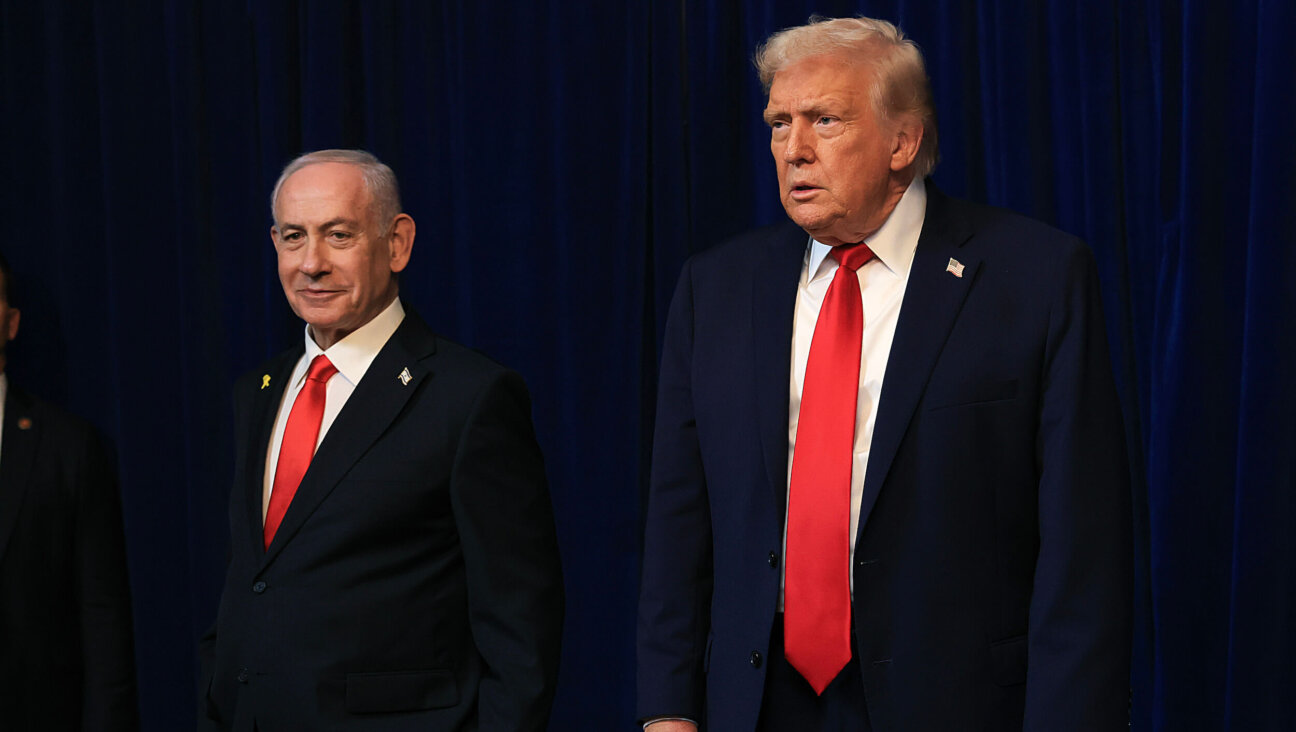
President praises Israeli Prime Minister Benjamin Netanyahu as a ‘very good man’ who ‘gets a little excited sometimes.’
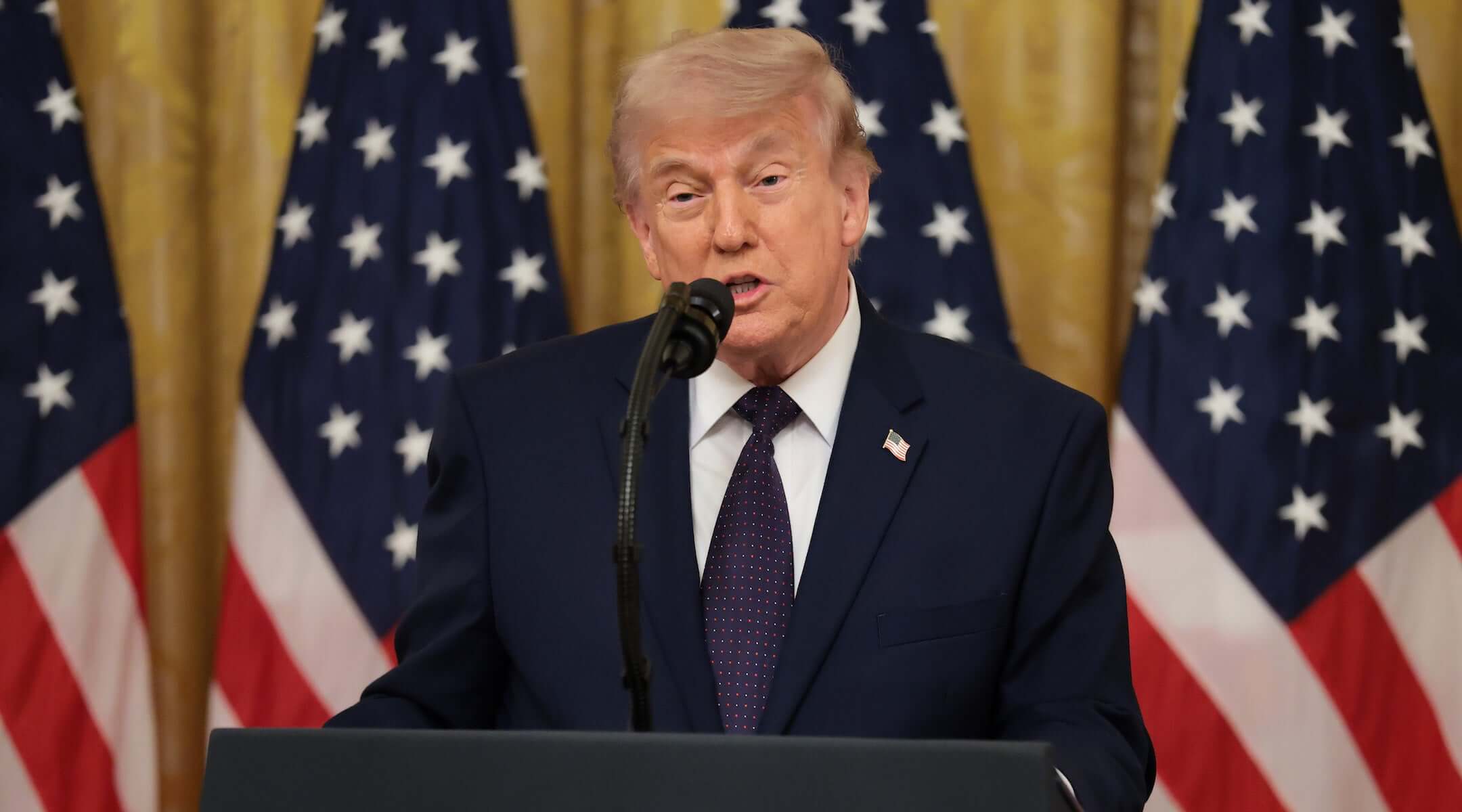
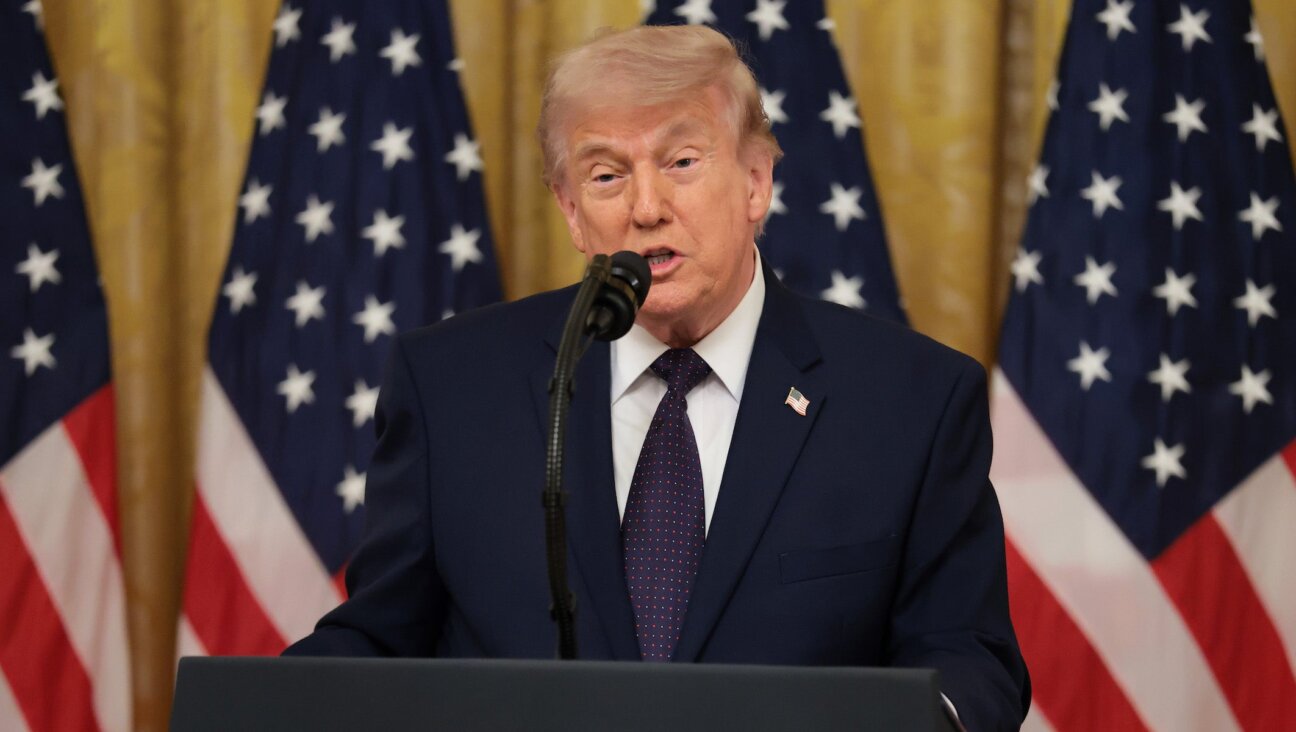
President Donald Trump speaks at the White House on May 22, 2026 in Washington, DC. Photo by Anna Moneymaker/Getty Images
(JTA) — Iran will retain ballistic missiles but will never be allowed to have nuclear weapons, President Donald Trump said Wednesday, stressing that his deal opening the Strait of Hormuz and ending the war with the Islamic Republic would save Israel from atomic destruction.
“Think of what Israel is getting. They are not going to be nuked,” Trump told reporters in Evian, France, toward the end of the G7 summit, where he secured the support of its leaders for the deal that relies on a carrot-and-stick approach.
Trump has offered Iran economic benefits if it halts its nuclear weapons program but has threatened “to bomb the hell out of them” if it doesn’t.
The White House on Wednesday afternoon provided to media outlets including Reuters and the Associated Press a copy of its Memorandum of Understanding digitally signed on Sunday between Washington and Tehran. The agreement has been met with staunch criticism from Israeli and U.S. politicians across the political spectrum, even though prominent Republicans began backing it once details were known.
South Carolina Sen. Lindsey Graham wrote on X Wednesday that it could be beneficial, while Louisiana Sen. Bill Cassidy called it “the worst foreign policy blunder in decades.”
Israel and its supporters are concerned that the memorandum empowers the Islamic Republic, allows for economic resources to pour into Iran, is short on details regarding the prevention of a nuclear Iran, fails to mention ballistic missiles and demands an end to the war in Lebanon.
Israel has been under heavy Iranian ballistic missile fire in the last year, first during a 12-day war in June 2025, and again from February 28 to April 8, when a shaky ceasefire went into effect. The memorandum prolongs that ceasefire for 60 days, with the option of an extension, during which time Washington and Tehran will hold talks to flush out details of the agreement.
During the press conference, Trump said that the deal was good for Israel.
“I told Bibi, ‘Bibi, your biggest risk was that they drop a nuclear weapon into the middle of Israel; they only need one, and there would be no more Israel. You got the most important thing that you were asking for,” Trump said.
“Iran has agreed they will neither produce or procure nuclear weapons,” Trump said, adding that Tehran would work with the United States to “turn over” the enriched uranium at the nuclear sites bombed during the war. Technical discussions on the removal of all stockpiles of enriched materials will begin immediately, he added.
He defended his position on Iran’s retention of ballistic missiles, explaining that the country had to keep pace with its neighbors, such as Saudi Arabia.
“They [Iranians] have to have some, because other people have some,” Trump said, adding, “Am I going to let Saudi Arabia have missiles but they can’t have them? It doesn’t work that way.”
Trump similarly defended the provisions in the agreement that lifted sanctions, including on the export of oil, and allow for the creation of a $300 billion fund for rehabilitation and economic development accessible should a final nuclear deal be arrived at after the 60-day negotiation period.
The fund “is only if they are doing things right,” Trump underscored, adding “they have to behave themselves.”
The president also addressed one of the central sticking points of the deal for Israel – the demand for an end to the war in Lebanon. Doing so would leave the Iranian proxy group there intact at a time when Israel has been negotiating with Lebanon for a peace deal that would tackle the issue of Hezbollah.
“In all fairness to [Prime Minister] Benjamin Netanyahu, he happens to be a very good man; he gets a little excited sometimes,” said Trump, explaining that they “had a little dispute over Lebanon.” Trump said that Lebanese leaders would be visiting the White House soon, as he reiterated comments from two days ago criticizing Israeli combat in Lebanon, explaining that Syria would do a better job against Hezbollah.
With an eye to the future, Trump said he still sought Saudi entry into the Abraham Accords, first put in place in 2020 and under whose rubric a number of Arab countries normalized ties with Israel.
“I think Saudi Arabia, if they lead the way, they will be doing themselves a big favor,” he said.
Did you know that only 2% of Forward readers donate to support our nonprofit newsroom? That 2% make it possible for millions to read the Forward without a paywall or subscription — removing any barriers to the full and fair Jewish story.
But while the Forward is free to read, it isn’t free to produce. Big stories — like deep dives into the antisemitism data, political scoops or reporting trips to college campuses — take months of research and fact-checking. All while we keep you informed of what you need to know each day.
— Rachel Fishman Feddersen, Forward Publisher & CEO
Support our mission to tell the Jewish story fully and fairly.