Banana Charoset (No Kidding)
Graphic by Angelie Zaslavsky
An audacious twist on a Passover staple. Photograph by Michael Bennett Kress
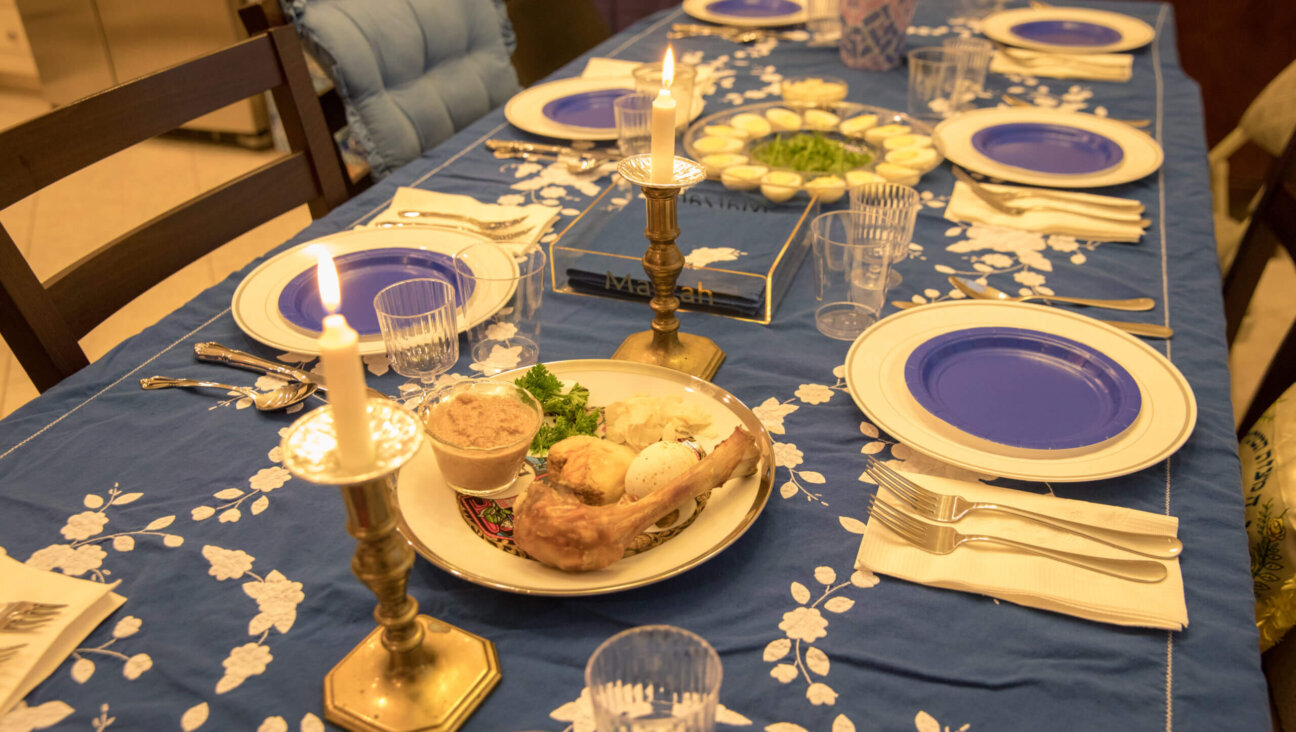
Charoset is the element on the Seder plate that represents the mortar used by the Israelite slaves to build bricks.
Growing up, I had Seders almost exclusively at my parents’ house or at a handful of other relatives’ homes, and everyone made the same charoset: walnuts, apples and sweet wine all smooshed together.
It was only when I began hosting my own Seders that I discovered a wide variety of charoset recipes from every corner of the world where Jews have ever resided.
This recipe comes from my friend Melissa Arking, who is a fabulous cook. I added chopped walnuts at the end for some texture.
Makes 3 cups (Serves 25 for Seder)
Prep time: 10 minutes
Advanced prep: May be made 3 days in advance
Equipment: Cutting board • Knives • Measuring cups and spoons • Food processor • Box grater • Silicone spatula • Small serving bowl
3 large ripe bananas
2 cups ground walnuts
2 tablespoons sugar
½ teaspoon ground cinnamon
2 tablespoons sweet kosher wine
2 apples, shredded on the large holes of a box grater
1 cup walnut halves, chopped into 1/3-inch pieces
1) In the bowl of a food processor fitted with a metal blade, place the bananas, ground walnuts, sugar, cinnamon and wine. Process until the mixture comes together.
2) Transfer to a small bowl, add the apples and chopped walnuts, and stir to combine.
Note: You can buy nuts already ground, with the skin or without. I have a coffee grinder dedicated to grinding nuts. You can also use a food processor, as long as it can reduce the nuts to a fine grind, almost like a powder, when you need almond flour for baking. If you grind nuts for too long, you will end up with nut butter.
Reprinted with permission from New Passover Menu ©2015 by Paula Shoyer, Sterling Publishing Co., Inc.
Why I became the Forward’s editor-in-chief
You are surely a friend of the Forward if you’re reading this. And so it’s with excitement and awe — of all that the Forward is, was, and will be — that I introduce myself to you as the Forward’s newest editor-in-chief.
And what a time to step into the leadership of this storied Jewish institution! For 129 years, the Forward has shaped and told the American Jewish story. I’m stepping in at an intense time for Jews the world over. We urgently need the Forward’s courageous, unflinching journalism — not only as a source of reliable information, but to provide inspiration, healing and hope.
 , editor-in-chief
Support our mission to tell the Jewish story fully and fairly.