Ethiopian American Jews lament loss of Harlem restaurant hub
Tsion Cafe declared a tiny community’s public presence through food and cultural connection. Its shutdown in the face of antisemitic harassment leaves a void for members of the Jewish-African diaspora.
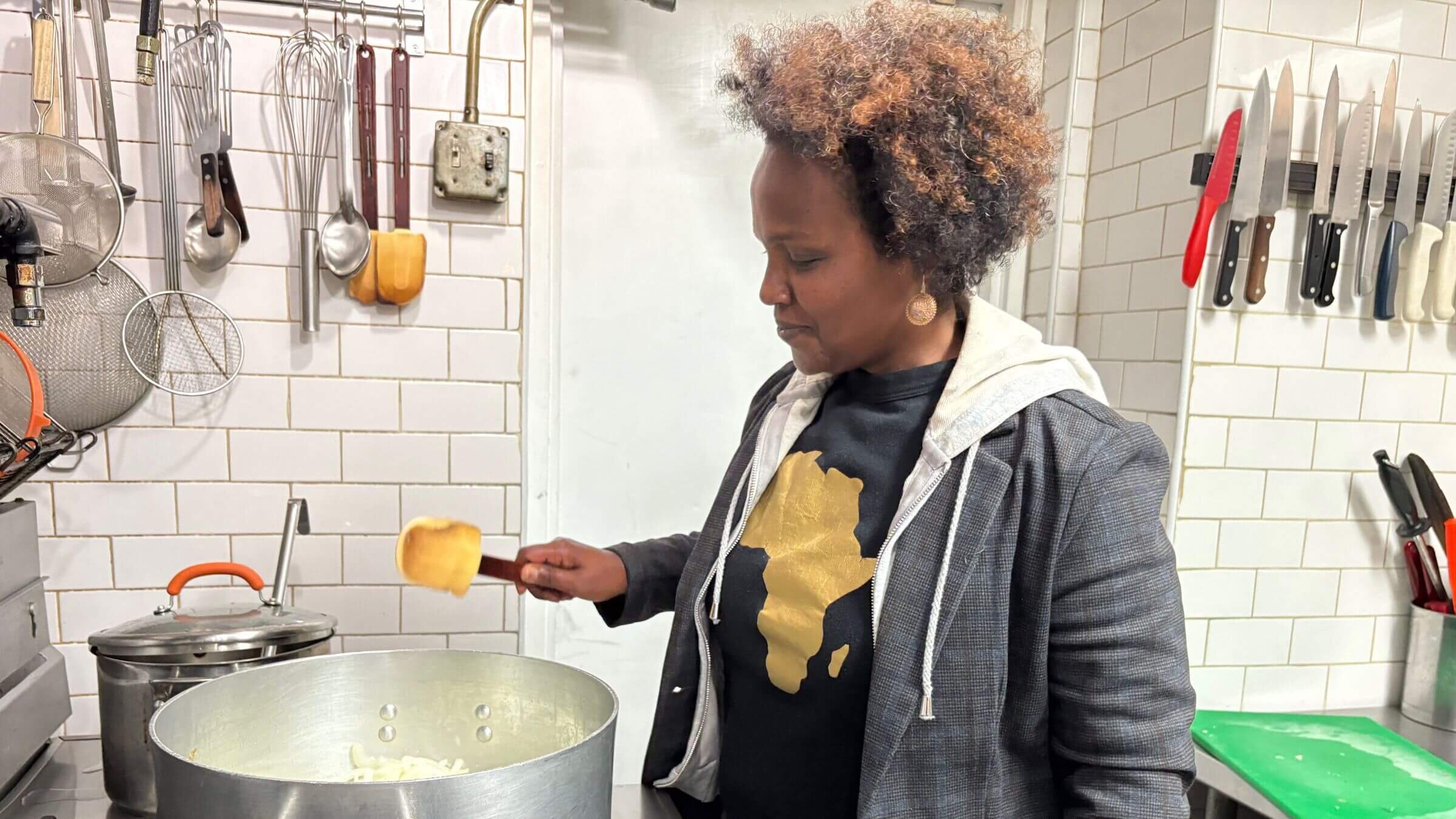
Beejhy Barhany cooking at Tsion Cafe in Harlem, New York Photo by Sam Lin-Sommer
By Simone Saidmehr February 22, 2026
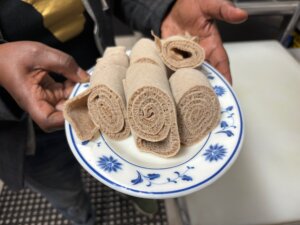
For over a decade, Tsion Cafe, which owner Beejhy Barhany believes is the only Ethiopian Jewish restaurant in America, introduced patrons to injera, shakshuka spiced with berbere, and the flavors of Ethiopian-Jewish cuisine. But more than that, it introduced many patrons to Ethiopian Jews for the first time.
“I’ve been the ambassador, willingly or unwillingly,” Barhany said. “On the forefront, bringing and pushing for Jewish diversity.”
She recalled a moment that, for her, encapsulates the spirit of Tsion Cafe: feeding gursha — the Ethiopian tradition of placing food directly into someone’s mouth as a gesture of love — to an elderly Ashkenazi Jewish woman.
“She was open to receiving it! Someone who would never eat with their fingers,” Barhany said, laughing. “And she couldn’t stop.”
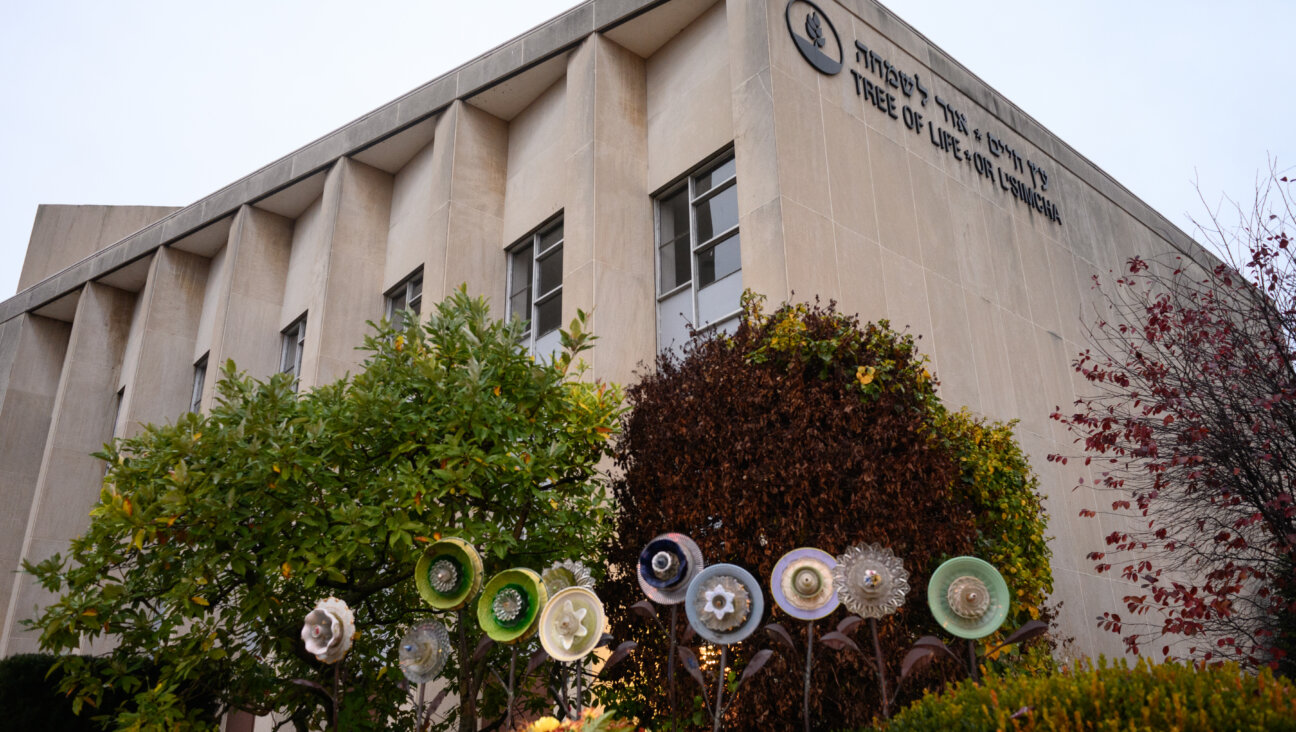
For Ethiopian Jews in America, a community numbering only a few hundred, Tsion Cafe was one of the only public-facing outposts of their heritage. But earlier this month, Barhany, who has been serving up Ethiopian Jewish delicacies to the Harlem community since 2014, announced on Instagram that she would close the restaurant’s dining room for “security reasons,” a move first reported by the New York Jewish Week.
Barhany told the Forward she has received “a lot of hate, phone calls, harassment,” including someone scrawling a swastika on the front of the restaurant. “You kind of push it aside, you disregard it. But at the end of the day, there is an impact emotionally, and it becomes a burden. I said to myself, ‘You know what? It’s just not worth it. It’s too much to deal with.’”
Despite the closure, Barhany remains determined to continue to share Ethiopian Jewish culture with patrons through catering and private events. “We are pivoting for security reasons because we have been threatened,” she said. “It’s not gone. We are reinventing ourselves. We are not giving up.”
The ‘Oct. 8 impact’
Barhany was born in Ethiopia and spent three years in a Sudanese refugee camp before moving to Israel in 1983, where she later completed compulsory service in the Israel Defense Forces — a path shared by many Ethiopian Jews of her generation.
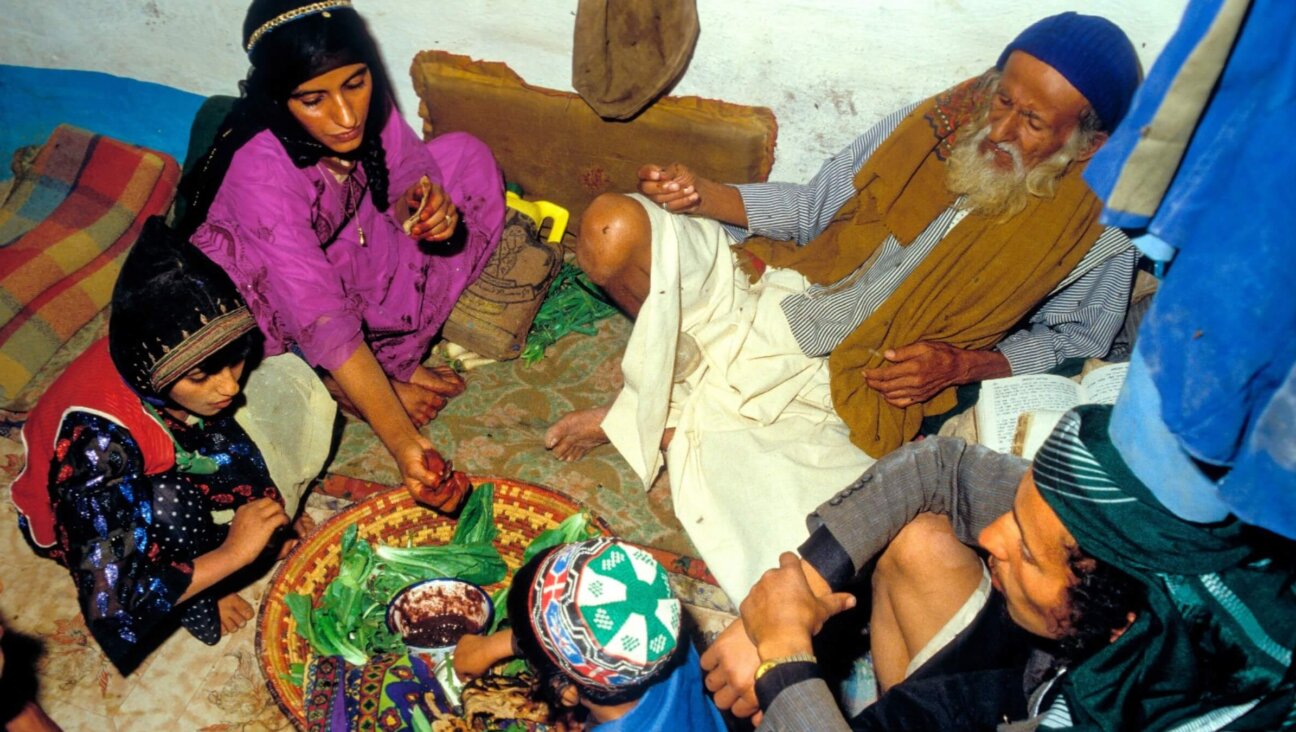
Ethiopian Jews lived for centuries in Ethiopia, maintaining ancient Jewish traditions and largely isolated from the broader Jewish world. In the 1980s and early 1990s, amid widespread instability in Ethiopia, Israel carried out dramatic covert airlift operations which brought tens of thousands of Ethiopian Jews to Israel. For many, their connection to Israel is rooted not only in longstanding religious tradition, but also in the lived experience of those rescue missions.
“Ethiopian Jews are very loyal to Jerusalem and to the people of Israel,” said Ephraim Isaac, an Ethiopian Jewish scholar based in New Jersey. “All the Ethiopian Jews I know living in America have relatives in Israel, and they go back and forth.”
When she arrived in New York in the early 2000s, Barhany was struck by how little awareness Americans had of the African Jewish diaspora. Wanting to educate her new neighbors about her background, and searching for a sense of “community and belonging,” she opened Tsion Cafe in 2014.
After the violent attacks on Israelis on Oct. 7, 2023, Barhany said she felt the desire to be more public about her Judaism and her connection to Israel. “It was that Oct. 8 impact. You just wanted to be a proud Jew,” she said. That impulse pushed her to make Tsion Cafe fully kosher and vegan. “I thought, ‘How can I have my people come here and feel comfortable?’ And also introduce Ethiopian food to people who never had it before.”
She also became more outspoken about her Jewish heritage and her connection to Israel, appearing in cooking videos with popular pro-Israel influencer Noa Tishby, and posting photos of herself at a pro-Israel rally shortly after the Oct. 7 attacks. As pro-Palestinian protests unfolded across New York City, particularly on nearby college campuses like Columbia University, she said she understood that her outspokenness could make her a target.
But for Barhany, there was no other option. “I celebrated proudly and amplify my identity. I never shy away from that,” she said. “Otherwise I wouldn’t be true to myself.” She said her advocacy “happened organically, sincerely, genuinely, because who I am.”
“I didn’t sign up for this,” she said, laughing. “But I am happy to engage with those people and maybe broaden their understanding of Jewish diaspora.”
A small community, a singular space
For many in the United States’ small Ethiopian Jewish community, Tsion Cafe’s closure represents more than a business shift; it marks the disappearance of one of the only visible spaces representing their culture in America.
Isaac estimated the Ethiopian Jewish population in America numbers only a few hundred. “They came here just like other members of Israeli society,” he said, for education, work, or opportunity. Some say they came to the U.S. to get away from discrimination they experienced in Israel. The largest cluster, he noted, is in Jersey City, with smaller communities in Brooklyn and Queens. “We respect each other, we love each other, but never lost contact,” he said.
“For a long time, I felt like that extra layer of being Black almost protected me, because people are scared of being called racist. They’re not scared of being called antisemitic.”Tali AynalemEthiopian American Jew
Barhany said that for many in the Ethiopian American Jewish community, Tsion Cafe was seen as “a home far away from home,” with community members traveling from across the country to come to her restaurant. “We have people coming from D.C., L.A., you name it,” she said.
“I think a majority of Ethiopian Jews in America know Beejhy,” Isaac remarked. “The community is very upset by the closure. She is respected for all the efforts that she has undertaken.”
Tali Aynalem, a 34-year-old Ethiopian Jew who lives in Oregon, said Tsion Cafe challenged longstanding assumptions about what Jewish identity looks like in the U.S. “In America, there is an idea of one way that a Jewish person looks like. I always sort of have to explain who I am. It’s not just understood.”
For Aynalem, Tsion Cafe was bringing to light the diversity of Jews and Israelis to an American audience. “She really was showing what Israel is all about, which is that we are so mixed because we’ve all been in exile in so many different places for so long. She showed that in her restaurant.”
But Aynalem sees the restaurant’s closure as part of a broader trend. “People are quick to say, ‘It’s a Black-owned business, it’s a small business, support it.’ But as long as there’s an intersection with Judaism, there’s no support,” she said. “It raises the question: Do you care about Black people, or do you just not care about Jews, regardless of color?”
She added that, as an Ethiopian Jewish woman, she once believed her racial identity shielded her from certain forms of antisemitism.
“For a long time, I felt like that extra layer of being Black almost protected me, because people are scared of being called racist,” she said. “They’re not scared of being called antisemitic.”
In the wake of rising threats and Tsion Cafe’s closure, she said, that sense of insulation has faded.
“It shows you that antisemitism, regardless of what you look like, doesn’t really discriminate,” she said. “I don’t think I have that extra armor anymore. No one is really safe in this climate.”
Aynalem also worries that Ethiopian Jews in America are still understood primarily through the lens of rescue. She said that for many American Jews, the only thing they know about Ethiopian Jews is stories of the dramatic operations that brought them to Israel.
“We’re past that,” she said. “Let’s talk about my generation. We’re part of the culture. People are eating injera — that’s a normal occurrence within Israeli culture now.” For Tali, Tsion Cafe was doing exactly that.
Barhany agreed.
“I always see articles about Ethiopian Jews being rescued,” she said. “I’m kind of fed up with that.” For her, Tsion Cafe was a way to “bring something more positive and more unifying” to the American conversation about Ethiopian Jewish life.
Not just for Ethiopian Jews
Rabbi Mira Rivera of JCC Harlem said Tsion Cafe was woven into the fabric of Jewish life in the neighborhood. “The Ethiopian Jews in Harlem aren’t going anywhere,” she said. “But it was always a joy to have a bastion, a place where you’d say, ‘Let’s meet at Tsion Cafe. Let’s celebrate your birthday there.’ It was part of living in Harlem.”
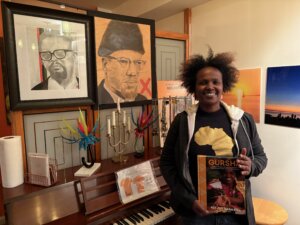
She compared Tsion Cafe to the Ethiopian Jewish neighborhoods she had visited in Israel, places where a community had a visible center. “This was that place,” she said. “It was where people gathered. Over the years, they changed to vegan and kosher so that the larger Jewish community would start to understand and partake in their culture.” She continued, “to not have that place where all the families can go, it’s really hard.”
But for Barhany, Tsion Cafe was never meant to be “just a cafe.” “I didn’t want it to be a regular cafe where you go in, sit, pay, and go,” she said. “It’s a place where people can nourish and engage in grown-up conversation.”
Amid antisemitic threats, she remains more committed to that mission than ever. Barhany plans to host interfaith gatherings and travel the country to share the flavors and stories of Ethiopian Jewish culture.
“If I can facilitate dialogue, I would be honored,” she said. “We are not giving up. We are still here. We’re just coming in a different shape or form.”