Bernard-Henri Lévy and Michel Houellebecq Stoke Their Egos and Bore Their Readers
Graphic by Angelie Zaslavsky
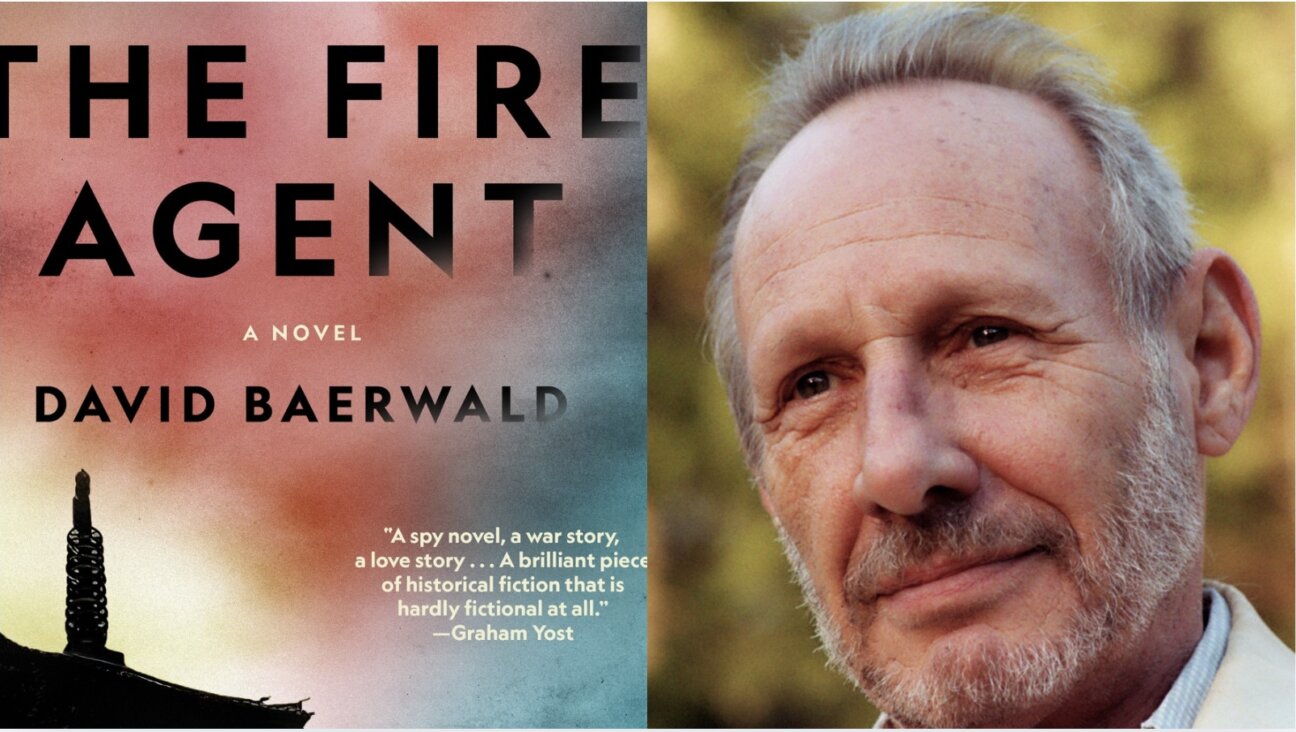
“Public Enemies,” far from being the “duel” suggested by the book’s subtitle, is in fact an act of mutual masturbation by two of France’s leading luminaries, Bernard-Henri Lévy and Michel Houellebecq (pronounced Wellbeck). In the book-length series of letters, the friends encourage each other to indulge in self-reflection. They talk about their fathers. They spar over Goethe, Nietzsche, and Schopenhauer. But mostly they trade notes on celebrity and use the opportunity to solidify their images.
Lévy aggrandizes his commitment to being an “engaged” intellectual. Houllebecq explains his indifference to injustice and persecution. He is, he implies, not interested. We do learn some things: Judaism — at least Lévy’s idealized and intellectualized version of it — is central to Lévy’s thinking. He likens himself to Albert Cohen’s protagonist, Solal, and says he is a “positive Jew” as opposed to Sartre’s ““negative Jew,” who is only Jewish in so far as others regard him as such. Houellebecq, in his most sympathetic moment, describes his own spiritual journey. He ultimately walked away from the Church but plainly retains sympathy and respect for the faithful.
Although this book is a gift for Lévy and Houellebecq’s biographers and future French literature Ph.D. students, most will not find it worth the effort. The two men speak in an untranslatable language of French cultural and intellectual references, from Pascal through Péguy and Maurras to Sarkozy. This edition helpfully provides footnotes to explain some of the references, although at least one note is incorrect: It misidentifies the Vichy-era Chantiers de Jeunesse and confuses it with the Service du Travail Obligatoire (STO). A specialist might argue that this is splitting hairs, but the mistake bespeaks the level of specialization required to appreciate Lévy and Houellebecq’s discourse. It is, in fact, a mystery why Random House went to the trouble to translate this book, since the few who can appreciate it can probably manage the French.
Non-specialists will do better by skipping “Public Enemies” in favor of the books that made Lévy and Houellebecq deservedly famous. Lévy’s discussion of Albert Cohen, however, serves as a reminder that one should not waste time with either man’s writings unless one has already read Cohen’s achingly beautiful “La Belle du Seigneur.“ Why read a good book when you can read a great book, the best novel in post-war French letters and arguably one of the greatest works of Jewish fiction ever written?
I’m personally matching all gifts to the Forward, up to $36,000. Can I match your gift now?

Hello, fellow Forward reader! I’m Joel Brown, a Forward reader and supporter for more than 15 years, and currently the chair of the board of directors.
I’m an avid Forward reader because it ticks so many of my essential boxes: excellent journalism, Jewish focus and diverse viewpoints. In today’s political climate, what I most appreciate is the Forward’s independence — made possible by the generosity of its membership.
The Forward is committed to bringing you unbiased, nuanced Jewish news. From my position as board chair, I see an exciting future as we expand our position as the definitive independent voice of contemporary American Judaism.
— Joel Brown, Forward board chair
Support our mission to tell the Jewish story fully and fairly.