Glorious Bastard

Tarantino Talks About His Not-A-Holocaust-Movie

Cards on the Table: Tarantino plays with our expectations.
UNIVERSAL
Cards on the Table: Tarantino plays with our expectations.

By Jordana Horn

Published August 21, 2009, issue of September 04, 2009.
  • Print
  • Share Share

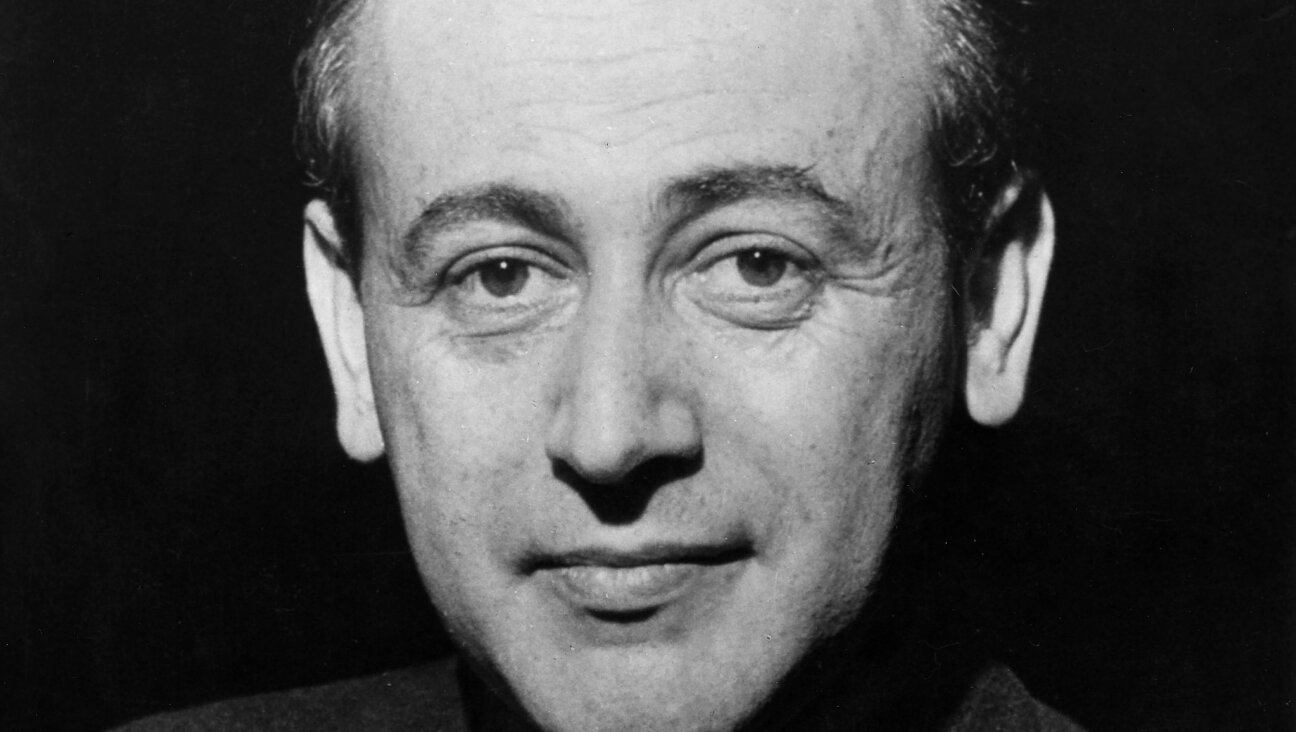
Quentin Tarantino is a director, writer and cinematic iconoclast known for works such as “Kill Bill” and “Pulp Fiction” that revel in non-linear plots and the portrayal of violence. His most recent film, “Inglourious Basterds,” takes the viewer on a bloody stroll through a fiction in which a band of Jewish-American soldiers is given free rein to go to occupied France and kill Nazis. After the film’s first New York screening at the Museum of Jewish Heritage — A Living Memorial to the Holocaust, Tarantino met with the Forward’s Jordana Horn to discuss his film.

Getty Images

Jordana Horn: I wanted to ask you how you felt, both going in and coming out of the screening last night, within that particular context.

Quentin Tarantino: … I thought it was a complete triumph. I was very excited about it…. I thought it was a very thought-provoking conversation….I like my movie. I’m really proud of my movie. And if they didn’t like it, I would have been like, “Well, screw you guys, all right? I like my movie!” You know, it wasn’t like I was currying favor. But yes, I do think I wanted them to like it. And I do appreciate it that they did. … The movie has a … certain tone to it … This is not “Schindler’s List.”… So, you know, don’t go expecting that. And look, when you do a movie that has as much humor as mine has… it’s understandable that some people could be touchy about it.

This is not a Holocaust movie, really.

No, it really isn’t at all…it’s more of the thing of the bunch of guys on a mission … like a ’60s movie, like the “Devil’s Brigade” or “Dirty Dozen” or something like that. But that’s the way I normally do stuff. I start off with a certain genre…that’s the jumping-off point. I intend to expand the genre, blow the doors off of it. But the starting-off point is that there’s a bunch of guys, and there’s a mission … this movie’s closer to something like E.L. Doctorow’s “Ragtime,” with a community of characters, an overall “big story” that leads somewhere, and a mix of invented characters and historical figures.

Could you go into why you picked this particular time and place in history?

World War II is one of the most interesting and fascinating story subjects of the 20th century. It was the most profound thing that happened in the 20th century. We actually — humanity — stopped the return of the Dark Ages, which could have very well happened if the Nazis had been successful. Before that, it was the way it always was for countries at war: might makes right. ‘I take your country and make it mine,’ and that’s the way the world was governed. Forever, all right? And the Industrial Age stopped that, but we could have gone back to that, if the world hadn’t risen up…But all the different subjects that we put in the movie pertain to World War II, whether it was the idea of American Jews getting vengeance behind enemy lines in a way that their European counterparts … couldn’t … And even just the way that you’re dealing with Germany via filmmaking inside the Third Reich … dealing with Josef Goebbels, not as the architect of evil, the way he’s always seen, but in his job as studio head.

What made the Nazis so bad was their wholesale devaluation of the sanctity of human life. At what point, when you’re laughing at the scalpings, do you think, you’ve turned it around?

If you’re dealing with people like the Nazis … well, you either eat the wolf or the wolf eats you. You know? That’s where I would be coming from in a situation like that….

Why not make Raine Jewish?

You know, he just wasn’t … when I came up with the scenario of all of them together, he just wasn’t … It was very important to me that he was a hillbilly. By every outward appearance, you’d think he’d be a racist redneck. And in fact, he’s the opposite…He was probably fighting the Klan in the ’30s, before the war. The Nazis? Same thing. He’s a student of history, so he knows about the Apache resistance — he decides — “I want Jewish soldiers in here, because I want it to be a holy war. I want them to bring what a gentile wouldn’t … the gentiles have the luxury of being soldiers. The Jewish-American soldiers have the duty of being warriors.”

In my first imagining of this story, Shosanna was a much more badass character, kind of a Joan of Arc of the Jews … she has lists of Nazis to wipe out … And when I put it away and ended up doing “Kill Bill”, what I wanted to do with Shosanna, I gave to “The Bride.”

It had a very nice effect … when I came back to this story, I thought, ‘well, I can’t do that anymore. And it just made Shosanna all the more realistic … and it made her more like Jackie Brown. Her power is in keeping it together … That becomes her strength, as opposed to wiping out Nazis … an idea that I had … one of the ways Nazis were able to really clamp down on people acting against them was that one German life was worth 10 lives … So, she wasn’t part of the resistance in this [earlier] version [of the idea], and she’s killing Nazis, and then they were going to kill 10 resistance prisoners every week until she gave herself up. And then where I had her coming from was, “To hell with the resistance … F*** the French. They give more of a damn about Notre Dame than the damn Jews, so I don’t care about them. I’m fighting for Jews, make no mistake about it.”

[Later] … I think one of the things that makes the movie enjoyable to watch — just the fact that it’s a World War II movie, you can’t help but have associations in your mind about what you think it’s going to be. The movie ends up being very different from that … part of the liberating fun of actually watching it is that it plays out differently from what you’d imagined …

How is this movie different from your other movies?

I don’t think it’s that different at all. Some of the qualities that make this movie particularly unique to the World War II genre are part and parcel of what I do in film. Humor is part of what I do. That’s part of my thing. And actually the basis of most of that humor is getting you to laugh at things that really aren’t that funny. If I were to write and direct something that didn’t have those qualities, if I were you, I’d be suspicious. I don’t know how to do it any other way.

What’s up with the misspelling of the title?

It’s an artistic stroke. To describe it would take the piss out of it. Consider it a Basquiat-esque touch.

[Laughs] I wish I could describe the hand gesture that you made as you said that.

[Laughs] It was sort of like, why is he getting the check? But he has Elmer’s Glue stuck in his hand.

Christoph Waltz’s character [of Nazi officer Hans Landa] was amazing. I would have been very interested to see how, if Waltz had come to the museum, he would have been received.

Well, you know, Waltz’s son is a rabbi.

Really?

Yes. And I’m actually kind of glad about that. There are several qualities in Christoph that are very similar to Landa. Not the Nazi part, obviously, but his erudition and his cleverness. Because of that, I can actually make parallels between him and Landa and not get too worried about calling him a Nazi.

A rabbi… where?

In Israel. I had to check on a Yiddish word, and Christoph called his son in Israel, who is actually a Yiddish expert. Christoph is obviously a language expert himself as well.

I came into this film thinking, ‘Surely there are enough films about the Holocaust already without Tarantino making one too.’

For the last 30 years, all the movies coming out about World War II, whether it be feature films or TV movies …they really focus on the Holocaust and the victims of World War II … But even during the war…and even during the ’60s, you know, with the guys-on-a-mission movies, there was no crime in telling a thrilling story. You didn’t feel like an idiot, for example, when you said, ‘I had fun watching The Great Escape,’ even though Nazis mow down and kill people. I have a great time watching that movie. It’s very entertaining. And that doesn’t make my movie better or worse, but it’s something that has been lost in the last 30 years of the telling.

Jordana Horn is a lawyer and writer at work on her first novel.


International trailer for “Inglourious Basterds” — widely considered the best trailer for the film!


  • Print
  • Share Share

The Forward welcomes reader comments in order to promote thoughtful discussion on issues of importance to the Jewish community. In the interest of maintaining a civil forum, the Forward requires that all commenters be appropriately respectful toward our writers, other commenters and the subjects of the articles. Vigorous debate and reasoned critique are welcome; name-calling and personal invective are not. While we generally do not seek to edit or actively moderate comments, the Forward reserves the right to remove comments for any reason.


Comments
chelemer Sat. Aug 22, 2009

After seeing the preview and reading a number some accounts of it, I have come to the conclusion that it is the ultimate in antisemitic pornography. With this movie, Tarantino is trying to prove that Hitler was right after all because the Jews, as proven by his movie, are a bloodthirsty race that needs to be annihilated and Hitler was doing his share to save mankind.

However, Tarantino is in illustrious company with Shakespeare' Merchant of Venice.

Many have bought into the pretense that this play is not truly antisemitic but rather a criticism of antisemitism. However, it is sufficient to read or see the play and it will become evident that it is, in reality, truly deceptive and antisemitic. Shylock's legendary humanizing speech: "If you prick us, do we not bleed?", is a congenial moment in the course of the drama which, predominantly, makes it clear that Jews are disgraceful beings aspiring to the destruction of Christians. The fact that Shakespeare portrays Portia, Antonio, and Bassanio as a bunch of Christian jerks when Shylock is forced by the court to convert to Christianity, under a penalty of death, does not mitigate the characterization of Jews as an evil race. The play not only refers to Shylock as an evil person but mainly as an evil member of an evil race.

George Bernard Shaw wrote the following: "I have striven hard to open English eyes to the emptiness of Shakespeare's philosophy, to the superficiality and second-handedness of his morality, to his weakness and incoherence as a thinker, to his snobbery, his vulgar prejudices, his ignorance, his disqualifications of all sorts for the philosophic eminence claimed for him. . . ."

I hope that my opinion is not biased by the fact that I am a Holocaust survivor.

Heinz Wartski

chelemer Sat. Aug 22, 2009

After seeing the preview and reading a number some accounts of it, I have come to the conclusion that it is the ultimate in antisemitic pornography. With this movie, Tarantino is trying to prove that Hitler was right after all because the Jews, as proven by his movie, are a bloodthirsty race that needs to be annihilated and Hitler was doing his share to save mankind.

However, Tarantino is in illustrious company with Shakespeare' Merchant of Venice.

Many have bought into the pretense that this play is not truly antisemitic but rather a criticism of antisemitism. However, it is sufficient to read or see the play and it will become evident that it is, in reality, truly deceptive and antisemitic. Shylock's legendary humanizing speech: "If you prick us, do we not bleed?", is a congenial moment in the course of the drama which, predominantly, makes it clear that Jews are disgraceful beings aspiring to the destruction of Christians. The fact that Shakespeare portrays Portia, Antonio, and Bassanio as a bunch of Christian jerks when Shylock is forced by the court to convert to Christianity, under a penalty of death, does not mitigate the characterization of Jews as an evil race. The play not only refers to Shylock as an evil person but mainly as an evil member of an evil race.

George Bernard Shaw wrote the following: "I have striven hard to open English eyes to the emptiness of Shakespeare's philosophy, to the superficiality and second-handedness of his morality, to his weakness and incoherence as a thinker, to his snobbery, his vulgar prejudices, his ignorance, his disqualifications of all sorts for the philosophic eminence claimed for him. . . ."

I hope that my opinion is not biased by the fact that I am a Holocaust survivor.

Heinz Wartski

PS Sat. Aug 22, 2009

In the movie the avenging Jews only kill Nazis. They are not shown as bloodthirsty at all, only angry.

I wouldn't judge the film by its marketing, which is far more brutal than the movie itself, which is basically a lot of great dialogue and performances and very little action.

PS Sat. Aug 22, 2009

In the movie the avenging Jews only kill Nazis. They are not shown as bloodthirsty at all, only angry.

I wouldn't judge the film by its marketing, which is far more brutal than the movie itself, which is basically a lot of great dialogue and performances and very little action.

Ruth Book Sat. Aug 22, 2009

Heinz Wartski, Your background as a Holocaust survivor does not imply bias but adds only to your credibility. And let none of us discount your reaction on the basis of your history. In fact, we take more seriously your opinion, because of your experience. However, did you read this interview? Do you not see the intent of Tarentino, who is clear that Hitler was the direct opposite of "right." Do you see the director's reasoning behind the portrayal of an important character as a "hillbilly"--do you see his purpose behind that? Do you see that certain creative works are meant to be taken-NOT-literally? Do we, the People of the Book, not understand that? True, we do not take kindly to "spoofs" on this subject. Laughter, silliness, mocking and satire--cum-Holocaust goes against the grain. But this man is not Jewish; he's a writer and movie director, and after time has passed, he has the right to create work that is "not a Schindler's List film" and the responsibility to be true to his own sensibilities, which do include a social conscience and an understanding of the ordeal of Jews during World War II. Idiotic racists will take the film literally, but normal, thoughtful people--the majority--will not misinterpret the impressions, which the director, if successful, delivered with finesse. Let's see the film, then decide.

chelemer Sat. Aug 22, 2009

Ruth Book, Thanks for the message. I have seen many forms of antisemitism, ranging from the overt to the implied, and I must admit that Tarantino's version is new and cleverly disguised behind his pandering to Jews. You ascribe to Tarantino all sorts of noble and lofty motives which I can't see nor understand. Even if Jews would not be a part of this movie, how is it possible to ascribe lofty sentiments and high moral values to the brutality that Tarantino promotes?

chelemer Sat. Aug 22, 2009

With this movie, Tarantino shows that Jews are not interested in the law or lawful processes but in lynching and lawlessness. We always considered ourselves to be "the guardians of the law" and not a bunch of wild hoodlums running around mutilating and killing people without due process. From Maimonidis to the most secular, Jews have always considered it a sacred obligation to follow the principles of the law, and Tarantino saw it fit to trample on that which is most sacred to us.

Heinz Wartski

PS Sun. Aug 23, 2009

Only in the very narrowest terms does the movie show that "Jews are not interested in the law or lawful processes but in lynching and lawlessness".

The subtitle of the picture is "One Upon a Time in Nazi-Occupied France", in which context the law and lawful processes had little meaning, since obeying the law was obeying Hitler.

Also, for what it's worth, and unmentioned in the article, is the fact that the producers of the movie - Lawrence Bender and the Weinstein brothers - are Jewish, albeit of younger generations [than Mr Wartski].

Disclaimer: I'm not Jewish, but came out of the theater anxious to search for comments in the Jewish press, and have found that so far it's getting generally good reviews. Will be very interested in what happens when Tarantino goes to Israel for the premiere there in September.

chelemer Sun. Aug 23, 2009

Thank you, PS, for your thoughts. Unfortunately, it is a fact that people can be taken in by those who gratify their ego and Jews are not exempt. That the producers of this movie, Lawrence Bender and the Weinstein brothers, are Jewish only proves that money is more important than ethnic values. What difference does it make whether a thousand-and-one Jewish newspapers write positive revues about this movie and Israel gives Tarantino the keys to the Wailing Wall?

Heinz Wartski

Ruth Book Sun. Aug 23, 2009

I just saw the movie. It's nothing like the impression left by the trailers or press reviews. It's unbelievable the level of history Tanantino conveys, along with the fantastical. And the subtle references communicate so much--for example, the use of fire-a metaphor for the horrors that continue to be remembered and the original, pre-Holocaust, definition of holocaust. It's brilliantly comedic, and a great outlet after decades of dealing with the trauma in a civilized way, which the perpetrators did not deserve but which we, the Jewish people, hold dear. That is our legacy--that we didn't do these things--but in this film, it's obvious the Jewish characters are fictional, and their actions are a play on what would/could/might happen...ON ANOTHER PLANET. Mr. Wartski, you need to see the movie before you comment on ego and money and ethnic values.

chelemer Sun. Aug 23, 2009

Ruth Book, Regardless of whether the preview is a correct or incorrect portrayal of the movie, the point is that Tarantino sets out to prove that Hitler's crowning achievement, and, yes, Hitler's victory, was to make us, Jews, abandon what we hold most sacred, the principle of law.

Heinz Wartski

ps Sun. Aug 23, 2009

I'm amazed that only three of us are commenting on this movie, which - if nothing else - deserves comment. But I would also stress seeing it before commenting, because this is not at all the brutal cartoon that the marketing campaign is trying to sell. This is something very new and very interesting.

PS Sun. Aug 23, 2009

I'm even more amazed at the ease with which this system generates double - triple! - posts.

chelemer Sun. Aug 23, 2009

To PS - The preview promises spectators that they will witness lawless atrocities committed by Jews that are equal to those perpetrated by Hitler. Of course, this is done for revenge. For some reason, Tarantino believes that, after the Holocaust, Jews should choose to follow the teachings of Hitler instead of Maimonidis.

Although there are only three of us taking part in this discussion, I believe that we have something to offer and manage to challenge one another to better understand what lies behind the issue.

Circus Mon. Aug 24, 2009

Mr. Wartski,

Your opening comment is framed in the context that you're open to the possibility that you're opinion is incorrect ("I hope that my opinion is not biased by the fact that I am a Holocaust survivor."), however your subsequent comments show you to be entirely close-minded on the subject. I hope the former, and not the latter, is the case.

There is room in this world for satire on ANY subject. There has to be. Tarantino has put together what might be described as the ultimate "revenge fantasy" here. And make no mistake, this IS fantasy. There's no assertion or deception to this film being historical fact. If you're familiar with his work, you understand that humor, loose plots, and especially violence are essential elements to all that Tarantino does. He's doing nothing different in "Basterds" than he's done before, so any assertion that this movie's violence is meant to disparage Jews is way off base.

Now, you may be someone who does not like violent films, or films with gratuitous swearing, or satirical, dark comedies. Perhaps you did not emjoy "Resevoir Dogs" or "Pulp Fiction." If so, you're unlikely to enjoy "Inglorious Basterds." But don't cloak your interests of taste in an anti-semitic defense. It's not fair.

Perhaps, recall your first comment and take a step back. If all the other commenters are disagreeing with you, and from a reasonably intellectual perspective, I might add- not fanboy rants- perhaps you are indeed mistaken about the film.

SPN Mon. Aug 24, 2009

I have the greates kavod/respect for Mr Wartski as a Holoaust survivor. However, the last comments by Circus certainly ring true for me.

All I will say, is that Judaism also teaches that halbana panim - literally the whitening of one's face - or embarrassing another in public is to be avoided at all costs for it is akin to murder (of another's character). Judaism also teaches that before one is convicted of a capital crime you must have two witnesses who actually saw the crime being committed. Where am I going with this?

Well, Mr. Warski, you are claiming that Mr. Tarantino has "whitened the face" of the entire Jewish people through a libelous piece of film making. Before you pass this judgement, you need to at least have ONE witness (if not the requisite two) see the actual murder/libel take place! In other words, you cannot condemn Tarantino of libel against the Jews unless you have witnessed the film yourself and not relied on marketing, trailers and comments of others. You owe it to him and to the ethics and morals of the Jewish tradition.

As a rabbi myself, I implore you to not cast any more aspersions or judgment without seeing the film. If after seeing the film you still feel the same way, then you certainly have every right to criticize it.

Ruth Book Mon. Aug 24, 2009

Mr. Wartski, You are incorrect in your statement that Tarantino sets out to prove that Hitler was victorious by getting the Jews to abandon their moral legacy. In fact, Tarantino does the complete opposite. In fact, the quirkiness of the whole story is a product of the very fact that Jews, in reality, did not take revenge. The historical fact that Jews were the complete opposite of the Jewish-fictional-characters-of-this-movie CREATES the satirical quality of the film. In addition, the Nazi characters are so downright evil, and the historical references for their evil are so obvious in their subtlety, that the film sends a message that revenge is what the Nazis deserved but did not get in reality: so, ok, let's give to them here...in fantasyland. It's brilliant.

chelemer Mon. Aug 24, 2009

Circus & SPN - are saying that I should not depend on the preview to be a true portrayal of the movie and, therefore, I should not believe the brutality I saw (or witnessed). As the rabbi, SPN, says, I need to go and see the whole movie and be a spectator (or a witness) to the full complement of brutality before making up my mind.

Is brutality that is sprinkled with intellectual or comic intermezzi not what is seems? I certainly cannot argue with those who find intellectual comfort in Tarantino's genre of movies.

Somehow, Tarantino claims to know that Jews have nothing better to do than fantasize about revenge and how they would go about it to transcend Nazi methods.

Heinz Wartski

Kurt Mon. Aug 24, 2009

chelemer, I offer the utmost respect to you, as a survivor of such a terrible thing. However, I must respectfully disagree with you on a number of points.

First and foremost, nowhere is it at all evident, or implied, in this film that Hitler's actions were "right." It is nearly impossible to walk away from this movie and feel that way. Tarantino was not suggesting this in any way, shape, or form.

You seem to precieve that the movie characterizes all Jews a certain way, based on the actions of the title group. This is not a fair assessment, as the violence depicted is not practiced throughout the movie by large numbers of Jewish men and women.

To reiterate what others have stated: This movie is a fictional piece, set in a historical setting. It is showing an alternate history, not a factual one. It shows a collection of men and women uniting to tkae out a supreme evil in the world. These people are German Jews, American Jews, American Christians, German Christians, Englishmen, and a Black man. The fact that the Basterds are Jewish is just used to provide a premise for the movie, that these men are taing this atrocity more personally, and are fighting in part for themselves, not just because their country has ordered them to do so.

To say that the film is used to portray Jewish people as a universally violent group is just reading too much into the previews before seeing the movie.

Rabbi Dr. Bernhard Rosenberg Mon. Aug 24, 2009

My parents, holocaust survivors, of blessed memory, would not have found this Holocaust dark humor very amuzing. If only the leadership of the Nazi party was as stupid as portrayed in the movie, and Hitler a complete idiot, perhaps my siblings, grandparents, aunts, uncles and cousins would 'not have been murdered and gone up in smoke in the chimneys of Auschwitz'.The Jews did not take scalps and brand people with swastikas on their foreheads. I wish there was a Jewish brigade who could have annihilated the Nazis. This movie had very little to do with Jews as victims and more to do with showing the victims, in this case Jews , as rats. Was this a commercial for Hitler and Goebels. I am sure the producers and actors are laughing all the way to the bank

chelemer Mon. Aug 24, 2009

In a posting of August 23, PS writes: "Only in the very narrowest terms does the movie show that ‘Jews are not interested in the law or lawful processes but in lynching and lawlessness'".

With this, PS admits that my claim might have some validity. Once the cat is out of the bag it doesn't matter if the opening was wide or narrow.

Most of the responses posted on this forum imply that Tarantino's genre of violence needs to be taken into context because it contains some deep philosophical undertones. If that be the case, I admit ignorance and a lack of understanding.

Heinz Warski

Rabbi Dr. Bernhard Rosenberg Mon. Aug 24, 2009

Dear Heinz As a holocaust survivor I doubt very much if you lack any understanding or possess ignorance regarding the Nazi regime and its cruelty. How many Holocaust survivors would find this movie or in fact other dark humor holocaust movies to be hilarious?. When my mother would see Hitler's face on T.V. she would yell out there goes the murderer of my family.Yes, I saw the movie when it came out on Friday. Yes, it made the most money of any movie this week. I hope some of the proceeds will be donated to Holocaust education. I guess I am only dreaming.As one who teaches Holocaust studies as well as communication. arts, I watch all the current and past Holocaust movies. I have even written a book on the subject. I think it is time to say Da yenu, it is enough. Better we should .spend money on Jewish education. Dear G-d someone give 45 million, the amount this film made this week, to subsidize the education of our Jewish kids.

chelemer Mon. Aug 24, 2009

Dear Rabbi Rosenberg. I thank you for the message to me and I also thank you for your postings which have hit the nail on the head on a number of important points.

My wife and I are both teaching the Holocaust to highschool and university students in Naples, Florida and vicinities. We have also written a book on our survival for the Holocaust museum of Southwest Florida in Naples. For a relatively small city, this museum has an extensive collection and even a genuine German boxcar that has been repaired and is now touring various schools.

Our next Holocaust lecture will be held in October at the Ave Maria University in Southwest Florida.

With much appreciation and best wishes.

Heinz Wartski

Richard Mon. Aug 24, 2009

Look at IRON LAZAR millions starved.The IDF will love this movie.

Ben Jorwitz Tue. Aug 25, 2009

I saw the movie. If Quentin Tarantino would cut all Jews out and substituted them with Americans, British or French it would be a fairly good WWII movie. Certainly not a "Schindler's List" but something new that every creative artist has a right to experiment with. The presence of Jews changes everything. The movie is now an unprecedented event in the WW II cinematography. It is like a release of Lockerbie bomber. If his release would be denied would it be worldwide news? Same here. A bit of scandal guaranties attention. And that's what Tarantino likes. The movie is directed by a very talented director who has a lot of knowledge how to do an entertaining movie but who has no taste and frankly no brains. That's what young people like. Is there any one positive Jewish character (except Shosanna of course)? No. There are a bunch of American Jewish soldiers looking exactly as Nazi propaganda depicted them. Jews, who have a very special ritual to cut a chicken throat with minimal pain, are depicted as blood thirsty (again Nazi term) sadists. Why? I do not think Quentin Tarantino is anti-Semite but he does not understand a bit about WWII. He absolutely misunderstood what happened during Holocaust. Unfortunately that happens very often when a non-Jew wants to help Jews to look better in the eyes of gentiles. Please leave us alone. We don't need defenders like him. P.S. The Crishtof Waltz is absolutely superb and his acting wroth the Oscar.

chelemer Tue. Aug 25, 2009

It is a sad commentary that Jews are buying into Tarantino's pandering. With this movie, Tarantino is re-victimizing the survivors, those who perished in the Holocaust, as well as all living Jews. Are we, Jews, not smart enough to realize that Tarantino is falsifying and exploiting that which is most sacred to us, the Holocaust. This type of Holocaust-falsification is more vicious than Holocaust-denial.

This movie is a revival of the works by Julius Streicher and Joseph Goebbels.

Heinz Wartski

Hugo Stiglitz Tue. Aug 25, 2009

I can understand Heinz Wartski's sentiment. Much of my family perished in Auschwitz, and to those that didn't, the Holocaust affects us all even to this day.

I don't think the movie is anti-semitic though. I think it's a farce, and it doesn't pretend to be anything else. It does take a contextual understanding of Tarantino as a filmmaker to appreciate this fully, so I would love for Mr. Wartski, should he be so inclined, to read a bit about Tarantino's cinema to try and see this point of view.

Personally, as a Jew, I am wary of the over-use of the "anti-semitic" label. I understand it's important to identify and combat true anti-semitic thoughts and movements but I feel the term is over-used and therefore loses power.

Sebastian Tue. Aug 25, 2009

People, and nations, are known by their means, not simply their ends. Consider George Bush's authorising of CIA torturing, or Israel, the settlements, & the occupied territories. Only a tiny minority currently argue against the right to existence of Israel, and it's right to defend itself. Yet there remains considerable controversy: because Israel is judged by its methods and not simply its ends.

At a time of controversy over US torturing, and Israeli settlements, I find a film about vengeful Jews and Americans scalping Nazis in France, saying: "F*** the resistance! All we care about are our own", & using morally dubious methods to defend a noble cause, only succeeds in tarnishing that cause.

Now add to that the variance of opinion within the religion itself over the belief that the Jews are a peoples/race uniquely chosen by God:

Controversy over the original version of the Aleinu prayer & successful attempts by some Orthodox Rabbinical authorities, prominently 19th century Rabbi Moshe Yehoshua Leib Diskin, to reinstate the excised phrase. (Referring to non-Jews: For they bow to vanity and emptiness and pray to a god which helps not.) (The phrase currently exists in Italian, Sephardi and many Orthodox prayer books.)

Criticism of some North European Jews regarding treatment of converts (yahoo group: A Judaism Conversion Victims Anonymous - http://groups.yahoo.com/group/ConversionExodus/links/)

The teachings of a limited number of extreme Rabbis of genetic superiority (http://www.forward.com/articles/7311/).

With that dispute as a backdrop, to portray fictitious Jewish soldiers as showing disregard for the safety of the Resistance fighting, in part, for the liberation from Nazism of European Jews, and then the spectacle of that film being celebrated, perfectly innocently, for its entertainment value by many in the Jewish community, is incendiary and will serve to promote to some the notion that the belief in being chosen by God is being interpreted as racial superiority by many more of the Jewish community than is actually the case.

Any lowering of a moral standard only serves to diminish legitimacy: it has the same effect as tossing a polaroid from Abu Graib to al Qaeda. This film will be received by those with already established prejudices in the same way.

Personal disclosure: I am an Empiricist who believes that the probability that any religion is correct approximates zero.

Judd Maltin Tue. Aug 25, 2009

The fact is that the time and place in which this movie is set is very important. It's set just after D-Day. Most of the Jews who the Nazis would kill have already been killed - far off in Eastern Europe. There already was news of the death camps, and this is the story of two fictitious groups who seek to destroy the Nazi hierarchy, desiring to end the war. One group is the British High Command who has their agent meet up with this revenge troupe that most folks on this list find so objectionally representing angry, vengeful Jews. The other group is a tiny network of two individuals, one whom had her family is killed by the same Nazis.

To me, two very important questions were raised in the film, questions that I think most viewers also feel disturbing them:

"Should the Nazi soldiers be allowed to return to 'normal life,' or should they be marked with a mark of Cain for the crimes they committed?"

"What would have happened if the entire Nazi High Command was indeed assassinated?"

Folks on this board who see the film as anti-semitic through Tarantino's depiction of some of them as blood-thirsty revenge murderers seem to desire that we as Jews always be portrayed in ways that they fantasize Jews to be. But the fact is, we Jews are human. Some of us are bloodthirsty revenge murderers, some of us are saintly angelic beings. Most are normal folks who love a good movie about a bunch of guys who go out to seek revenge and hold people responsible for the crimes they commit. If a chance comes along to defeat the enemy who is promising genocide for you people, why not take that chance?

And in Tarantino's ouvre, I find this actually the least "gratuitously" violent of all the films. War is violent, always. That is it's very definition. Others of his films centered on drugs, theft, or impassioned personal relationships. I personally found the violence on THOSE films to be perpetrated by characters who were not always completely portrayed as the insane beasts that their violent actions would suggest.

So, if anyone wants to pick up the thread about the "Mark of Cain" or the "What would have happened if we killed Hitler and his command", that would be very interesting to discuss.

Sebastian Tue. Aug 25, 2009

People, and nations, are known by their means, not simply their ends. Consider George Bush's authorising of CIA torturing, or Israel, the settlements, & the occupied territories. Only a tiny minority currently argue against the right to existence of Israel, and it's right to defend itself. Yet there remains considerable controversy: because Israel is judged by its methods and not simply its ends.

At a time of controversy over US torturing, and Israeli settlements, I find a film about vengeful Jews and Americans scalping Nazis in France, saying: "F*** the resistance! All we care about are our own", & using morally dubious methods to defend a noble cause, only succeeds in tarnishing that cause.

Now add to that the variance of opinion within the religion itself over the belief that the Jews are a peoples/race uniquely chosen by God:

Controversy over the original version of the Aleinu prayer & successful attempts by some Orthodox Rabbinical authorities, prominently 19th century Rabbi Moshe Yehoshua Leib Diskin, to reinstate the excised phrase. (Referring to non-Jews: For they bow to vanity and emptiness and pray to a god which helps not.) (The phrase currently exists in Italian, Sephardi and many Orthodox prayer books.)

Criticism of some North European Jews regarding treatment of converts (yahoo group: A Judaism Conversion Victims Anonymous - http://groups.yahoo.com/group/ConversionExodus/links/)

The teachings of a limited number of extreme Rabbis of genetic superiority (http://www.forward.com/articles/7311/).

With that dispute as a backdrop, to portray fictitious Jewish soldiers as showing disregard for the safety of the Resistance fighting, in part, for the liberation from Nazism of European Jews, and then the spectacle of that film being celebrated, perfectly innocently, for its entertainment value by many in the Jewish community, is incendiary and will serve to promote to some the notion that the belief in being chosen by God is being interpreted as racial superiority by many more of the Jewish community than is actually the case.

Any lowering of a moral standard only serves to diminish legitimacy: it has the same effect as tossing a polaroid from Abu Graib to al Qaeda. This film will be received by those with already established prejudices in the same way.

Personal disclosure: I am an Empiricist who believes that the probability that any religion is correct approximates zero.

Sebastian Tue. Aug 25, 2009

Apologies for the double post: browser error.

I understand Judd's point about the ordinary reactions of humans. My issue with that is that these aren't ordinary humans and the film doesn't present them as such. This is comic strip. It is more akin to propaganda than a naturalistic portrayal of human psychology and frailty.

In being a revenge film it sets up an idea it portrays as entertaining and satisfying... but there is another very important second element... the audience. This spectacle isn't for nothing... it desires a reaction.

Now, you take a religion with a difficult past and an accusation of racism... and you portray a group of adherents as bloody thirsty and insular... ignoring the safety of other would be liberators of any Jewish survivors: specifically because they aren't Jewish.

Then you set that up as a heroic entertainment and you get a nationalistic response from some other adherents. Just imagine if I swapped Americans for the Nazis; Afghanistan for Europe; and Al Qaeda for Jews in a fantasy about liberating the new Islamic Empire... and I got a lot of hot headed students in a Pakistani madrasah cheering.

Would it appear responsible? Or would it encourage the belief that Moslems are violent and have an arrogant disdain for any 'kafir'?

That is my opinion: the film sets up a false virtue and tries to provoke an ugly sentiment in the audience.

Ben Jorwitz Tue. Aug 25, 2009

Surely Quentin Tarantino did not want to make an anti-Semitic film. Tell me just one thing - why Jewish commandos are there? The plot line with a Jewish girl sparing her life to kill Nazis does not raise any controversy or questions. This line is very believable and that’s where the movie rises to its high point. And the line with British agent also not bad. It all makes this movie trustable and enjoyable. And at the same time we see degenerative Jewish commandos. Why? What for? What Tarantino wanted to say? That he is so inventive and creative that nobody could come to such idea? But in reality the plot line with Jewish commandos ruins the movie. It only causes laughter from the youth and sadness from mature people. It is exactly where the movie losses its grip on the audience. Excellent movie requires excellent taste that is missing here. There is absolutely no deep philosophical reasoning beneath the movie. It’s purely entertainment. One can offer a thousand interpretations but none of them would be the real basis for the film because it has none. The only exception is a role of Crishtof Waltz who portrays a very smart Nazi, a Nazi who likes his job, who does not care whom to exterminate – rats or Jews because he likes extermination, he likes play games with people and always win. Definitely the well thought idea that is the movie’s crown achievement. But on the other side who counterparts this Nazi – a bunch of sadistic degenerates. That makes you think – who needs his brain and 4 languages? To fight a dumb American or equally dumb Jews? This discussion took a strange twist. Anyone who has a personal connection with Holocaust will be deeply troubled. Oversensitive Jews will be troubled too. There is nothing to discuss despite all reasons, hidden motives and interpretations. The movie portraits Jews unfavorably and it vulgarize the Holocaust. But it is still a free country so there should be a place for such movies. The only logical reason to see the film may be to go for entertainment. If you think that Holocaust or your Jewish roots does not bother you go and see it but do not try to find something inside, ideas or metaphors. It was not made for people with brains.

chelemer Tue. Aug 25, 2009

Tarantino puts the Jews on a equal footing with the Nazis, he shows that the Nazis didn't have the upper hand, and all that happened was an exchange of brutalities between the Nazis and Jews.

And now, the Tarantino fans applaud his movie and ignore that it is a falsification of the Holocaust. Denial of the Holocaust is much easier to deal with than falsification of the Holocaust.

Heinz Wartski

Sebastian Tue. Aug 25, 2009

I very much agreed with Ben Jorwitz's well balanced perspective.

I think I am responsible for what he delicately described as a 'strange twist' in the conversation. The point I tried to make is that various societies seem to be losing their way and I made a comparison between:

sadistic murder as entertainment; torture as something acceptable to a nation with a proud tradition of egalitarian democracy; and a recent trend in religions extremes towards virulent disrespect for others.

I think all these things are linked to, and explained by, heightening tension socially. I oppose, and am saddened, all of them.

Frank Thu. Aug 27, 2009

Just more Hollywood garbage. Far more important - bookmark this link and read it regularly: http://www.camera.org/

Tom Mathews Fri. Aug 28, 2009

Tarantino is a no-talent phoney who manages to make a piece of cinematic excrement that transforms his fictional WWII Jewish-American soldiers into dispeakable Nazis. In an recent interview with Terry Gross on PBS "Fresh Air" Tarantino discusses with Gross how one of his Jewish characters "scalps" a German captive while she titters on about how real this bloddy scene was when she veiwed the movie...going on to actually admit that she went back to see the same movie a second time! Needless to say, I needed plenty of "fresh air" after listening to Tarantino and the gushing Gross. One should be able to hear a repeat of this program on the WHYY website in their Fresh Air archives. Please be ready to have your gag reflex tested. Tom Mathews

Miriam Fri. Aug 28, 2009

I saw the movie a few days ago and had mixed feeling about it. It was the first Tarantino movie I've ever seen and friends warned me it would be violent, and so it was. But a few things struck me as strange:

- The audience was laughing during scenes I was cringing at.

- I felt that the scenes depicting the emotions of the French people under the Nazi occupiers had versimilitude, which was problematic in that the movie's ending was sheer fantasy. Given the state of education today, I am willing to bet half the people in the audience left that theater believing that's the way the war ended.

Propagandists of all stripes know that mixing in a few truths with a lot of lies is an effective way of getting your message out. What was the message here? That the Allies won? We know that. That the Jews weren't helpless? With 6 million dead, that can only be true among a small, nay, tiny, population. That the Nazis were madmen and morality-free? We already know that too.

Paul Sat. Aug 29, 2009

First of all, I am not jewish but came across while looking for reviews for that movie. I've seen it yesterday and it was my first Tarantino Movie. I must say, I found it very entertaining.

Someone above wrote "It’s purely entertainment." - I think it was meant as critique, but I wouldn't take it rather as praise. It is just entertainment.

The movie did neither make me think that jewish people are "rats", nor that they are "blood-thirsty revenge murderers". I also do not think Hitler was right with the Holucaust.

There were violent scenes and cruelty shows - yet that is something I dislike in general. I would not attribute cruelty to Americans or Germans or Jews in general, perhaps to Nazis (but then I would have to define Nazi exactly. Some people entered the NS party without being ideologically a nazi). Of course, I would attribute violence and cruelty to war, but that seems tautlogical.

Besides the cruelty, I found the movie thrilling and the plot highly ironical. And I found some of the irony really 'funny'. The camera was good, the soundtrack fitting. And to me this makes the movie worth watching and I'm considering watching it again. So it was great entertainment.

However, if you except Holocaust education or education about history, you will be disappointed. Yet, the movie does not claim to be an morally educational movie and I think it would be wrong to see it as such. Morally, I think the movie is neutral or ambivalent.

Yet it claims to be entertainment and seeing it as entertainment, I think it succeeds pretty well.

If there was some 'moral question' than the fact that indeed many Nazis succeeded in living a comfortable life after the war. This was mentioned above.

Concerning the comments here: 1. I find it strange judging a movie before having seen it. 2. I find it strange judging a entertainment-movie for non-entertaining criteria so strongly as people do here. 3. I find it strange blaming Tarantino for the uneducated audience.

Ari Sat. Aug 29, 2009

With all due respect, Mr Wartski, you should really go and see the movie and only then offer comments on it. You should not assume that a movie is something you can actually understand based on a 3-minute sensationalist trailer and some viewer comments and reviews. Tarantino's movie may indeed be a problematic one, but I do not think your comment that "Tarantino puts the Jews on a equal footing with the Nazis, he shows that the Nazis didn't have the upper hand, and all that happened was an exchange of brutalities between the Nazis and Jews" has anything to do with what we have there.

To begin with, the Jewish brigade is recruited and lead by a hillbilly, their commander, a military officer whom they obey. No lawlessness here, but military action and a clear line of command. They are part of the US military and they are recruited from among Jewish Americans because the Brad Pitt character has an obsession with western movies and imagines the European situation as a struggle between evil oppressors and an oppressed population -- the Jews, who in this view are like the Apache. Furthermore, they are not bloodthirsty revengers: they are a special team whose job is to frighten Nazis and give substance to their guilty nightmares. As the Brad Pitt character puts it, they are killing nazis so that when a Nazi is tormented by his guilt over what he had done, he can have real nightmares.

Finally, the movie is about a fantasy action which is meant to put an end to the war as well as to the Reich. Not gratuitous killing -- but killing with a clear purpose. Partisan action against a huge and murderous evil empire. The first chapter of Tarantino's movie and the movie whose premiere is the grand finale of the film make the situation very clear about who has the upper hand.

Without appreciating the basic logic of the movie -- which is more complex than this -- you really have no idea of what it has to say about Nazis and Jews.

ari Sat. Aug 29, 2009

Frank, I am sorry to say this -- your post really should be removed from here. This is not about where the link points, but what a forum like this should be about. If you believe it is just more Hollywood garbage, and that it does not deserve more discussion, that's fine. Say so, and leave, and don't offend those of us who are engaged in a discussion by telling us we really should be doing something else.

Daniel M Sat. Aug 29, 2009

Tarantino is not an anti-Semite for directing this film. As he has said numerous times, this film is his "spaghetti western but with World War II iconography." To Heinz: This film is completely fantasy. It does not seek to make a point about anything, and Tarantino certainly does not intend to portray the Jewish people in a negative way. It may be possible that this is what he ended up doing, as all the Jewish characters in the film are intent on murder, but if you look at a lot of American movies with guns and action the protagonists do not care about the "bad guys" they kill and show them absolutely no sympathy. The portrayal of a band of soldiers going around killing bad guys (Nazis) is not too original, Tarantino called his film a Western and if you are at all familiar with Westerns then you'd know that what happens in them is that the good guys kill the bad guys. This movie is no different. I do think that the idea to portray Jewish soldiers going around scalping Nazis is, like the rest of the movie, completely devoid of any satire (what would Tarantino be satirizing? Everyone already thinks Nazis are evil) and perhaps, bearing the Holocaust in mind, even a stupid one, but I think all that happened was that Tarantino did not take this into consideration. I'm quite sure he didn't seek to portray the Jewish race as a whole in a negative way. And the Jews depicted in this movie couldn't be more different than those depicted in Nazi propaganda; they are quite likable.

Allie Mon. Aug 31, 2009

Friends, please, do not take this movie too literally! Lighten up!

It's a grotesque, Tarantino-style at it's best! Everything in it is FICTIONAL!

However, it made me feel good as a Jew. I think that the movie was perfectly timed, much needed for our own esteem (we can't continuously be 'bludgeoned by the bat' of criticism from the right and from the left. The movie is an example of high-level entertaining necessary for an ordinary people overburdened nowadays with worries. Bravo, Tarantino!

Abdul M. Ismail Wed. Sep 2, 2009

[I'm British Muslim and have Jewish and Israeli friends so I chuckle at anyone who assumes I'm anti-semetic by making observations which may seem critical.]

I watched "Inglorious Basterds" (UK spelling) this afternoon (2nd September) because I'm a fan of Tarantino films but apart from Christoph Waltz's performance, which deservedly won the Cannes award for Best Actor, I thought the film was actually quite poor - and it had nothing to do with the "Jewish element" which tends to be a regular feature in most Hollywood films nowadays.

Here are a few comments:

1. The film was about revenge in its most sordid form. Although the film was fictional, in reality many Jews who escaped from Europe during this period did join the British Army to fight the Nazis but there weren't squads of Nazi killers as depicted in this movie. This was pure fantasy albiet in reality, the Israelis tend to do exactly what the Basterds did, i.e. take no sh*t.

2. There were also about 150,000 Jews served under Hitler's army so I think the film would have been better served if there was a fictional story about Jews on "our side" fighting Jews on the side of the Nazis instead of the atypical evil German solider which everyone has seen in movies for 60 years.

3. A comment above made mention that the Basterds could just as well have been Brits or Americans. This is true but the Jewish element always goes down well with the Jewish Producers in Hollywood, which the film, ironically, pointed out. The Jewish contingent in the film 'may' well have been a decision to ensure funding. Who knows?

4. I don't mean to get all political on everyone but after the Jews experienced so much persecution at the hands of the Europeans, they then went on to ethnically cleanse 750,000 Palestinians in 1948, over 50% of which were forcibly removed or fled prior to the creation of the State of Israel. This happened less than 3 years after the Holocaust was made public to the world. It was at that point, the Jews lost the moral high ground. Although "Inglorious Basterds" is fiction, what happened in reality certainly showed that there are indeed parallels between the Nazis and the Zionists. Ironically, those who were terrorised are now called terrorists. Go figure.

5. Here's a question for those who claim that this film is anti-semitic because it portrays Jews to have similar murderous mentality as the Nazis. Why is it (and this is 100% true) that in 1933 the Zionists not only signed an agreement but also collaborated with the Nazis against the will of European and American Jews who wished to boycott German goods because of its persecution of German Jews? The fact that the Zionists were successful ensured the Third Reich would not go bankrupt and in return, the Nazis allowed for the transfer of 50,000 Jews from Germany to what was then Palestine;

http://www.youtube.com/watch?v=o3we8Sg9oOs

The Man With No Name Thu. Sep 3, 2009

First, I greatly respect and revere all the opinions offered by those who have endured things I cannot possibly imagine and have only read about. We (the world) are truly in your debt.

However, as an American, I think that, if anything, Tarantino's movie portrays a positive view of the "Basterds."

First, Tarantino himself states that this film is a "spaghetti western" staged into the setting of WWII. All characters in Leone's spaghetti westerns were "ambiguous," in that none of them were the John Wayne-style, all-mighty good man, etc. This leads me to believe that Tarantino did not mean for the Basterds to be an almighty, vengeful force, but to also articulate the true horror that plagued most of the world during that time period, including the killing of civilians on both sides of the war.

Secondly, almost every WWII film I have seen (and that is many, from many time periods) comes from the Allied side, naturally. These films all glorify random Allied soldiers (in fact, the classic, "The Dirty Dozen" glorifies convicted murders!). To "glorify" a group of Jewish soldiers in a fictional film (as evinced by the ending) seems the most adequate of all these films. Are not the most emotional films related to a real-life motivation? My grandfathers fought the Nazis; however, they did so "for their country," without question. But to portray (especially FICTIONALLY) a WWII Allied group as Jewish adds a factor of vengence not accomplished by virtually any other film, but a staple of the "spaghetti western" that Tarantino was so eager to emulate.

Third, despite some of the "dark humor" portrayed in the film, I believe that Tarantino made it very clear what monsters the Nazis were. Hans Landa is the personification of evil. Any remotely sympathic character is portrayed as defying the Nazis. Further, the "heros" of the film are those who believe the Nazis (especially the High Command) are truly the some of the worst "humans" to ever walk the earth. From a director that usually makes all characters' motivations somewhat ambiguous, I believe that "IB" articulates that even Tarantino could not find any sort of ambiguous quality in the actions of the Nazi Party.

But I digress; let "IB" be one more message to our culture of why we must avoid any political movements that harken to the hateful, ignorant view of the Nazis.

The Man With No Name Thu. Sep 3, 2009

One more point, and I will leave myself open to comment.

I do not know whether the readers here are American or familiar thereof, especially of the pre-WWII culture. If you are, you know that Brad Pitt's role as a "son of the soil" or "hillbilly" would indicate that his character "should be" one of the earliest, and most violent stereotypes of those who hate ANY minority, including Jews.

Tarantino clearly made Pitt a "hillbilly" to amplify the hatred the Americans felt towards the Nazis. My paternal grandfather's parents (Protestants) had come to America in the late 1920s from Germany; however, my grandfather and his male siblings immediatly hoped on ships and troop transports to vanquish what was clearly and evil that could not be allowed to take over the world.

Such blind and horrifying nationalism is (one reason) why many left Continental Europe in the years between the World Wars, and many were proven to have made the correct decision.

Carolan Sat. Sep 5, 2009

I don't intend to critique what others have stated and instead I would like to bring up a few points that have yet to be addressed.

I felt Tarantino did a fair job of attempting to move beyond black and white thinking of most WWII inspired movies where all Germans are evil and all Jews are victims by blending together both factual events and a "what if" type of fantasy. In terms of German characters, we see the typical truly evil Nazi's lacking in remorse but we also see the simple soldier who just wants to go home to see his newborn child and the woman who was working for the allies. Likewise, the Jewish characters have a range of motivations from the family that is hiding to avoid persecution, to the girl who survives a massacre and becomes a strong female protagonist, to even the fantasy driven Basterds who take it upon themselves to fight their oppressors.

In addition to the multi-dimensional feel for the characters, the movie is different from most American written and produced films in that it is both mostly filmed in Germany at a German movie studio, and the majority of the German characters are portrayed by actual well-known German (and Austrian) actors. In this way, the film further blends together both the fantastical and the factual to create something unique.

There are many moving and powerful movies about the Holocaust, and certainly such movies have their place, but personally I enjoyed seeing a movie that decided to go an entirely different route. It was nice to see that the movie was dedicated to both accurately showing the cruelty of the Nazi's and showing that not every German during WWII believed in Nazi doctrine, while also presenting an alternate story; a piece of fiction where a group of skilled Jewish American soldiers changed the course of history.

Just because we must never forget the past does not mean that we should also deprive our imaginations from envisioning the possibilities that could have been.

ASG Sun. Sep 6, 2009

I have just spent over an hour reading all of the above posts. Having seen the movie I feel justified in making these comments:

First, let's all be honest about it -- how can those who actually experienced the horrors and tragedies of either WWII or more particularly the Holocaust, be expected to view this or any film (or book or blog) in a dispassionate mode as if they were a film critic? To expect such is to admit to a total misunderstanding (or perhaps ignorance) of the human impact such events will have. I doubt that Charles Lindburgh (sp?) would have enjoyed watching a farcical depiction of his baby's kidnap and murder -- even if the outcome had turned out differently and even if the critics thought it was entertaining.

Second, the real problem that this film reveals is not in the film itself nor in its creator. It is the problem of where we all are as a civilized society that films which denigrate and trivialize the most horrific events of ours or any time in history even have to be made. Are we so devoid of subject matter than can entertain us that we need films that distort the truth and thereby influence history as it is told and retold.

Third point -- made by others and related to my second point -- is that it is truly unfortunate, but still true, that all too many (I won't say most) take their knowledge of historic events and their ideas about people from film. So whatever the apologists for Tarantino may say and however studied and rational their arguments may be, this film simply adds a little more fuel to anti-Semite's grab bag of incendiaries. Moreover it allows one or another distortion of history to be "proven" by another, with no concern for facts. Thus a British Muslim commentator can now feel validated in his belief that in 1948 750,000 Palestinians were "ethnically cleansed" from the new state of Israel.

Finally, as for the film itself, those who submit it was a poorly made film (not up to even QT's standards) are right on. Fact of the matter is until my 93 year old mother, having read this QT interview in her hard copy Forward, informed me that the Brad Pitt character was not Jewish, I and everyone else I know who have seen the film thought he was supposed to be. What I think I'm saying is that the film is devoid of any background material that would give context to any of the character's motivations (other than of course Shoshanna's) and likewise there is no character development along the way. Probably Tarentino thought it was enough to make the commando's Jewish and that was motivation enough for their brutalities. But then, as also noted elsewhere, they could more easily have been French partisans.

Sorry for my ramblings. I also recommend reading and supporting CAMERA.org. Will we ever treat each other's sorrows as more than grist for money making hacks?

Karl Sun. Sep 6, 2009

@Heinz Wartski: "And now, the Tarantino fans applaud his movie and ignore that it is a falsification of the Holocaust."

What part of the word "fiction" don't you understand? The movie doesn't aspire to be anything else than a made up story or a "falsification of the holocaust", if you will. Everybody knows that. You have gotten it all wrong..

/Karl

A.M. Mon. Sep 7, 2009

Frankly, as a student of Jewish law and history, I fail to understand the objections to this film. Personally, I am not a fan of violent movies, but if ever violence was not "gratuitous", it is in the context of this movie. Mr. Tarantino took pains to set up the scenario so the context was clear: this is Nazi-occupied France, in which Nazi soldiers are actively engaged in murdering innocents. Who among us would not support a brigade tasked with killing Nazi soldiers? If their commanded uses collection of scalps as a motivator, how does this differ from David's dowry of Philistine foreskins to present to King Saul for his daughter's hand in marriage? Or American airmen marking their "hits" on the side of their jets?

The bottom line is, Judaism does not anywhere prescribe pacifism. It recognizes fully that there is implacable evil in the world, and there are times -- rare as they may be -- that war and bloodshed is fully appropriate, to break the strong arm of oppression and save the lives of innocents. That was clearly the aim of the killing in this movie. I think the pacifist approach is pernicious, not only for endangering lives of the meek in a dangerous, predatory world, but because it serves as the only basis for vilifying Israel, e.g for assassinating terrorists to protect innocents. The bible says "Lo Tirtzach", thou shalt not MURDER; "thou shalt not kill" is a mistranslation. There is a time to kill, to protect life and liberty, and if there ever is such a time, it is of Nazis, in Nazi-occupied countries.

A.M. Mon. Sep 7, 2009

Frankly, as a student of Jewish law and history, I fail to understand the objections to this film. Personally, I am not a fan of violent movies, but if ever violence was not "gratuitous", it is in the context of this movie. Mr. Tarantino took pains to set up the scenario so the context was clear: this is Nazi-occupied France, in which Nazi soldiers are actively engaged in murdering innocents. Who among us would not support a brigade tasked with killing Nazi soldiers? If their commanded uses collection of scalps as a motivator, how does this differ from David's dowry of Philistine foreskins to present to King Saul for his daughter's hand in marriage? Or American airmen marking their "hits" on the side of their jets?

The bottom line is, Judaism does not anywhere prescribe pacifism. It recognizes fully that there is implacable evil in the world, and there are times -- rare as they may be -- that war and bloodshed is fully appropriate, to break the strong arm of oppression and save the lives of innocents. That was clearly the aim of the killing in this movie. I think the pacifist approach is pernicious, not only for endangering lives of the meek in a dangerous, predatory world, but because it serves as the only basis for vilifying Israel, e.g for assassinating terrorists to protect innocents. The bible says "Lo Tirtzach", thou shalt not MURDER; "thou shalt not kill" is a mistranslation. There is a time to kill, to protect life and liberty, and if there ever is such a time, it is of Nazis, in Nazi-occupied countries.

Karl Mon. Sep 7, 2009

@A.M.: If there was any underlying message in this movie you totally missed it. The bloodthirst that you are showing can very easily get out of hand and turn yourself into the exact predator you originally despiced.

"I think the pacifist approach is pernicious, not only for endangering lives of the meek in a dangerous, predatory world, but because it serves as the only basis for vilifying Israel, e.g for assassinating terrorists to protect innocents."

This is exactly the argument Hamas makes when they recruit new suicide bombers in Gaza.

Juan Tue. Sep 15, 2009

I found the movie to be a cheap piece of american war propaganda. German bad amerikkkan-jewish good. Pathetic.

chelemer Sat. Oct 10, 2009

To: Karl who posted Mon. Sep 7, 2009

At times, there is a thin line between fiction and propaganda. Joseph Goebbels and Julius Streicher could also have claimed, in a court of law, that their antisemitic writings should have been considered works of fiction, and no harmful consequences were intended.

Heinz Wartski

JTP Mon. Oct 26, 2009

I felt that the whole film lead up to the scene in the cinema...which I found to be analagous to a gas chamber and the "larger than life" face of Shossona in the smoke to be analagous to Hitler. I enjoyed the movie thoroughly and felt that the intent was to show an exact opposite of history in a tit for tat fashion...at least it seemed obvious to me...all races of people contain good and bad members...c'est la vie non?

M Blosenhauer Wed. Dec 16, 2009

Ok, I only read half your comments but nonetheless want to contribute my opinion. This is a fictional movie and a good one at that. The ending was unexpected and a bit of a let down to me. I think QT did this film so he could show Hitler being riddled with the bullets at the end. However, I want it bought to your attention that the Jews in the Basterds are American and therefore crazy. Also, my only critique is that people of the era didn't really have a clue about the Holocaust or Hitler's plan for cleansing. We learned about it after invasion. In fact most of Hitler's command did not realize how far they were taking it. Read the memoirs of Albert Speer. As a pacifist I love this kind of rubbish. I could never hurt someone and am against all war(even to protect). So it is only in media that I can experience violence. I also like the portrayal of the young German private that intended on burning his uniform. It was no different than the service men that burned and killed Vietnamese to stop the spread of "evil" communism. Many young men have died for one country or another no matter the ethnicity it was, is and forever will be wrong.

sir vicious Mon. Jan 4, 2010

Heinz,

You sound like you are completely paranoid, delusional and insane. You seem to think that every artist out there from Shakespeare to Tarantino is antisemitic. Maybe they are just artists telling entertaining, fictional stories and that's it. It's not a grand plot to stir an antisemitic frenzy.

Fiction is fiction and history is history. Do yourself a favor and don't get offended by fiction because remember, it's not fact.

Heinz Wartski Tue. Jan 5, 2010

My apoloy for messing up my previous posting - a senior moment. (So that my remarks will not be interpreted as an attack on you, I take the liberty of addressing you as Sir V).

Sir V,

Thank you for your posting. You might be right because I can't produce a certificate to disprove the three assertions you made concerning me being paranoid, delusional, and insane. However, you are incorrect in implying that works of fiction could not be motivating factors to produce grave consequences. Why than did Julius Streicher, in the Stürmer, use works of fiction like Shakespeare's Shylock? Also, special fictional material, in the form of books and pamphlets, were published by the Nazi propaganda ministry of Joseph Goebbels, that were intended to have direct consequences on the Holocaust. You would be mistaken if you believe that that type of propaganda material was produced as an idle exercise. I can't blame you for not knowing about it because this material was only in circulation during the Nazi era.

With regards Heinz Wartski

Heinz Wartski Tue. Jan 5, 2010

To Sir V, (Response to your posting of January 4, 2010)

If this is a forum for introducing arguments, it is not useful to introduce three self-incinerating straw-men in the form of Paranoia, Delusion, and Insanity who, by definition, are disqualified from arguing.

Heinz Wartski Sat. Jan 9, 2010

M Blosenhauer proclaims to be a pacifist who loves violence.

Those who approve of this movie apparently like to see Nazi soldiers being victimized by Jewish violence and Jewish thirst for blood. One does not have to be a Holocaust survivor, nor a Jew, to see through Tarantino's pandering type of antisemitism - if nothing else, it is clever.

Matt Pagel Fri. Jan 22, 2010

I think Tarantino the director is more talented than Tarantino the screenwriter - his storytelling prowess usually outshines the story.

With this in mind I think he probably takes a favorite theme of his, revenge, applies it to WWII, and proceeds to tell the "what if" story in his typical violent and visually striking style. I don't believe he has anything to say about the Jewish people as a whole. (He probably doesn't believe in such characterizations whether they are positive or negative).

In my opinion it is deliberately an anti-nazi propoganda film, and Tarantino turns the Nazi's (goebbel's) methods against them in the same way as his characters do. This mirror imaging is evident in many parts of the film.

As a filmmaker Tarantino is an entertainer and nihilist in my opinion. He isn't making a comment that this is what Jews would have or should have done, rather "wouldn't it be a cool movie if...". I think his movie successfully raises relevant questions on the justness of reciprocity in revenge.


    Would you like to receive updates about new stories?


    We will not share your e-mail address or other personal information.

    Already subscribed? Manage your subscription.