How ‘a bundle of letters’ became a cornerstone of life advice for American Jews
Launched 120 years ago today in 1906, the Forward’s A Bintel Brief advice column explores ‘the most interesting nooks of people’s souls’
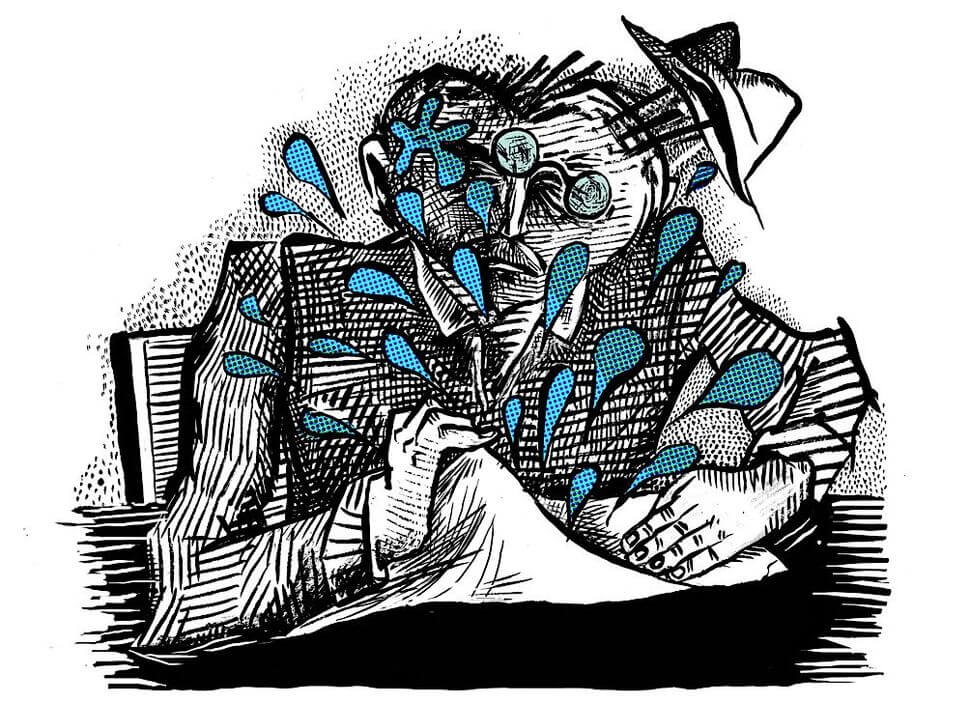
Ab Cahan, founder of the Forward and A Bintel Brief. Graphic by Liana Finck

By Andy Carvin January 20, 2026
January 20, 2026 marks the 120th anniversary of A Bintel Brief, the Forward’s advice column, launched in 1906 by the paper’s founder and publisher, Ab Cahan. Tackling the personal challenges of Eastern European Jewish immigrants, Cahan and the Bintel Brief columnists who followed him would dispatch their advice with humor, compassion, and honesty.
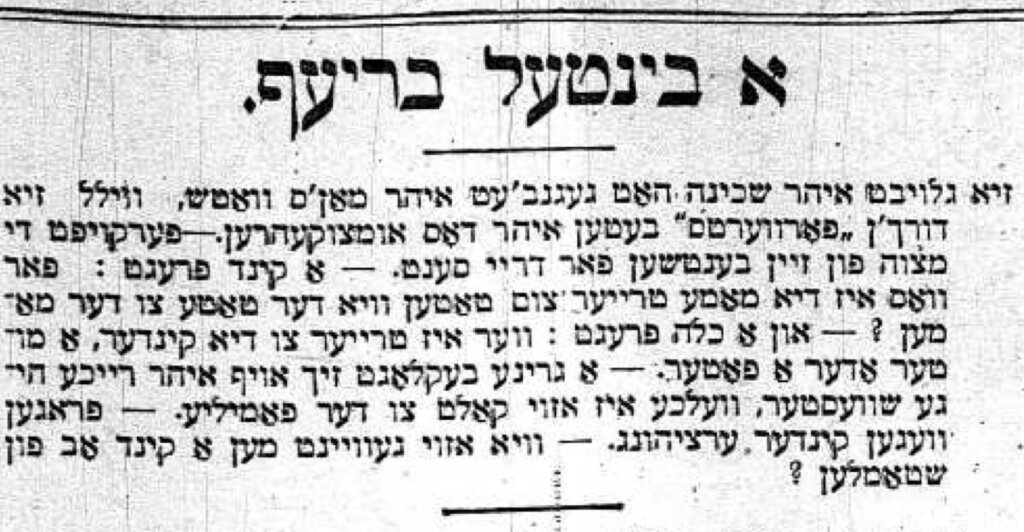
By 1906, Der Forverts, as the Forward is known in Yiddish, had grown over its initial three decades to become the leading Yiddish-language newspaper in the United States. But A Bintel Brief — Yiddish for “a bundle of letters” — was something the paper hadn’t tried before. Well, not exactly.
In his introduction to the very first Bintel Brief, which is preserved online at the National Library of Israel, Cahan explained that the new column had been inspired by a section of the paper devoted to letters to the editor that launched three years earlier.
A Bintel Brief, however, would be an advice column, focusing on letters “that expressed issues of … human interest,” Cahan explained. He continued, “Readers will find in the Bintel Brief letters an interesting turning of pages from the Book of Life … Hundreds of diverse emotions, interests and lost opportunities will be expressed here. Hundreds of various vibrations of the human heart will be heard here.”
History would prove him right. Over the next 120 years, A Bintel Brief would explore the “various vibrations of the human heart” with homespun Jewish advice, tens of thousands of times over, and along with its contemporary advice columnists like Dorothy Dix inspire countless advice columns across U.S. newspapers, including “Dear Abby” and Ann Landers (née Esther Friedman).
In his autobiography Pages from My Life, which Cahan published 100 years ago in 1926, he recalled, “I had always wished that the Forverts would receive stories from ‘daily life’ — dramas, comedies or truly curious events that weren’t written at a desk but rather in the tenements and factories and cafés — everywhere that life was the author of the drama … How to do this? Not an easy task — much harder than writing an interesting drama or comedy.”
“One day in January 1906,” he continued, “[my secretary, Leon] Gottlieb told me about three letters that had arrived which didn’t seem suited for any particular department … All three letters were of a personal nature rather than a communal one, and each told an individual story. I considered the three letters and my response was: Let’s print them together and call it A Bintel Brief.”
There’s also the apocryphal version of the story, illustrated by cartoonist Liana Finck while working on a series of cartoons inspired by A Bintel Brief that eventually became a book in 2014. “Rumor has it, the letter on the top of the pile Abraham Cahan’s secretary brought him that strange day in 1906 was two feet long and sewn together with scraps of industrial thread. The spelling was atrocious, but the tears that spewed out of the letter were real — Cahan tasted them to make sure.”
While perhaps nothing more than a mayse, the story rightly captures the willingness of Forverts readers to share their individual problems with A Bintel Brief and seek advice.
And some of them still resonate today.
For example, in the first edition of the column, a bride-to-be reached out because of a debate that erupted with her fiancé after she suggested that mothers are more faithful to their children than fathers because they are the ones saddled with the responsibility of childcare, to which the fiancé angrily replied that women make too big of a deal of their role as caregivers, and that fathers are more dependable. Cahan replied that “smart, serious minded parents raise children that are both truly loyal and have both feet on the ground” like the mother and father. To this, he added, “It’s best for your future children that you read all you can, attend as many lectures as possible, and develop together and grow intellectually. That will create a pair of parents who best know how to raise their children and will be of service in their devotion and love.”
It also did not take long for questions regarding interfaith relationships to emerge in the column. One letter that same year featured a newlywed Jewish man describing the fraying relationship with his Christian wife over the first year of marriage. “Mixed marriage between a Gentile and a Jew is a complicated affair,” Bintel acknowledged, before putting a spin on the then-common story of Jewish parents sitting shiva for their son marrying a Gentile woman: “Not enough has been said about the Gentile family. For while the parents of the Gentile girl may accept the Jewish son-in-law and tolerate the marriage, the girl loses many of her friends, former classmates and relatives.”
Writing for the Forward in 2014 about Finck’s book, Yevegeniya Traps noted that letters like these offered “a succinctly potent representation of the lives of Eastern-European immigrants trying to make their way in early-20th-century New York.” She added, “No artist or journalist could render the doubt, uncertainty and backbreaking work of life in the New World as clearly and honestly as the words of sufferers seeking wisdom” from A Bintel Brief.
Or as Cahan concluded in his autobiography, “Everyone wrote about that which was closest to their hearts. The result was that the Bintel Brief would be assembled out of those letters that revealed the most interesting nooks of people’s souls.”
This is a moment of great uncertainty. Here’s what you can do about it.
We hope you appreciated this article. Before you go, we’d like to ask you to please support the Forward’s independent Jewish news this Passover. All donations are being matched by the Forward Board - up to $100,000.
This is a moment of great uncertainty for the news media, for the Jewish people, and for our sacred democracy. It is a time of confusion and declining trust in public institutions. An era in which we need humans to report facts, conduct investigations that hold power to account, tell stories that matter and share honest discourse on all that divides us.
With no paywall or subscriptions, the Forward is entirely supported by readers like you. Every dollar you give this Passover is invested in the future of the Forward — and telling the American Jewish story fully and fairly.
The Forward doesn’t rely on funding from institutions like governments or your local Jewish federation. There are thousands of readers like you who give us $18 or $36 or $100 each month or year.
Support our mission to tell the Jewish story fully and fairly.