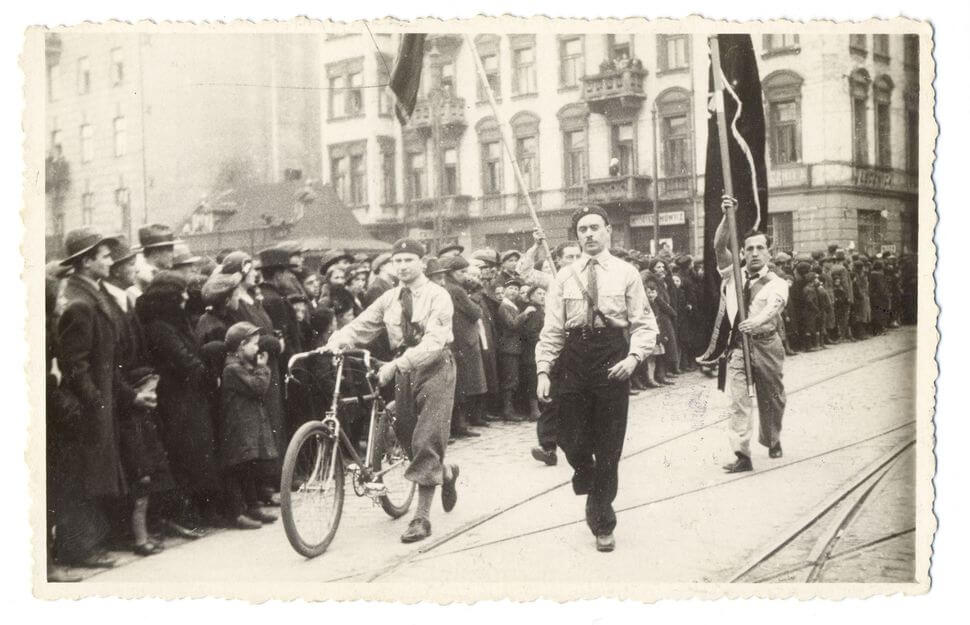
An online comedy course asks Marc Maron, Lewis Black and more — why did Jews get into the funny business?
YIVO’s ‘Is Anything Okay?’ dives into Jewish American comedy history
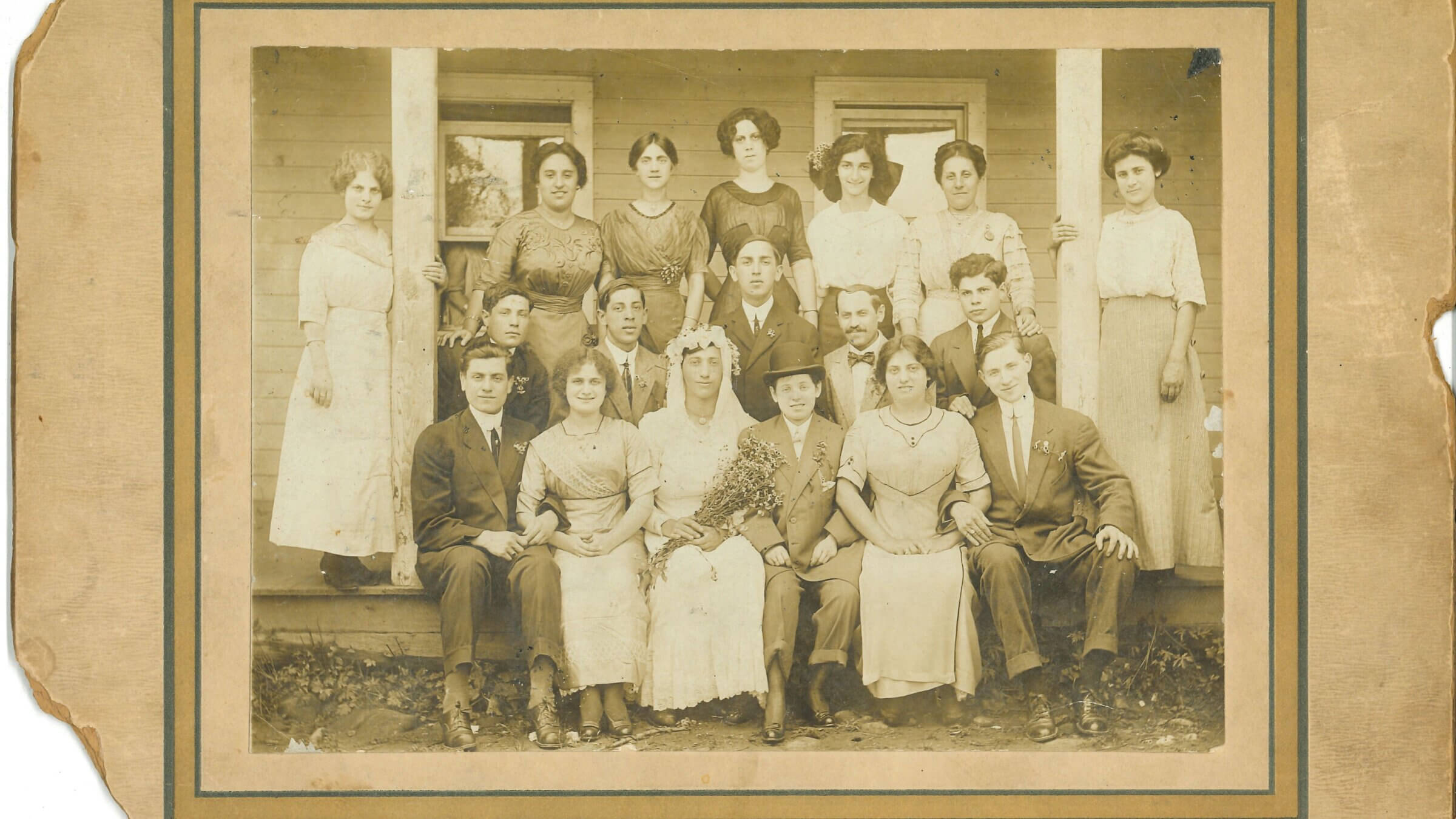
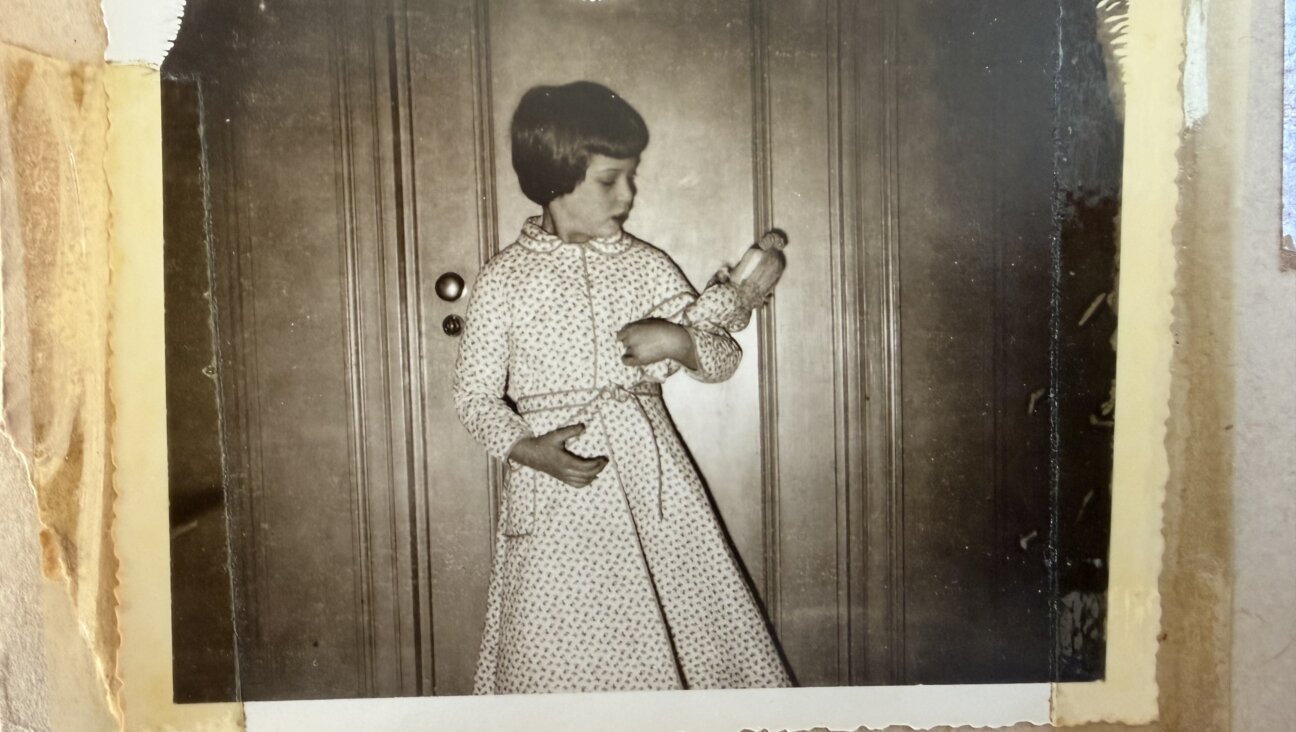
A drag wedding in the Catskills circa 1910, when Jews would board with farmers for vacation. Courtesy of YIVO Archives

By PJ Grisar March 14, 2024
There’s a 1910 wedding photo from the Catskills with a group of dapper men and well-coiffed women. But if you take a closer look at the happy couple, you might notice something interesting: the bride, cradling a bouquet, is a man. The groom in a bowler hat and double-breasted suit, is a woman.
This snapshot of this mock drag wedding, taken on the porch of a farmhouse, is an example of entertainment that Jews sought in their early outings upstate, and in a way it marks the beginning of the Borscht Belt comedy circuit that would arise in later decades and go on to define what we think of as American Jewish humor.
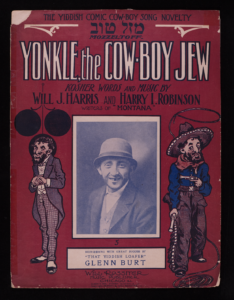
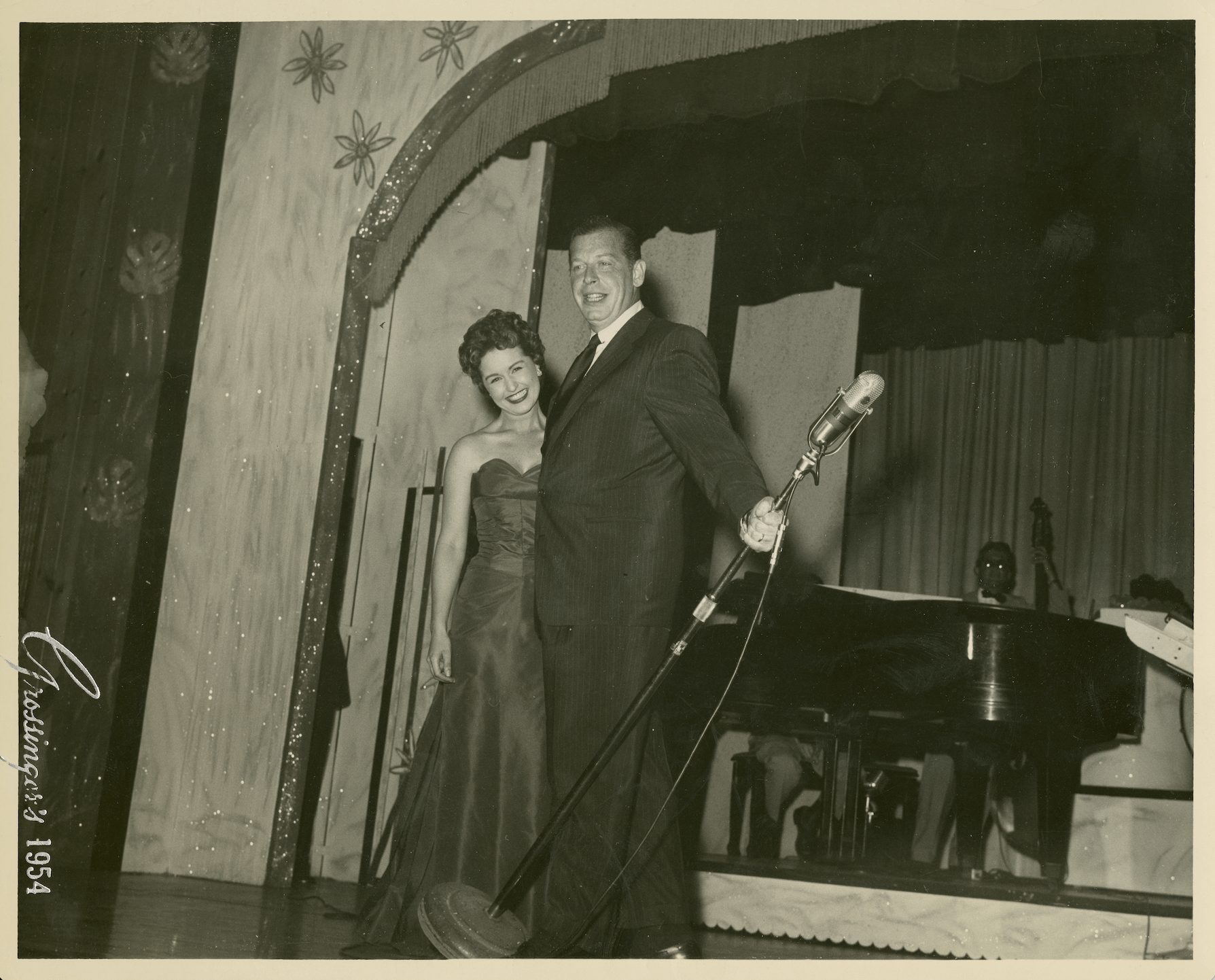
The sepia photo, along with a Fanny Brice album sleeve, sheet music for a Yiddish novelty song called “Yonkle, the Cowboy Jew” and images of Milton Berle and Rodney Dangerfield at Grossinger’s resort are all part of the YIVO Institute for Jewish Research’s new seven-part online course, Is Anything Okay? The History of Jews and Comedy in America. The course kicks off March 21, right before Purim.
Utilizing YIVO’s archive and tapping academics, comedy writers and comedians, the series starts in Eastern Europe with the satire of the Haskalah and will guide students through Second Avenue, the Borscht Belt and onto television and modern-day social media and memes. Is Anything Okay strives to answer why some of the most influential comedians in America — and so much of what became the comedy industry — happened to be Jewish.
“There are many different angles you could take on it,” said YIVO’s director of education Ben Kaplan, noting the insider-outsider status of Jews looking to assimilate in the United States in the 1900s through the 20th century. The Jews, he said, are “using comedy to figure out who they are in their relationship to America more broadly.”
“There’s a similarity with things like the film industry, the recording industry, the comic book industry,” Eddy Portnoy, YIVO’s director of exhibitions, said of Jews starting out in show business. “Because Jews were often excluded from other professions, this was something that was a possibility.”
Chiming in on the history and context of Jews in comedy are scholars and authors like Columbia professor Jeremy Dauber, president of the Tenement Museum Annie Pollard and David Roskies of the Jewish Theological Seminary. Comedians Marc Maron, Paul Reiser, Judy Gold and W. Kamau Bell appear in pre-taped video interviews.
Of these comedians’ participation, Portnoy said the likely “had no idea what they were getting into,” but that once they started chatting gave some brilliant insights.
“We were talking in the class about this phenomenon of Jewish self-deprecating humor,” Kaplan said, concluding that it emerged from historic oppression and the need to gain control over their vulnerable status. When they asked Lewis Black about this tendency he said when Jews poke fun at themselves, they’re saying to antisemites “what you think is criticism is nothing compared to self-loathing I can bring to the table.”
The course, which is free, with one session rolling out each of the next seven weeks, and then online permanently, will also explore the potentially offensive world of Holocaust jokes, using Ferne Pearlstein’s documentary The Last Laugh as a teaching tool.
By tracking the rise of Jewish comedy from Yiddish theater to the well-assimilated world of Seinfeld, the course chronicles not just the evolution of a unique strain of Jewish humor, but the journey from newly arrived immigrants — playing to others like themselves — to acts that sell out Madison Square Garden.
“It’s a compelling way to follow this arc of American Jewish history,” Kaplan said.
YIVO’s free course Is Anything Okay? starts March 21. For more information and to register click here.
It’s our birthday and we’re still celebrating!
We hope you appreciated this article. Before you go, we’d like to ask you to please support the Forward’s independent Jewish news.
This week we celebrate 129 years of the Forward. We’re proud of our origins as a Yiddish print publication serving Jewish immigrants. And we’re just as proud of what we’ve become today: A trusted source of Jewish news and opinion, available digitally to anyone in the world without paywalls or subscriptions.
We’ve helped five generations of American Jews make sense of the news and the world around them — and we aren’t slowing down any time soon.
As a nonprofit newsroom, reader donations make it possible for us to do this work. Support independent, agenda-free Jewish journalism and our board will match your gift in honor of our birthday!
Support our mission to tell the Jewish story fully and fairly.