A Koufax for these times
The Portland Trail Blazers’ Deni Avdija has become a lightning rod as an Israeli NBA star
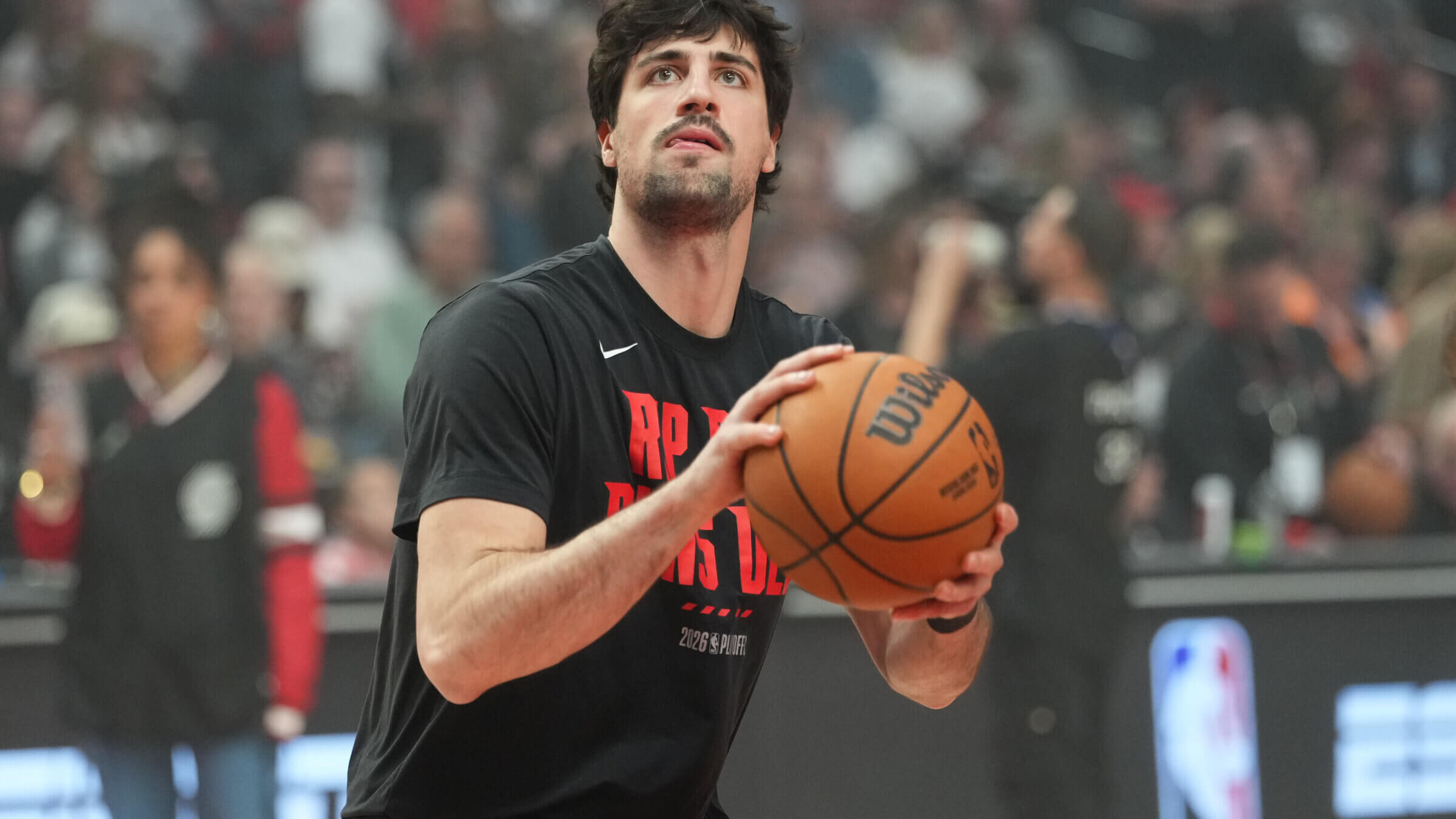
Deni Avdija is at the center of a new dilemma about Jewish identity and sport. Photo by Soobum Im/Getty Images

By Louis Keene April 24, 2026
Something strange, funny and frankly delicious happened on social media last Tuesday night: A legion of extremely online sports fans came forward to admit that the NBA’s most famous Israeli was, unfortunately, very good at basketball.
Deni Avdija, the 25-year-old forward for the Portland Trail Blazers, had just scored 41 points and the winning basket in a game that clinched his team’s first playoff appearance in five years. He had been a revelation even the most irrational haters couldn’t deny.
“Deni a f—ing hooper bro I’m sorry I’m sorry,” grieved one social media user. Said another: “I don’t think there’s ever been a player to shut me up as much as Deni has tonight.”
What was so upsetting about this? “Accidentally celebrated Denicide,” one person confessed, using a crude portmanteau you can probably figure out. Another said Avdija had beaten his opponent “IDF style.” Their bitterness was not about Avdija the basketball player, in other words. It was about his country of birth, the wars it has waged and the awful human toll of the last two-and-a-half years.
It is both the projection of anti-Israel resentments onto Avdija and his ability to transcend them that make him the defining Jewish athlete of our time, a Sandy Koufax figure for the 21st century. Koufax’s decision to sit out a 1965 World Series game on Yom Kippur evoked Jewish questions of assimilation in midcentury America. Avdija’s breakthrough, and the tempest it has provoked, reflect the tensions around Israel and Zionism inherent to today’s American Jewish experience.
Avdija has mostly stayed out of the fray of Israeli-Palestinian affairs, but he has not been silent. He has posted standard (though hardly neutral) solidarity messages along the lines of “Am Yisrael Chai.” After Oct. 7 — an attack in which he personally knew some victims — he Sharpied the names of fallen Israeli soldiers on his shoes. “I’m from there, and I respect my country, and I stand behind it,” he told The Athletic earlier this year. “I’m a proud Israeli, because that’s where I grew up.” While Avdija has not actively defended his country’s leadership, he also has not condemned it.
He also served, albeit briefly, in the Israeli army. Drafted by the Washington Wizards as a teenager, he was exempt from mandatory service, but he enlisted anyway and did something along the lines of basic training before moving to the States. This was in 2020, long before World War III began and, as the Guardian’s Lee Escobedo wrote, at an age most people have not formed ironclad opinions. Avdija never saw combat.
Nevertheless, online NBA fans have taken to calling him a war criminal, and some — ironically, I think? — have attributed his ability to earn free throws to the domineering influence of Benjamin Netanyahu. These insults will sound familiar to many American Jews, many of whom have felt themselves at one moment or another become someone else’s proxy for the war in Gaza.
Avdija’s response, then, can become a proxy for ours. “It’s frustrating to see all the hate,” he said in January. “Like, I have a good game or get All-Star votes, and all the comments are people connecting me to politics. Like, why can’t I just be a good basketball player? Why does it matter if I’m from Israel, or wherever in the world, or what my race is? Just respect me as a basketball player.”
Perhaps a desire to overcome that bias has fueled his recent success. After last Tuesday’s masterpiece, he poured in 30 points, 10 rebounds and 5 assists in a loss to the heavily favored San Antonio Spurs; in Game 2, Avdija used his signature deceleration move to set up the game-winning dunk. It felt especially good, he said afterward, to win on the Israeli Day of Independence.
Freighted with the ambassadorship of an unpopular country, Avdija is only comfortable representing it by being the best basketball player he can be. That approach, I would argue, is as valid as the frustration he isn’t saying or doing more. This is sports, where the dreams and anxieties of the viewing public are always projected onto the contestants, and this is the sports hero we’re getting.
No Jewish pro athlete since Koufax — not a slugger like Shawn Green or another ace pitcher like Max Fried; not an Orthodox overachiever like Ryan Turell — has been as charged as the post-10/7 Israeli NBA star. Avdija, who made his first All-Star team this year, unites and divides simply by keeping his team on TV. At the outset of every playoff game, NBC allows each team’s starters to introduce themselves and state their alma mater. Avdija, who did not attend college, says “Herzeliya, Israel.” It feels significant.

Did you know that only 2% of Forward readers donate to support our nonprofit newsroom? That 2% make it possible for millions to read the Forward without a paywall or subscription — removing any barriers to the full and fair Jewish story.
But while the Forward is free to read, it isn’t free to produce. Big stories — like deep dives into the antisemitism data, political scoops or reporting trips to college campuses — take months of research and fact-checking. All while we keep you informed of what you need to know each day.
— Rachel Fishman Feddersen, Forward Publisher & CEO
Support our mission to tell the Jewish story fully and fairly.