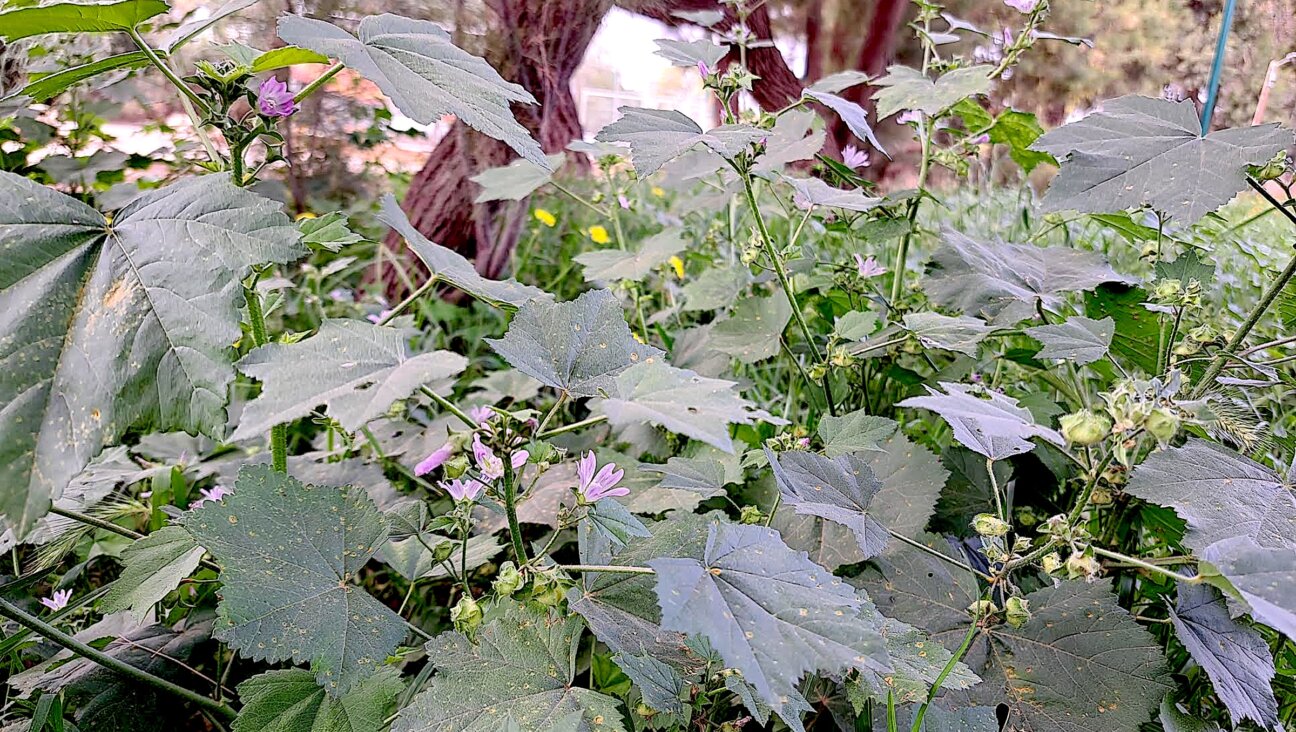
Why Are Satmars Calling New Hasidic Town ‘Palm Tree’?
Graphic by Angelie Zaslavsky

By Josh Nathan-Kazis November 10, 2017
Residents of the New York town of Monroe voted this week to carve out a portion of their town to create a brand new one with an unusual name: Palm Tree.
So why will a village 50 miles north of New York City bear the name of a tropical tree that is particularly ill-suited to the climate?
Palm Tree was created after a many-decade battle between longtime Monroe locals and the residents of the Satmar Hasidic village of Kiryas Joel, which was located within Monroe. As the population of Kiryas Joel exploded, the village government has come into increasing conflict with the rest of Monroe over a wide range of issues.
Palm Tree will finally separate the Satmar Hasidim from the rest of Monroe, creating a new town that encompasses Kiryas Joel and some nearby acreage.
Kiryas Joel is named for Grand Rabbi Joel Teitelbaum, the Satmar Hasidic leader who founded the village. So why Palm Tree? “Teitelbaum,” which is also the last name of Grand Rabbi Aron Teitelbaum, Joel’s nephew and successor in Kiryas Joel, translates from Yiddish as “Date Palm.”
The palm tree has previously served as a logo for Satmar groups in Williamsburg and in Kiryas Joel.
Contact Josh Nathan-Kazis at [email protected] or on Twitter, @joshnathankazis.
This is a moment of great uncertainty. Here’s what you can do about it.
We hope you appreciated this article. Before you go, we’d like to ask you to please support the Forward’s independent Jewish news. All donations are still being matched by the Forward Board - up to $100,000 until April 24.
This is a moment of great uncertainty for the news media, for the Jewish people, and for our sacred democracy. It is a time of confusion and declining trust in public institutions. An era in which we need humans to report facts, conduct investigations that hold power to account, tell stories that matter and share honest discourse on all that divides us.
With no paywall or subscriptions, the Forward is entirely supported by readers like you. Every dollar you give is invested in the future of the Forward — and telling the American Jewish story fully and fairly.
The Forward doesn’t rely on funding from institutions like governments or your local Jewish federation. There are thousands of readers like you who give us $18 or $36 or $100 each month or year.

Support our mission to tell the Jewish story fully and fairly.