A day before Tisha B’Av, a large Jerusalem stone falls at the Western Wall
A comment on Israeli society, or an odd coincidence?
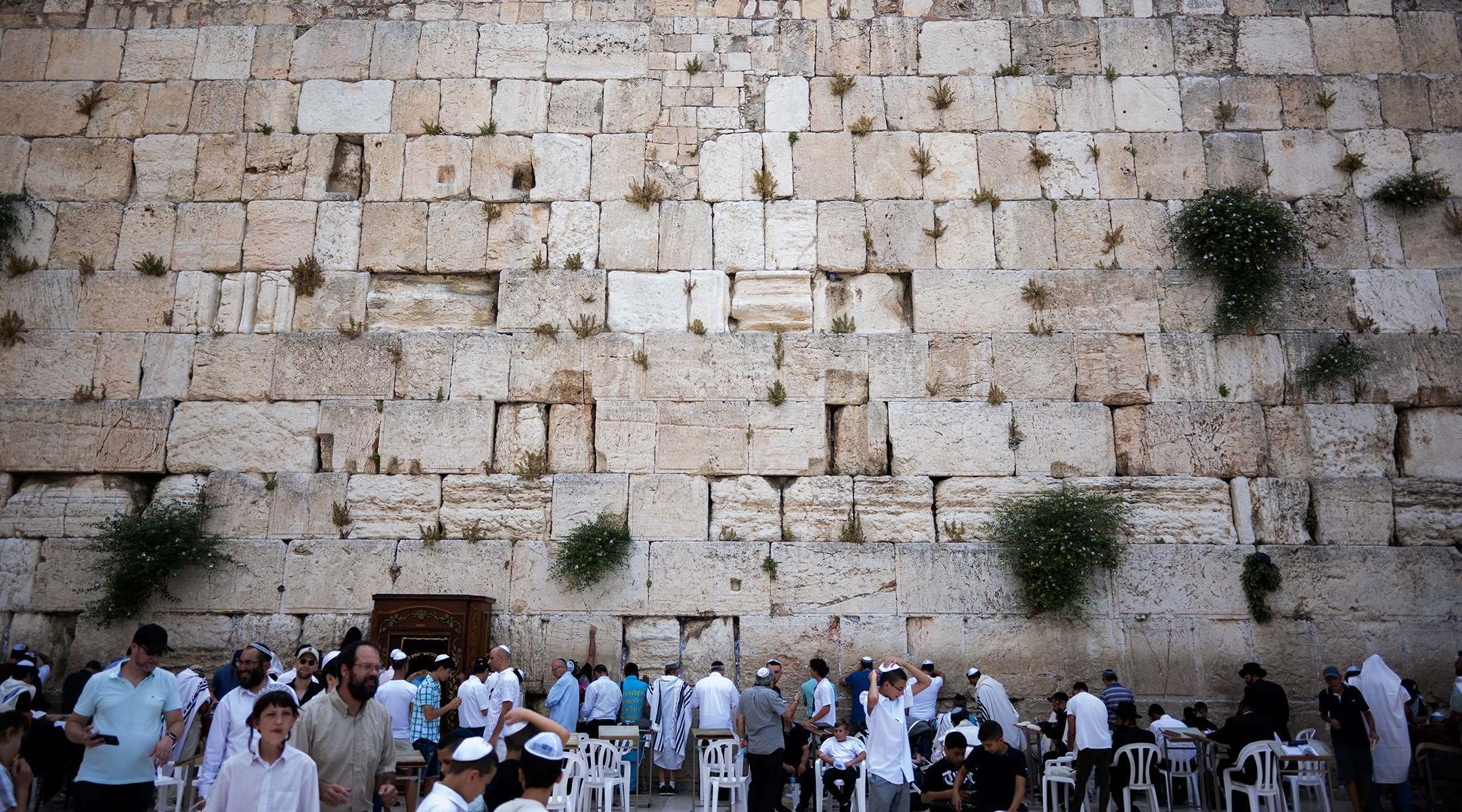
Jewish worshipers pray at the Western Wall in the Old City of Jerusalem, June 13, 2022. Photo by Alexi Rosenfeld/Getty Images

By Louis Keene August 12, 2024
Was it a historical metaphor, a comment on current affairs, or just a strange coincidence?
The day before Tisha B’av, the day on which the Jewish people mourn the destruction of Jerusalem, a piece of ancient Jerusalem stone roughly the size of a brick fell onto the prayer area in front of the Western Wall during prayer services.
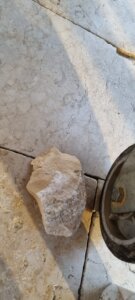
With Jews around the world already on edge and preparing to observe the first Tisha B’Av since Oct. 7, the fallen stone could be read as ominous — or fortunate, as no one was injured in the incident.
But Jews, and Israelis in particular, have been bracing for another stone to drop — a looming attack vowed by Iran and Hamas in retribution for the July 31 assassination of Ismail Haniyeh, the terrorist group’s leader, in Tehran. (Israel has neither confirmed nor denied responsibility for the assassination.)
Widely considered the holiest site in Judaism, the Western Wall is believed to be the last remaining outer wall of the Second Holy Temple in Jerusalem, and dates to Herod’s refurbishing of the Temple complex around 20 B.C.E. Today, prayer services are held there throughout the day, and early-morning prayer services were being held when the stone fell from the Machkameh Wall, which abuts the Western Wall to the south.
According to the Western Wall Heritage Foundation, the Makhkameh wall was built around 700 years ago by the Mamluks. Engineers who visited the site said the wall was not a structural risk.
In addition to the destruction of both Temples, Tisha B’Av commemorates a number of ancient Jewish tragedies, including the crushing of the Bar Kokhba revolt and the Biblical testimony of the 12 spies.
"Why I became the Forward’s Editor-in-Chief"

You are surely a friend of the Forward if you’re reading this. And so it’s with excitement and awe — of all that the Forward is, was, and will be — that I introduce myself to you as the Forward’s newest editor-in-chief.
And what a time to step into the leadership of this storied Jewish institution! For 129 years, the Forward has shaped and told the American Jewish story. I’m stepping in at an intense time for Jews the world over. We urgently need the Forward’s courageous, unflinching journalism — not only as a source of reliable information, but to provide inspiration, healing and hope.
Support our mission to tell the Jewish story fully and fairly.