French appeals court rejects antisemitism charge in poisoning of Jewish family by nanny
The family’s law said they would seek to appeal the latest ruling
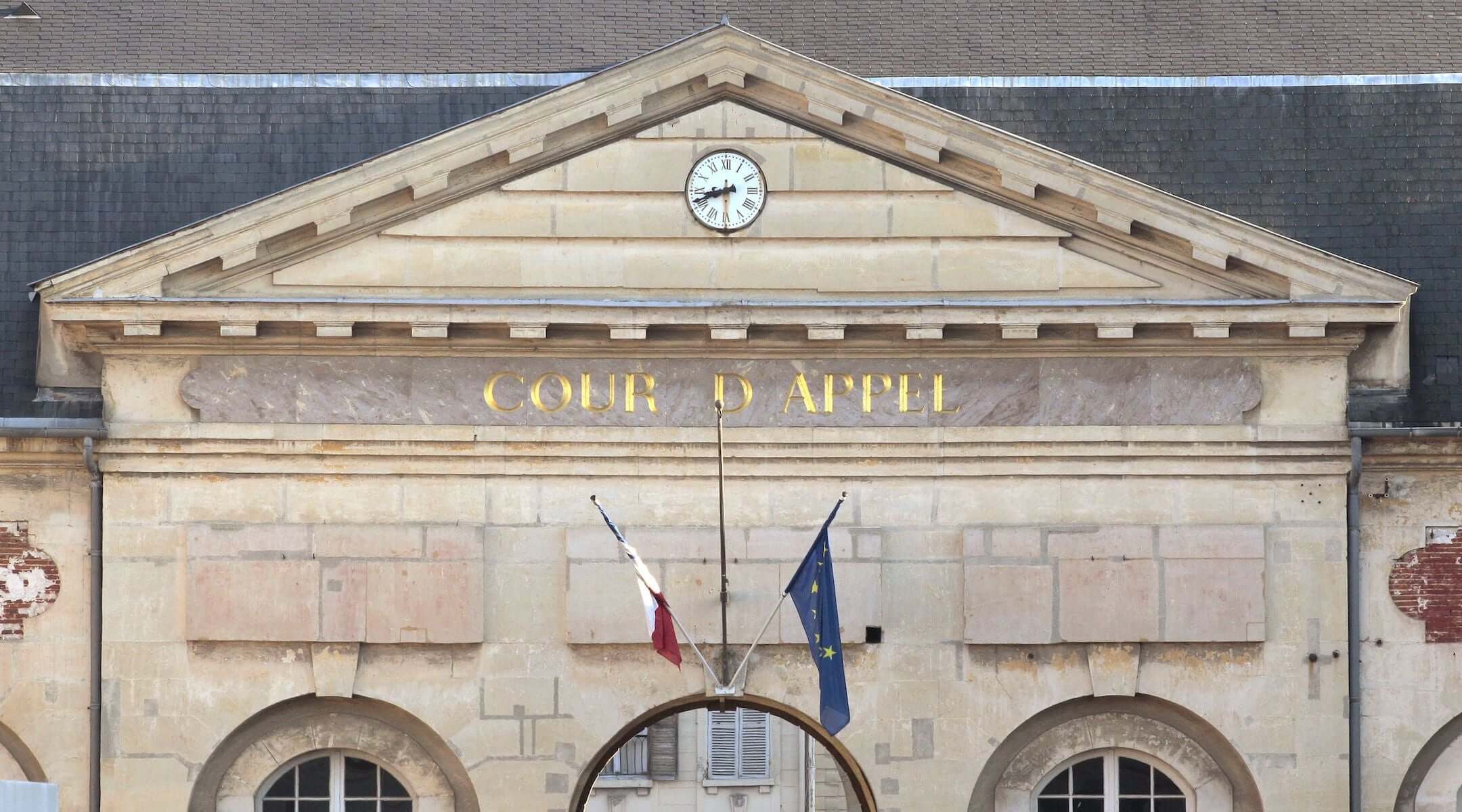
The pediment of the Versailles Court of Appeal, located in the former Queen’s Stables, on September 30, 2011. Photo by Jacques Demarthon/AFP via Getty Images
(JTA) — A French appeals court ruled on Wednesday that a nanny from Algeria who was convicted of poisoning the Jewish family she worked for was not motivated by antisemitism.
The decision by the Versailles Court of Appeal comes months after the nanny, identified as Leïla Y., 42, was sentenced to two and a half years in prison by the Nanterre criminal court in December for attempting to poison the Jewish family she worked for with cleaning supplies.
During her arrest and a subsequent search of the home on Feb. 5, 2024, Leïla Y. told police, “Because they have money and power, I should never have worked for a Jewish woman; she only brought me trouble.”
Despite the nanny’s comments, the Nanterre court rejected the aggravating circumstance of antisemitism in the case, and the Versailles Court of Appeal ruled in its latest decision that the nanny’s remarks did not constitute antisemitic statements.
The family’s lawyers, Patrick Klugman and Sacha Ghozlan, decried the ruling in a press release, saying that they would seek to appeal the decision again.
“This decision makes judicial repression of antisemitism impossible and turns legal texts, meant to be protective, into mere useless scraps of paper,” Klugman and Ghozlan said. “Faced with such a decision, litigants risk losing all confidence in and protection from the judicial institution.”
The family’s lawyers also called on the French Minister of Justice and the National School for the Judiciary to “thoroughly review both initial and ongoing training of judges in combating racism and antisemitism,” and urged the prosecutor general to file an appeal “in the interest of society.”
Yonathan Arfi, the president of the Representative Council of Jewish Institutions of France, called the ruling “incomprehensible” in a post on X, adding that it “raises questions about the willful blindness in French society toward antisemitism when it forms the backdrop of cases without being the sole element.”
“Are there contexts that make antisemitic remarks acceptable to the point that the justice system refuses to see them?” Arfi continued. “This legitimation of antisemitism is one more step in its tragic banalization since October 7.”
The ruling comes amid a sharp rise in antisemitic incidents in France since Oct. 7, and follows several high-profile court cases in recent years that have sparked outcry within the country’s Jewish community about how the French judiciary prosecutes antisemitism.
On Thursday, French lawmakers withdrew an antisemitism bill hours before it was set for debate that would have made it illegal to “implicitly” condone or incite terrorism or call for the destruction of a state recognized by France. A similar law is expected to be introduced by French lawmakers in June.
This article originally appeared on JTA.org.

Did you know that only 2% of Forward readers donate to support our nonprofit newsroom? That 2% make it possible for millions to read the Forward without a paywall or subscription — removing any barriers to the full and fair Jewish story.
But while the Forward is free to read, it isn’t free to produce. Big stories — like deep dives into the antisemitism data, political scoops or reporting trips to college campuses — take months of research and fact-checking. All while we keep you informed of what you need to know each day.
— Rachel Fishman Feddersen, Forward Publisher & CEO
Support our mission to tell the Jewish story fully and fairly.