Holy Molé: Things Get Spicy in the Holy Land

Graphic by Angelie Zaslavsky
Contrary to popular wisdom, spiciness is not one of the basic tastes. It’s actually a form of pain.
It is the feeling caused by the presence of capsaicin, the chemical that makes peppers hot. It is usually found in pepper seeds and in the white fiber that goes through it. Peppers are usually hotter in summer than in winter, but anyone who has tasted them recently knows that this summer, the peppers are particularly scorching. A small tip and a word of caution: red hot peppers are ripe, so they are relatively less hot than green hot peppers. If you got one of those, put salt on your tongue, eat some bread, drink milk or even an alcoholic drink. Even an ice pop will help.
Since sharp flavors tend to crowd out other tastes, we tried to find the best dishes whose sharpness did not overpower the other flavors, so everyone who likes it hot will manage to come out of the experience alive.
Ah, it burns: Shishko
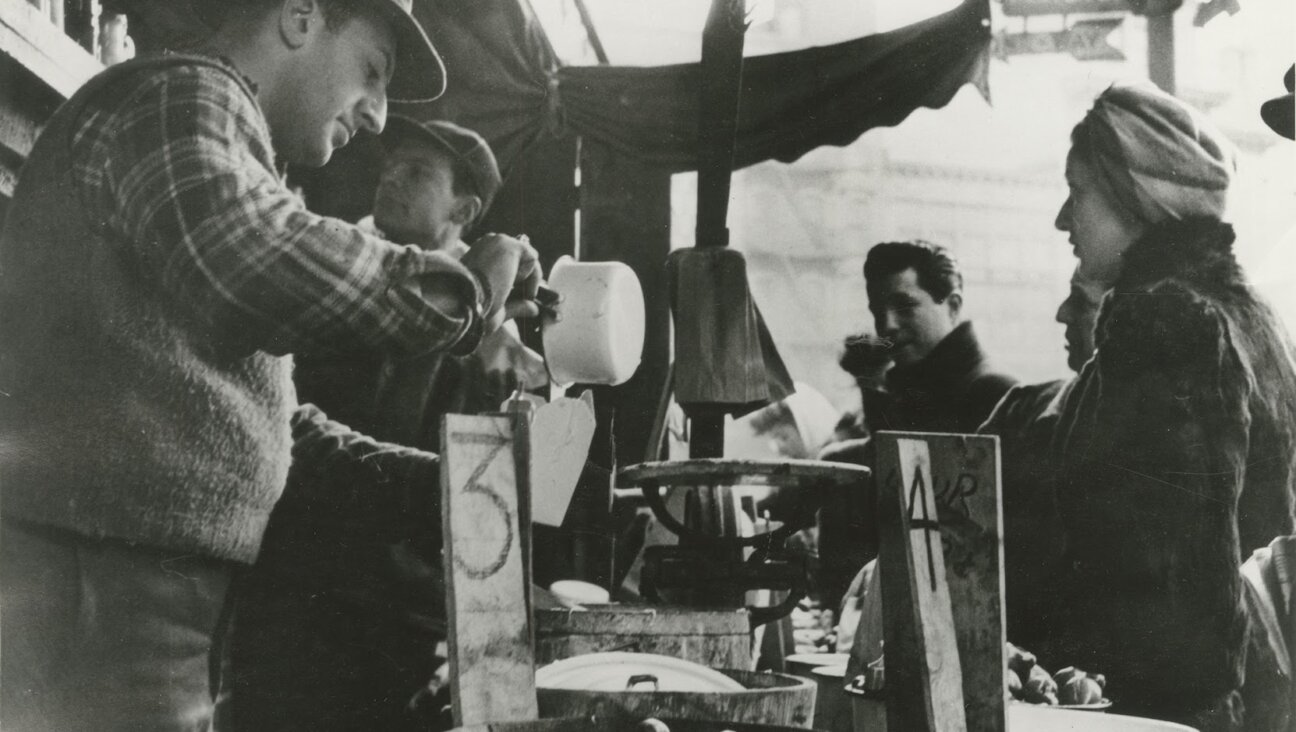
The concept of Shishko was born in one of the Bulgarian restaurants in Jaffa. The idea was to take the hamarot – small, intimate and lively eateries in the area of the Levinsky market – add air conditioning and silverware, a little music and Bulgarian-Jewish food, and end up with an inexpensive place to drink alcohol and have something to eat with it. The result: a Bulgarian hamara that has taught all the other restaurants in the market how to live it up.
Read More at Haaretz.com.
It’s our birthday and we’re still celebrating!
We hope you appreciated this article. Before you go, we’d like to ask you to please support the Forward’s independent Jewish news.
This week we celebrate 129 years of the Forward. We’re proud of our origins as a Yiddish print publication serving Jewish immigrants. And we’re just as proud of what we’ve become today: A trusted source of Jewish news and opinion, available digitally to anyone in the world without paywalls or subscriptions.
We’ve helped five generations of American Jews make sense of the news and the world around them — and we aren’t slowing down any time soon.
As a nonprofit newsroom, reader donations make it possible for us to do this work. Support independent, agenda-free Jewish journalism and our board will match your gift in honor of our birthday!
Support our mission to tell the Jewish story fully and fairly.