2016: The Year the Food Movement Died
Graphic by Angelie Zaslavsky
For a good few years, I felt guilty whenever I bought an out of season vegetable. I’d look on packages of dumpling wrappers to see which ones didn’t have preservatives. And I find myself… not really doing any of this anymore.
In the Baffler, Heather Havrilesky takes on upscale foodie preciousness. It’s a great piece, and one that draws unexpected connections between gourmet (that is, pre-sanctimonious yuppie food culture, imported luxury ingredients, amoral schmanciness) with the newer thing where rich people and not-rich over-spenders feel like eating local (and knowing who Michael Pollan is) is the be-all and end-all of being a good person. And she hones in on the essential:
“[T]here’s scant evidence that the vogue for artisanal cuisine has produced anything close to a more just, affordable, and robust food economy. If anything, it has driven our already class-segmented food system into still greater polarities, with privileged access to rabbit larb and Japanese uni at the upper end of the spectrum, and a wasteland of overprocessed, cheap, and empty slop at the other.”
It’s a damning critique, and a fair one, but one that strikes me as… how to put this? As a problem that is in the process of solving itself.

“Leafy greens offer fiber!” Image by Phoebe Maltz Bovy
I’ve long thought the obsession with where food comes from was a bit silly. And as Ginia Bellafante points out, it’s long been super hypocritical – everyone’s eating junk food but it’s only condemned when poor people are the ones doing so. But there’s something particularly outrageous now about the very notion that activism would manifest itself as restricting one’s asparagus purchases to springtime. As the debate rages on among the well-meaning posh and pale over whether safety pins should be worn in solidarity with immigrants and people of color, just think where one would have to rank the decision between organic kale and locally-grown chard.
It’s not, to be clear, that our OMG FASCISM times have rendered labor, health, or environmental concerns obsolete. Hardly! Rather, it’s that obsessing over individual consumption choices, choices based on (often flawed) guesswork about what the ethical choice even is, is so plainly not the best use of liberals’ time or energy.
Phoebe Maltz Bovy edits the Sisterhood, and can be reached at [email protected]. Her book, The Perils of “Privilege”, will be published by St. Martin’s Press in March 2017.
"Why I became the Forward’s Editor-in-Chief"
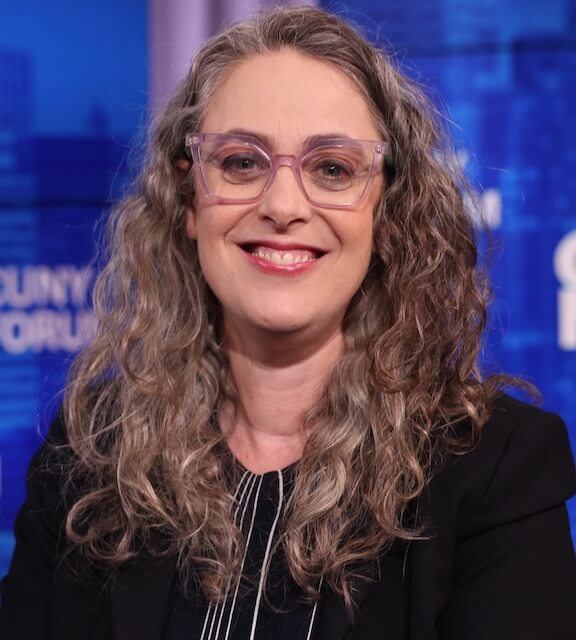
You are surely a friend of the Forward if you’re reading this. And so it’s with excitement and awe — of all that the Forward is, was, and will be — that I introduce myself to you as the Forward’s newest editor-in-chief.
And what a time to step into the leadership of this storied Jewish institution! For 129 years, the Forward has shaped and told the American Jewish story. I’m stepping in at an intense time for Jews the world over. We urgently need the Forward’s courageous, unflinching journalism — not only as a source of reliable information, but to provide inspiration, healing and hope.
Support our mission to tell the Jewish story fully and fairly.