Abe Foxman built the Jewish establishment. He died troubled by what it had become
The longtime Anti-Defamation League was frusturated that his successors shied away from condemning Trump for enabling antisemitism
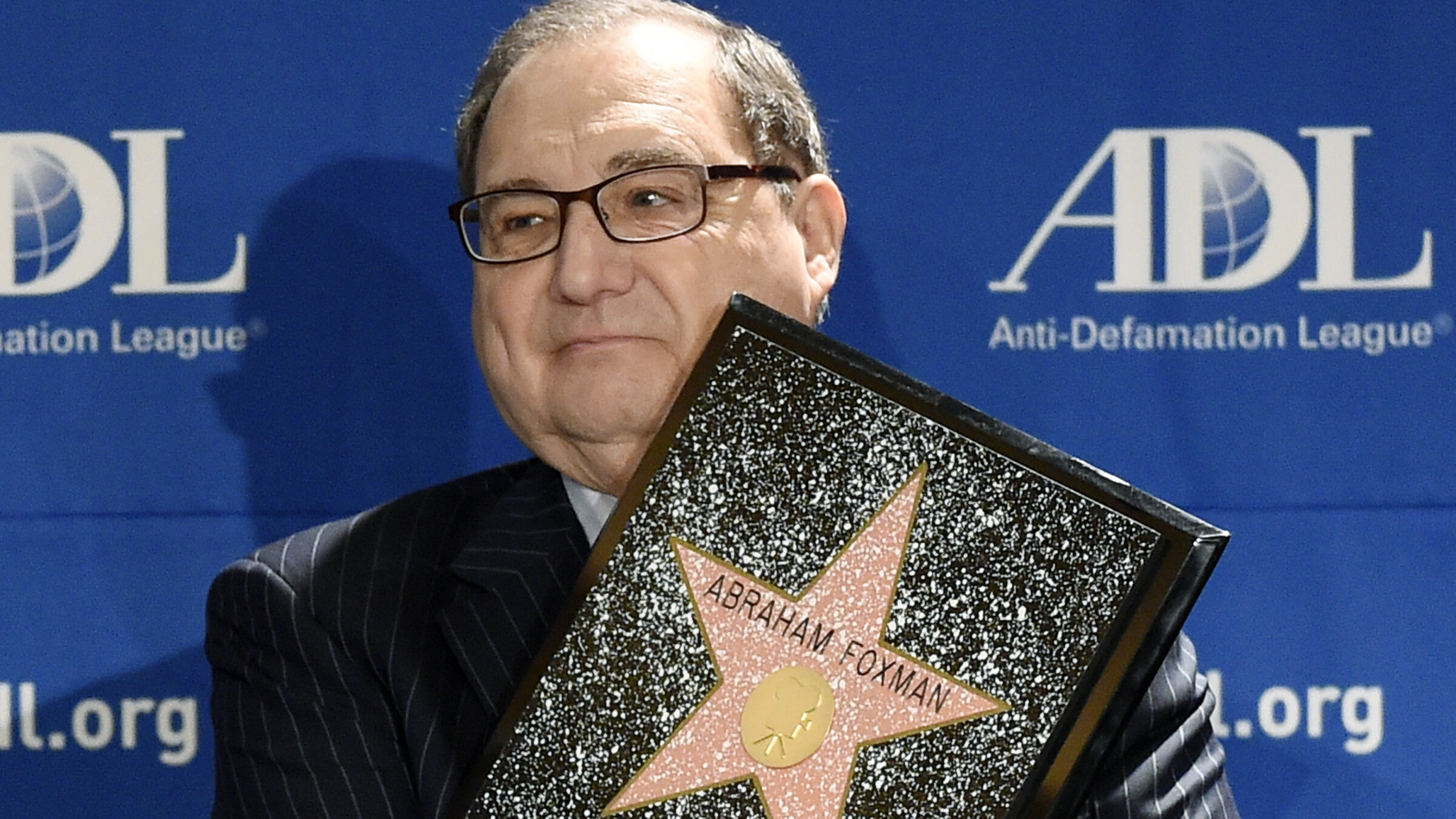
Abraham Foxman holds a replica of the Hollywood Walk of Fame Star as he is honored by the Anti-Defamation League 2014 Annual Meeting at The Beverly Hilton in Beverly Hills, California. Photo by Kevork Djansezian/Getty Images
By Arno Rosenfeld May 11, 2026
Abe Foxman never texted me Shabbat Shalom, and he didn’t always answer my calls. I couldn’t blame him, because I was often looking for something more from Foxman than his comment on current events.
Foxman, who died on Sunday, was a consummate insider who had become troubled by what he viewed as the cowardice of the very Jewish establishment he helped create during his five decades at the Anti-Defamation League. This dynamic fascinated me, and I sometimes pressed him articulate these concerns more candidly. But Foxman didn’t want to become a gadfly following his retirement in 2015 and picked his words carefully.
Occasionally, though, his frustration slipped through.
When I asked him a few years ago about the boom in new organizations created to fight antisemitism — more than 75 nonprofits with that mission have been created since he left the ADL in 2015— he lamented that it had become much more difficult for legacy organizations to say no to donors with political agendas because they could now take their dollars elsewhere.
“I had rules,” Foxman said. “Maybe that’s why they’re able to raise more money than I could.”
The erosion of rules that had once governed American society alarmed Foxman because he recognized that it was those norms — political correctness, trust in the mainstream media, bipartisanship — that had protected Jews.
“Antisemitism has always been here,” Foxman said on Israel’s Army Radio in 2018, during Donald Trump’s first term as president and after the Charlottesville “Unite the Right” rally had opened the nation’s eyes to an emboldened antisemitic movement. “What has changed is a new permissiveness, a new legitimacy, a new emboldenment, as if it’s OK — or more OK — today to be an antisemite.”
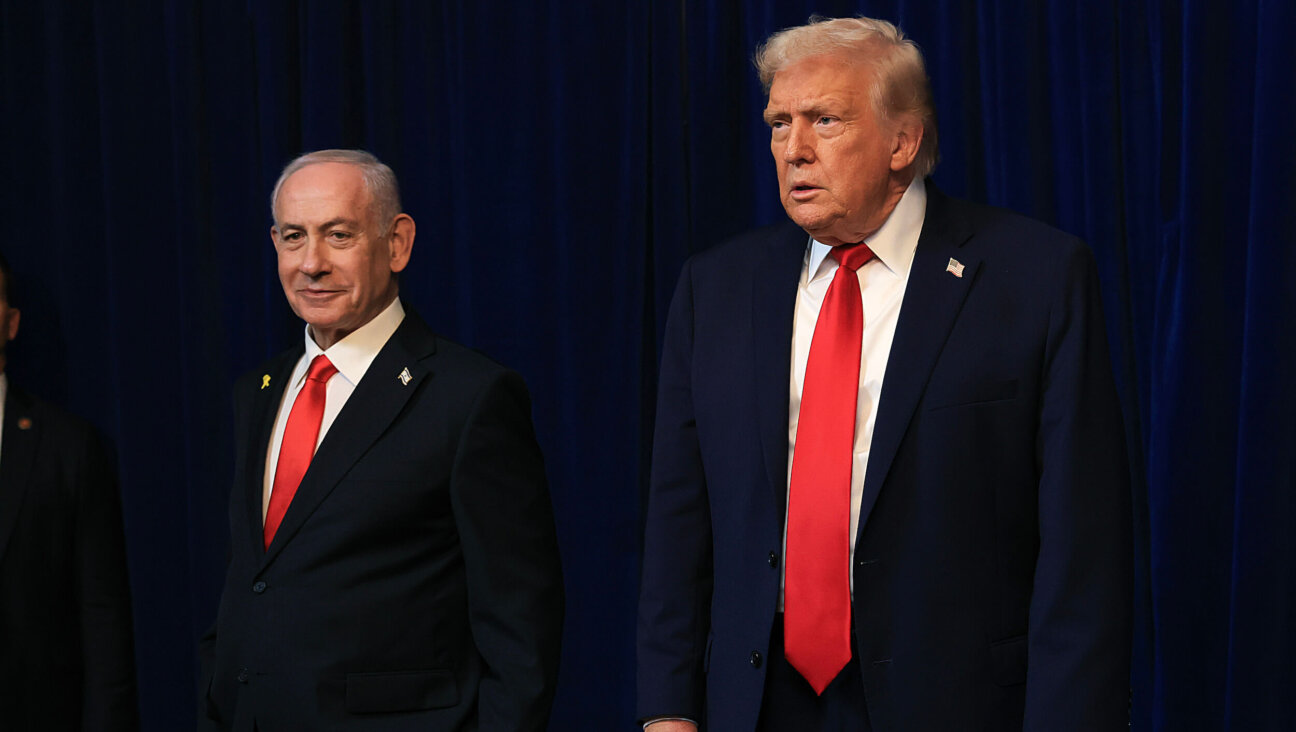
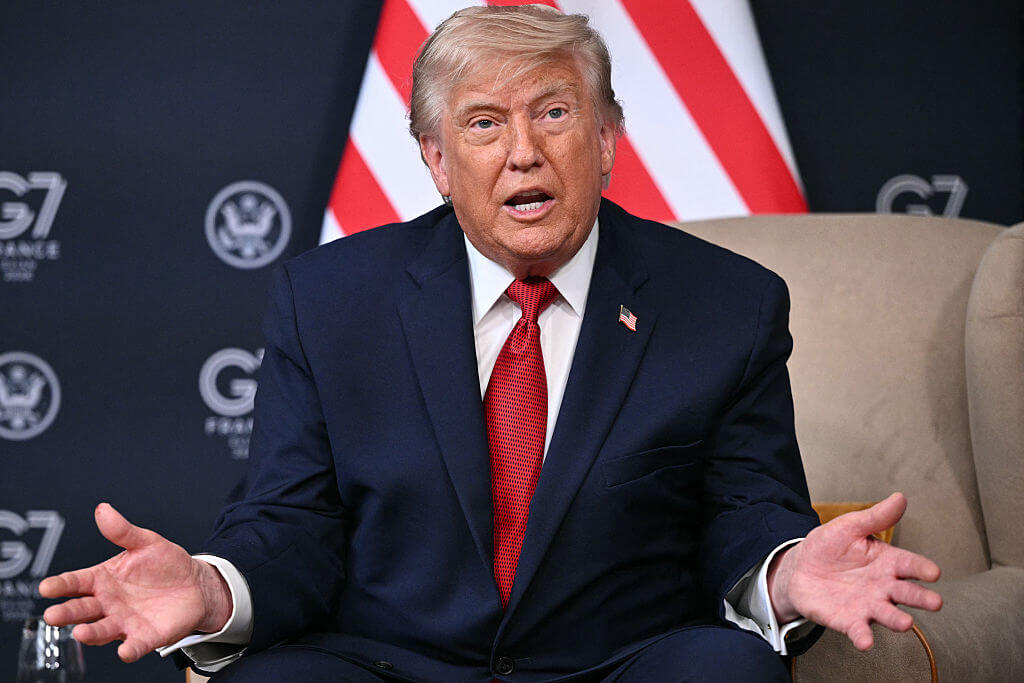
Unlike many of the leaders who succeeded him atop the country’s most powerful Jewish organizations, Foxman drew a direct line between the rise of Trump and skyrocketing hostility toward Jews.
“Trump’s presidency — in spirit and in deed — has given succor to bigots, supremacists, and those seeking to divide our society,” Foxman wrote in his endorsement of Joe Biden. “He and his administration dehumanize immigrants, demonize the most vulnerable, and undermine the civility and enlightened political culture that have allowed Jews to achieve what no diaspora community outside Israel can claim in two millennia.”
Foxman slammed Jonathan Greenblatt, his successor at the ADL, and other Jewish leaders for failing to follow his lead during the campaign.
But Foxman had, in some respects, paved the way for the state of affairs that he later bemoaned.
Take his relationship with Fox News owner Rupert Murdoch, who he met in the shvitz during one of Foxman’s biannual visits to a spa for billionaires, where each week-long stay cost nearly $9,000, paid for by an ADL donor. “I have come to know the man, not his image,” Foxman said after presenting Murdoch with a leadership award in 2010.
When I asked Foxman whether he regretted feting the founder of Fox News, which had almost certainly contributed to the erosion of political correctness and trust in the media that he later lamented, he cryptically brushed aside the concern: “Fox wasn’t Fox back then.”
And Foxman could claim impunity when it came to countering antisemitism in the way that he saw fit.
After the ADL found itself embroiled in a scandal over its close monitoring of political activists in the early 1990s, including activists against South African apartheid who were also critical of Israel, a Washington Post reporter wrote that Foxman “testily argued” to him that the ADL “has a right to do whatever it must within the law to combat antisemitism,” including receiving files the police said were stolen from the FBI.
Foxman also lobbied Congress not to recognize the Armenian genocide, worried that doing so would endanger Turkey’s Jewish community and damage the country’s relationship with Israel, before eventually reversing course. And, in what became the central allegation in longstanding complaints from the left that Foxman had stoked Islamophobia, he insisted that it was offensive to build a proposed mosque near Ground Zero in Manhattan.
Foxman also deeply believed that Israel’s security was connected to the safety of Jews in the United States, and that animus toward Israel was often a veiled expression of animosity toward Jews, something he remained concerned about until the very end.
This willingness to play ball with billionaires and stake out controversial political positions intended to protect Jews or Israel — often blurring the line between the two — would help shape how the Jewish community evolved in the decades after Foxman became ADL director in 1987.
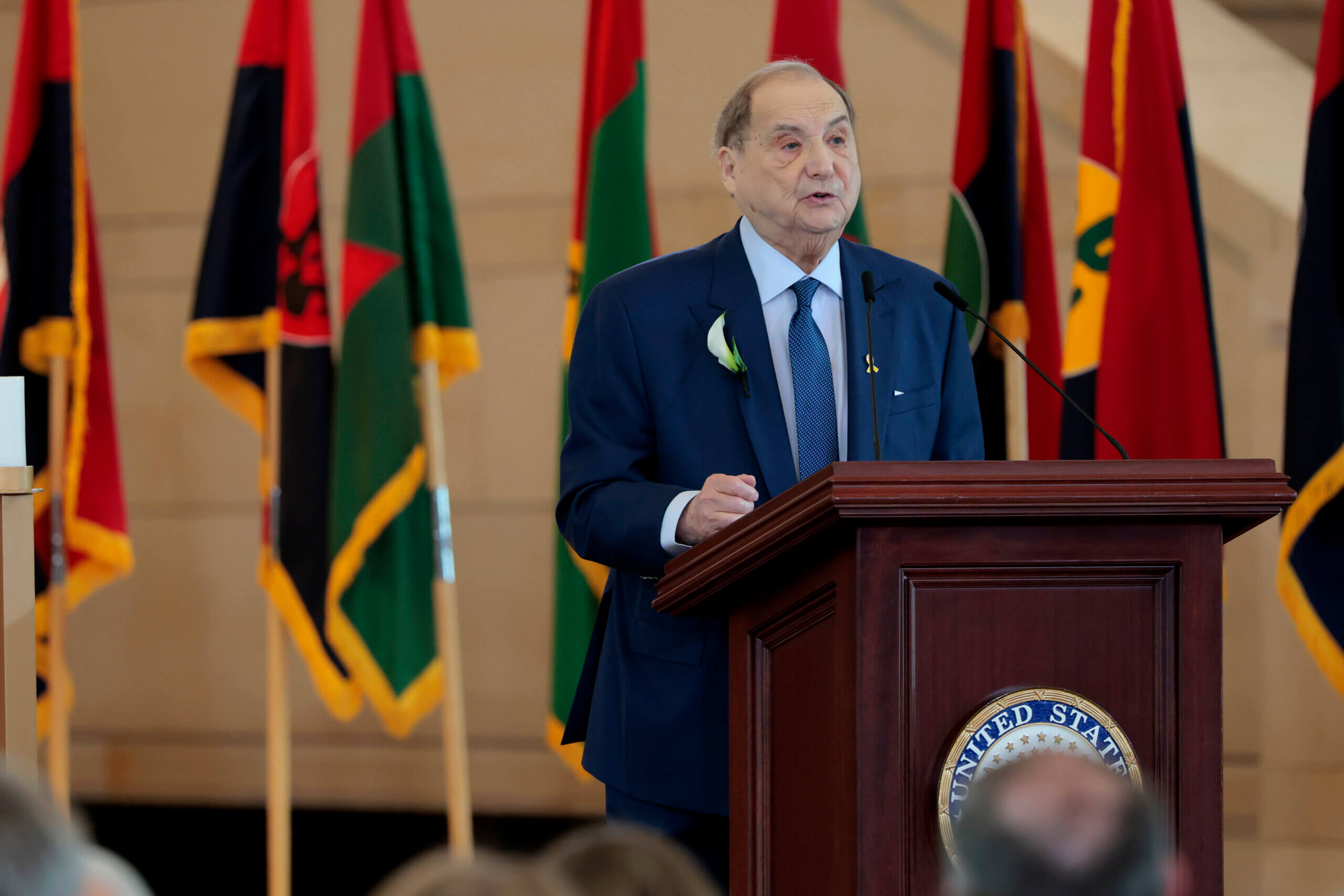
Foxman achieved his towering status partly through his gravitas and charisma, what Nicole Mutchnik, chair of the ADL board, referred to as his ability to be a “warm friend, advisor, spirited antagonist and hugger — all over lunch.”
But I suspect it also had to do with his ability to maintain what has become an untenable political stance: a deep belief that Jews must fight for civil rights without giving up particular Jewish concerns around Israel and antisemitism.
This meant investing in the ADL’s civil rights portfolio — voting rights, immigration, racial justice, LGBTQ equality — even as he defended Israel in ways that rankled many liberals inside and outside of the organization.
And it meant becoming a forceful voice against both Trump and Israel’s far-right turn in recent years, even as he complained about what he viewed as unfair criticism of AIPAC by progressives and Democratic politicians drifting away from support for Israel in recent interviews.
Foxman shared this commitment to both liberalism, and a connection to Israel that at least sometimes conflicts with that liberalism, with a plurality of American Jews giving the ADL arguably the strongest claim of any legacy organization that it actually represented the American Jews it claimed to speak for.
But despite Foxman’s success — praise for his legacy came from wildly diverse corners of the Jewish community — the current crop of Jewish leaders have not adopted his politics.
The largest establishment organizations, including the current iteration of the Anti-Defamation League, seem to have determined that a wider-ranging commitment to civil rights advocacy and vocal opposition to Trump is a nonstarter if they intend to continue advocating for Israel, at a time when much of the Democratic Party has turned actively hostile to the Jewish state.
Meanwhile, the progressive Jewish groups who remain most committed to civil rights work have largely abandoned Zionism as part of their missions.
This may be a more honest form of Jewish politics than what came before. But it has also left many Jews feeling politically homeless and played into the erasure of a political center that Foxman, and no shortage of Jewish historians, have insisted is integral to Jewish safety.
“We do well when we’re in the center,” Foxman told me shortly after I started this job. “And there is no center today.”

Did you know that only 2% of Forward readers donate to support our nonprofit newsroom? That 2% make it possible for millions to read the Forward without a paywall or subscription — removing any barriers to the full and fair Jewish story.
But while the Forward is free to read, it isn’t free to produce. Big stories — like deep dives into the antisemitism data, political scoops or reporting trips to college campuses — take months of research and fact-checking. All while we keep you informed of what you need to know each day.
— Rachel Fishman Feddersen, Forward Publisher & CEO
Support our mission to tell the Jewish story fully and fairly.