Phasing out US subsidies for Israel’s military will strengthen our alliance — not end it
A lasting security partnership must be sustainable, and the status quo no longer is

Rocket trails from an interception by Israel’s Iron Dome missile defence system are pictured over Tel Aviv on March 1. Photo by Ahmad Gharabli / AFP

Jeremy Ben-Ami April 14, 2026
The United States treats Israel differently from all our other close allies, granting far more military aid with far less oversight. Contrary to traditional wisdom, this exceptionalism is no longer in the best interest of either country.
As an American Jew with deep ties to the state of Israel, whose grandparents were among the founders of Tel Aviv, I understand the inclination to treat Israel as exceptional. The establishment and success of the state — even with its challenges — remains for me, and much of our community, a miracle.
But the current American-Israeli relationship is not sustainable, aligned with American laws and values, or politically beneficial to Israel — which is why J Street, the organization I lead, called this week to phase out U.S. taxpayer subsidies for Israel’s military purchases.
For decades, Israel has received a form of support that no other prosperous, technologically advanced American ally receives: direct U.S. taxpayer-funded subsidies for its military purchases. Countries like Japan and South Korea, as well as our NATO allies, cooperate closely with the U.S., purchase advanced American defense systems, and maintain deep strategic ties. But they pay for the weapons and equipment they buy from the U.S.
Israel today is strong enough to do the same.
J Street is not proposing to distance the U.S. from Israel. We’re proposing that it’s time for this close alliance to take steps to become stronger and more enduring. We are not suggesting that Israel should lose access to Iron Dome or other defensive systems currently funded with American help. We are simply proposing that Israel gradually take on complete responsibility for paying for those systems — just like other American allies.
We propose this because the current model is no longer an asset. It’s becoming a liability.
Inviting allegations of favoritism
Today, the U.S. provides roughly $3.8 billion annually in military aid to Israel under a 10-year agreement negotiated under former President Barack Obama, which will expire in 2028. That’s more military financing to Israel than to all other countries combined, a level of exceptionalism that’s driving polarization across the political spectrum.
On the right, that exceptionalism fuels narratives about favoritism and undue influence. On the left, it contributes to growing anger, especially as Israel’s use of U.S.-supplied weapons has raised serious humanitarian and legal concerns.
Exceptionalism is no longer protecting the relationship. Instead, it is eroding support for it.
The 2028 expiration of the current agreement provides a natural timeline to begin responsibly phasing out direct financial subsidies. Yes, some will argue that the middle of a war isn’t the time to make such a change. But we are not proposing to end assistance, and think these years of war have clarified the need for a more sustainable approach — not given a reason to avoid confronting the question of aid.
A sustainable U.S.-Israel relationship requires bipartisan support, and a broad perception that the alliance is aligned with American laws and interests. Amid fierce backlash over the wars in Gaza and Iran — backlash driven in significant part by Israel’s conduct — both of those necessities are imperiled. Normalizing the relationship by treating Israel like our other close allies will help defuse these dynamics, and place the relationship on a more stable footing.
The need for oversight
The first step in normalization must be ensuring that Israel uses U.S.-provided weapons in full compliance with U.S. law. Like any other recipient of American arms, Israel should be subject to consistent rules, oversight and accountability. There is a lengthy history of spotty American enforcement of these laws under administrations of both parties. Under President Donald Trump’s administration, these rules have become less consistent for all countries — not just Israel — than any time in the last 50 years, but the norms instilled by past rules have broadly persisted.
Right now, the U.S. is not consistently holding Israel to those norms, which have historically included a commitment to avoid arms transfers “that risk facilitating or otherwise contributing to violations of human rights.” There is evidence that Israel used U.S. arms in violations of international law amid the war in Gaza, which is why J Street does support withholding certain weapons systems — such as 1,000-pound bombs — until Israel comes into compliance.
Of course, this discussion must be grounded in the reality with which Israelis live. The past few years have brought extraordinary trauma – from the Hamas attack of Oct. 7, 2023, to the ongoing threats of rocket fire and regional escalation. For Israeli families like mine, the threat is immediate and personal, sending them night after night into bomb shelters.
In that reality, systems like Iron Dome are not abstractions. They are lifelines. They intercept rockets headed toward homes, schools and hospitals. Nothing in J Street’s proposal changes this fundamental commitment: Israel must be able to defend its people.
But there is a difference between ensuring access to these systems and asking American taxpayers to indefinitely subsidize them.
Respect for Israel’s independence
We support a strong, enduring U.S.-Israel security partnership — one that includes intelligence sharing, joint military planning and technological cooperation, as well as continued access to systems like Iron Dome and David’s Sling. We believe U.S. foreign policy must continue to embody a commitment to help Israel meet real threats it faces in the region.
But shifting this partnership to one of more equal footing reflects confidence in Israel itself.
Israel is not a weak or dependent country. It is a regional power with a dynamic economy and one of the most capable militaries in the world. Asking it to fund its own defense is not abandonment. It is a recognition of Israel’s strength.
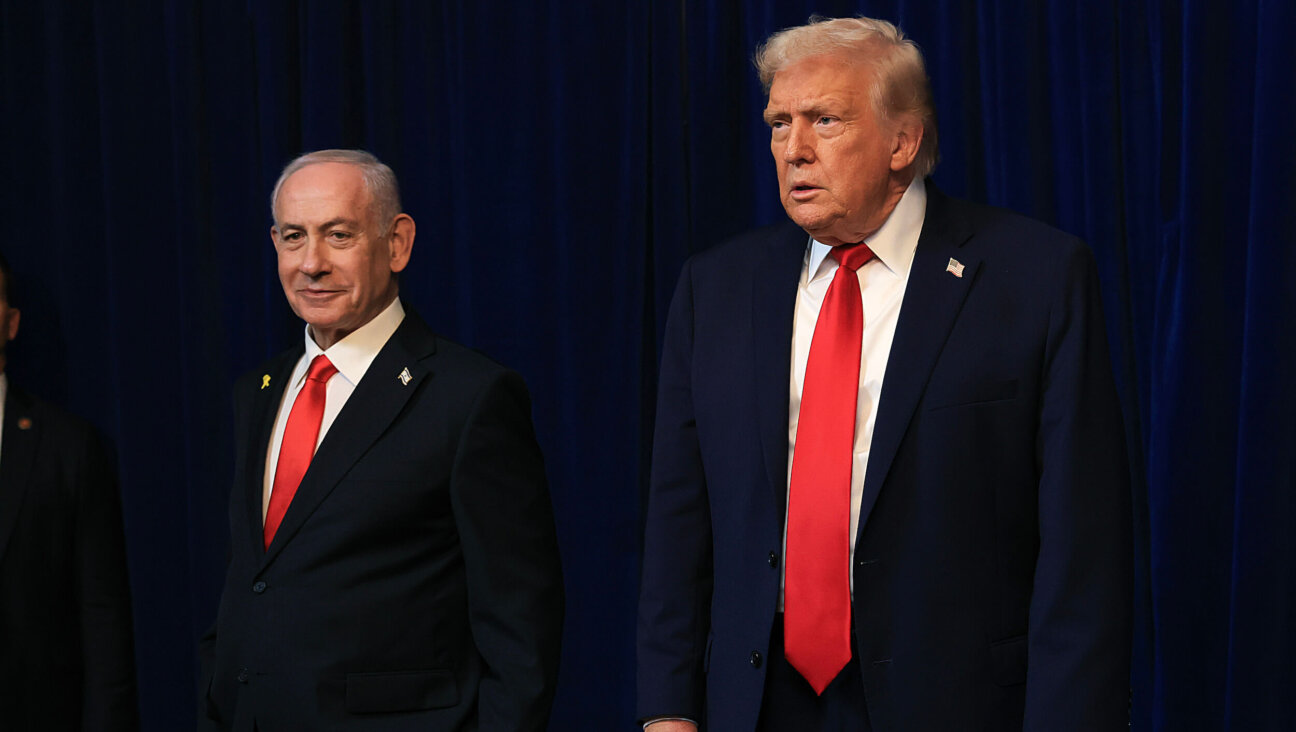
Even Israeli Prime Minister Benjamin Netanyahu has acknowledged this reality, calling for “tapering off” U.S. military aid.
We can maintain a deep commitment to Israel’s security, including continued access to lifesaving systems like Iron Dome, while evolving the terms of that support to reflect today’s realities.
This won’t weaken the alliance — it will strengthen it, by setting it up for a more secure future.
The strongest relationships are built on mutual respect and shared responsibility, not exceptionalism or dependency.

Hello, fellow Forward reader! I’m Joel Brown, a Forward reader and supporter for more than 15 years, and currently the chair of the board of directors.
I’m an avid Forward reader because it ticks so many of my essential boxes: excellent journalism, Jewish focus and diverse viewpoints. In today’s political climate, what I most appreciate is the Forward’s independence — made possible by the generosity of its membership.
The Forward is committed to bringing you unbiased, nuanced Jewish news. From my position as board chair, I see an exciting future as we expand our position as the definitive independent voice of contemporary American Judaism.
That’s why I’m paying it Forward, by matching $36,000 of reader gifts. It’s an investment in the Forward’s newsroom, to continue telling the American Jewish story with truth and independence.
— Joel Brown, Forward board chair
Support our mission to tell the Jewish story fully and fairly.