How can I explain to my 93-year-old mother why it suddenly seems ok to hate Jews?
Her parents fled pogroms. Now the country they thought was safe seems less so
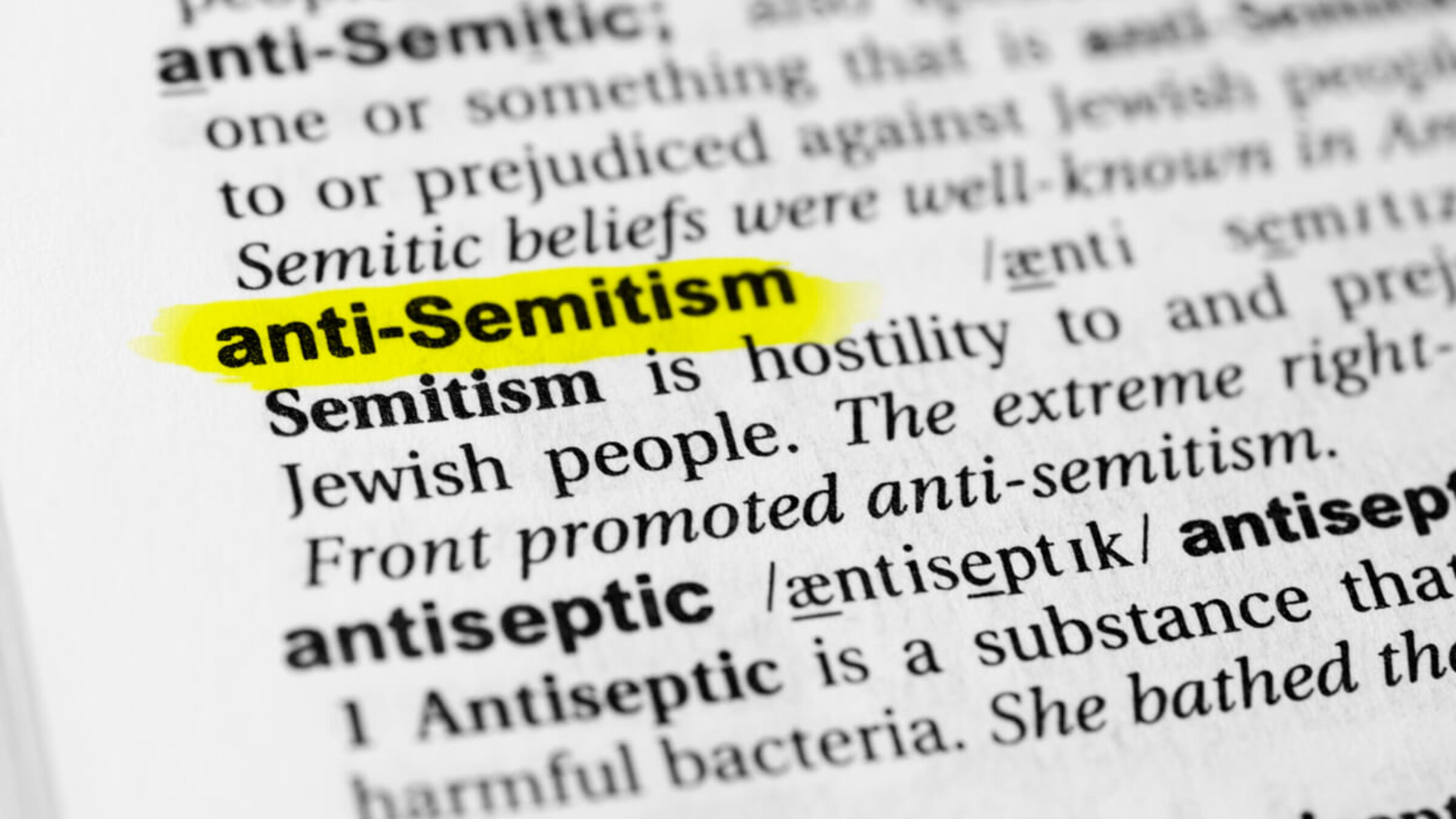
Rising antisemitism is remaking the way that Jews see the world. Photo by Lobro78/iStock by Getty Images
My mom — 93 years old, still sharp, a lifelong Democrat, a woman who has read The New York Times nearly every day for the last five decades — called me this week, in something approaching shock, to tell me she had read Nicholas Kristof’s latest op-ed.
“I can’t believe what they’re saying,” she said of the piece, whose claims — particularly one, questionably sourced, involving the alleged rape of a prisoner by a dog — drew accusations of serious journalistic malpractice. To me, this felt like more than flawed reporting. It bore the unmistakable contours of a modern blood libel.
“How can they print this?” my mom asked. “What’s happening in the world?”
Sometimes we encounter an unexpected threshold, and suddenly the familiar world appears altered. The Kristof column was such a threshold for my mother. Her parents were immigrants; her mother left a Romanian shtetl as a child, crossing the Atlantic with her younger brother when they were 12 and 9 years old. They came because Jews were fleeing rapes and murder. If you are an American Jew of Eastern European descent, there is a decent chance your family history contains some version of this story — that of people fleeing pogroms.
You may remember the most recent example of such an attack. It happened on Oct. 7, 2023 — the first pogrom carried out in the age of smartphones.
To say that things have felt strange and frightening for many Jews worldwide since that horror is like saying clouds produce rain or honey is sweet. Strangest of all is the speed with which, in many quarters, people sought to not just explain the atrocity, but actually justify it.
What has tormented me almost as much as the violence itself is the astonishing pace at which animus toward Jews, or toward “Zionists,” has become normalized in spaces where one might once have expected understanding. And yes, I know, people are weary of hearing Jews explain why hostility directed at the overwhelming majority of Jews who believe in Jewish self-determination often bleeds into hostility toward Jews themselves. I know all the caveats. I know all the disclaimers. I have read them too. Still, it increasingly appears that anti-Zionism in many quarters has become not merely tolerated, but a litmus test.
The range of what can be said aloud has changed. So have the categories of people toward whom contempt may be openly directed. Prejudice against Jews that can once again — as in an era many thought was gone forever — pass as a kind of moral sophistication.
Each week there is a new reason to think about all this. A Democratic congressional candidate in Texas named Maureen Galindo has crossed yet another Rubicon of human foible and weakness. Galindo reportedly proposed transforming a detention center into a prison for “American Zionists” and described it as a place where many Zionists would undergo “castration processing.”
I cannot say categorically that Galindo represents a new political era. She may not. Fringe figures have always existed. But that a candidate seeking office within one of America’s two major political parties — a candidate who advanced to a Democratic runoff after finishing first in a crowded primary field, with roughly 29% of the vote — used this grotesque language is notable.
Maybe she’ll lose badly. Maybe she’ll vanish from the political stage. That wouldn’t change the fact that her statements did not produce immediate and universal condemnation.
Every era contains extremists. But sometimes institutions cease to treat extremism as radioactive, and begin treating it first as eccentricity, then as another perspective deserving “consideration,” then activism, then orthodoxy.
Is that happening here? I’m wondering. So is my mother.
I have spent much of my life among artists, intellectuals, musicians, progressives — a cohort that once seemed animated by an instinctive suspicion toward ethnic hatred in all forms. Increasingly, Jews appear exempt from that instinct. “Galindo is just another crazy person,” I’ve heard people say. I see. Just another crazy person competing seriously in a Democratic primary after proposing internment camps for “American Zionists.”
This is not about Galindo alone. It is also about institutions. About The New York Times, whose reporting and opinion pages remain, for millions, a moral compass. My mother did not call me outraged after reading Kristof. She called bewildered. She called sad. This was the newspaper she’d followed through wars, assassinations, civil rights struggles, and presidents of every variety. Her confusion and grief now pains me more than I can say. When exactly, she seemed to be asking me, did this happen? When did support for Israel become, in some circles, evidence of moral defect? When did “Zionist” become a slur, not a description of a legitimate ideology?
When did suspicion toward Jews become newly accessible, provided it arrived draped in the language of liberation?
All of this feels both cosmic and deeply personal. I have yet to meet a Jew who does not feel some shift beneath their feet.
And to them I say: do not cower. Do not hide your Jewishness. Do not keep your love for Israel or for Jews a secret. Go and do something singularly Jewish. Reorient yourself toward whatever you understand God to be. And if God feels impossible, then orient yourself toward the continuity of the Jewish people.
May we go from strength to strength. Mom, if you are reading this, that goes especially for you.