
This is the Forward’s coverage of Jewish culture where you’ll learn about the latest (and sometimes earliest) in Jewish art, music (including of course Bob Dylan and Leonard Cohen), film, theater, books as well as the secret Jewish history of…
Culture
-
Brighton Beach to Carnegie Hall: Neil Sedaka Sings a Familiar Tune
The first time Neil Sedaka appeared on “The Ed Sullivan Show,” the really big show almost didn’t go on. It was 1961, and the young singer-songwriter was at the top of the pop charts. He planned three numbers for his “Ed Sullivan” debut that would illustrate his multifaceted background. “Calendar Girl,” his radio hit at…
-
February 20, 2004
100 YEARS AGO • More than 10,000 partiers streamed into Madison Square Garden one Saturday night this month to take part in the sensational Forward Masked Ball. It was incredible to look down from the packed balconies onto the dance floor, where thousands of couples danced the night away. The masks and costumes made parts…
-
February 13, 2004
100 YEARS AGO • In spite of rumors that Russia’s dictator has fallen ill on account of failures of the Russian army in its battles with Japan as well as the general weakness of the economy, evil decrees against the Jews of the empire are continuing unabated. Thousands of Jews are being driven out of…
The Latest
-
Looking Back February 6, 2004
100 YEARS AGO • At a time when pogroms are occuring so frequently, it seems like all Russians hate Jews. The Bund reports, however, that there are not only working-class Russians who consider themselves compatriots of Jewish workers, but they are also willing to stand up and protect their Jewish colleagues during pogroms. For example,…
-
January 30, 2004
100 YEARS AGO • After pogroms in which their stores and homes were destroyed, more than 1,200 Jews from a number of smaller towns in Morocco have arrived in Casablanca. Morocco has been wracked with violence and riots, which, though directed at the ruling classes, have victimized the Jewish and, to a lesser degree, the…
-
January 23, 2004
100 YEARS AGO • Cigarmaker Sam Gold, 24, was in love with Annie Ordover, 20, and asked her to marry him. Annie, however, wasn’t interested and brushed off his advances. On Friday night, when Gold proposed again in the middle of Sixth Street, he was rebuffed a second time. It was then that he pulled…
-
Adios, Spanish! Hebrew Gets Hot on Campus
Stephen Black wanted to study Hebrew in high school. But despite the sizable Jewish community in his New Jersey hometown, Black’s public school didn’t offer Hebrew classes, so he settled for Spanish instead. Then, last fall, when he enrolled as a freshman at Harvard University, Black had the chance at last to study Hebrew, and…
-
Judaic Studies Classes See Enrollment Boom
Lauren Twigg entered San Diego State University as an undergraduate four years ago with a game plan: She would study business and become a chief executive officer of a powerful company. But what she didn’t bank on was that she’d be bored to tears by her math and economics courses. “I figured if I didn’t…
-
Israel Advocacy Coalition Targeting High Schools
In response to what many are calling the sad state of Israel advocacy on college campuses, prominent Jewish communal officials and educators have settled on a new approach to teaching undergraduates how to defend the Jewish state: Start in high school. About 60 juniors and seniors from Jewish high schools in the New York metropolitan…
-
Russian School Helps Kids Maintain Parents’ Heritage
The mass exodus of Jews from the former Soviet Union in the past decade has created a unique quandary for Jewish schools: How can educators help immigrants’ children maintain links to a country they don’t know, and imbue them with knowledge of a religion and culture that is often unfamiliar to their parents? The Shalom…
-
Israelis Living in the U.S. Find a Special Place To Learn
Children lugging backpacks rivaling their own weight trudge slowly up the stairs on a typical Monday afternoon at Temple Sinai in Brookline, Mass. At first glance, it looks like another session of an ordinary afternoon Hebrew school is about to begin. But leaning one’s ear closer, one hears children kibitzing in a mixture of English…
Explore
Most Popular
- 1

Opinion The Iran war ended terribly for the US, and even worse for Israel
- 2

Film & TV In ‘Disclosure Day,’ Steven Spielberg finds himself at odds with Jewish thought about aliens
- 3

Sports This year’s biggest World Cup upset came from its most ‘Jew-ish’ team
- 4

News Who is Gadi Eisenkot, the Israeli politician who could dethrone Netanyahu?
In Case You Missed It
-
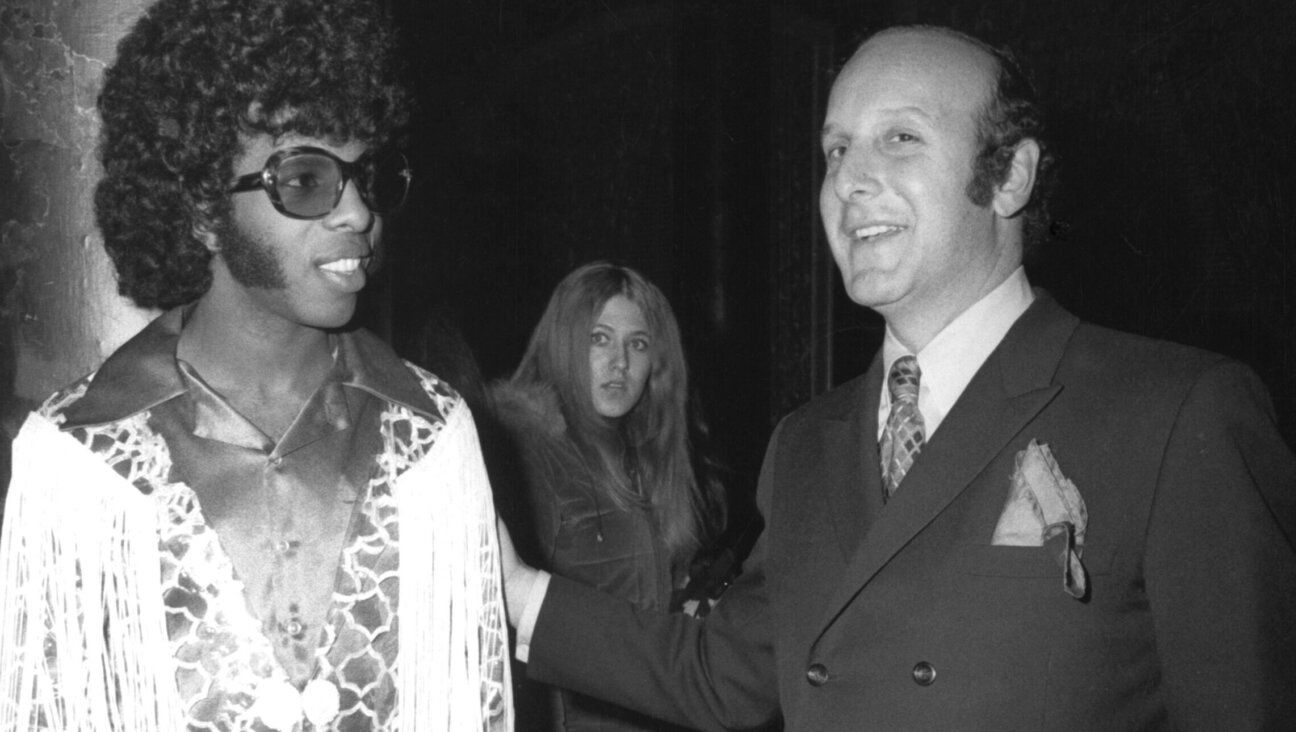
Music Everyone was a fan of Clive Davis — even if they didn’t know it
-

Fast Forward U.S. and Iran announce direct Lebanon track without Israel
-

Fast Forward Years after a boycott fight, Ben & Jerry’s Israel debuts a flavor celebrating Israeli resilience
-

Fast Forward Mamdani calls AIPAC ‘monsters’ in rally ahead of NY primaries