J Street Talks With Hillel End Without Deal
Graphic by Angelie Zaslavsky
Representatives of J Street U and Hillel met and failed to immediately agree on how best to collaborate on the national level.
The meeting earlier this month, details of which emerged late last week, was called after Hillel director Eric Fingerhut pulled out of a commitment to speak at J Street’s annual conference in March.
Fingerhut reportedly canceled under pressure from Hillel donors who object to J Street, a Jewish Middle East policy group that advocates greater U.S. engagement toward an Israeli-Palestinian peace deal and criticizes Israel’s settlement policies.
Fingerhut’s speech was to have praised campus chapters of J Street U and Hillel for cooperating in combating the Boycott, Divestment and Sanctions movement against Israel. Fingerhut’s appearance would have elevated the relationship to the national level.
The June 11 meeting between members of J Street U’s board and staff and lay leaders of Hillel International, held at Hillel’s headquarters in Washington, D.C., began with a reiteration of the close working relationship enjoyed by campus chapters of both groups, J Street U’s president told JTA.
“We talked about our shared interest in engaging progressives and the enormous progress we’ve made on campuses,” Benjy Cannon said.
Hillel’s spokesman, Matthew Berger, told JTA that the meeting was at the request of J Street U. He said Hillel’s lay and professional leadership and J Street U’s leaders had a wide-ranging conversation that lasted several hours.
“The discussion covered every topic that the J Street U leaders raised,” Berger said. “We will continue to work with them, as we do with other organizations that engage Jewish students on campus.”
However, Hillel did not immediately respond at the meeting to three J Street U requests: an opportunity for J Street U’s board to engage directly with the Hillel donors who object to the partnership; the opportunity for J Street U to help train Hillel staff at its summer training institute; and Fingerhut’s appearance at J Street U’s summer leadership institute.
“They were open to that, if noncommittal,” Cannon said. Agreeing to the requests would “show we’re an important part of this conversation,” he said.
A Hillel official confirmed Cannon’s account and said that the body was still considering the requests.
The official said Hillel understood it would be given some time to evaluate J Street U’s requests.
“Unfortunately, J Street U decided to send out fundraising letters instead of waiting to see if we could come to an agreement. That was counterproductive,” the official said.
In a fundraising letter after the meeting, Cannon described the meeting in generally positive terms, but added, “I am disappointed to report that we ultimately did not leave the meeting with any concrete commitments from them.”
"Why I became the Forward’s Editor-in-Chief"
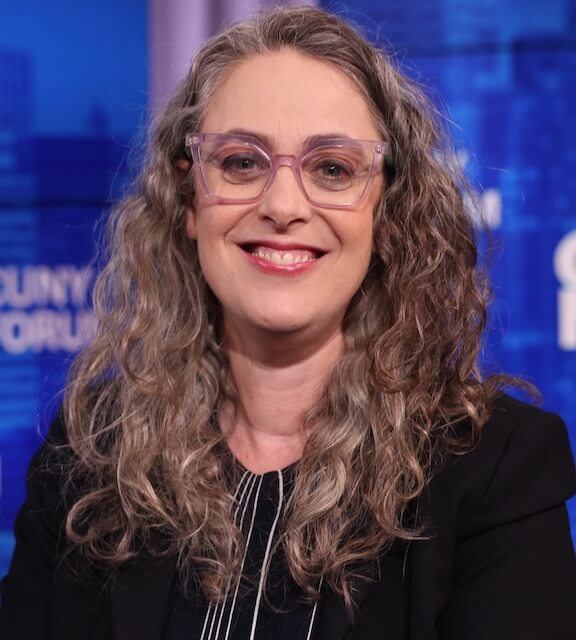
You are surely a friend of the Forward if you’re reading this. And so it’s with excitement and awe — of all that the Forward is, was, and will be — that I introduce myself to you as the Forward’s newest editor-in-chief.
And what a time to step into the leadership of this storied Jewish institution! For 129 years, the Forward has shaped and told the American Jewish story. I’m stepping in at an intense time for Jews the world over. We urgently need the Forward’s courageous, unflinching journalism — not only as a source of reliable information, but to provide inspiration, healing and hope.
Support our mission to tell the Jewish story fully and fairly.