List of hostages for potential release circulates as pressure mounts for ceasefire deal
Israel cautioned that the list did not reflect any agreement with Hamas
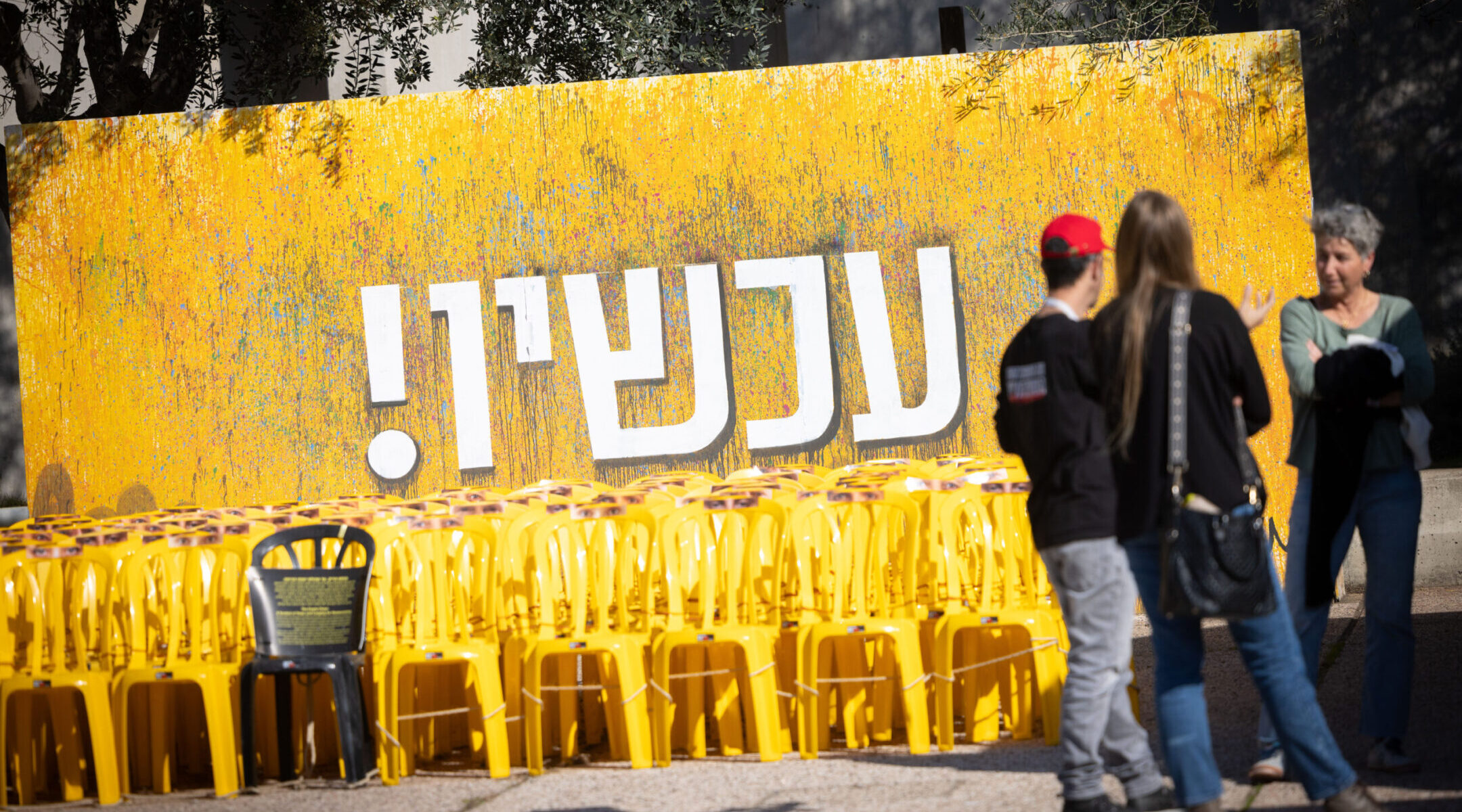
Visitors at Hostage Square in Tel Aviv stand in front of a sign reading “Now!” in Hebrew, Jan. 6, 2025. (Miriam Alster/Flash90)
(JTA) — A list of hostages that could be released in a ceasefire deal circulated in international and Israeli media on Monday amid reports that ceasefire negotiations were once more gaining momentum.
But the Israeli government is warning that the list does not reflect any agreement — or information about the status of the people on it.
“The list of hostages that has been published in the media was not provided to Israel by Hamas but was originally given by Israel to the mediators in July 2024,” Prime Minster Benjamin Netanyahu’s office said in a statement. “As yet, Israel has not received any confirmation or comment by Hamas regarding the status of the hostages appearing on the list.”
Netanyahu’s office condemned the distribution of the list as psychological warfare by Hamas designed to sway negotiations.
The Hostage and Missing Families Forum released a statement saying that the families were “deeply shaken and distressed” by the list’s publication. The organization supports a deal that would result in the release of all hostages, not just some.
The list — reportedly shared with multiple news organizations by a senior Hamas official — may represent more concrete details than have appeared previously in reports about sparring between Israel and Hamas over which hostages would be released in a deal. The list, which a Saudi news agency published in full, followed by Israeli publications, includes 10 adult women, 22 adult men and 2 children, and does not say which of the hostages are living.
Of the 100 hostages remaining in Gaza, officials have said that dozens are likely dead; Hamas said last year that the Bibas brothers Kfir and Ariel, the only Israeli children remaining in Gaza, had been killed. Liri Albag, a 19-year-old soldier who appeared alive in a video released by Hamas over the weekend, is on the list, as are some of the Americans who remain hostage.
The list’s publication comes as supporters of a deal — who include the vast majority of Israelis, according to public opinion surveys — hope that Hamas’ increased isolation and a looming deadline imposed by President-elect Donald Trump could create a breakthrough that has so far eluded negotiators.
Trump vowed last month that there would be “all hell to pay in the Middle East” if the hostages were not released by his Inauguration Day on Jan. 20. Though he did not offer details, his vow, made on social media, was widely interpreted as a threat against Hamas.
Hopes for a deal have flared and dimmed periodically for months and no hostages have been freed through negotiations for well over a year. Some members of Netanyahu’s governing coalition staunchly oppose any deal that leaves Hamas intact and requires Israeli forces to exit Gaza entirely, while U.S. and Israeli officials both say Hamas has failed to accept deals.

Did you know that only 2% of Forward readers donate to support our nonprofit newsroom? That 2% make it possible for millions to read the Forward without a paywall or subscription — removing any barriers to the full and fair Jewish story.
But while the Forward is free to read, it isn’t free to produce. Big stories — like deep dives into the antisemitism data, political scoops or reporting trips to college campuses — take months of research and fact-checking. All while we keep you informed of what you need to know each day.
— Rachel Fishman Feddersen, Forward Publisher & CEO
Support our mission to tell the Jewish story fully and fairly.