Some named names, some didn’t, but it’s not just a story of good guys and bad guys
For director Anna Shapiro, ‘Are You Now or Have You Ever Been’ has a lot to say about today’s politics and antisemitism
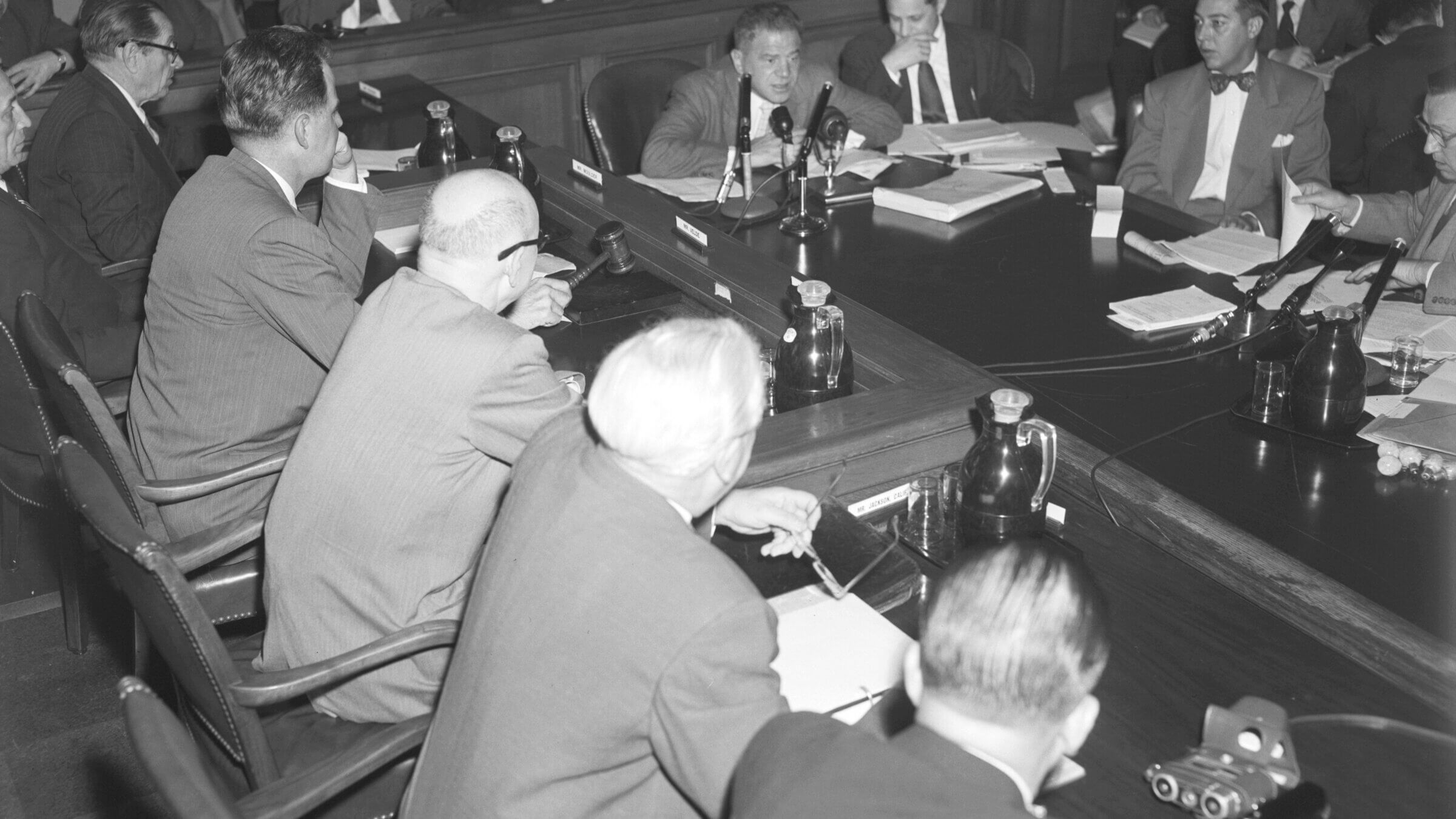
Lionel Stander testifies before the House Un-American Activities Committee. Photo by Getty Images
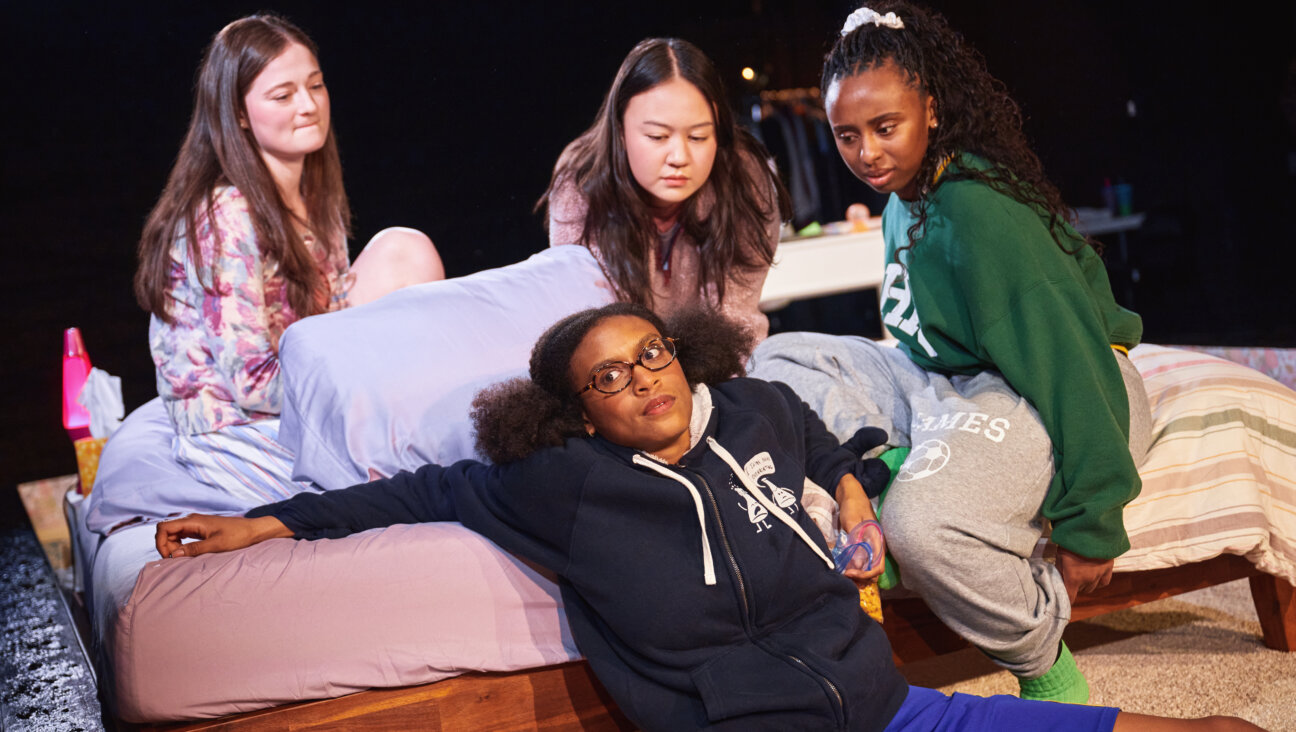
It was written in 1972 and takes place between 1947 and 1959. It consists of testimony given before the infamous House Committee on Un-American Activities, which damaged or destroyed the lives of many people in the entertainment world during the Communist scare and the blacklisting of the 1940s and 50s. But for its Tony-winning director, Anna D. Shapiro, Are You Now or Have You Ever Been, a docudrama that is being revived at New York City Center, is relevant today — in more ways than one.
“I think that everybody will enter this play from a different perspective, because it’s in conversation with things that we’re dealing with as a country right now,” Shapiro told me over the phone. “For instance, my producer, Jeffrey Richards, who is of a certain generation, for him, it’s just deeply about freedom of expression. He has spent his whole life making art, championing artists, and the idea that he feels like we’re moving towards, which we clearly are, is a more fascist behavior around freedom of expression. He wants to remind people how dangerous some of these moves from the current administration are.”
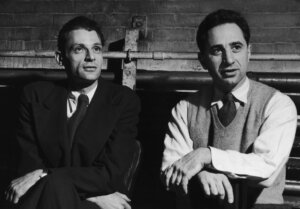
“But I’m just a little bit younger than Jeffrey,” Shapiro, 60, continued. “I did the play when I was in college. So I was probably 22, 23, actually, just finishing college. And it was very clear then, right? It was about good guys and bad guys, and it was very easy to demonize the people who named names and champion the people who were brave enough not to name names. And now, as I’m older, I realize there’s a lot more complexity when the entire system is coming after you in a way that makes you feel like your entire livelihood is threatened. So on one level, it’s one thing for Arthur Miller not to name names. It was Arthur Miller. They weren’t going to be able to destroy Arthur Miller. But it’s another thing for an actor whose career is fading and who doesn’t have any control over his destiny to be kind of pushed into naming names. And I think that that’s what interests me, which is how difficult it becomes to be good in America, how difficult that is becoming, how terrifying and terrorizing the current administration is.”
The play, by Eric Bentley, highlights testimony by some of those — Jerome Robbins, Elia Kazan, Larry Parks, Abe Burrows — who named names of Communist Party associates and some of those who didn’t, such as Arthur Miller, Paul Robeson, Lillian Hellman, Lionel Stander. It features a rotating cast that includes Steven Pasquale, Molly Ringwald, Santino Fontana and Bob Odenkirk.
Bentley, who died in 2020 at age 103, taught dramatic literature at Columbia University during the 1950’s and 60s. He was a champion and translator of the German playwright Bertolt Brecht. Shapiro won her Tony for Tracy Letts’ August: Osage County and is a former artistic director of the famed Steppenwolf Theatre Company in Chicago. Most recently on Broadway she directed the Tony-winning revival of Eureka Day.
‘Of course they were antisemitic’

Six of the Hollywood Ten screenwriters and directors who were blacklisted and sent to prison for their refusals to testify were Jews. In the Bentley play, Miller, Robbins, Hellman, Stander and Burrows are Jewish.
As the play records, one key committee member, John E. Rankin of Mississippi, a known racist who was called out for his antisemitism, insisted on reading out the birth names of actors who he presumed to be Jewish, such as June Havoc (June Hovick), Danny Kaye (David Daniel Kaminsky), Eddie Cantor (Edward Iskowitz), Edward G. Robinson (Emanuel Goldenberg) and Melvyn Douglas (Melvyn Hesselberg).
“Of course they were antisemitic,” Shapiro said. “One of the things that they went out of their way to point out was how many of the actors and directors in Hollywood had changed their names and that their original names were so clearly Jewish. For them, this exposed a kind of nefariousness. They assumed a nefarious intent, as opposed to being what it really was, which was a way for Jews to defend themselves and keep themselves safe from antisemitism by changing their names, to be able to be in the public eye in a way that was less dangerous for them.”
The committee, she said, “twisted that and said, see, all these people, all of these people in Hollywood, are pretending not to be Jews, but they are, and they’re the problem.”
Actually, though, she said, “when you really look at what being a quote-unquote Communist was in this time, for the most part, these were essentially Democratic socialists. They were people who had gotten a little lucky, were making a little money. Many of them for the first time in their families. And they wanted to help the underdog. They wanted to look at what was corrupt in the system and make things better for people. They weren’t ‘burn the system down.’ They weren’t those people.”
Many Jews were victims of blacklisting, but many top executives in Hollywood who perpetrated or supported blacklisting were themselves Jewish. One reason, of course, was fear of the committee and other anti-Communist zealots like Wisconsin Senator Joseph R. McCarthy. But there was another.
“I think that’s our complex history, isn’t it?” Shapiro said. “And we’re in a complex moment as Jewish people. We have been in such a conversation with our existential threats. And what we think of as the solution to that very, very real historic and current threat. And what I appreciate about you bringing that up is that Jews are not a monolith. Right now, that’s happening again, right? I disagree actively with my older brother, right? Now, what we don’t disagree with each other about is that we’re Jews.”
Making an impact
Although Shapiro says her family were not practicing Jews, she said she is very conscious of her Jewish heritage. “My mother didn’t practice primarily because she was a Marxist and she didn’t believe in God. And also, quite frankly, she was raised in a very conservative Jewish household. And the sexism of her day, of when they were in shul, the women were upstairs. Every Friday night, her grandmother would cook everything and eat in the kitchen. So she saw a lot of the sexism. And that really made her walk away from her Judaism. But with both of my parents, whenever Judaism was being attacked or somebody wanted to take it away from them, they would fight for it.”
“What I’ve realized, Shapiro went on to say, “is how without practicing, without going to shul, without even celebrating Passover, my Judaism is in my body, and it informs decisions I make. I think it’s the reason that I’ve done so much work around equity and systemic racism and systemic sexism. I think I essentially understand that part of my task is to seek justice, and to make an impact in the world.”
So what impact would she like the play to make on audiences?
“I always say that I direct plays really for one reason, and that is to make the audience’s world bigger. And that really only happens two ways, right? You go into a theater and you either see something familiar and you go, wow, there’s other people like me, or you go into the theater and you see something so different from your own experience and you think, my God, the world is so much bigger than I know. In this play, based on the way that you calibrate the performances, you can either make a very black and white statement, or you can make more nuanced and ambiguous statements.”
She agrees with the philosophy, she said, that every society’s survival is based on its ability to embrace ambiguity.
“And where we are right now — and I’m not even talking about on the right, because I don’t have anything to say about the right. They’re very confusing to me. So I can only speak to the people with whom I share essential beliefs. I think that we are not talking to one another well. I think we are looking at black and white and good and evil, and it’s way more complex than that. So I hope people come away going, wow, I really thought it was just going to be like the good guys who didn’t name names and the bad guys who named names.”
‘Are You Now or Have You Ever Been’ runs through Sept. 11 at City Center in New York.
Did you know that only 2% of Forward readers donate to support our nonprofit newsroom? That 2% make it possible for millions to read the Forward without a paywall or subscription — removing any barriers to the full and fair Jewish story.
But while the Forward is free to read, it isn’t free to produce. Big stories — like deep dives into the antisemitism data, political scoops or reporting trips to college campuses — take months of research and fact-checking. All while we keep you informed of what you need to know each day.
— Rachel Fishman Feddersen, Forward Publisher & CEO
Support our mission to tell the Jewish story fully and fairly.