Trump administration restores student visas, but impact on pro-Palestinian protesters is unclear
The about-face comes amid mounting criticism over the crackdown from Jewish groups
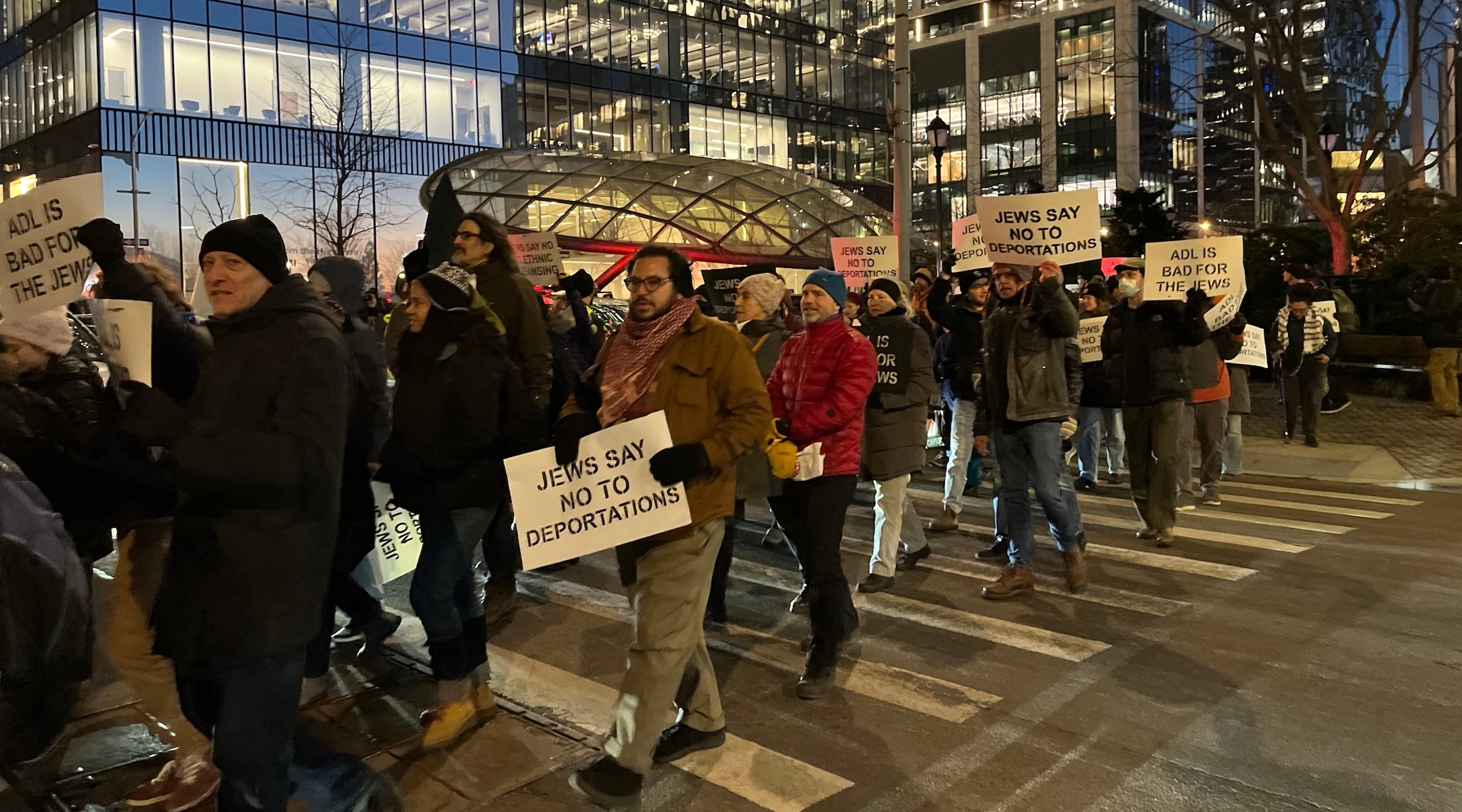
Following the rally at Bella Abzug Park, demonstrators marched toward the Javits Center, where ADL was holding its “Never is Now” summit on antisemitism and hate, Mar. 3, 2025. (Joseph Strauss)
(JTA) — The Justice Department announced Friday that it will walk back the cancellations of hundreds of student visas amid mounting legal pressure.
It was not immediately clear whether the reversals would affect any of the high-profile cases of students whose visas were revoked because of their participation in pro-Palestinian protests.
Instead, the announcement related directly to a different set of revocations that have been more widespread: of students who had ever been arrested, even for minor infractions or who had charges dismissed. Those revocations, which have affected students from around the world studying across the country, have drawn more than 100 legal challenges and rulings against the government in at least 50 cases, according to Politico.
Now, the Justice Department says it won’t cancel any more student visas based on records in the Student and Exchange Visitor Information Systems database, known as SEVIS, until it develops a better system for doing so.
The about-face comes as the Trump administration faces mounting criticism over its crackdown on student protesters and on immigrants, including from Jewish groups.
On Tuesday, HIAS, the historic Jewish immigration nonprofit, issued a letter signed by over 560 Jewish religious leaders that condemned the “immoral use of law” by the Trump administration.
“As Jews and as Americans, we refuse to remain silent at the co-opting of our nation’s statutes and express alarm about the path down which it leads,” the HIAS letter read. “We demand that the administration abandon its manipulative interpretation of law and restore a commitment to the inalienable rights that are the source of our country’s greatness.”
Most of the students thought to be targeted because of their activism are still in the country, but at least two have opted to leave the United States rather than fight deportation in court. They include the Cornell University protest leader Momodou Taal and a Columbia University graduate student who maintained that she was uninvolved in protests on the school’s campus but had been arrested before having charges dropped.

Hello, fellow Forward reader! I’m Joel Brown, a Forward reader and supporter for more than 15 years, and currently the chair of the board of directors.
I’m an avid Forward reader because it ticks so many of my essential boxes: excellent journalism, Jewish focus and diverse viewpoints. In today’s political climate, what I most appreciate is the Forward’s independence — made possible by the generosity of its membership.
The Forward is committed to bringing you unbiased, nuanced Jewish news. From my position as board chair, I see an exciting future as we expand our position as the definitive independent voice of contemporary American Judaism.
That’s why I’m paying it Forward, by matching $36,000 of reader gifts. It’s an investment in the Forward’s newsroom, to continue telling the American Jewish story with truth and independence.
— Joel Brown, Forward board chair
Support our mission to tell the Jewish story fully and fairly.