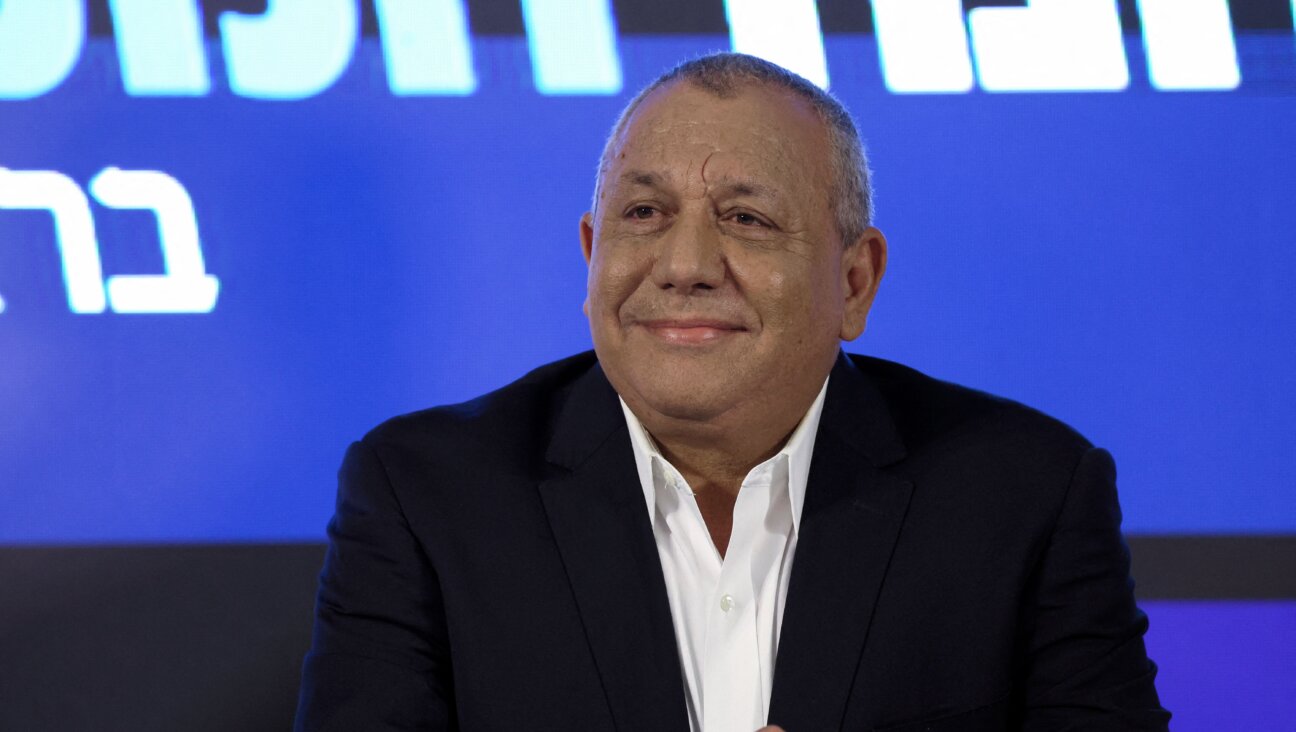
31st anniversary of AMIA bombing marked by ceremonies in Argentina, Israel and, for the first time, Congress
The July 18, 1994, car bombing killed 85, injured over 300, and completely destroyed the Jewish community center in Buenos Aires
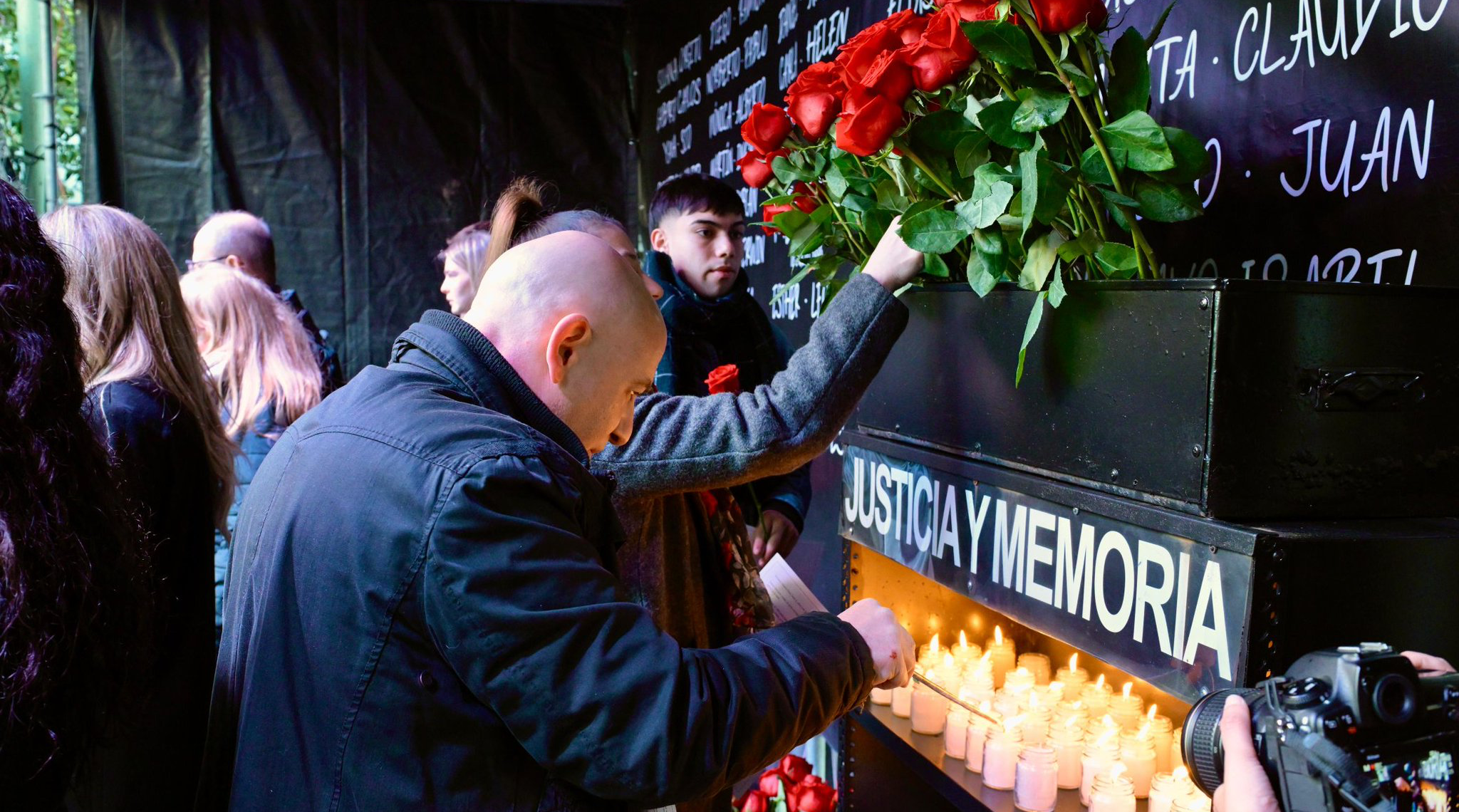
People pay tribute to victims of the 1994 AMIA bombing in Buenos Aires on July 18, 2025. (Courtesy AMIA)
(JTA) — An official commemoration of the AMIA Jewish community center bombing in Buenos Aires took place in Congress this week for the first time, amid increased tensions with Iran, the country understood to have been behind the attack.
The July 18, 1994, car bomb attack killed 85 people, injured over 300, and completely destroyed the AMIA building.
At an event Tuesday organized by the House Foreign Affairs Committee, the Argentine Embassy in Washington and AMIA, Reed Rubinstein, legal advisor to the U.S. Department of State, noted that Argentina’s judiciary ruled last year that the bombing had been executed by Hezbollah and ordered by Iran. He also noted that Argentina’s top court recently decided to pursue a trial in absentia for the perpetrators, a major step after decades of inaction.
“These are important steps toward justice for the victims, and toward restoring accountability and deterrence,” Rubinstein said, noting that Jewish institutions remain targets for violence today.
The commemoration at the Rayburn House Office Building was one of multiple commemorations that took place around the globe this week, falling shortly after the United States joined Israel in taking aim at Iran’s nuclear program and in a climate changed by Israel’s punishing war against Hezbollah last year and Argentina’s recent political shift. It is now led by Javier Milei, an avowed philosemite who has made multiple trips to Israel and has directed his government to pursue accountability in the AMIA case.
Milei and several cabinet ministers attended the commemorative ceremony in Buenos Aires held Friday outside the rebuilt AMIA building. He did not speak but told reporters, “We won´t stop until justice is done.”
There, AMIA’s new president, Osvaldo Armoza, warned that Iran is “more active than ever” in Latin America. “The AMIA attack cannot be understood as an isolated incident,” he said.
Armoza, an attorney who took office as AMIA president just one month ago, praised the current government for being “on the right side of history” following the October 7 terrorist attack in Israel. “The national government’s clear support for Israel in such a dramatic moment is worthy of recognition,” Armoza said, prompting one of the loudest rounds of applause on the cold morning.
No one yet has been convicted of the bombing, though Argentina — and Israel — have long pointed the finger at Tehran, implicating several former Iranian officials, and Hezbollah in the AMIA attack and also in the March 17, 1992, terrorist attack on the Israeli embassy in Buenos Aires.
Another ceremony was held in Israel, with Argentina’s ambassador to Israel, Rabbi Axel Wahnish, attending a ceremony at the Israeli Knesset on Monday.
Originally founded to assist European immigrants, AMIA today provides a wide range of social services, operates a Jewish cemetery, and hosts educational and cultural programs.
It is one of the largest organizations serving Argentina’s Jewish population — about 200,000 people — and also supports the broader community, including non-Jews.

Did you know that only 2% of Forward readers donate to support our nonprofit newsroom? That 2% make it possible for millions to read the Forward without a paywall or subscription — removing any barriers to the full and fair Jewish story.
But while the Forward is free to read, it isn’t free to produce. Big stories — like deep dives into the antisemitism data, political scoops or reporting trips to college campuses — take months of research and fact-checking. All while we keep you informed of what you need to know each day.
— Rachel Fishman Feddersen, Forward Publisher & CEO
Support our mission to tell the Jewish story fully and fairly.