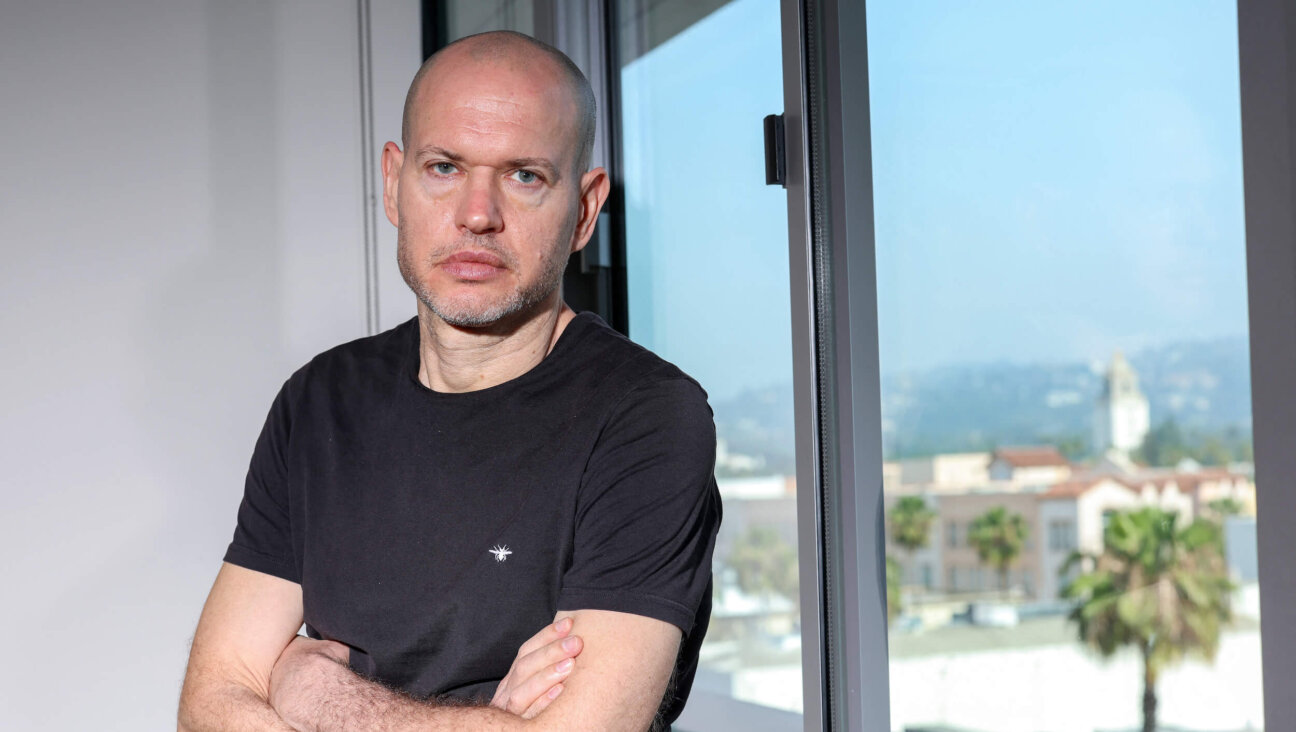
Emma Stone, Jonathan Glazer join growing list of Hollywood figures boycotting Israeli film institutions
Israeli film industry leaders say the ban is counterproductive and targets “precisely those who are committed to fostering dialogue”

Emma Stone attends the “Bugonia” red carpet during the 82nd Venice International Film Festival on August 28, 2025 in Venice, Italy. Photo by Vittorio Zunino Celotto/Getty Images
(JTA) — A boycott circulated by film-industry luminaries targeting Israeli film and cultural institutions is picking up steam days after its release, with more big names like Emma Stone and Bowen Yang signing onto a list that now numbers more than 3,000.
A growing number of Jewish creatives are also signing on, including Jonathan Glazer, the director of the Holocaust film “The Zone of Interest” and an executive producer on the new Palestinian-led Gaza drama “The Voice of Hind Rajab.”
Abbi Jacobson, Eric Andre, “The Bear” star Ebon Moss-Bachrach, Oscar-winning screenwriter Arthur Harari and Pulitzer Prize-winning playwright Annie Baker are among the other Jews who have joined the list. Some of the non-Jewish names now include Guy Pearce (recently Oscar-nominated for playing an antisemitic industrialist in “The Brutalist”), Harris Dickinson, Elliot Page and Peter Sarsgaard. Sarsgaard recently starred in the docudrama “September 5” about the 1972 terror attacks on Israeli Olympians; his daughter with Jewish actress Maggie Gyllenhaal was arrested at a Columbia University pro-Palestinian protest earlier this year.
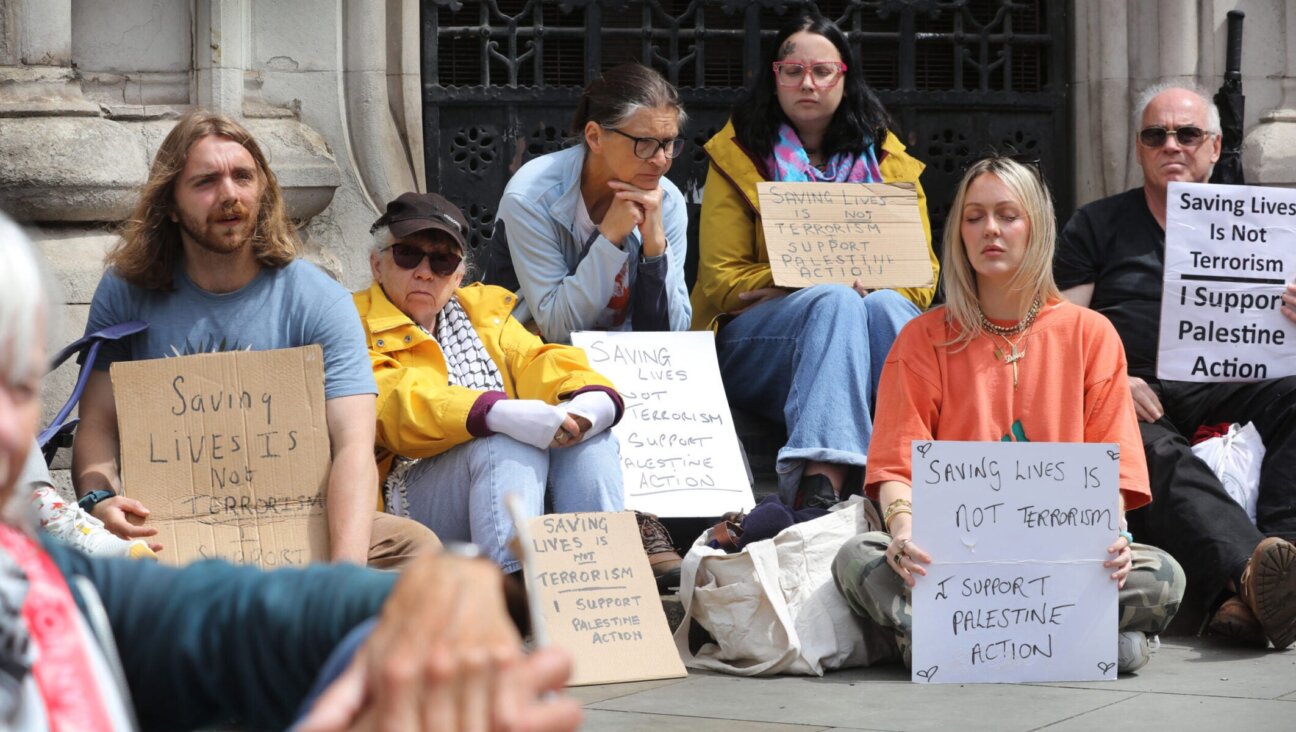
The petition, circulated by the group Film Workers For Palestine, pledges “not to screen films, appear at or otherwise work with Israeli film institutions — including festivals, cinemas, broadcasters and production companies — that are implicated in genocide and apartheid against the Palestinian people.” It names organizations like the Jerusalem Film Festival, but says the boycott does not apply to Israeli individuals.
The group says they are inspired by a similar boycott that had targeted Apartheid South Africa. Actors Javier Bardem and Susan Sarandon helped to promote the petition on Instagram.
Several Israeli film associations spoke out against the boycott. The group Friends of the Israeli Film and TV Producers Association, in a statement to NPR, called the boycott “profoundly misguided” and said its signatories “are targeting the wrong people.”
“By targeting us — the creators who give voice to diverse narratives and foster dialogue — these signatories are undermining their own cause and attempting to silence us,” the group said. “We call on the international community to recognize our commitment to dialogue, peace, and giving voice to all sides of this conflict. Our stories are tools for understanding and healing, and we will continue using them to help bring an end to violence.”
Nadav Ben Simon, chair of the Israeli screenwriter’s guild, also called the boycott counterproductive. In a statement published in The Guardian, he said that Israeli filmmakers often collaborate with Palestinian creatives and that boycotts “harm precisely those who are committed to fostering dialogue and building bridges between peoples. Such measures risk silencing the very voices striving tirelessly for reconciliation and understanding.”
Addressing the boycott’s exemption for Israeli individuals, Ben Simon added, “In Israel, there is no such thing as boycotting institutions without affecting creators… There are very few Israeli films that are not funded in some way by state-budgeted institutions or foundations.”

Hello, fellow Forward reader! I’m Joel Brown, a Forward reader and supporter for more than 15 years, and currently the chair of the board of directors.
I’m an avid Forward reader because it ticks so many of my essential boxes: excellent journalism, Jewish focus and diverse viewpoints. In today’s political climate, what I most appreciate is the Forward’s independence — made possible by the generosity of its membership.
The Forward is committed to bringing you unbiased, nuanced Jewish news. From my position as board chair, I see an exciting future as we expand our position as the definitive independent voice of contemporary American Judaism.
That’s why I’m paying it Forward, by matching $36,000 of reader gifts. It’s an investment in the Forward’s newsroom, to continue telling the American Jewish story with truth and independence.
— Joel Brown, Forward board chair
Support our mission to tell the Jewish story fully and fairly.