New York lawmakers approve 50-foot buffer around houses of worship in challenge to Mamdani
The statewide measure comes as synagogue protests persist
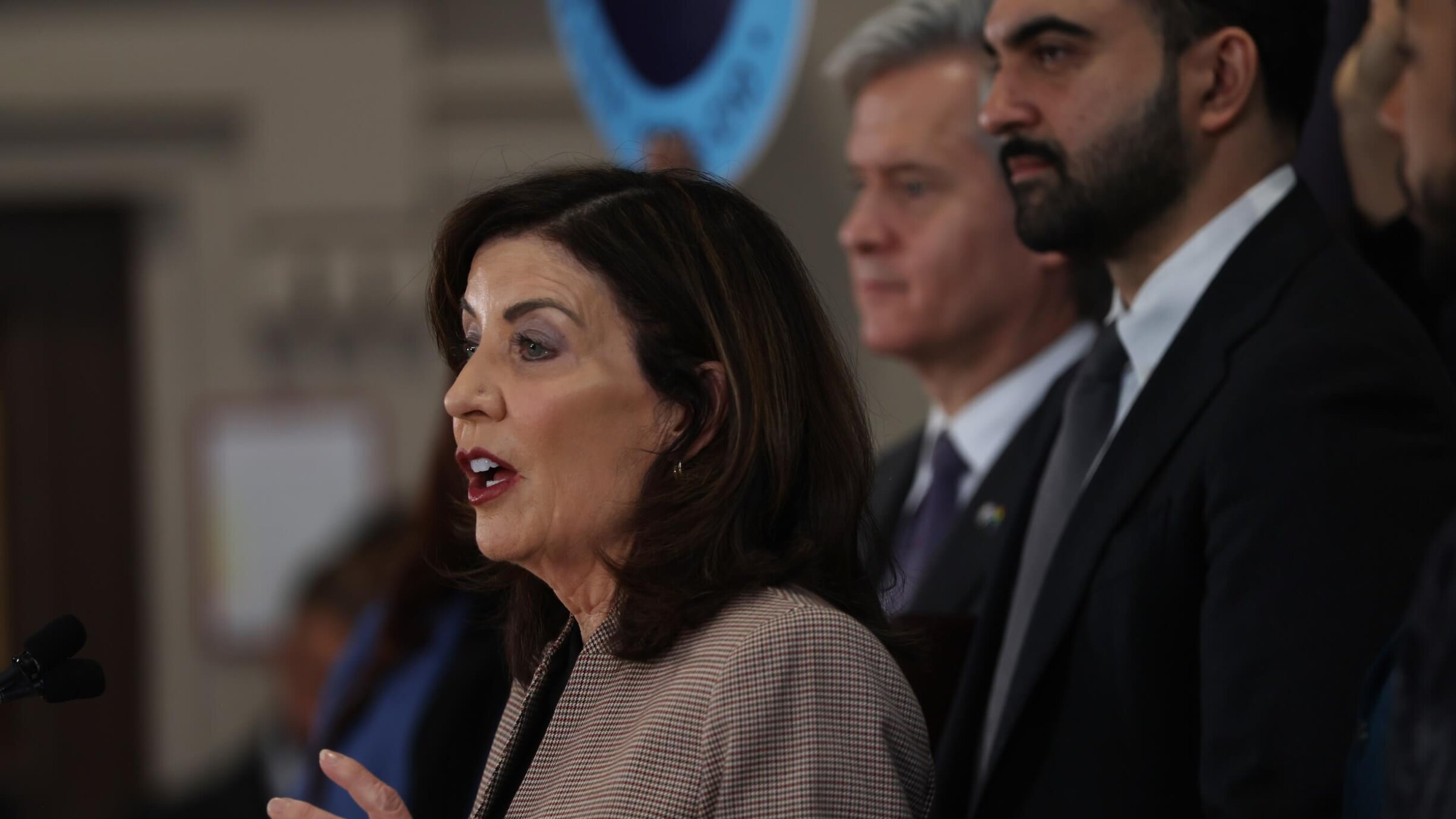
New York Governor Kathy Hochul joined by New York City Mayor Zohran Mamdani on Feb. 10. Photo by Spencer Platt/Getty Images

By Jacob Kornbluh May 26, 2026
New York legislators Tuesday approved a sweeping buffer zone measure as part of the state budget, in a measure that would establish criminal penalties for violations.
The legislation, proposed by Gov. Kathy Hochul and negotiated with the Democratic-led majorities in the state legislature, establishes a 50-foot security buffer around houses or worship and educational centers in response to or anticipation of a planned protest outside its premises. The bill would make it a class B misdemeanor — a low-level criminal offense — when a protester “knowingly or intentionally engages in a course of conduct that places that individual in reasonable fear for their safety.”
The measure defines a place of religious worship broadly, covering not only sanctuaries but also community centers and schools being used for services, education and religious observance. And it gives police the authority to establish a security perimeter beyond 50 feet, within which demonstrations are not allowed, when anticipating large protests or clashes.
“New Yorkers will be safer because of it,” Hochul said in a statement after its passage by the State Assembly. The incumbent Democrat is running for reelection this year and is making a play for Jewish votes.
The bill goes further than Hochul’s original proposal earlier this year, which called for a 25-foot buffer zone around religious institutions statewide. “We’ve seen demonstrations targeting faith communities outside synagogues, mosques and churches,” Hochul told reporters last month. “This is not free expression, this is harassment, and it has no place in the state of New York.”
The statewide approach contrasts with the New York City law that Mayor Zohran Mamdani allowed to become law without his signature in April. That measure, advanced by the City Council, requires the NYPD to develop safety plans for protests near houses of worship and manage access during demonstrations.
Civil liberties advocates and progressive groups had raised concerns about broad restrictions on protest activity. Mamdani, a strident Israel critic who faces scrutiny from mainstream Jewish organizations over his response to antisemitism and pro-Palestinian protests, vetoed a similar bill that applied to schools and educational institutions.
The City Council introduced a revised measure that does not apply to libraries, teaching hospitals, and colleges and universities.
Assemblyman Simcha Eichenstein, who represents the Orthodox-populated Borough Park neighborhood in Brooklyn, said the state intervention became “critically urgent” following Mamdani’s veto of the school safety reporting bill. “If New York City fails to take the necessary steps to protect vulnerable New Yorkers, the State of New York must act,” said Eichenstein.
In a joint statement on Wednesday, a group of Jewish state legislators said the measure is “designed to strengthen the safety and security of Jewish New Yorkers and send a strong message to the mayor that the Jewish community is not afraid to stand up.”
A City Hall spokesperson did not immediately respond to a request for comment regarding the state law.
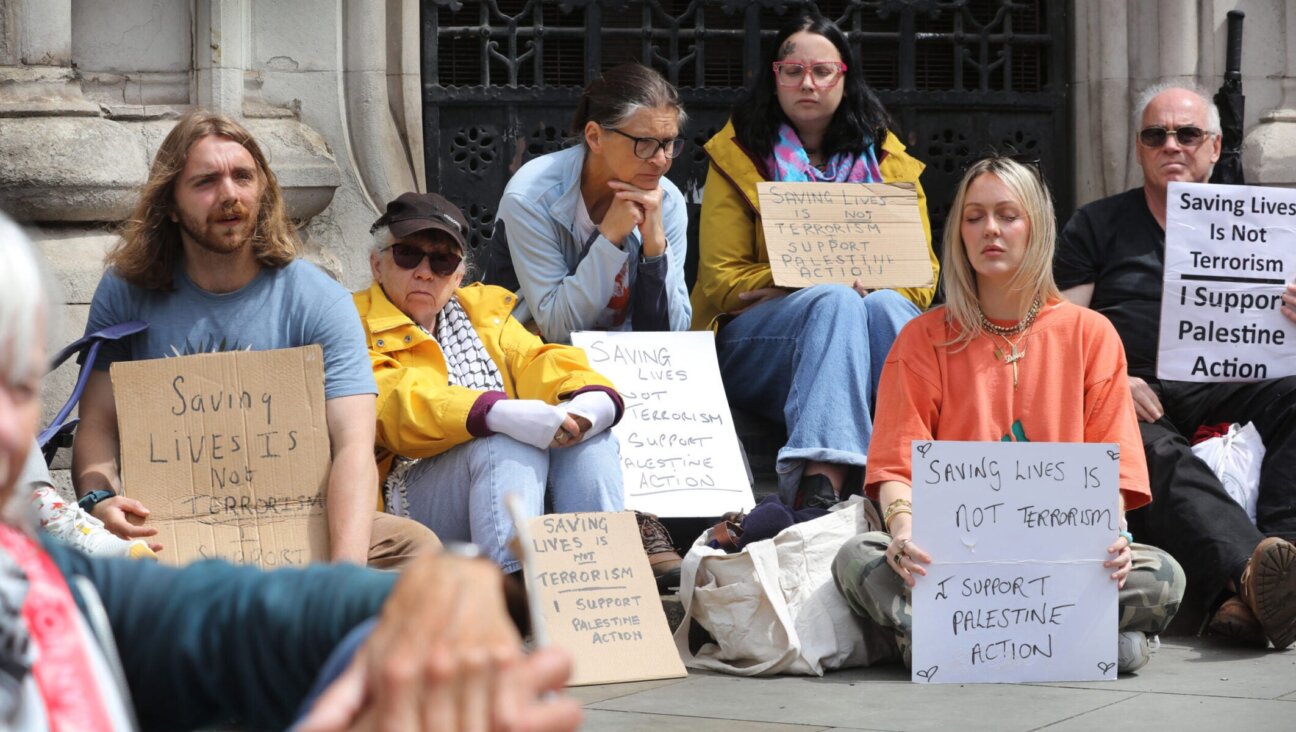
The push for buffer zones followed repeated disruptive protests since the Oct. 7, 2023, Hamas attacks on Israel and the war in Gaza, focused on synagogues hosting real estate sales of property in Israel and in the West Bank. In recent months, protests outside the Park East Synagogue in Manhattan and Young Israel of Kew Gardens Hills in Queens featured antisemitic slogans and chants that Zionist organizations view as antisemitic.
The mayor has not intervened to discourage demonstrations. Following a recent clash between protesters and supporters of Israel outside a synagogue in Brooklyn, the mayor emphasized his support of “the constitutional right to protest and counter-protest” peacefully, without intimidation or hatred.
Jewish organizations and Orthodox leaders had pushed for stronger protections, arguing that some protests outside synagogues crossed the line from political expression into intimidation and harassment.
The UJA Federation of New York thanked Hochul and the bill sponsors for demonstrating “strong leadership in their unwavering effort to help ensure safe access to critical community institutions and safeguard the right to worship free of harassment and intimidation.”
Opponents of restrictions are expected to seek legal challenges to statewide restrictions, based on concerns about infringement on free speech rights in public spaces. Hochul said last month she’d defend it in court.
Jews For Racial & Economic Justice, a progressive group aligned with Mamdani, called the state legislation “disgraceful” and “an astonishingly irresponsible course of action.” Sophie Ellman-Golan, a JFREJ spokesperson, said “it’s outrageous and dangerous” that Hochul and members of the legislature chose to criminalize protest “at a time when the federal government is actively persecuting activists and organizers” in the name of Jewish safety.
This post has been updated.

Hello, fellow Forward reader! I’m Joel Brown, a Forward reader and supporter for more than 15 years, and currently the chair of the board of directors.
I’m an avid Forward reader because it ticks so many of my essential boxes: excellent journalism, Jewish focus and diverse viewpoints. In today’s political climate, what I most appreciate is the Forward’s independence — made possible by the generosity of its membership.
The Forward is committed to bringing you unbiased, nuanced Jewish news. From my position as board chair, I see an exciting future as we expand our position as the definitive independent voice of contemporary American Judaism.
That’s why I’m paying it Forward, by matching $36,000 of reader gifts. It’s an investment in the Forward’s newsroom, to continue telling the American Jewish story with truth and independence.
— Joel Brown, Forward board chair
Support our mission to tell the Jewish story fully and fairly.