Hochul pushes 25-foot buffer around New York houses of worship as Mamdani wavers on local bills
The New York governor, running for reelection, amplified her pledge to pursue action as critics claim restrictions would limit New Yorkers’ constitutional rights
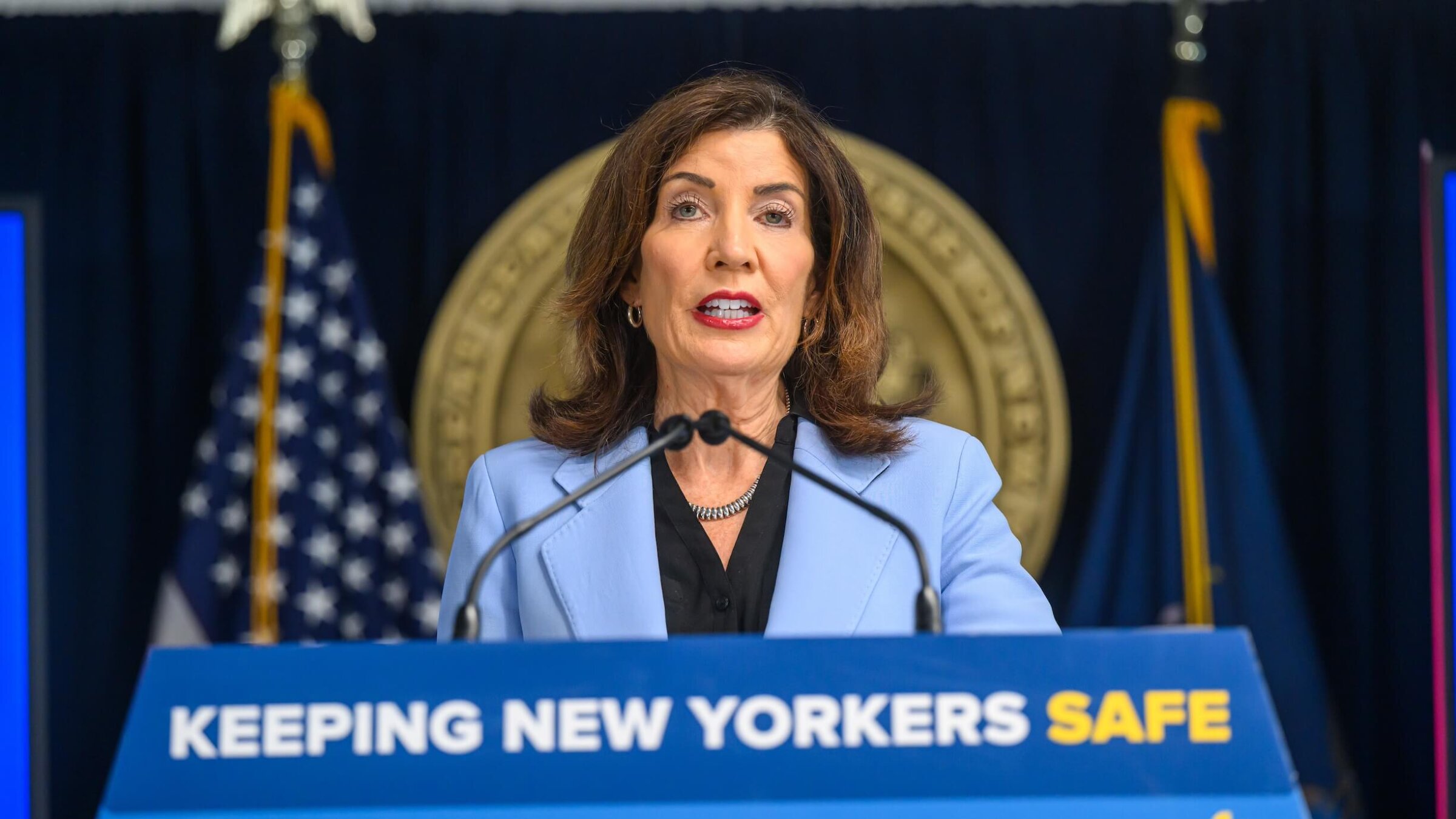
New York Gov. Kathy Hochul on April 15. Photo by Susan Watts/Office of Governor Kathy Hochul

By Jacob Kornbluh April 15, 2026
New York Gov. Kathy Hochul on Tuesday doubled down on her support for proposed legislation that would create a 25-foot buffer zone around houses of worship statewide, stepping into a growing debate over public safety and free speech in a move that puts her at odds with New York City Mayor Zohran Mamdani.
Hochul, who is running for reelection this year, pushed the plan ahead of a final budget agreement with the state Legislature, now more than two weeks past its April 1 deadline. It comes as Mamdani has declined to say whether he will sign a more limited measure passed by the City Council aimed at curbing disruptive demonstrations outside synagogues and schools.
“I want to get that done,” Hochul, speaking alongside Jewish leaders and law enforcement officials, said about her proposed 25-foot buffer, which would be upheld by police around places of worship. “That is common sense. It’s a statement when people leave their homes, that they will feel safe from harassment.” She added that the fear of Jews facing antisemitic attacks and harassment “is not a hypothetical. It is happening. It has happened, and the effects are lingering.”
The governor’s proposal marks a more aggressive statewide approach than the one recently passed by the New York City Council, led by Speaker Julie Menin, who is Jewish, as anti-Jewish incidents continue to make up a majority of reported hate crimes in New York. The Council’s package of bills directs the NYPD to develop a plan within 45 days for managing protests near houses of worship and educational institutions. The synagogue-focused measure passed 44–5 — a veto-proof margin — while a companion bill addressing protests near schools cleared the chamber with a narrower majority.
Mamdani, a strident critic of Israel who rose to power aligned with pro-Palestinian activism, has not committed to signing or vetoing the legislation, citing “serious concerns” raised by free speech advocates and pro-Palestinian supporters about limiting New Yorkers’ constitutional rights. Under city law, the bills could also become law automatically if he takes no action within 30 days.
The mayor, however, did publicly express objections to the Council’s initial proposal to establish buffer zones of up to 100 feet outside synagogues. “I wouldn’t sign any legislation that we find to be outside of the bounds of the law,” he said. The perimeter proposal was omitted in the final version of the bill following reservations expressed by Police Commissioner Jessica Tisch, who cautioned that a one-size-fits-all rule might not withstand legal challenge and could prove unworkable across neighborhoods with vastly different street layouts.
A City Hall spokesperson referred to Mamdani’s previous statements when asked for comment on the Hochul proposal. The state measure could supersede any action he takes.
Representatives for Carl Heastie and Andrea Stewart-Cousins said Wednesday that the Democratic leaders are reviewing the proposal with their members and remain in ongoing discussions before making a decision.
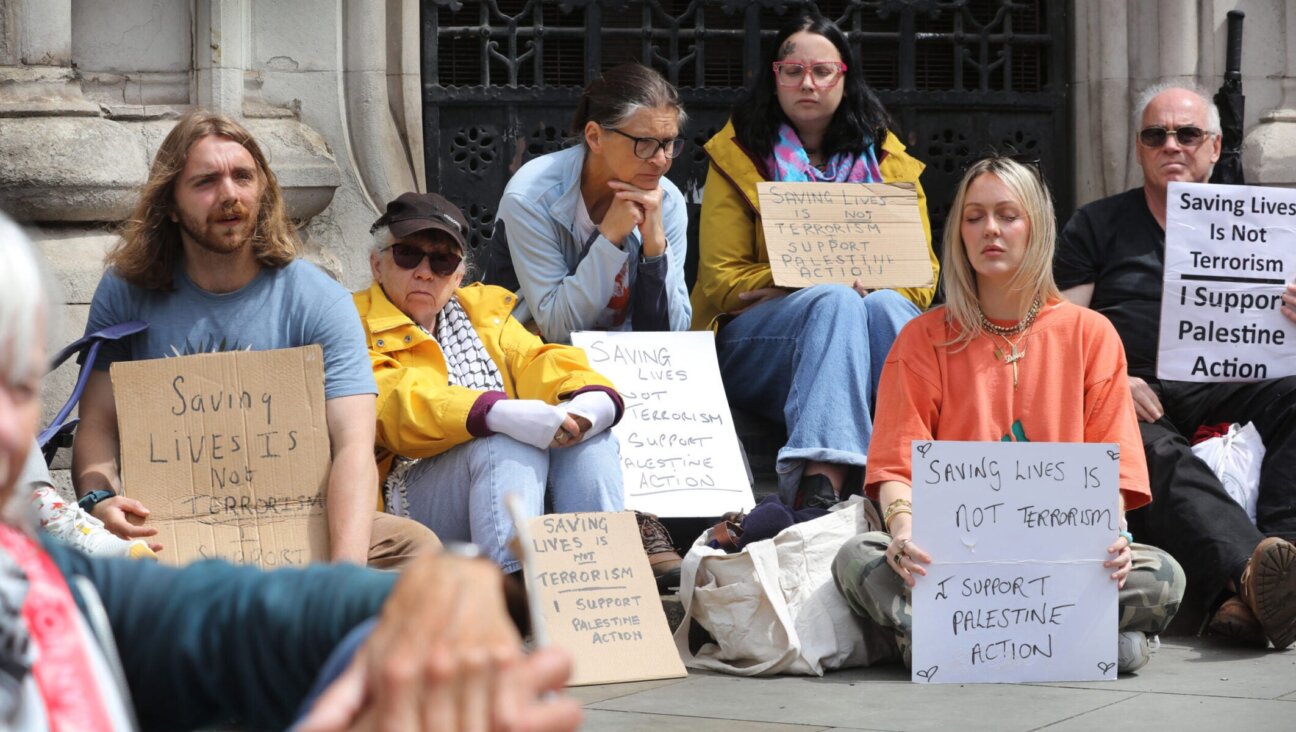
The proposals emerged following disruptive protests outside houses of worship in recent months centered on events promoting immigration to and real estate in Israel, at Park East Synagogue in Manhattan and Young Israel of Kew Gardens Hills in Queens.
Hochul was uncompromising about her approach. “I believe I have the right to protect people’s constitutional right to free exercise of religion,” she told reporters. “And so if that needs to be tested in court, bring it on.”
Hochul, who endorsed Mamdani in the mayoral election last year, has maintained a warm relationship with Jewish leaders since becoming governor. If passed, the buffer zone bill could bolster her chances among the state’s more than one million Jewish voters against Bruce Blakeman, the Republican candidate and the first Jewish executive of Nassau County on Long Island. In 2022, former Rep. Lee Zeldin came within five percentage points of winning the governor’s race, powered by strong Jewish support.
Hochul made the announcement to call for an additional $70 million in funding for the state’s Securing Communities Against Hate Crimes program, which provides grants to protect vulnerable institutions, as well as a new online system for reporting bias incidents. Hochul has already allocated $131 million in grants for a total of 1,745 security projects since taking office in 2021.

Hello, fellow Forward reader! I’m Joel Brown, a Forward reader and supporter for more than 15 years, and currently the chair of the board of directors.
I’m an avid Forward reader because it ticks so many of my essential boxes: excellent journalism, Jewish focus and diverse viewpoints. In today’s political climate, what I most appreciate is the Forward’s independence — made possible by the generosity of its membership.
The Forward is committed to bringing you unbiased, nuanced Jewish news. From my position as board chair, I see an exciting future as we expand our position as the definitive independent voice of contemporary American Judaism.
That’s why I’m paying it Forward, by matching $36,000 of reader gifts. It’s an investment in the Forward’s newsroom, to continue telling the American Jewish story with truth and independence.
— Joel Brown, Forward board chair
Support our mission to tell the Jewish story fully and fairly.