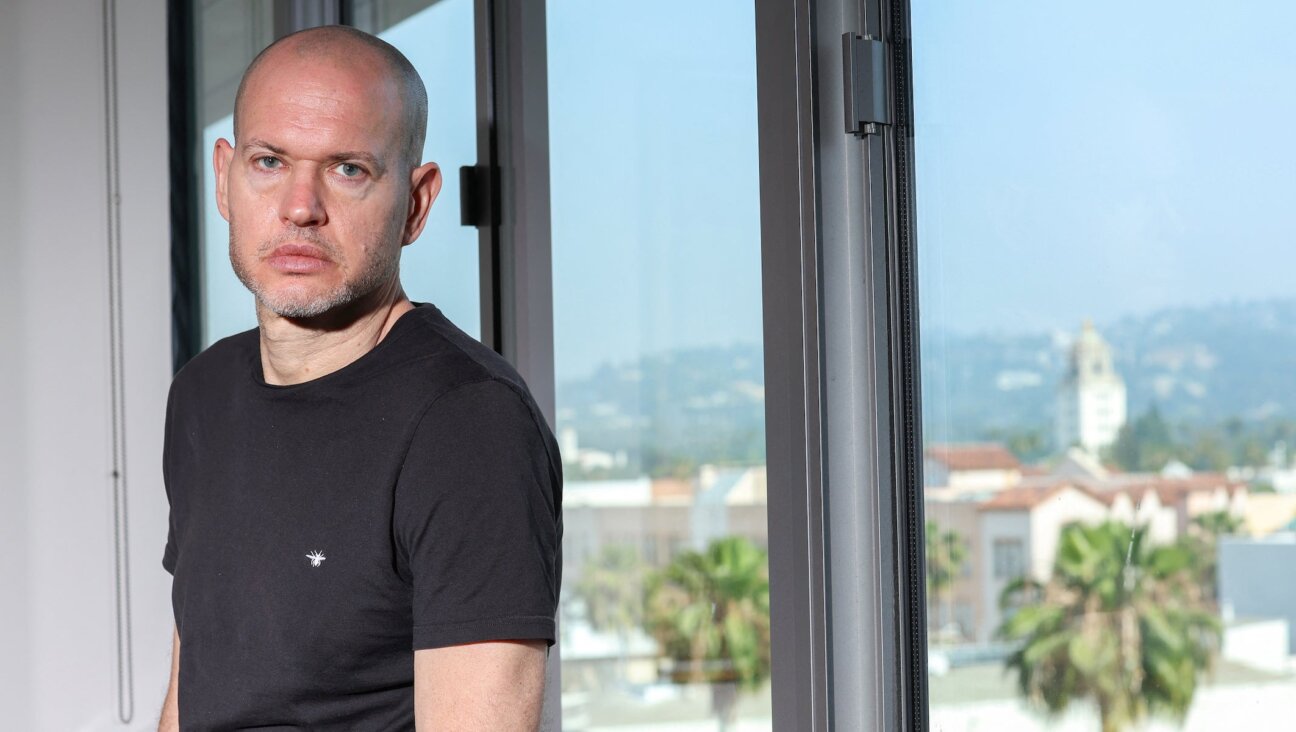
Argentine tennis star Diego Schwartzman now plays soccer for a Jewish club in Buenos Aires
Schwartzman peaked at No. 8 in the world and retired earlier this year
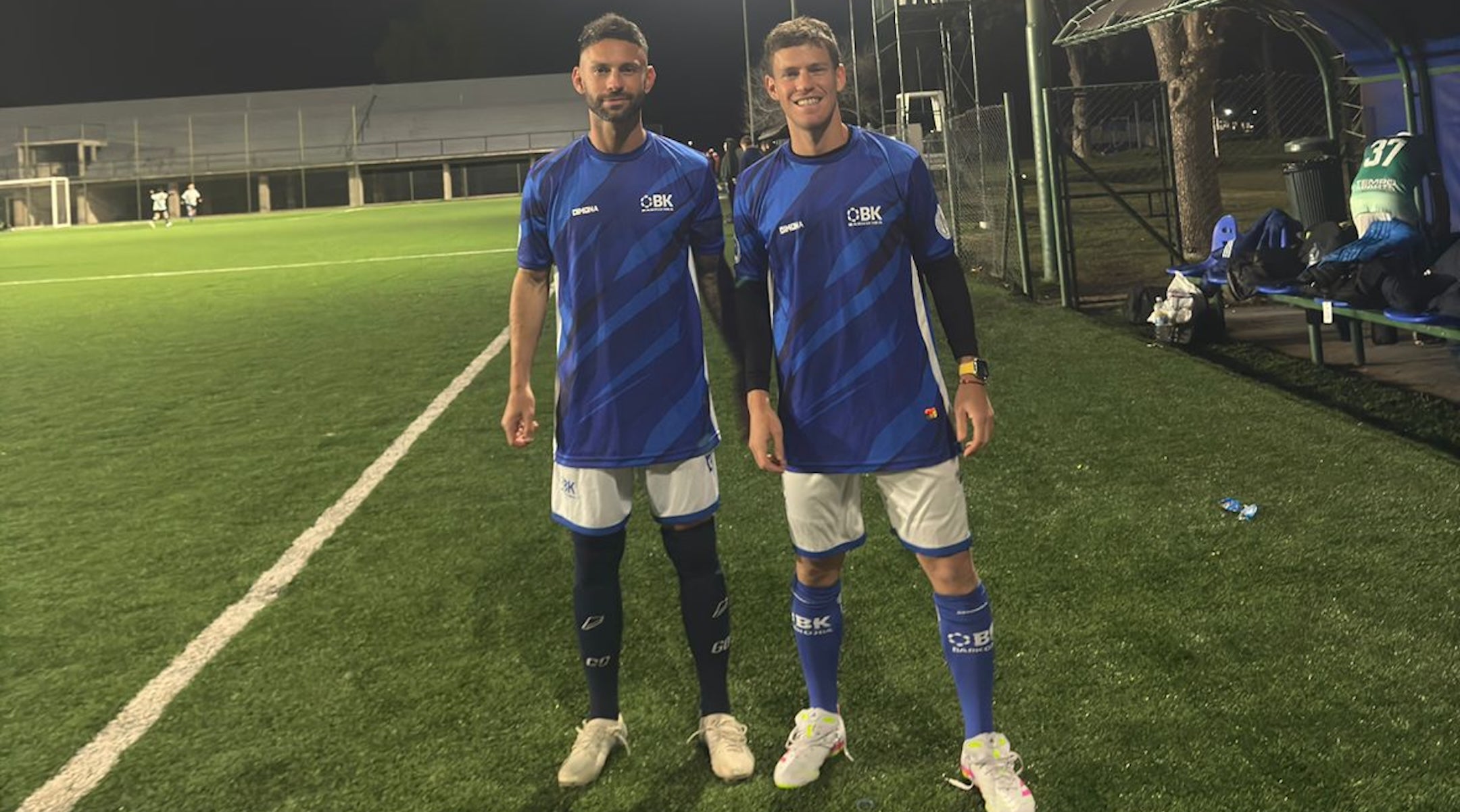
Diego Schwartzman, at right, poses with a Barkojba teammate in Buenos Aires, 2025. Courtesy of Guido Plotnik
(JTA) — BUENOS AIRES — Former top-10 tennis player Diego Schwartzman, once ranked among the world’s best, is now playing soccer for one of Buenos Aires’ Jewish sports clubs.
Schwartzman’s sporting life has long been tied to Jewish institutions: He played soccer as a child with his friends and older brothers at Barkojba, a club named after Simon Bar Kochba, leader of the 2nd-century Jewish revolt against the Roman Emperor Hadrian, and he began his tennis career at the Hacoaj sports club (“strength” in Hebrew).
He dropped soccer to avoid injuries as he ascended in tennis, where his ranking peaked at No. 8 in the world, in 2020 — when the 5’7” star became the shortest man to reach a Grand Slam semifinal since fellow Jewish player Harold Solomon at the 1980 French Open. In 2021, Hacoaj named a soccer field for him.
Now, after retiring earlier this year, Schwartzman has returned to the soccer pitch, competing for Barkojba in the division for players 28 and older. He usually plays midfield and says he is playing nearly every week.
“I play soccer with my best lifelong friends,” Schwartzman told the Jewish Telegraphic Agency during Hacoaj’s 90th anniversary celebration this week, where he was an honored guest. “I grew up with them, they supported me during my career, and now that I left tennis, I’m back playing soccer with them, just like in our youth.”
He added, “It’s a mix of joy, fun, friendship. It’s my identity.”
Guido Plotnik, a friend and current teammate, recalled meeting Schwartzman through his older brother Matías more than 15 years ago. He noted two recent highlights in Schwartzman’s soccer career.
“I could clearly tell you about the two goals he scored against Hebraica just two weeks ago. He came on with 15 minutes left, the game tied 2–2, and he scored twice to win it 4–2,” Plotnik said.
He added, “He’s also sharing the field with Mati, his brother, for the first time ever. I can only imagine what that must feel like for the two of them.”
Barkojba was founded as a club for German Jewish immigrants in 1937 and rapidly grew into one of Buenos Aires’ biggest Jewish community centers. Its soccer teams compete in Argentina’s Jewish soccer league, organized by FACCMA, the federation of Jewish sports institutions in the country. The men’s over-28 team is currently undefeated in the FACCMA tournament after three games.
I’m personally matching all gifts to the Forward, up to $36,000. Can I match your gift now?

Hello, fellow Forward reader! I’m Joel Brown, a Forward reader and supporter for more than 15 years, and currently the chair of the board of directors.
I’m an avid Forward reader because it ticks so many of my essential boxes: excellent journalism, Jewish focus and diverse viewpoints. In today’s political climate, what I most appreciate is the Forward’s independence — made possible by the generosity of its membership.
The Forward is committed to bringing you unbiased, nuanced Jewish news. From my position as board chair, I see an exciting future as we expand our position as the definitive independent voice of contemporary American Judaism.
— Joel Brown, Forward board chair
Support our mission to tell the Jewish story fully and fairly.