Yad Vashem says it has identified 5 million Holocaust victims with help of AI
The milestone was achieved through the use of artificial intelligence
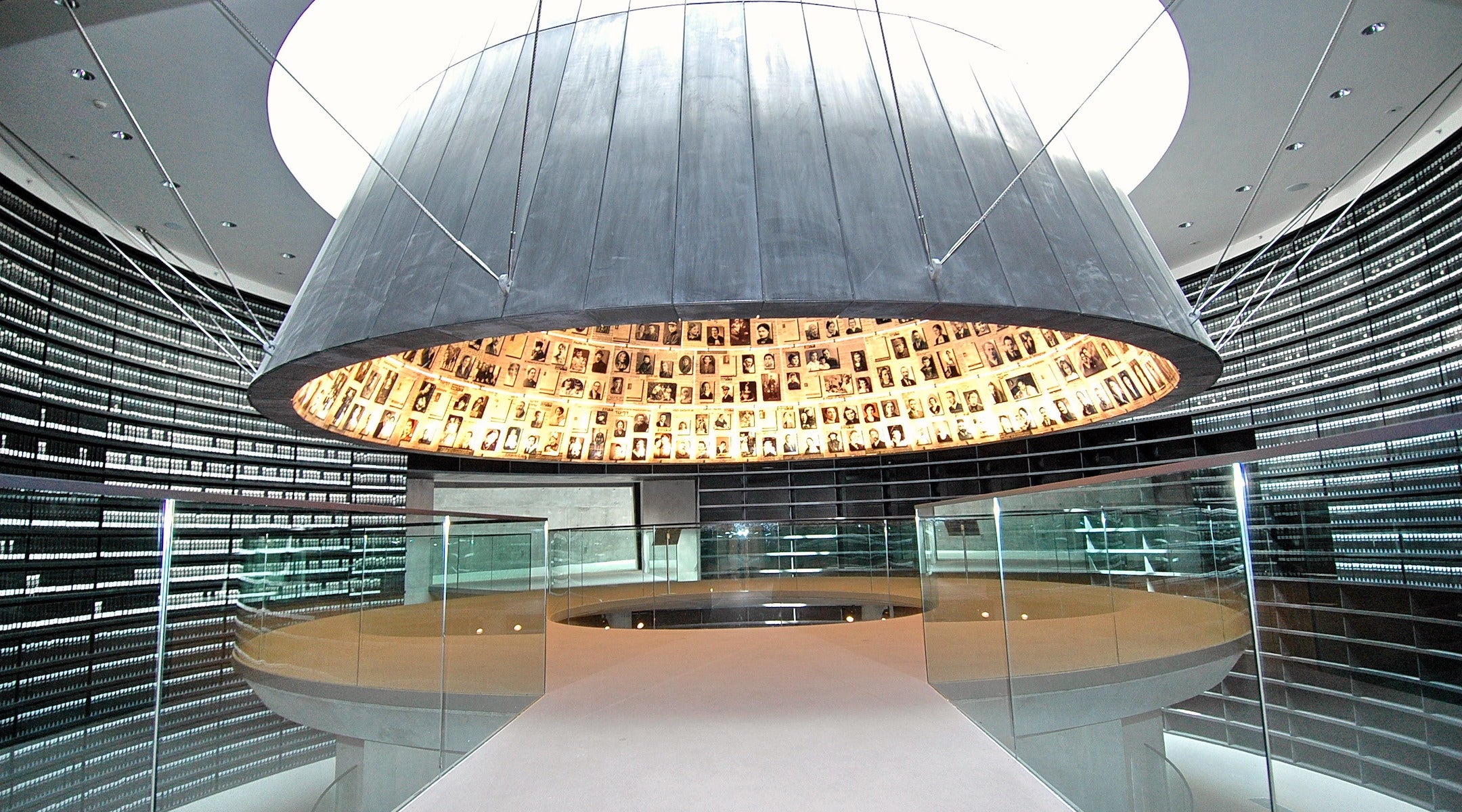
The Hall of Names at the Yad Vashem Holocaust Museum in Jerusalem. Courtesy of Yad Vashem
(JTA) — Yad Vashem, Israel’s Holocaust memorial, says it has reached a major milestone in its efforts to uncover the identities of all of the Jews murdered in the Holocaust, crossing the 5-million name threshold with the help of AI.
That leaves 1 million names still unknown from the tally of 6 million murdered Jews that is synonymous with the genocide perpetrated by the Nazis during World War II.
Two years ago, Yad Vashem inaugurated a 26.5 foot-long “Book of Names,” which included the names of 4,800,000 victims of the Shoah, at the United Nations headquarters in New York City.
Since then, researchers deployed AI technology and machine learning to analyze hundreds of millions of archival documents that were previously too extensive to research manually, according to Yad Vashem. In addition to covering large amounts of material quickly, the algorithms were taught to look out for variations of victims’ names, leading to the new identification of hundreds of thousands of victims.
Yad Vashem estimates an additional 250,000 names could still be recovered using the technology.
“Reaching 5 million names is both a milestone and a reminder of our unfinished obligation,” said Dani Dayan, the chairman of Yad Vashem, in a statement. “Behind each name is a life that mattered — a child who never grew up, a parent who never came home, a voice that was silenced forever. It is our moral duty to ensure that every victim is remembered so that no one will be left behind in the darkness of anonymity.”
Did you know that only 2% of Forward readers donate to support our nonprofit newsroom? That 2% make it possible for millions to read the Forward without a paywall or subscription — removing any barriers to the full and fair Jewish story.
But while the Forward is free to read, it isn’t free to produce. Big stories — like deep dives into the antisemitism data, political scoops or reporting trips to college campuses — take months of research and fact-checking. All while we keep you informed of what you need to know each day.
— Rachel Fishman Feddersen, Forward Publisher & CEO
Support our mission to tell the Jewish story fully and fairly.