Netanyahu on ‘60 Minutes’: Fight with Hezbollah should be seen as separate from Iran war
The Israeli prime minister said President Donald Trump “understands what I am saying.”
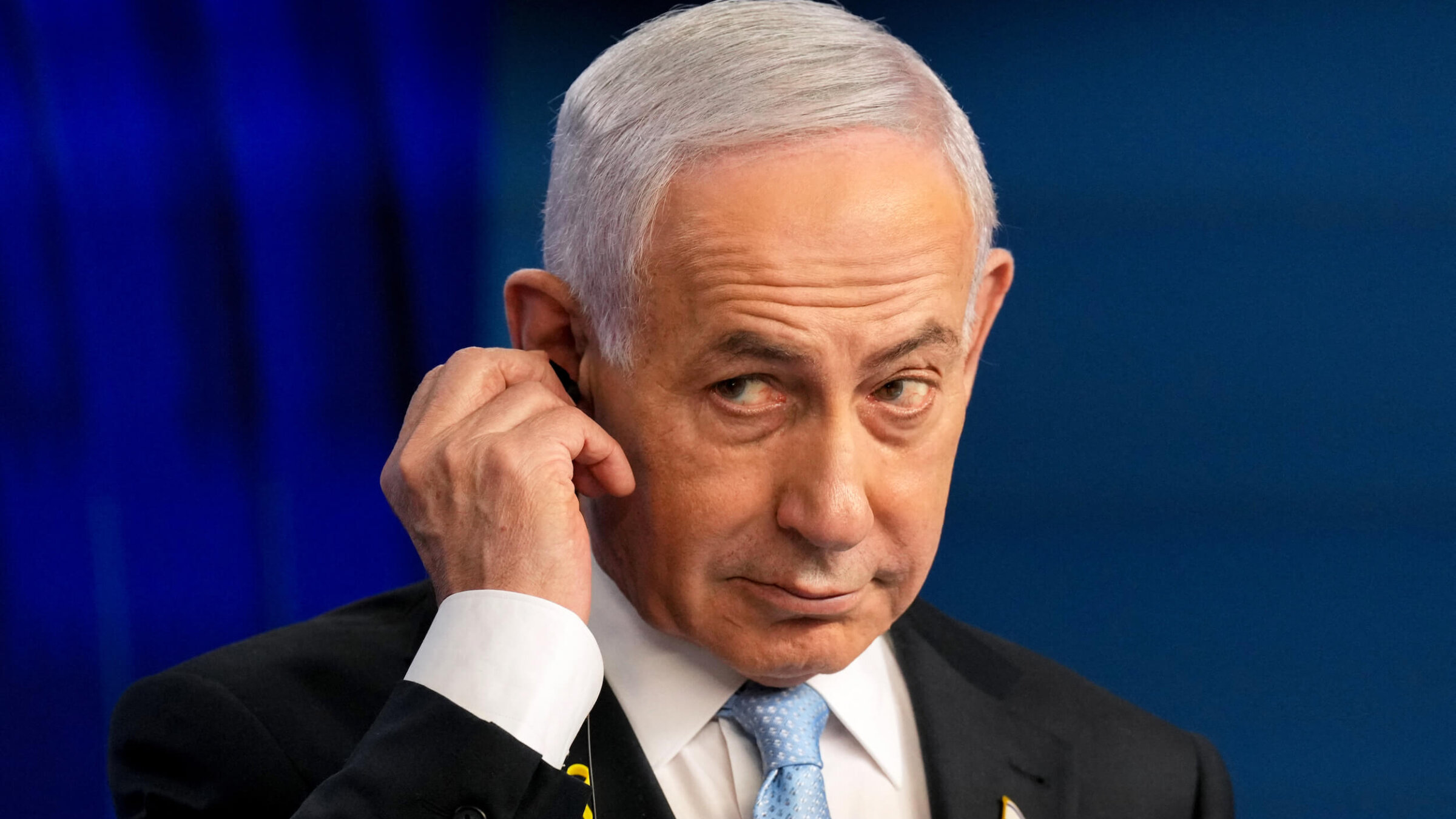
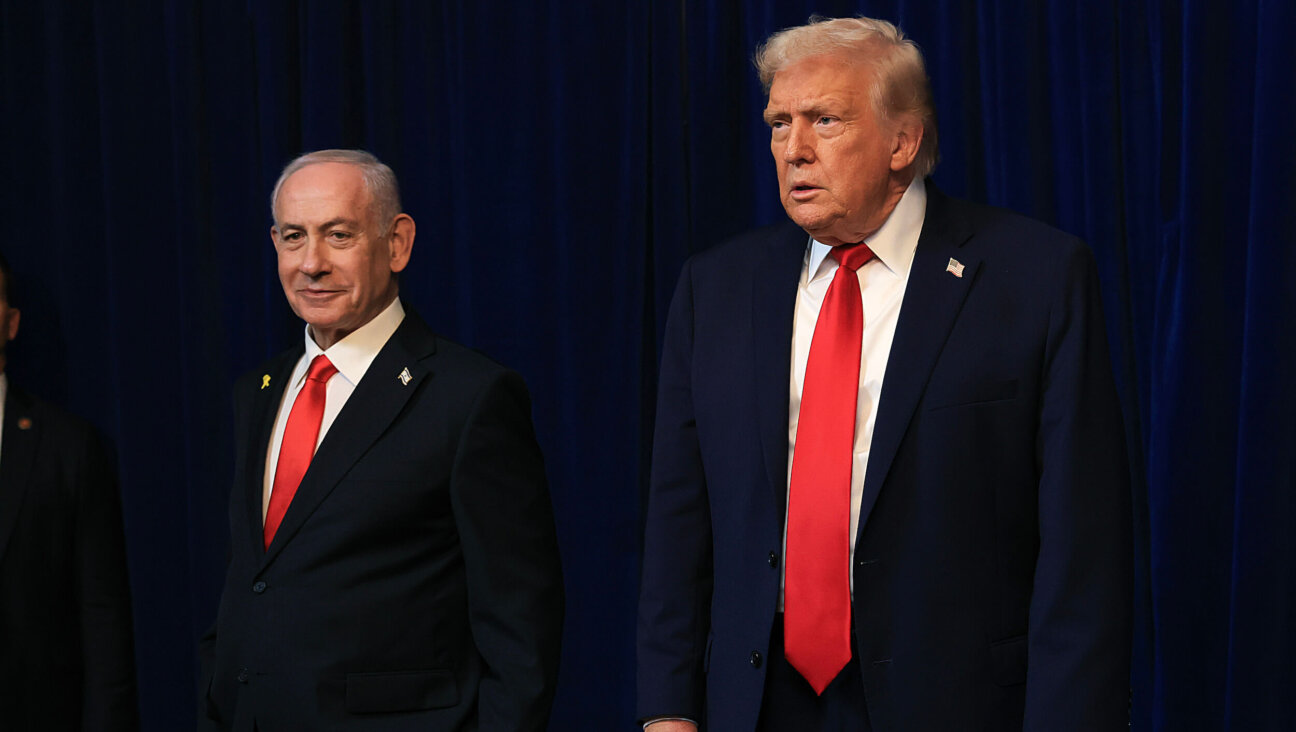
Israeli Prime Minister Benjamin Netanyahu in Jerusalem on Dec. 7. Photo by Ariel Schalit/Pool/AFP
(JTA) — In an appearance on U.S. television on Sunday night, Israeli Prime Minister Benjamin Netanyahu argued that Israel should continue fighting against Hezbollah in Lebanon even if the war in Iran concludes.
Netanyahu spoke with Major Garrett on CBS’ “60 Minutes” as President Donald Trump continues to negotiate to end the Iran war that he and Netanyahu jointly began in February. When Trump declared a ceasefire with Iran on April 7, Netanyahu initially insisted that the deal did not require Israel to stop fighting Hezbollah, an Iranian proxy based in Lebanon. The Iranians insisted that it did, and Trump soon weighed in on social media to say that Israel was “prohibited” from attacking inside Lebanon.
In the weeks since, Israel and Hezbollah have continued to fight, but at a decreased intensity. Now, with Trump seemingly not eager to resume fighting with Iran even as the Iranians have not acceded to his demands at the negotiating table, Netanyahu said the conflicts should be decoupled.
“Is it possible, Mr. Prime Minister, that the war with Iran could end but the war with Hezbollah could continue? That these would be separate and divergent fields,” Garrett asked.
“They should be,” Netanyahu answered. “What Iran would like to do is to say, ‘No, you know, if we achieve a ceasefire here, we want a ceasefire there.’”
“Will you accept that?” Garrett asked. After Netanyahu said he would not, Garrett went on: “Even if President Trump asks you to?”
Netanyahu replied, “Look, he understands what I’m saying.”
Trump’s critics on both sides of the aisle have alleged that Netanyahu pushed him into entering the war. But Netanyahu said that belief is wrong. He called reporting by The New York Times about what he told Trump during a Feb. 11 White House meeting “incorrect,” saying that he had never told Trump that regime change in Iran was an assured outcome of a shared attack.
Netanyahu also insisted to Garrett that declining public support for Israel in the United States was a product of online campaigns designed to spread misinformation.
“Do you believe that’s the only explanation, or is it possible that some Americans have come to a different sense of Israel because of the last two or three years?” Garrett pressed.
“What they see is so many falsifications and vilifications that are unfounded, but they don’t know because they just get you know, the last reel in the movie. They don’t see the entire movie,” Netanyahu said.
The Israeli government recently allocated $730 million for public diplomacy, including online campaigns, designed to boost public opinion about Israel. The allocation quadrupled what was set aside last year for that purpose.
This article originally appeared on JTA.org.
Did you know that only 2% of Forward readers donate to support our nonprofit newsroom? That 2% make it possible for millions to read the Forward without a paywall or subscription — removing any barriers to the full and fair Jewish story.
But while the Forward is free to read, it isn’t free to produce. Big stories — like deep dives into the antisemitism data, political scoops or reporting trips to college campuses — take months of research and fact-checking. All while we keep you informed of what you need to know each day.
— Rachel Fishman Feddersen, Forward Publisher & CEO
Support our mission to tell the Jewish story fully and fairly.