Celebrated German Jewish bakery closes, saying ‘the hatred reached Berlin’ after Oct. 7
Babka & Krantz’s Israeli immigrant owner was the first Jewish master baker accepted into the Berlin Bakers’ Guild
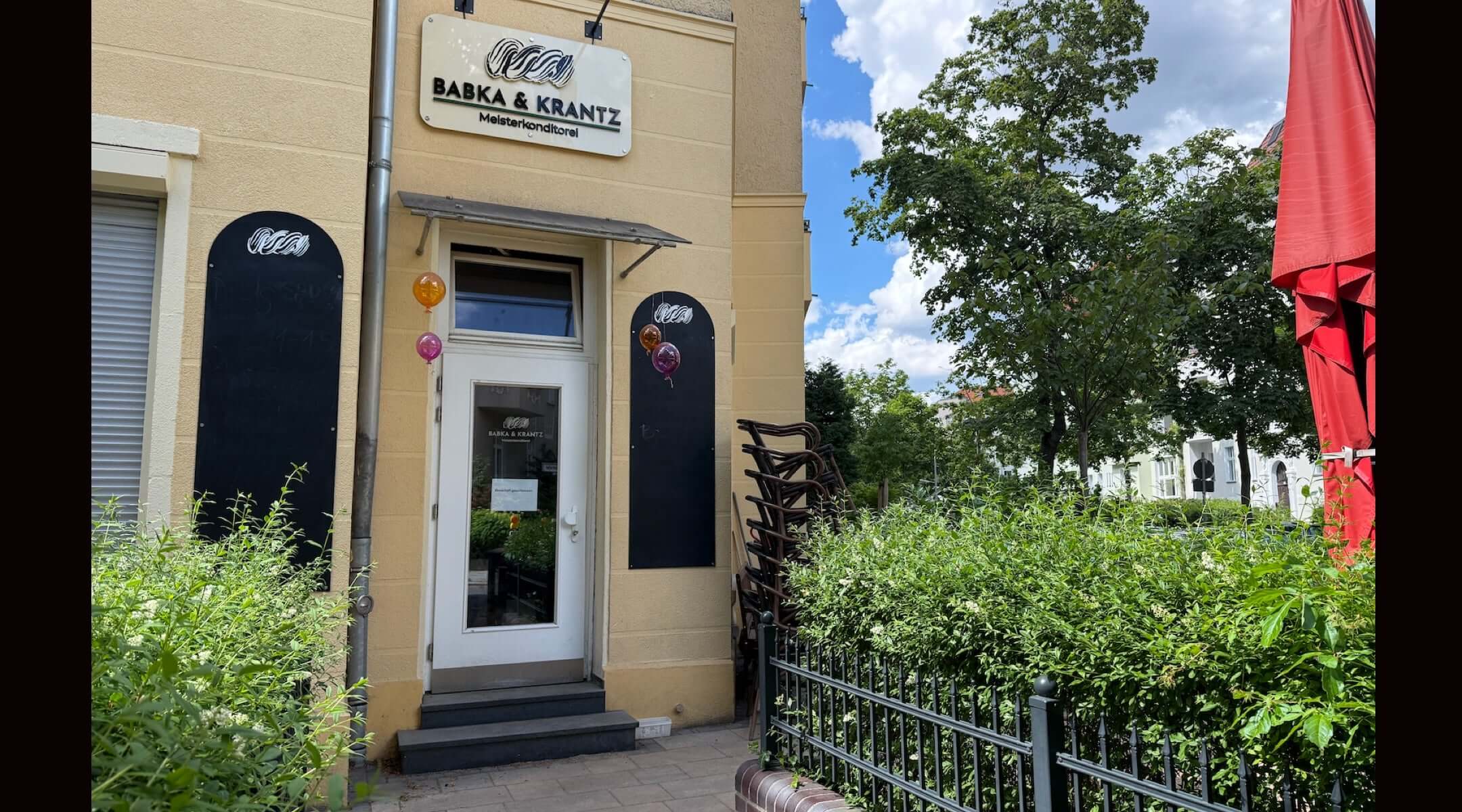
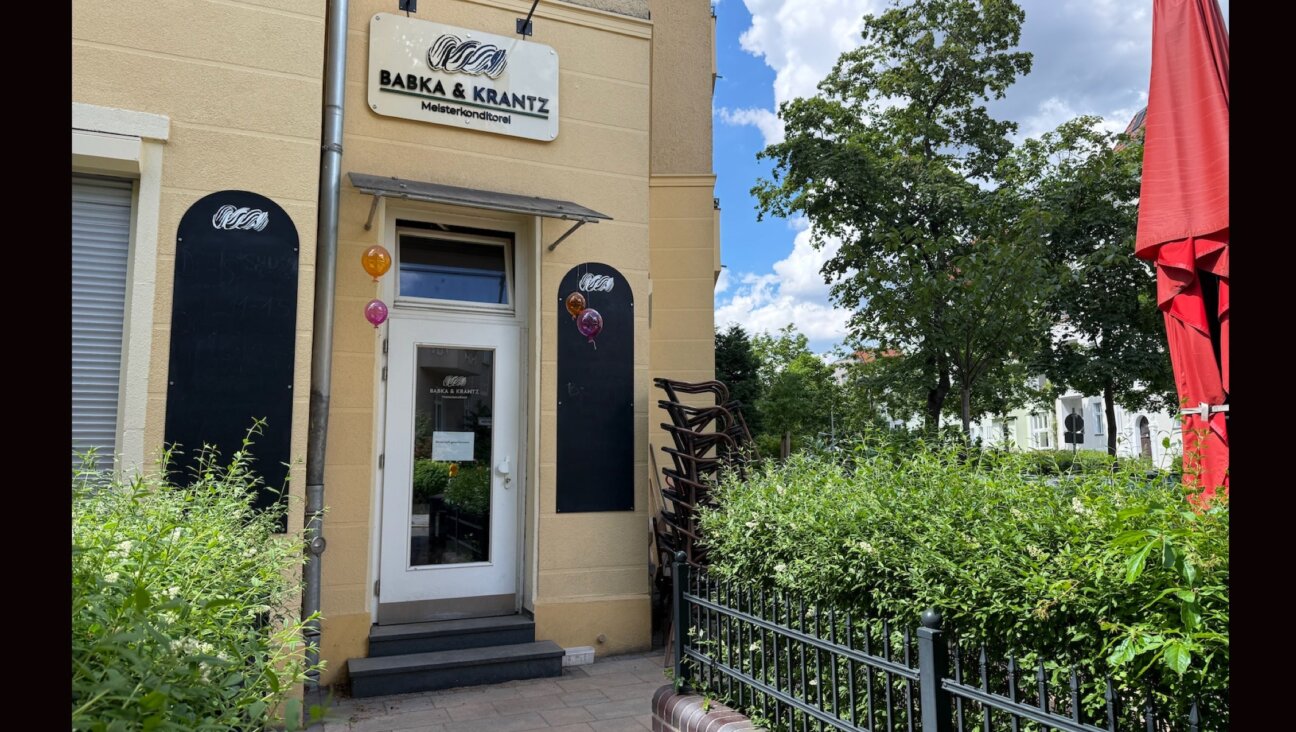
Babka & Krantz, a Berlin Jewish bakery, closed citing harassment as well as economic pressure, as seen in June 2026. (Toby Axelrod)
(JTA) — BERLIN — A Jewish bakery owned by Polish and Israeli immigrants in this city has shut its doors, citing a combination of economic pressure and antisemitic harassment.
Babka & Krantz opened in the Friedenau district in November 2022 and added a second location in December 2024, adjacent to the memorial at the site where the Nazis devised their “final solution” for the Jews during the Holocaust.
The second location at the House of the Wannsee Conference closed on Nov. 30, according to the bakery’s Instagram account, which directed followers to a statement from the memorial that has since been deleted from its website.
“We regret the verbal abuse and the difficult situation to which the managing directors and employees of BABKA & KRANTZ Meisterkonditorei were exposed and express our full understanding for the termination of the cooperation under these circumstances,” said the March 10 statement, which was preserved by the Internet Archive.
Now, the original location has closed, too.
Café owners and married couple Shahar Elkin and Marcin Liera-Elkin said in a statement to friends and supporters that a construction site had blocked access to the bakery for more than a year, curbing foot traffic.
But they also said they had been affected when, after Hamas’ Oct. 7, 2023, attack on Israel, “the hatred reached Berlin as well.” The bakery was “subjected to constant verbal abuse” since that time, they said in their statement, which has circulated on social media.
Elkin and Liera-Elkin declined to comment to the Jewish Telegraphic Agency, saying they were turning down all media inquiries for the time being. “We and our family need to settle down and attend to a few matters,” they said.
Some would-be customers in the neighborhood said they were already missing the Babka & Krantz on Sunday.
“I was actually going there every day recently, after I found out they were closing. I found that really unfortunate,” said Rebecca, who declined to share her last name. She said she had heard about both the economic impact of the construction and about harassment that had taken place at the store, adding, “It makes me sad that things are this way. I’m trying not to cry.”
Babka & Krantz joins a growing list of beloved eateries that have cited the aftermath of Oct. 7 in announcing their closures. Also in Berlin, the hummus bar Kanaan, which was jointly owned by an Israeli and a Palestinian, closed in March after experiencing protests. An Israeli restaurant in Portugal cited harassment when it announced its closure in January, as did an Ethiopian-Israeli eatery in New York City that recently ceased operating as a traditional restaurant. In Washington, D.C., a local chain of Israeli restaurants closed down late last year following a boycott campaign.
Elkin came to Berlin in 2012 from his home city of Haifa, Israel, and in 2019 earned a master baker’s certificate, becoming the first Jewish master baker accepted into the Berlin Bakers’ Guild. Liera-Elkin was born in Posen, Poland, and grew up in Berlin.
The couple said they were proud to be producing Jewish baked goods in a city with a resurging Jewish population.
“Our families come from cities with a vibrant Jewish life and a formative culture of debate. Today, few or no Jews live in these places anymore,” they said in their statement last week. “That’s why Berlin is such a miracle.”
Germany is home to an estimated 200,000 Jews, including many from the former Soviet Union and a large contingent of Israeli expats. The bakery catered to them, offering special menus for Jewish holidays, devising baked goods that reflect diverse Jewish traditions and even bringing in a rabbi to answer visitors’ questions.
But the bakery catered not only to Jewish customers. According to the owners, non-Jewish locals learned about Jewish culture at their tables. “Our neighbors have seen that different people can eat together at one table and speak to each other,” they wrote in their goodbye note.
The business also won professional recognition, earning a Craftsmanship Award sponsored by the Federal Ministry for Economic Affairs last year.
The couple said the good relations they had built as unofficial ambassadors of Jewish culture – introducing Berliners of all backgrounds to Jewish culinary specialties – were endangered when the construction site went up in their neighborhood, blocking the street view of their business. They lost customers and money, they said, and their anxiety was increasingly visible on their Instagram account, where they chronicled their fruitless efforts to make their story accessible again.
Speaking to the Berliner Morgenpost in November, Liera-Elkin hinted that the two-pronged pressure — economic and harassment — might force them to close. He reported that their vehicle had been vandalized and that they had “experienced numerous verbal and even physical attacks in our private life, received hate-filled letters and calls.” The couple said they had even sent their daughter to stay elsewhere for a time.
“We are just a bakery that wants to offer great products. But now we are only confronted with problems and politics that leave us in despair,“ he told the Morgenpost. “We really don‘t know if Berlin is still the right place for us.”
I’m personally matching all gifts to the Forward, up to $36,000. Can I match your gift now?

Hello, fellow Forward reader! I’m Joel Brown, a Forward reader and supporter for more than 15 years, and currently the chair of the board of directors.
I’m an avid Forward reader because it ticks so many of my essential boxes: excellent journalism, Jewish focus and diverse viewpoints. In today’s political climate, what I most appreciate is the Forward’s independence — made possible by the generosity of its membership.
The Forward is committed to bringing you unbiased, nuanced Jewish news. From my position as board chair, I see an exciting future as we expand our position as the definitive independent voice of contemporary American Judaism.
— Joel Brown, Forward board chair
Support our mission to tell the Jewish story fully and fairly.