On Shavuot, Kaddish for the Heroine of My Youth
This week, for the Jewish holiday of Shavuot, I will light a Yahrtzeit candle in my studio apartment and attend the memorial Yizkor service. The superstitious may disapprove since, thankfully, I have not lost anyone in my immediate family, for whom I would be required to go through these mourning rituals. Yet, I take this time to pause and honor Hedda and George Kury, who have been gone for seven years and who have no one to say Kaddish in their honor.
Growing up in middle-class, suburban Boston, I wanted to be just like Hedda, the glamorous socialite who bought me puffy dresses with matching overcoats and fur mufflers from Neiman Marcus. Her beautiful gifts made me feel like I belonged with the trust-fund babies at my preparatory school, where I was labeled a new money Jew. Hedda’s husband, George, a gentle dark-haired pathologist, was my grandfather’s friend and, for as long as I could remember, the stately pair was part of my tight-knit group that gathered on holidays.Although they’d survived the Holocaust and endured Communist Hungary, Hedda and George appeared to be living the American dream.
I was nine years old, when I saw the line of green numbers tattooed to Hedda’s forearm. Peering over stacks of copper pots and pans, I tried to get a better view, as she stirred her gravy from scratch. I learned later that Hedda, her sister and mother survived Dachau and Auschwitz by churning out family recipes for the Nazis.
As magically as the doctors appeared in my life, by my 10th birthday, they’d vanished. When they never called and stopped sending their usual gifts, I feared I’d stared at the numbers too long. For years after elegant Hedda stopped coming for holidays, I refused to study the Holocaust. If Hedda didn’t have to deal with it, why should I?
By the time I left for college, I was practiced at denying my heritage. I surrounded myself with other East Coast boarding school graduates, who’d never met my family, and followed my surgeon father’s advice “Think Yiddish, Dress British.” Then, in March of my freshman year, my mother called to tell me what she’d read in the paper. George Kury strangled Hedda, his wife of 50 years who was suffering from Parkinson’s disease, and then overdosed on sleeping pills. Some reports called it a mercy killing.
I emailed editors who’d published articles on George and Hedda’s murder-suicide, interrogated members of my family, and got in touch with Hedda’s hairdresser. I searched through birthday cards they’d given me and old photographs. There was a shot from every one of my backyard birthday parties between 1987 and 1992 of George and my grandfather sitting next to each other in folding chairs.
The intricate dresses Hedda gave me still hung in garment bags inside my closet. Her couture presents helped me blend in when I was first looking for acceptance and learning to navigate a world in which I felt so ostracized. Without letting on, Hedda had buried her painful past under beautiful things, which were auctioned off with the rest of her estate. The Boston Globe headline of the story about the estate sale was: “The Sale of a Lifetime.”the_sale_of_a_lifetime/)
For the most private of women, they held a public circus. I didn’t go. I didn’t need a souvenir to remember her. She’d taught me to act strong and look it, no matter how I felt on the inside — and I will keep remember that lesson always.
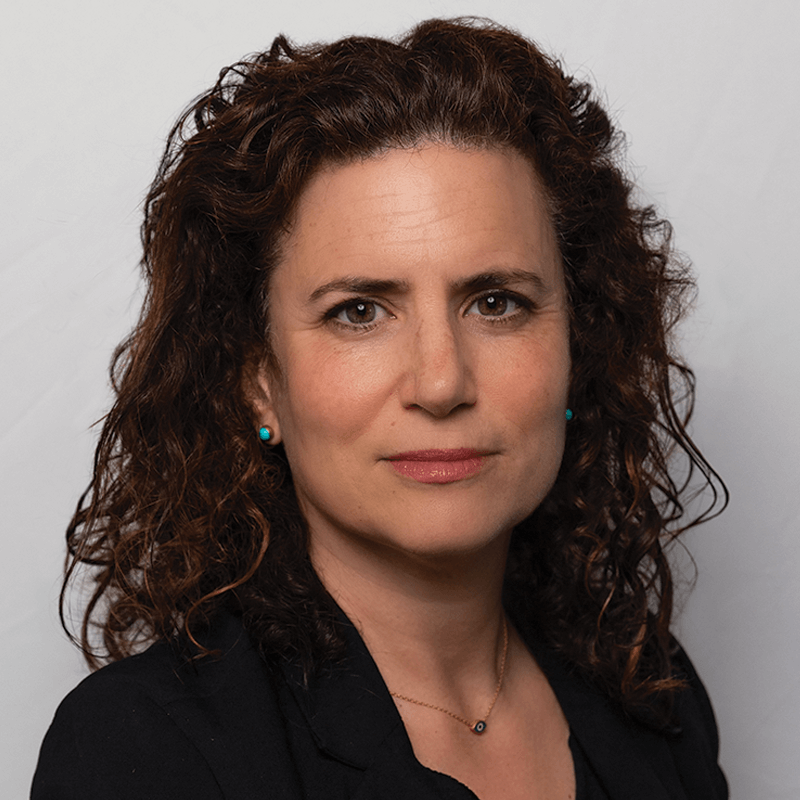
Alyson Gerber is a writer living in New York City. She just completed a young adult novel Gracie Garber Loves Goys.
Did you know that only 2% of Forward readers donate to support our nonprofit newsroom? That 2% make it possible for millions to read the Forward without a paywall or subscription — removing any barriers to the full and fair Jewish story.
But while the Forward is free to read, it isn’t free to produce. Big stories — like deep dives into the antisemitism data, political scoops or reporting trips to college campuses — take months of research and fact-checking. All while we keep you informed of what you need to know each day.
— Rachel Fishman Feddersen, Forward Publisher & CEO
Support our mission to tell the Jewish story fully and fairly.