Moses, MLK and Miep
The other day, while sitting on my lap, my 2-year old daughter Hannah asked,“What’s your name, Mommy?”
“Ilana,” I answered. She looked surprised and said, “My teacher’s name is Ilana.”
I had to reassure my daughter that my name really was Ilana, and that her preschool teacher and I have simply have the same name. How strange, I thought. I love this child more than anything in the world. I would give my life for her, and yet she doesn’t even know my name!
In this week’s Torah portion, Va’era (and I appeared), God had a similarly puzzling encounter with Moses. Moses had appeared before Pharaoh and asked him to free the people but Pharaoh refused. Moses was terrified that his mission would fail, so God appeared to him and said, “I am YHVH. I appeared to Abraham, Isaac and Jacob as El Shaddai, but I didn’t tell them my name YHVH.” God then reassured Moses that the people would be redeemed.
What is the meaning of this description of God’s names?
This moment can be understood as a change in God’s relationship with the biblical figures, like the shift in relationship between a parent and child over time. The name El Shaddai is related to the word Shadayim which means breasts. To Abraham, Isaac and Jacob, God appeared as a nurturing figure. When Moses learned God’s name, he matured and became God’s partner in freeing the people.
The mother is typically central to an infant’s world. However, their vision broadens to include a whole range of relationships — with teachers, friends and family members — as they develop into preschoolers. As youngsters learn their mother’s name, they learn that she has other relationships too; they begin to comprehend their place within this broader picture.
This shift is parallel to the change that takes place between the book of Bereshit and Sh’mot. The book of Genesis focuses primarily on the story of a family, that of the patriarchs and matriarchs. In Exodus, the purview broadens to a nation and their epic struggle for freedom.
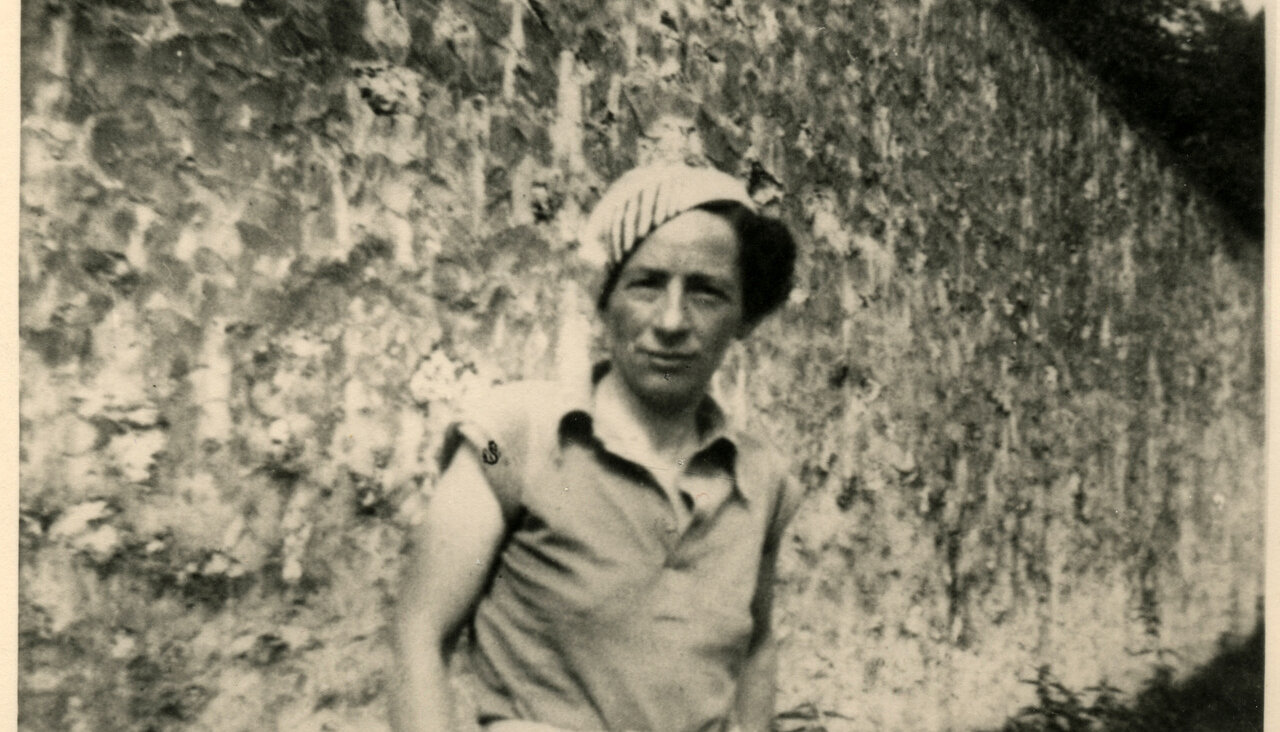
How fitting that we read this text as we honor Martin Luther King Jr., for whom these biblical tales were such a source of inspiration. In Exodus, we read of the first acts of civil disobedience — from the Hebrew midwives, Shifra and Puah, who disobeyed Pharaoh’s orders to kill the Hebrew babies, to Moses and Aaron, who demanded that Pharaoh “let my people go.” Dr. King followed in that great tradition, as did Miep Gies, who risked her life to hide Anne Frank and her family from the Nazis, and died earlier this month at age 100.
On the night before he was assassinated in 1968, King echoed Moses when he said: “And I’ve looked over, and I’ve seen the Promised Land. I may not get there with you, but I want you to know tonight that we as a people will get to the Promised Land. So I’m happy tonight. I’m not worried about anything. I’m not fearing any man.”
Likewise, Miep Gies recalled, “I had no time to occupy myself with fear. There was work to be done.”
Like Moses, Martin and Miep understood that people were created to be God’s partners in the work of liberation. When we comprehend this truth, then we know our Parent’s name.
Rabbi Ilana Grinblat teaches rabbinic literature at the American Jewish University’s Ziegler School of Rabbinic Studies. She lives in Los Angeles with her husband and their two young children.
Did you know that only 2% of Forward readers donate to support our nonprofit newsroom? That 2% make it possible for millions to read the Forward without a paywall or subscription — removing any barriers to the full and fair Jewish story.
But while the Forward is free to read, it isn’t free to produce. Big stories — like deep dives into the antisemitism data, political scoops or reporting trips to college campuses — take months of research and fact-checking. All while we keep you informed of what you need to know each day.
— Rachel Fishman Feddersen, Forward Publisher & CEO
Support our mission to tell the Jewish story fully and fairly.