Indiana synagogue that shaped Reform movement is sold — and will become a coffee shop, event space
A grassroots effort to reclaim the 1867 Lafayette building fell short. Its new owner says he will preserve the structure while giving it a new life
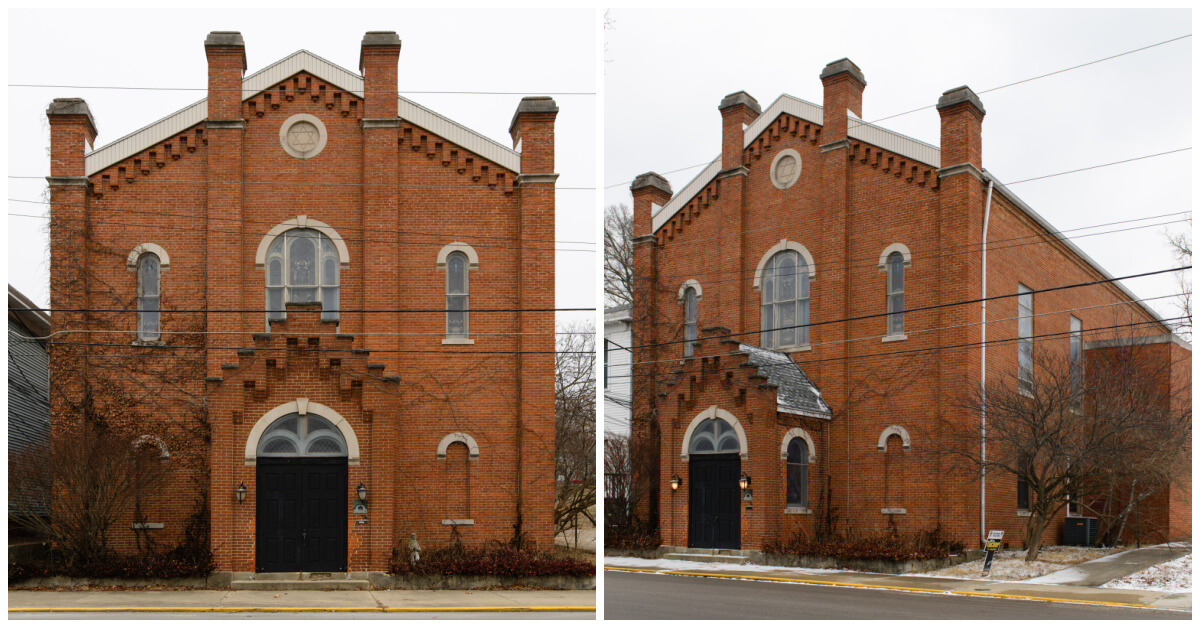
Ahavas Achim was founded in 1849 in Lafayette, Indiana. It moved into this building in 1867. It moved out in 1969. Photo by Chris Volansky-Wirth

By Benyamin Cohen May 5, 2026
The 1867 synagogue in Lafayette, Indiana — once a laboratory of the Reform movement — has been sold, after a grassroots effort to bring it back into Jewish hands fell short.
In recent months, a small group of local Jews tried to crowdfund roughly $300,000 to buy the building, hoping to turn it into a cultural and educational center preserving the city’s Jewish history. But the campaign ran out of time.
“Including pledges, we had about $60,000,” said Robyn Soloveitchik, one of the organizers. They needed nearly five times that amount. Now, the donations will be returned.
The sale of the building closed May 1 to a new owner, Ed Bahler, a local businessman whose family has worked in construction for decades.
“We hope to make it a super vibey, cool, historic coffee shop and place to have events,” Bahler said. He plans to preserve the exterior, which has landmark status and is topped by a large Star of David, but said it requires repairs to brickwork, gutters and landscaping.
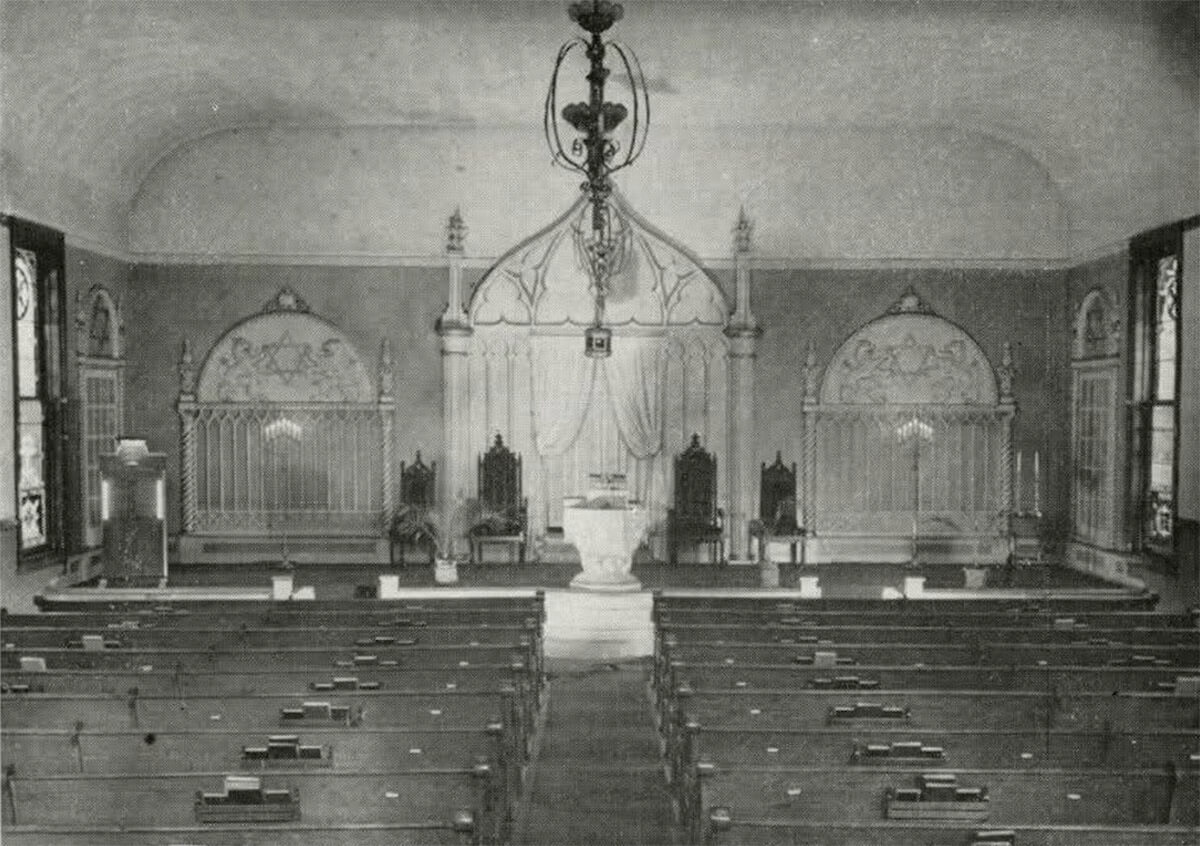
The former sanctuary, with its high ceilings and stained glass windows, will remain a focal point.
Bahler said the project is partly about giving back. “We’re invested in the community,” he said, noting that seven of his children attended Purdue University in neighboring West Lafayette.
Soloveitchik said her group knew from the outset the purchase effort faced long odds. “Of course, it’s not what we wished for,” she said, “but we did know it was going to be an uphill battle.”
The nonprofit she and others formed to purchase the building plans to continue operating, shifting its focus to other preservation efforts in the state. “Hopefully we can find a way to stick around and just do a little bit of good for our community, even if this project didn’t work out,” she said.
Michael Brown, executive director of the Indiana Jewish Historical Society, called the outcome disappointing. “I’m sad that they weren’t able to acquire the building,” he said.
He hopes Bahler will mount a plaque or display photos documenting the building’s history as a pioneering synagogue.
A changing landscape
What happened in Lafayette is part of a broader pattern across Indiana.
In April in Terre Haute, the state’s oldest continuously operating Jewish congregation sold its synagogue building after more than a century. The 1910 structure, known for its sweeping stained glass windows, is expected to become a wedding venue.
“We had to sell in order to continue operating,” said Scott Skillman, president of the United Hebrew Congregation. They now plan to meet at a smaller location, or to rent space from a church.
Like many small towns, Terre Haute has seen its Jewish population shrink for decades. “There’s no amount of programming that’s going to change that,” Skillman said.
Other Indiana synagogues have found more unusual second lives that would have been unimaginable to the people who built them.
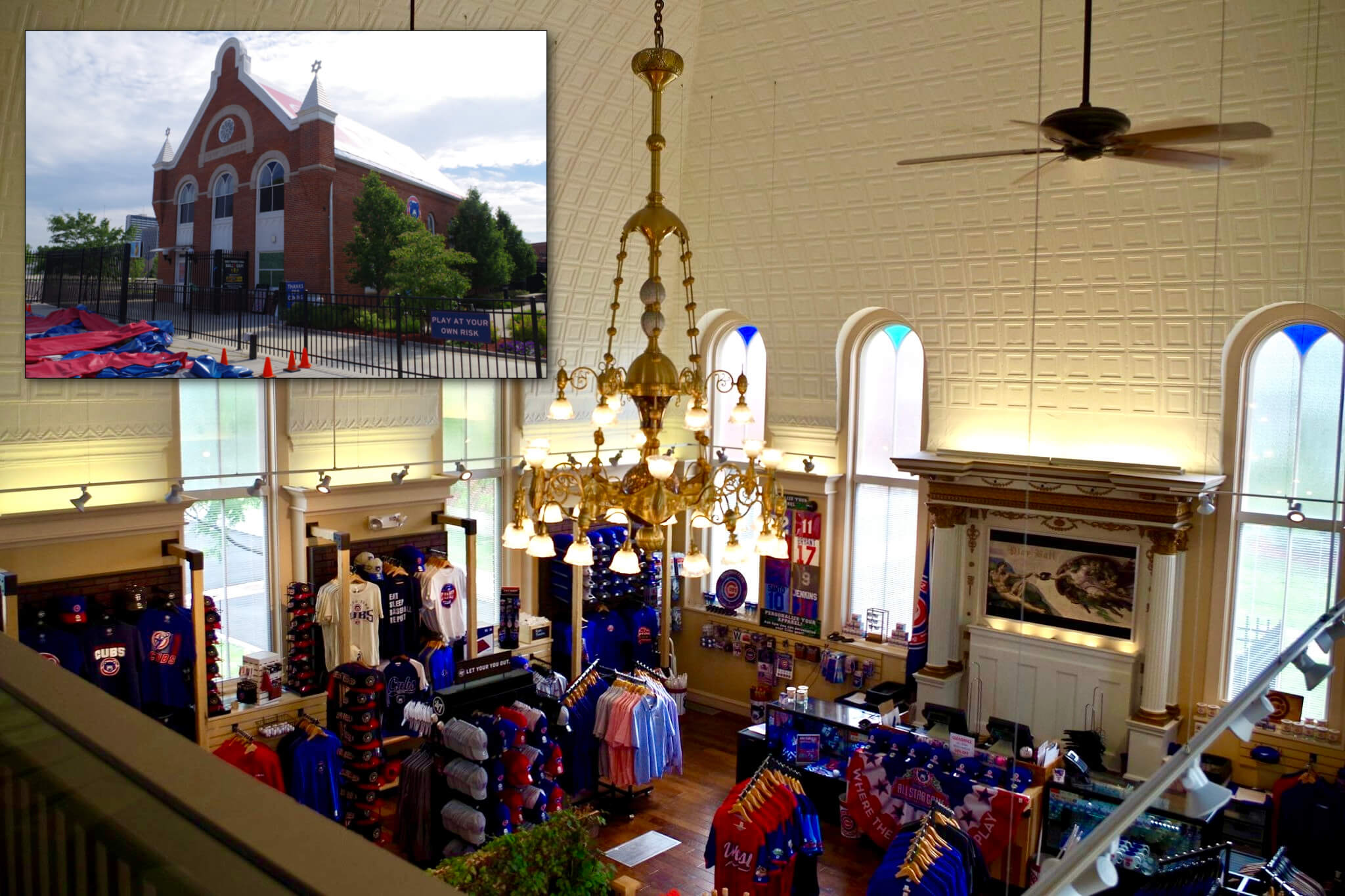
When a new baseball stadium was built in 2012 in South Bend, the team owner had to figure out what to do with a 1901 Romanesque Revival–style synagogue on the property that was listed on the National Register of Historic Places. The team spent $1 million restoring the building, where the team gift shop now operates. A mural on the wall of what’s now known as the Ballpark Synagogue riffs on the Sistine Chapel, depicting God passing a baseball to Adam along with the words “Play Ball.”
Wendy Soltz, a history professor at Ball State University who led the federally funded Indiana Synagogue Mapping Project, has documented 66 purpose-built synagogues across the state dating back to the 19th century. Of those, 24 have already been demolished.
The Lafayette building, she said, had “statewide and national significance.”
A legacy reshaped
The Lafayette synagogue was founded in 1849 as Ahavas Achim.
The congregation was among the early adopters of Reform Judaism in America and is believed to have hosted one of the first egalitarian minyanim in the country. The building it moved into in 1867 stood as a marker of that ambition — a place where a small Midwestern Jewish community helped shape a national religious movement.
Rabbi Julian Morgenstern served the shul, and later rose to lead Hebrew Union College. He helped secure visas for several Jewish scholars fleeing Nazi persecution, including Abraham Joshua Heschel. Several other future luminaries passed through Lafayette’s pulpit.
The congregation moved to a new Lafayette location in 1969. Since then, the old building has housed churches, the Red Cross and other nonprofits.
Lafayette today has two synagogues, one Reform and one Conservative. It also has a Chabad and Hillel connected to Purdue University. The school has roughly 1,500 Jewish students, according to Hillel.
For more than a century, Ahavas Achim’s building anchored Jewish life in the city. Now, it is entering a new chapter, one shaped by a different vision of community.
Bahler said he hopes to open the coffee shop and event space by the third quarter of this year, pending rezoning and renovations.
“We saw a historic building that had a very interesting spirit to it,” he said. “Something that could be brought alive into a place that draws people — a place of connection.”

Hello, fellow Forward reader! I’m Joel Brown, a Forward reader and supporter for more than 15 years, and currently the chair of the board of directors.
I’m an avid Forward reader because it ticks so many of my essential boxes: excellent journalism, Jewish focus and diverse viewpoints. In today’s political climate, what I most appreciate is the Forward’s independence — made possible by the generosity of its membership.
The Forward is committed to bringing you unbiased, nuanced Jewish news. From my position as board chair, I see an exciting future as we expand our position as the definitive independent voice of contemporary American Judaism.
That’s why I’m paying it Forward, by matching $36,000 of reader gifts. It’s an investment in the Forward’s newsroom, to continue telling the American Jewish story with truth and independence.
— Joel Brown, Forward board chair
Support our mission to tell the Jewish story fully and fairly.