A decaying historic farmhouse finds a savior in Chabad
One of the last pre-Revolutionary War houses in New York City is being restored by a rabbi and rebbitzin as a Lubavitch outpost
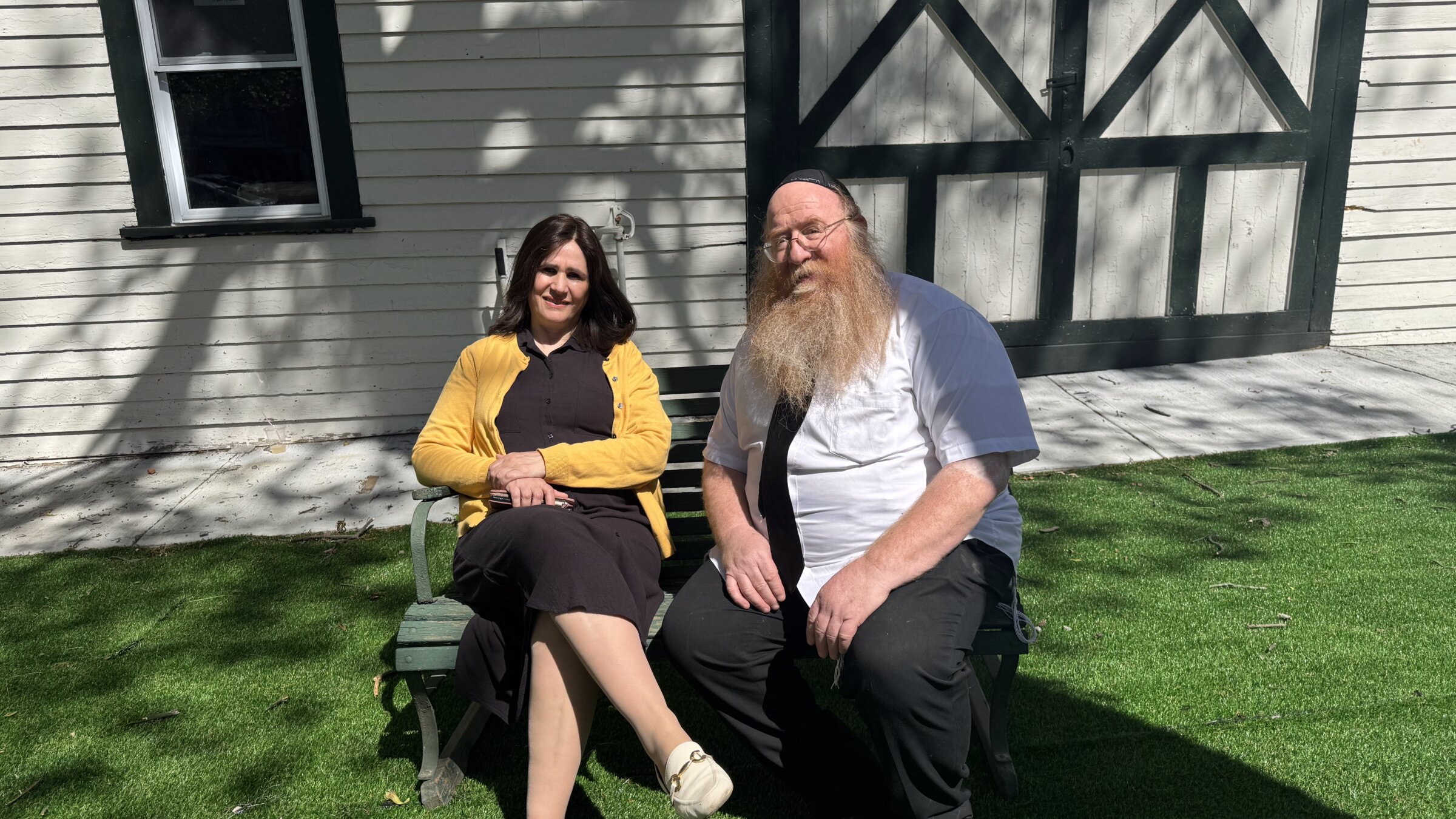
Chana and Zalman Liberow, the couple behind Chabad of Flatbush. Photo by Hannah Feuer

By Hannah Feuer June 2, 2026
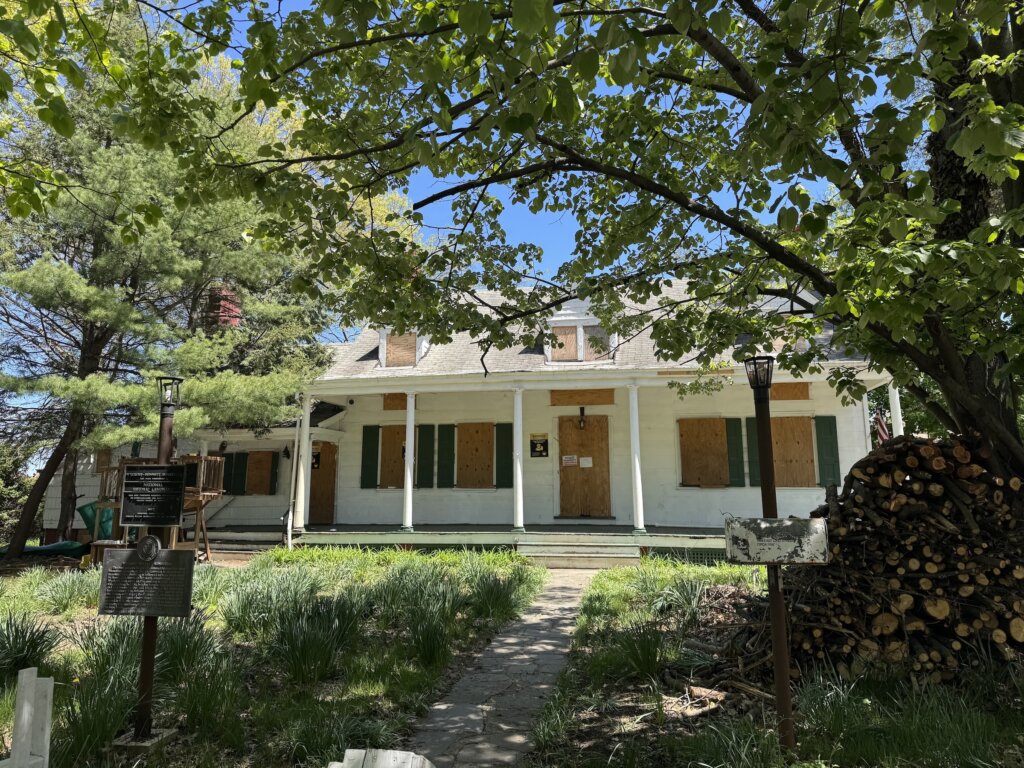
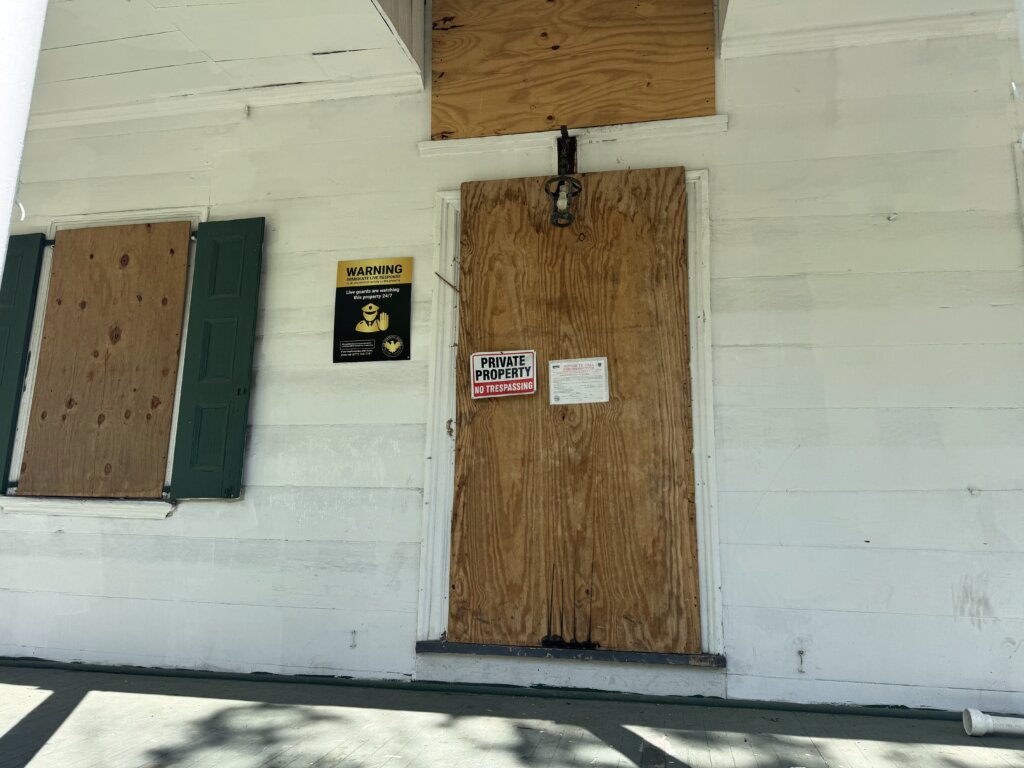
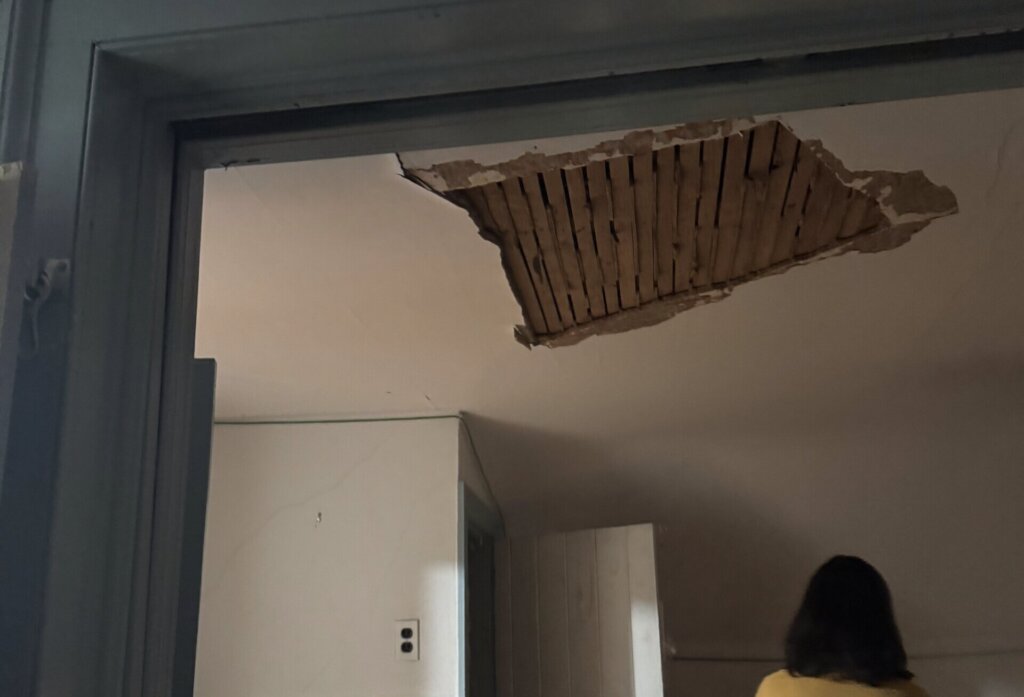
A Dutch Colonial home, just one of a handful of pre-Revolutionary War houses left in New York City, has been vacant and decaying for years. The windows are boarded up, signs warning against trespassing cover the property, and chunks of the ceiling are missing inside.
This historic landmark has an unlikely savior: Chabad, the global Lubavitch movement, which is planting one of its thousands of outposts there.
“Dilapidated is an understatement,” Rabbi Zalman Liberow of Chabad of Flatbush said as he gave the Forward a tour.
-
-
The boarded-up property.
Photo by Hannah Feuer
-
-
Signs warning against trespassing cover the home.
Photo by Hannah Feuer
-
-
Inside, chunks of the ceiling are missing.
Photo by Hannah Feuer
-
-
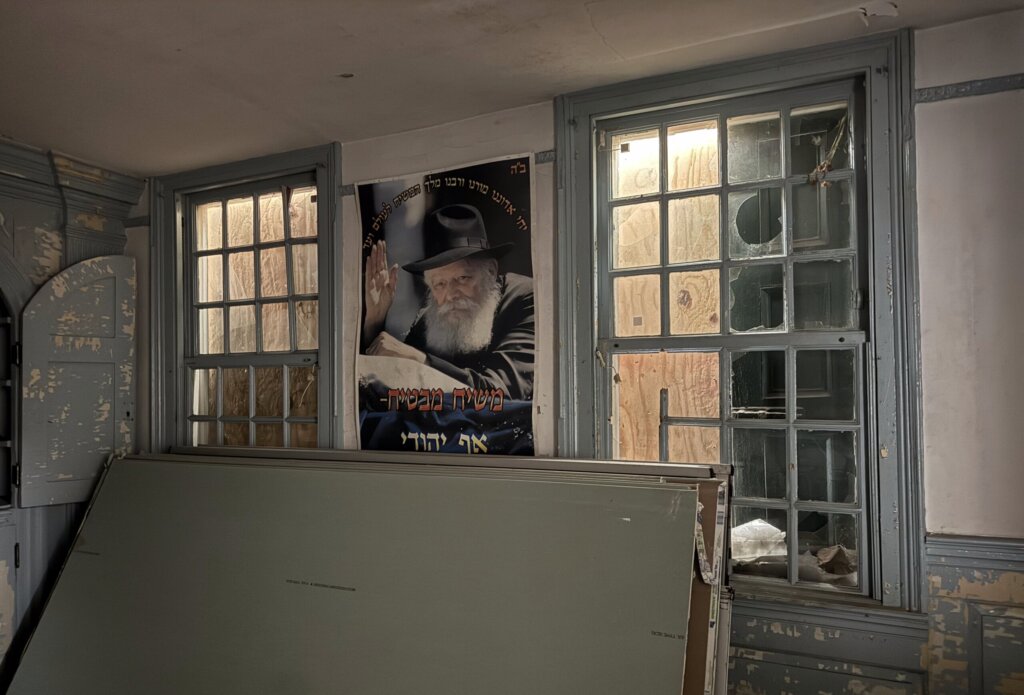
A poster of the Rebbe hangs on the wall.
Photo by Hannah Feuer
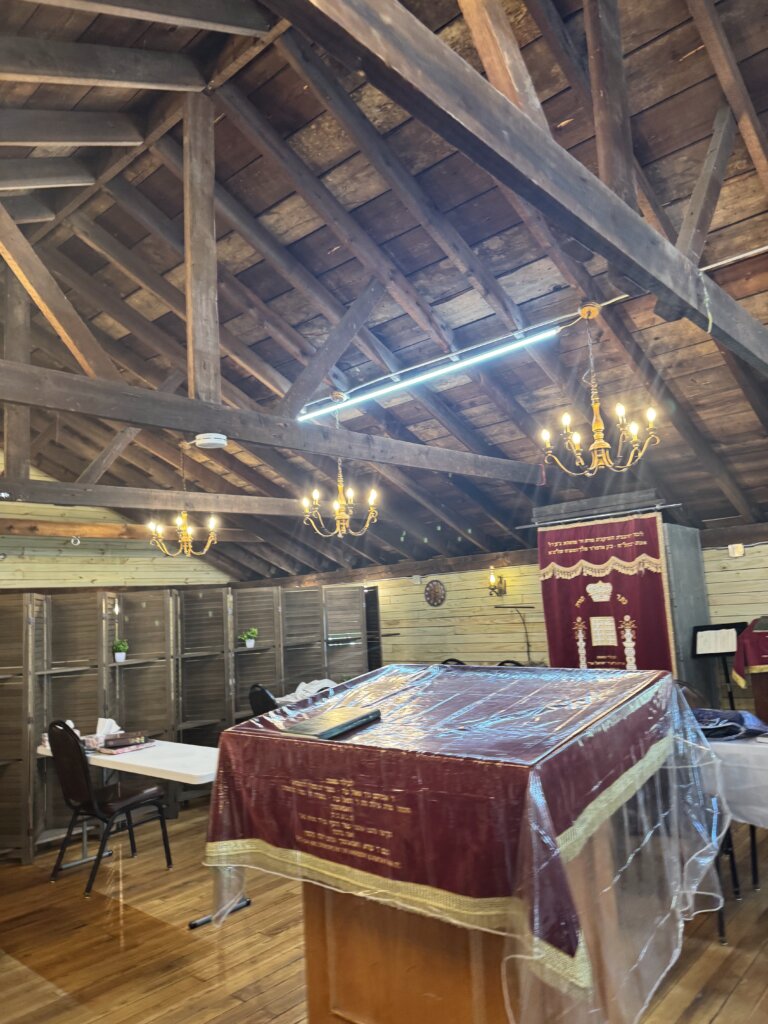
Chabad of Flatbush, led by Liberow and his wife, Chana, bought the historic Brooklyn property in December 2024 and will soon begin renovations to make the place livable. In the meantime, the couple has already transformed the barnhouse next door into a sanctuary, where a photo of the Lubavitch rebbe hangs on the wall near a compartment once used to store hay.
As other Jewish organizations have shifted toward digital community, Chabad has continued investing heavily in brick-and-mortar real estate, ranging from modest suburban homes to multimillion-dollar towers and converted landmarks. It’s a strategy that anchors Chabad in the communities it serves, but can also be costly: For the most part, Chabad couples — each unit headed by a rabbi and rebbitzin — finance their own operations, raising their own money to buy homes and establish centers of Jewish life.
The Liberows said a generous donation of Bitcoin from a donor, Eliot Stavrach, ultimately allowed them to purchase the 22,000 square foot lot for roughly $3 million, along with securing a high-interest loan to pay the mortgage while the couple awaited the sale of their old headquarters down the street. Last week, that transaction went through and reaped nearly $1.1 million.
The seller had also cut the asking price by nearly half, offloading what had become a white elephant, Liberow said.
“For him, it was a pain. For us, it was good,” Liberow said. “And I thought, even better, this is such an important piece of United States history.”
The prior landlord had reportedly struggled to find a buyer for the landmarked home, which by law cannot be demolished, and any alterations to the facade must be pre-approved by the city Landmarks Preservation Commission. In buying the home, the Liberows are also preventing its further deterioration — to the relief of neighbors who said the abandoned site had become a hotspot for drug use and a symbol of neglect.
“I’m just happy that the house will not be torn down and will actually have a future — a good one, it seems,” said Lori Citron Knipel, a former leader in the Brooklyn Democratic Party who used to frequent the house. “So that absolutely warms my heart, because it’s been breaking every time I pass it.”
The house’s history
The Wyckoff-Bennett Homestead is likely among the ten oldest properties in Brooklyn and the 50 oldest houses in all of New York City, according to Simeon Bankoff, former executive director of the Historic Districts Council.
A 1968 report from the Landmarks Preservation Commission noted that “two hundred years of wear have done little to diminish the simple beauty of its clear-cut profile,” and described it as “the most beautiful example of Dutch Colonial architecture in Brooklyn.”
The house is also notable for its role in the Revolutionary War: During the conflict, it quartered German soldiers fighting for the British, known as Hessians. Two of the soldiers etched their names and units into a windowpane.
A historical marker at the house notes that those troops may have taken part in the Battle of Brooklyn, the first major battle after the signing of the Declaration of Independence.
According to Liberow, local legend holds that George Washington once stopped at the Wyckoff-Bennett house for tea — though, “we never did find the teacup,” he joked.
Bankoff attributed the properties’ staying power partly to the fact that prior to a venture called 22nd Street Investors LLC purchasing the lots in 2021, the property had only ever been owned by three families over more than 250 years.
Hendrick H. Wyckoff, son of a Dutch settler who emigrated to New Amsterdam in 1637, is believed to have built the house before 1766. In 1835, Cornelius W. Bennett purchased it, and it remained in the Bennett family for four generations before a Jewish couple, Annette and Stuart Mont, bought the property in 1983.
-
-
The renovated sanctuary.
Photo by Hannah Feuer
-
-
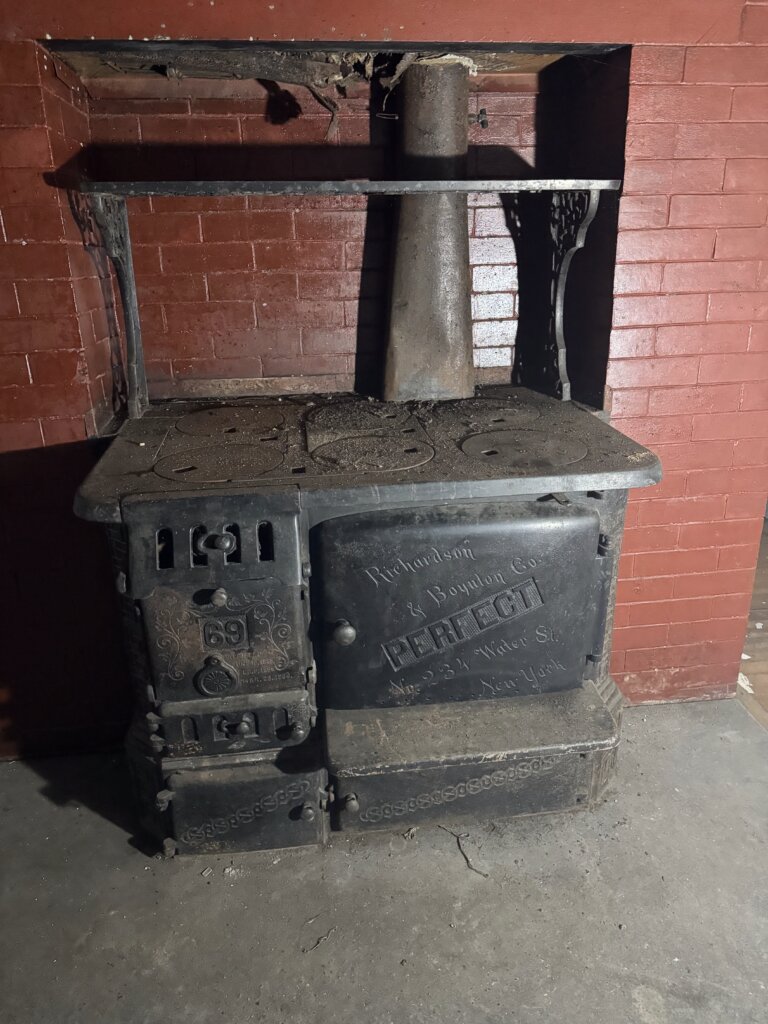
The antique Richardson & Boynton Co. stove.
Photo by Hannah Feuer
‘A piece of Brooklyn’s history’
The Monts had a deep appreciation for the home’s history, Citron Knipel said, and often opened it to the community. They hosted political fundraisers, birthday parties, and even a wedding at the house, she said, and they welcomed school groups into their home for local history field trips.
Only the facade of the house is landmarked, making its preservation legally required. But the Monts also preserved its interior details, including furniture from the Wyckoffs and Bennetts, an ornate fireplace framed by decorative tiles depicting biblical scenes, and an antique Richardson & Boynton Co. stove.
“There’s a sense of being part of and having a responsibility to the rest of the community to preserve it and move it forward,” Stu said in the 2013 documentary Living in a Landmark.
“And share it,” Annette added. “Because we have bought a piece of Brooklyn’s history.”
But an effort to secure the home’s legacy fell apart in 2010. The Monts had been in talks with the city to purchase the property, only to withdraw after the city reduced the sale price, deducting the rent the Monts theoretically would have paid to continue living there.
Annette died in 2013 at age 72, and Stuart died three years later at age 76. Their children, Ira and Randi Mont, sold the property to 22nd Street Investors LLC, registered to real estate investor Avraham Dishi, in 2021.
In an interview with the Forward, Ira Mont said he believed at the time of sale that 22nd Street Investors LLC would keep the house in good condition — and was disappointed that they ultimately did not.
Dishi drew two complaints for failing to maintain the Wyckoff Bennett house: one for the poor condition of the fence, still active, and another for the condition of the facade and roof, later withdrawn.
Officials at a Landmarks Preservation Commission hearing in March to discuss the Liberows’ minor proposed changes to the home noted there had been “all kinds of vandalism, fires, squatters, [and] drug users” there in recent years.
The Forward reached Dishi’s office by phone and left a message, but did not hear back.
Liberow said he has big plans for the house pending approval from the Landmarks Preservation Commission, including displaying a video in the front yard highlighting Jewish history in the United States. The Commission has already approved plans to install porch railings, a curb cut and a driveway at the site. And like the Motts, the couple plans to open the space up to the public. They’ve already begun hosting Hebrew school and holiday gatherings in the barnhouse next door, which they renovated for about $200,000 with rustic touches including wood paneling, barrels, lanterns and candle chandeliers.
For neighbors, the most meaningful change may simply be that the property is occupied at all.
“We got a very big welcome over here, because everyone’s so happy,” Liberow said. “Someone is going to save the property.”

Did you know that only 2% of Forward readers donate to support our nonprofit newsroom? That 2% make it possible for millions to read the Forward without a paywall or subscription — removing any barriers to the full and fair Jewish story.
But while the Forward is free to read, it isn’t free to produce. Big stories — like deep dives into the antisemitism data, political scoops or reporting trips to college campuses — take months of research and fact-checking. All while we keep you informed of what you need to know each day.
— Rachel Fishman Feddersen, Forward Publisher & CEO
Support our mission to tell the Jewish story fully and fairly.