A Grandmother’s Secrets
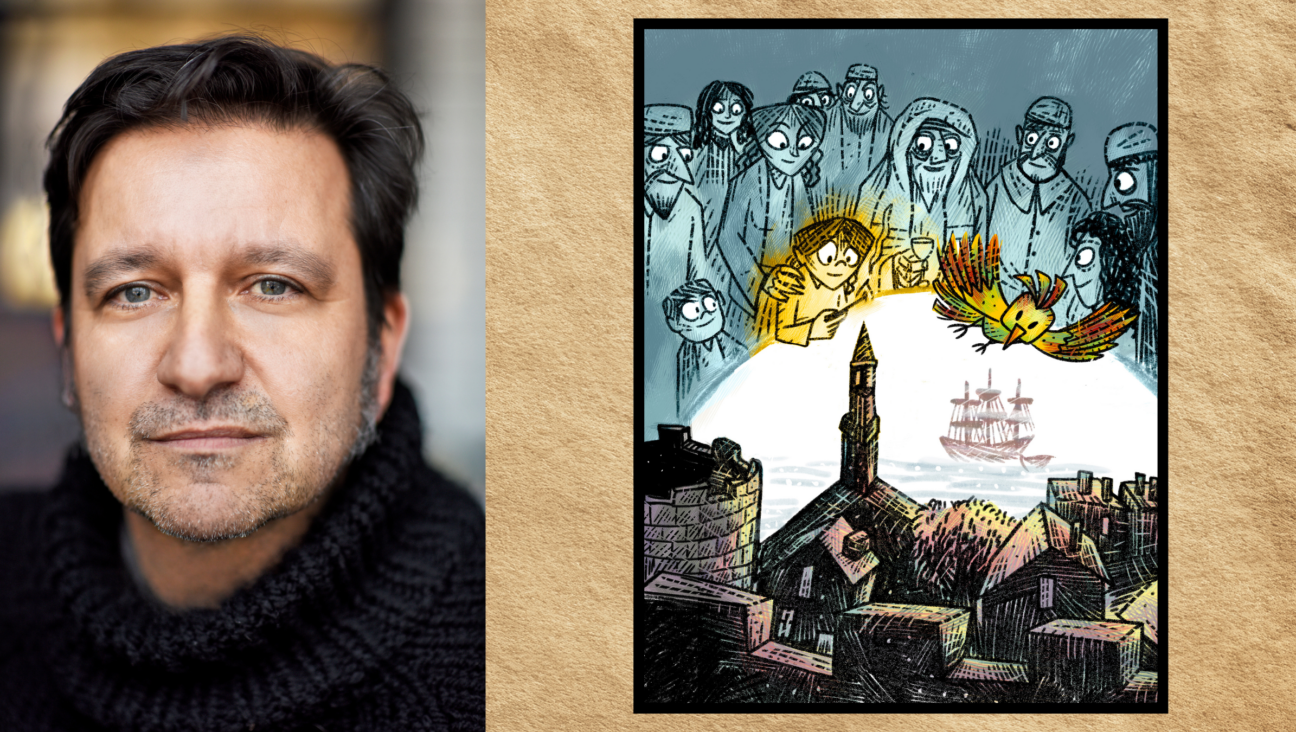
Graphic by Angelie Zaslavsky
Anna Solomon’s debut novel, “The Little Bride,” is now available. Her posts are being featured this week on The Arty Semite, courtesy of the Jewish Book Council and My Jewish Learning’s Author Blog Series. For more information on the series, please visit:
I’ve been thinking about my grandmother recently. This is my paternal grandmother, the longest-lived of my four grandparents and the only one I came to know well. Her name was Rose — like so many women of her generation — and the name suited her personality: Under her smooth exterior (held in place by corset and garters) there were thorns.
People use a lot of words to describe women like Rose. Hard. Cold. Judgmental. Even unloving. But — and it’s a big but — Rose was a mother, to four children. She has nine grandchildren now, most of us with advanced degrees, thriving in every corner of this country. How do we reconcile what we knew of her with what she gave us?
A couple weeks ago I visited a book group that had read my first novel, “The Little Bride.” The women were discussing my protagonist, Minna Losk, a Jewish orphan who travels to America in the 1880s as a mail-order bride. They were talking about how complicated she is — how along with being strong and compassionate she can also be stubborn and selfish. One woman said she forgave Minna all of it, because of what she’d been through. “She’s a survivor,” she said, and the other women nodded. “She reminds me of my grandmother,” the woman went on. “And my grandmother was not a nice woman.”
Immediately, others began to speak.
“My grandmother wasn’t nice, either.”
“Mine was very cold.”
“I never saw my grandmother smile.”
The table erupted in laughter. Then the women began talking about their grandmothers, and why they thought they’d been the way they were. They wondered about stories they’d heard — of immigration, or abuse, or miscarriages. And they wondered about stories that might have been kept a secret.
As they talked, I started wondering about Rose. Most of her stories had been about my grandfather’s history, or about her children. She hadn’t often talked about herself. What was her story, not the public version but the private one? What were her secrets? How had she become the woman I knew?
That conversation opened up a new door for me in my relationship with my grandmother. Fiction can do this, I think — it can lead us, however circuitously, to new compassion: for difficult characters, yes, but also for the people in our own lives. I feel closer, suddenly, to my Grandma Rose. I can hear her scolding me — “But I’m not even alive.” But I don’t think that matters one bit.
Anna Solomon’s debut novel, “The Little Bride” is now available. Read more about Anna on her website and find discussion questions for your book club here.
The Jewish Book Council is a not-for-profit organization devoted to the reading, writing and publishing of Jewish literature. For more Jewish literary blog posts, reviews of Jewish books and book club resources, and to learn about awards and conferences, please visit www.jewishbookcouncil.org.
MyJewishLearning.com is the leading transdenominational website of Jewish information and education. Visit My Jewish Learning for thousands of articles on Judaism, Jewish holidays, Jewish history and more.
Why I became the Forward’s Editor-in-Chief

You are surely a friend of the Forward if you’re reading this. And so it’s with excitement and awe — of all that the Forward is, was, and will be — that I introduce myself to you as the Forward’s newest editor-in-chief.
And what a time to step into the leadership of this storied Jewish institution! For 129 years, the Forward has shaped and told the American Jewish story. I’m stepping in at an intense time for Jews the world over. We urgently need the Forward’s courageous, unflinching journalism — not only as a source of reliable information, but to provide inspiration, healing and hope.
Support our mission to tell the Jewish story fully and fairly.