How Saul Rubinek’s best lie helped him get to the truth about his family’s Holocaust history
In “All In The Telling,” Rubinek’s partly-fictionalized memoir, he convinces his parents he’s writing a Holocaust story to solve a family fight.
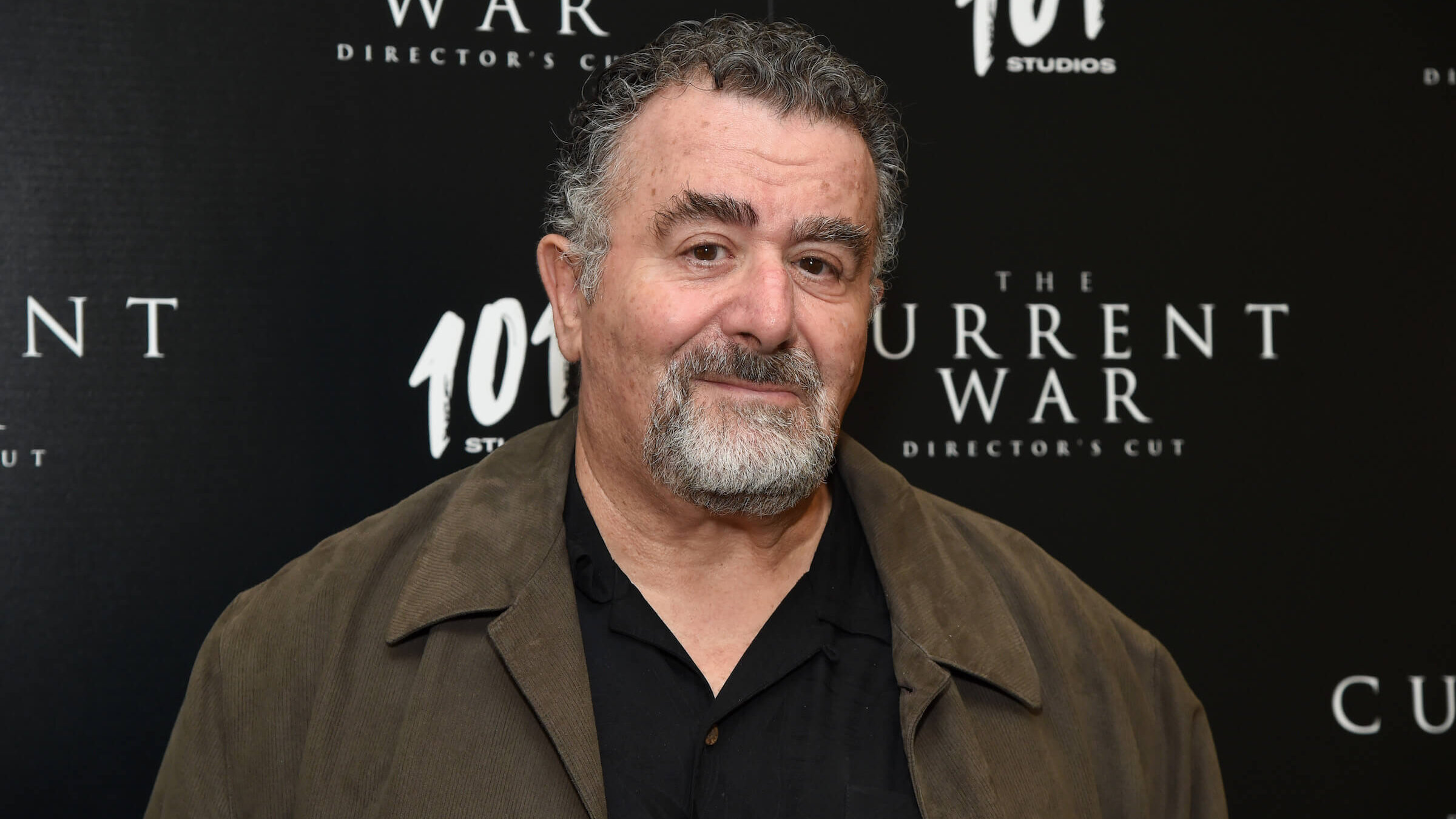
Saul Rubinek, actor and author of ‘All In The Telling,’ in 2019. Photo by Michael Kovac/Getty Images for 101 Studios
By Olivia Haynie April 28, 2026
All In The Telling: A Somewhat True Story
By Saul Rubinek
Redwood Publishing, 324 pages, $35.50
Saul Rubinek’s new book opens with a nightmare: a pitch black void that is slowly filled with criss-crossing white bars until whiteness threatens to overwhelm him.
As a teenager, Rubinek, an actor known for his roles in films like Ticket to Heaven and Unforgiven, and in the play Playing Shylock, tells his mother about the dream. She responds casually that he’s likely remembering a harrowing incident from his childhood at the Föhrenwald displaced persons camp when a woman tried to kill him by force-feeding him cream.
This murder attempt thrusts readers into a story that is part memoir, part Holocaust history and part fiction, moving between past and present. Told with Rubinek’s characteristic dry wit, it’s a rewritten version of his parents’ Holocaust survival stories, which he published in a 1988 book titled So Many Miracles. His newest book explains how Rubinek came to tell the story in the first place, and how the process changed his relationship with his parents — and exposed long-hidden truths.
Rubinek writes that the initial book project was born from a lie. When Rubinek tells his parents that he’s dating a non-Jewish girl, they cut him out of their life, his dad even going so far as to say the mourner’s kaddish for his son right in front of him. Rubinek devises a plan to get the three of them talking again: He tells his parents that the massive publishing house Penguin wants him to write a book about their story as Holocaust survivors. No such deal exists, but the lie is convincing enough that his parents agree to meet regularly with Rubinek to talk about their history.
Rubinek’s parents were born in Poland and were dating when the war broke out. They spent more than two years hidden in the home of Ludwig, a Polish farmer, his wife, Zofia and their son, Maniek. Their story is a sharp portrait of the incomprehensible situations Jews found themselves in during the Holocaust, like hiding in holes covered by cow dung to avoid Nazi dogs and pretending to be members of the Polish secret police to prevent themselves from being murdered.
Rubinek also lies to his girlfriend about the book to explain why he keeps visiting his parents — who she believes accept her non-Jewishness — without her. Unfortunately, she works in publishing and insists on reading the book, forcing Rubinek to start writing a fake manuscript.
The book eventually becomes a reality, turning into So Many Miracles, and Penguin does publish it in the end, although he still eventually gets caught in his lie. Rubinek also makes a documentary with the same title — which All In The Telling readers can purchase through a QR code in the back of the book — in which he travels to Poland with his parents so they can reunite with Zofia.
If you’ve read or watched So Many Miracles, many of the stories that have been pulled from the recordings Rubinek made with his parents will feel familiar. Nevertheless, Rubinek’s personal touch, alternating the transcripts of his parents with his own storytelling, helps strengthen the connection between the past and the present, underscoring how our lives are shaped by the experiences of the generations before us.
The book is subtitled A Somewhat True Story because of some creative liberties Rubinek says he took to give the story a little more texture. In order to have the events in the book happen in a more condensed timeline, Rubinek changed the year he and his girlfriend began living together. The name of the Polish translator and government spy who accompanied him and his parents around Poland is an alias. There’s also a chapter that imagines the dialogue between officials of Poland’s Censorship Committee as they determine whether or not to let the documentary be screened in the country, loosely based on letters the translator sent to Rubinek.
However, the book ends with a true tale: Years after finishing So Many Miracles, when Rubinek’s daughter turns 13, he decides she’s old enough to learn about what her grandparents went through and shares So Many Miracles with her — although he doesn’t tell her about the lies that started the project. Her school invites him to show his documentary to her class, but he worries that her classmates will think her family’s story is no more interesting than theirs. He reaches an agreement with the school: The film will be shown as an introduction to a Personal History week for the students; they will be tasked with interviewing their own family members and bringing what they learned back to the class. For some of the students this is a fun exercise; for others, it brings up old family secrets — such as why their German great-grandfather had a skull and bones on his WWII uniform.
By writing All In The Telling, it seems Rubinek has learned his own lesson: his story is also worth telling.
I’m personally matching all gifts to the Forward, up to $36,000. Can I match your gift now?

Hello, fellow Forward reader! I’m Joel Brown, a Forward reader and supporter for more than 15 years, and currently the chair of the board of directors.
I’m an avid Forward reader because it ticks so many of my essential boxes: excellent journalism, Jewish focus and diverse viewpoints. In today’s political climate, what I most appreciate is the Forward’s independence — made possible by the generosity of its membership.
The Forward is committed to bringing you unbiased, nuanced Jewish news. From my position as board chair, I see an exciting future as we expand our position as the definitive independent voice of contemporary American Judaism.
— Joel Brown, Forward board chair
Support our mission to tell the Jewish story fully and fairly.