Analysis: As Democrats unite behind Platner, Schumer’s future as leader faces tests
As insurgent candidates rise, the Democrats must confront new challenges over leadership and Jewish voter support
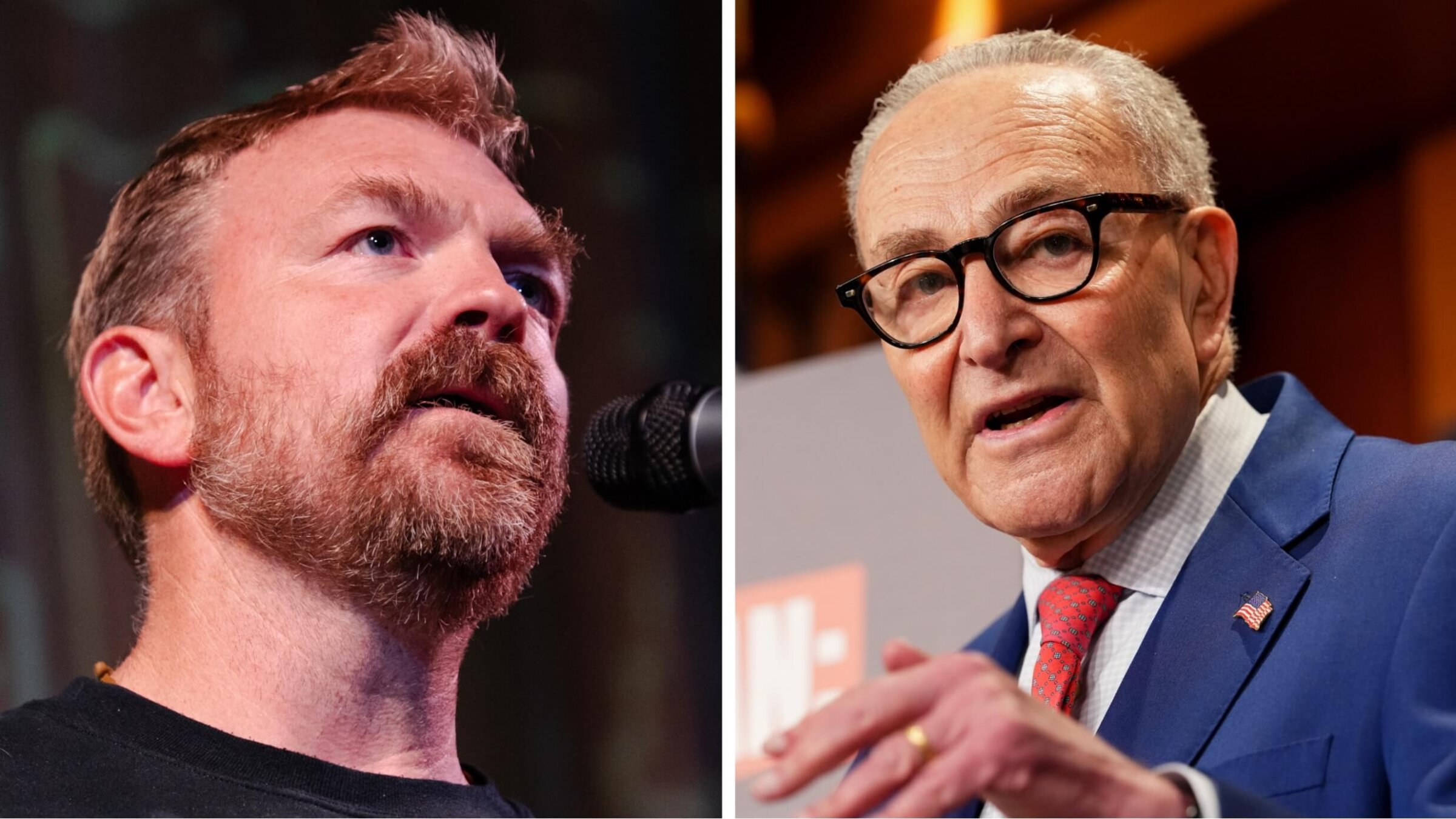
(R to L) Senate Minority Leader Chuck Schumer and Graham Platner, a Senate candidate from Maine. Photo by ophie Park/Getty Images and Eric Lee/Bloomberg via Getty Images

By Jacob Kornbluh April 30, 2026
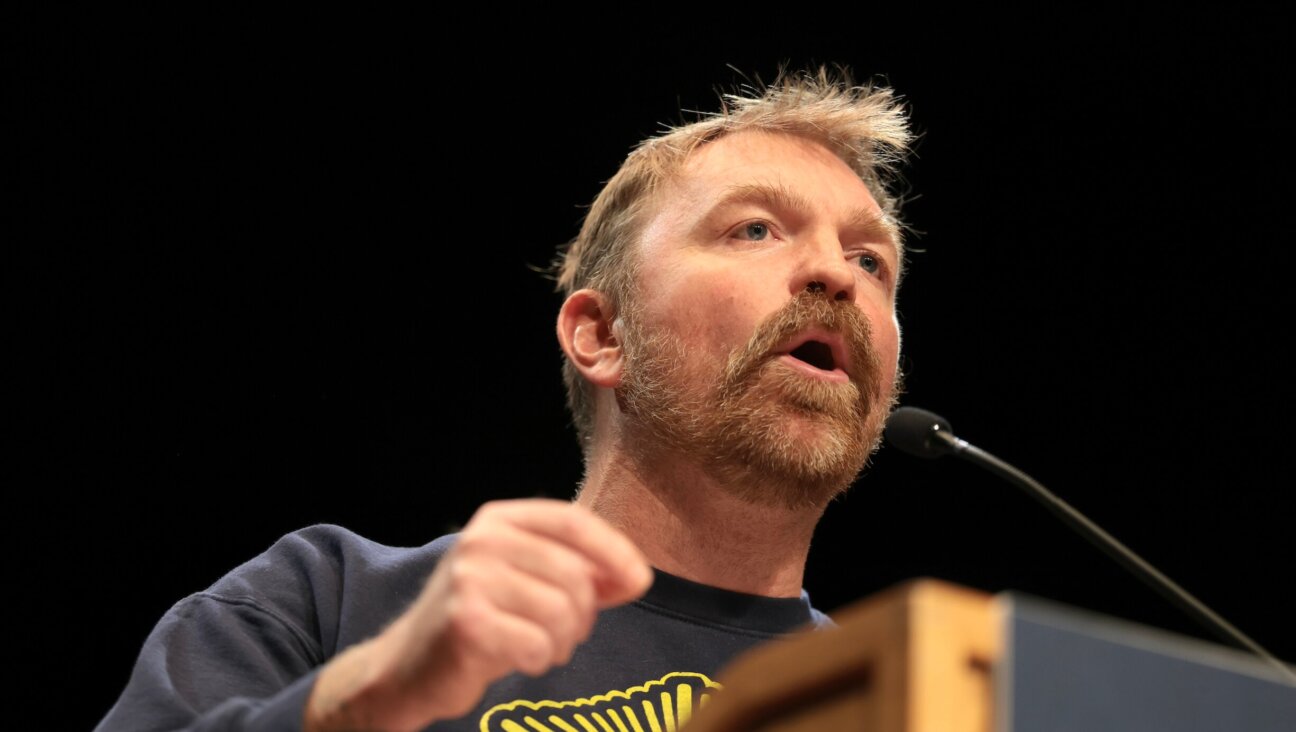
National Democrats on Thursday moved swiftly to unite behind Graham Platner — a progressive candidate whose past Nazi-linked tattoo and sharp criticism of Israel have alarmed some Jewish groups — after he became the presumptive nominee for Maine’s Senate seat.
The move made political sense. Platner, a Marine veteran and oyster farmer, had already been leading in polls against Gov. Janet Mills, who dropped out of the race on Thursday, citing fundraising struggles. Once Platner became the de facto Democratic nominee against incumbent Republican Sen.Susan Collins, party unity was all but automatic.
But that unity comes with serious risks.
Joel Rubin, a Democratic commentator and foreign policy expert, called Platner’s candidacy for a much-desired seat a “nightmare scenario” for the party.
“For Jewish Democrats, wanting to defeat Collins, to have a candidate who makes them very uncomfortable on Jewish issues could potentially dampen support for him,” Rubin said in an interview. “Typically, Jewish Democrats are the most enthusiastic of democratic constituencies for Democratic candidates.”
Senate Democratic leader Chuck Schumer, who had recruited Mills to run, is focused on winning back the majority, and Maine is a must-win in the pursuit to flip at least four Republican seats. “After years of allowing Trump’s abuses of power, Senator Collins has never been more vulnerable and we will work with the presumptive Democratic nominee Graham Platner to defeat her,” Schumer said in a joint statement with Sen. Kirsten Gillibrand of New York, who heads the Democratic campaign arm.
Schumer navigates new tensions
Schumer could play a pivotal role in mobilizing national donors, including Jewish donors, to support the Platner campaign.
Nonetheless, Schumer, who has seen his popularity decline since he supported a Republican spending bill to avert a shutdown last year, may be helping build a majority that won’t back him, as his longtime support for Israel increasingly becomes a liability in a party where many voters object to the United States providing funds to the Jewish state.
Platner has aligned himself with a new guard of candidates who could emerge from competitive primaries ready to challenge Democratic leadership — as well as the longstanding Democratic consensus in support of Israel.
Abdul El-Sayed, a U.S. Senate candidate from Michigan rising in the polls, and Zach Wahls, a progressive candidate from Iowa, have both said they oppose Schumer as leader.
These insurgents could also alienate moderate and pro-Israel Jewish voters in closely contested races in the fall. Figures like Platner and El-Sayed have adopted language and positions that would have been politically risky — if not disqualifying — in earlier cycles. Now, those stances are survivable.
And even if they win their races in the general election and Schumer stays on as leader, his role is getting harder to maintain as the party’s base has shifted, especially amid the wars in Gaza and Iran.
For years, Schumer has cast himself as an institutional anchor on issues important to the Jewish community, including support for Israel. In a speech for a Jewish crowd in 2019, he bragged about preserving Democratic unity on Israel aid. In 2024, he told the Forward that “having a majority leader who’s committed to Israel is vital for Israel’s relationship with the U.S.”
But shifting dynamics suggest the balance may be slipping.
Earlier this month, 40 Senate Democrats voted to block $295 million for the transfer of bulldozers — used by the Israeli military to demolish homes in the West Bank and Gaza — and 36 of them also supported a measure to block the sale of 1,000-pound bombs to the Jewish state. Those counts shattered a previous high of 27 Democrats who backed a similar pair of resolutions last year.
Schumer was in the minority of his party on both votes.
If a future roster of Democratic senators includes more legislators elected on platforms critical of Israel and skeptical of party leadership, Schumer’s ability to manage internal divisions could be tested in ways it hasn’t been before. Schumer came under fire from progressives in February after telling a Jewish group that he will keep “fighting” for military assistance to Israel.
In a recent interview with Politico, Sanders asserted he has now become the leader for Senate Democrats on Israel policy. “I mean, we got 40 votes, and Schumer got seven,” he said. “We have more support for our position than Chuck has for his.”
What Jewish Democrats are watching
For many Jewish voters, Platner’s rise and the party’s embrace of him are another signal of changes many are finding hard to swallow.
Platner faced backlash last year after acknowledging that a black skull-and-crossbones tattoo on his chest resembled a Nazi symbol. He has since covered it up. In past Reddit posts, Platner made incendiary comments, including in defending a man with a Nazi SS lightning bolt tattoo who impersonated a federal officer at a Black Lives Matter protest in Las Vegas in 2020.
Last month, Platner accused Israel of committing genocide in Gaza and suggested the U.S. should cut off all aid to Israel.
Platner has done some outreach to the Jewish community across Maine. Recently, his campaign hosted a Passover Seder in Bath, Maine with some 50 community members, during which he discussed rising antisemitism. It was co-hosted with Steven Koltai, the state chair of the progressive Jewish political fundraising group J Street, who is a key Platner supporter.
Halie Soifer, head of the Jewish Democratic Council of America, said in an interview on Thursday that her group is not ready to back Platner. JDCA had supported Mills in the primary. Soifer said support for Platner is far from guaranteed, citing past statements and actions that raise “reasons for concern.” She said Platner would need to provide clear assurances about his positions before JDCA considers offering any backing, if at all.
“We won’t support a Democrat who doesn’t represent the views and values of the vast majority of American Jews,” Soifer said.
For now, Democrats have little choice but to unite behind the presumptive nominee. But if candidates like Platner help deliver a majority, the real test will be holding it together.
I’m personally matching all gifts to the Forward, up to $36,000. Can I match your gift now?

Hello, fellow Forward reader! I’m Joel Brown, a Forward reader and supporter for more than 15 years, and currently the chair of the board of directors.
I’m an avid Forward reader because it ticks so many of my essential boxes: excellent journalism, Jewish focus and diverse viewpoints. In today’s political climate, what I most appreciate is the Forward’s independence — made possible by the generosity of its membership.
The Forward is committed to bringing you unbiased, nuanced Jewish news. From my position as board chair, I see an exciting future as we expand our position as the definitive independent voice of contemporary American Judaism.
— Joel Brown, Forward board chair
Support our mission to tell the Jewish story fully and fairly.