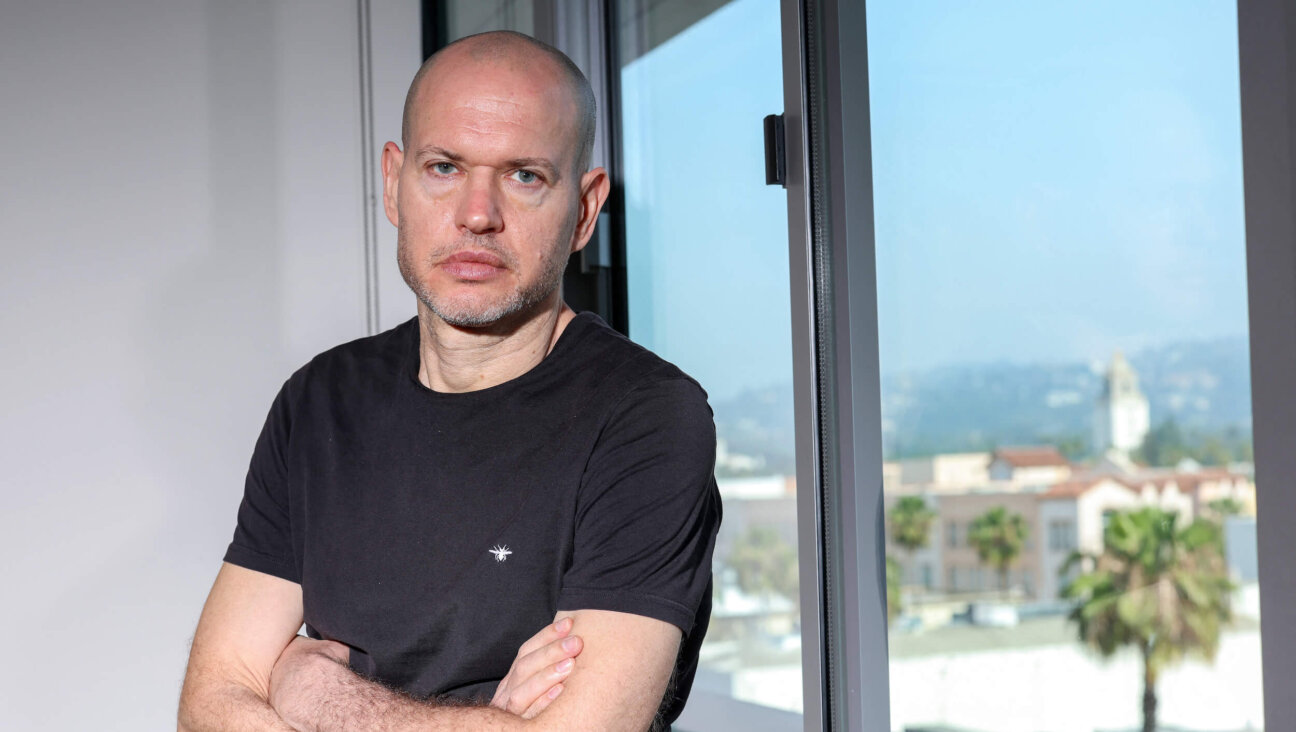
This graphic novel illustrates the story of America’s first Jewish congregation — pirates and all
‘Remnants’ tells the story of the 23 Jews who fled Brazil and established Shearith Israel in New York
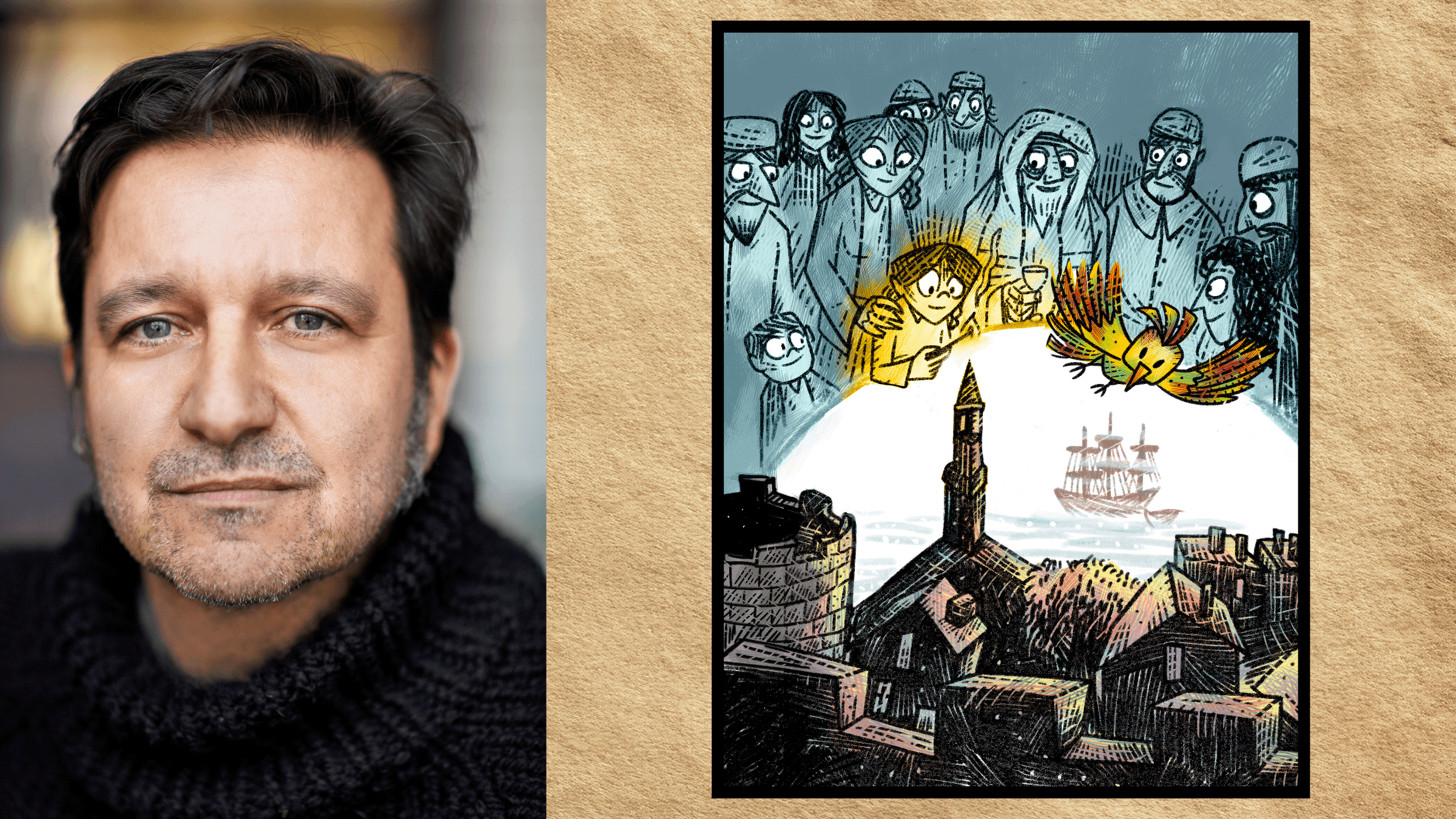
Julian Voloj wrote the graphic novel ‘Remnants’ about the Jews who established the first congregation in New York. Courtesy of Julian Voloj/collage made on Canva

By Olivia Haynie May 4, 2026 · Updated May 6, 2026
Remnants
By Julian Voloj and Andre Deniz
FairSquare Graphics, 14 pages, $13.99
Graphic novelist Julian Voloj was walking through Manhattan’s Chinatown when he stumbled across the cemetery of the United States’ oldest Jewish community, Shearith Israel. This inspired him to write Remnants, an interpretation of the story of 23 Jews from Brazil who established North America’s first congregation.
When people think about Jewish immigration to New York, it usually brings to mind the waves of Eastern and Central European Jewish migrants in the early 20th century. But Remnants sheds light on the Sephardic immigration that introduced Judaism to the Americas far earlier.
These Jews were originally from the Iberian Peninsula and had fled to the Netherlands during the Portuguese and Spanish Inquisitions that lasted from around the middle of the 15th century to the 19th century. When the Dutch began occupying Recife, Brazil in 1630, several Jews immigrated to the new South American colony and founded the first synagogue in the Americas, Kahal Zur Israel. Through the eyes of a young girl, Remnants recounts how they had to flee for their lives again in 1654, when Recife was seized by the Portuguese, who banished all Jewish and Dutch settlers. This group of Jews eventually arrived in New Amsterdam, now known as New York. Although there had been a community of crypto-Jews in Mexico in the 16th century, historians are not sure they were an organized community and Shearith Israel is widely recognized as North America’s first organized congregation.
Voloj is used to challenging assumptions about the homogeneity of Jewish identity in his work. His graphic novel Ghetto Brother told the story of a Puerto-Rican gang member living in the Bronx who finds out later in life that he comes from a family of crypto-Jews. Recently, Voloj co-created the graphic novel Hyphen: Jewish Stories in Our Own Words, which features a dozen personal stories from Jews from across the globe. In Remnants, vibrantly illustrated by Brazilian comic book creator Andre Diniz, Voloj turns his attention to the diversity of American Jewish history.
Voloj weaves together multiple Jewish stories in Remnants. The young female narrator is a fictionalized daughter of Asser Levy (stylized in Remnants as Asher Levy), America’s first kosher butcher and an early advocate for Jewish civil liberties. (Although Levy was one of the first Jews to arrive in New Amsterdam, there are differing accounts of what ship he arrived on and it is unknown if he was on the ship with the group from Recife.) He was originally from Vilna, then part of the Polish-Lithuanian Commonwealth. Asser Levy Place, a section of Avenue A in Manhattan that spans 23rd to 25th Street, and the Asser Levy Recreation Center are both named for him.
Jacob Barsimon, another Jew who arrived in New Amsterdam a month before the group from Recife, also features prominently. In Remnants, he serves as the main advocate for the newly arrived Jews after they are jailed for allegedly not paying the ship that brought them to New Amsterdam. This is a slight historical liberty — it’s not known if Barsimon was directly involved with freeing the Jews from prison. But he did partner with Levy to abolish the ban on Jews serving in the military and the exemption tax imposed on them. Though their petition was refused, Levy later successfully petitioned the government of Holland as an individual and was allowed to serve as a soldier. Barsimon and other Jews later successfully appealed to Holland to overrule Governor Peter Stuyvesant’s discriminatory practices against the Jewish people.
It’s not just bigotry that puts the Jews in Remnants in danger; during their migration out of Recife, they face terror on the open waters when their ship is seized by pirates. The scene is inspired by a historical report from a Venetian rabbi, Saul Levi Morteira, although historians have debated whether or not these captured Jews were the same ones who arrived in New Amsterdam. If what Morteira wrote is accurate, the Jewish hostages were eventually saved by the French. However, in Remnants, the Jews find salvation in a different, unexpected source — another piece of Jewish history that Voloj has woven into the tale. But no spoilers.
Although it’s a complex history, Voloj and Diniz’s illustrative approach helps make the story of America’s first Jewish congregation accessible to readers of all ages. Through the optimistic perspective of Levy’s daughter, the story of Recife’s Jews is not solely about the tragedies of exile and discrimination, but a tale of strength, resilience and the occasional miracle. Although Voloj takes some liberties to bring the different historical narratives into one storyline, Remnants provides a well-timed look into America’s Jewish history. As the American semiquincentennial approaches, Jewish institutions across the country are creating programming about the stories of Jews in America. Remnants takes readers back to the colorful beginning.
Clarification: The claim that the Jews from Recife established North America’s first congregation should not be construed as claiming that they were the first group of Jews to inhabit North America. The language has been updated to acknowledge the presence of crypto-Jews in Mexico in the 16th century and also specifies that the Recife Jews helped introduce Sephardic Judaism to the United States, not the Americas as a whole.

Hello, fellow Forward reader! I’m Joel Brown, a Forward reader and supporter for more than 15 years, and currently the chair of the board of directors.
I’m an avid Forward reader because it ticks so many of my essential boxes: excellent journalism, Jewish focus and diverse viewpoints. In today’s political climate, what I most appreciate is the Forward’s independence — made possible by the generosity of its membership.
The Forward is committed to bringing you unbiased, nuanced Jewish news. From my position as board chair, I see an exciting future as we expand our position as the definitive independent voice of contemporary American Judaism.
That’s why I’m paying it Forward, by matching $36,000 of reader gifts. It’s an investment in the Forward’s newsroom, to continue telling the American Jewish story with truth and independence.
— Joel Brown, Forward board chair
Support our mission to tell the Jewish story fully and fairly.