A new musical wonders: What happened to solidarity with English Jews?
‘Cable Street’ arrives with a hip-hop-tinged warning from history that couldn’t feel more timely
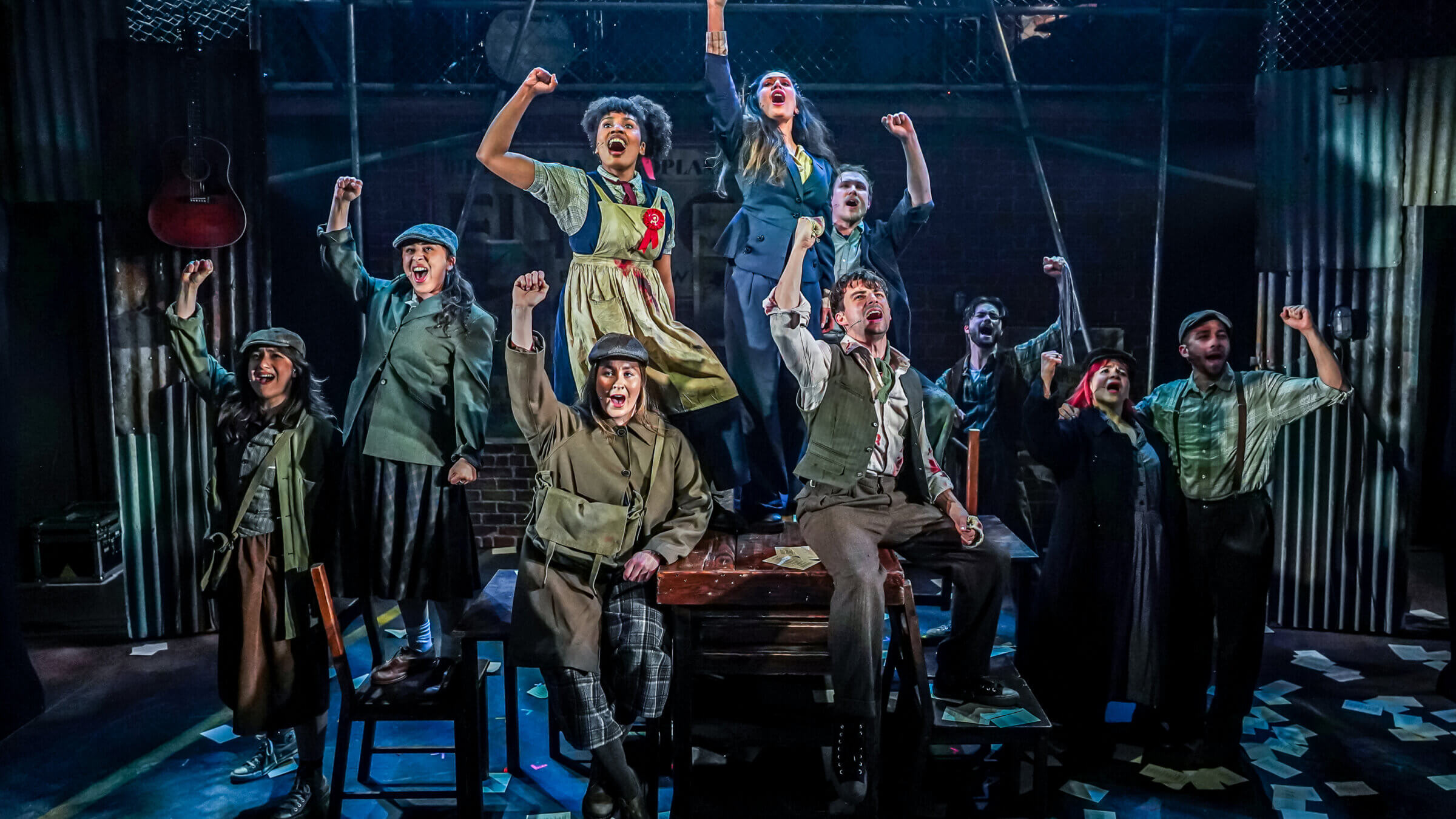
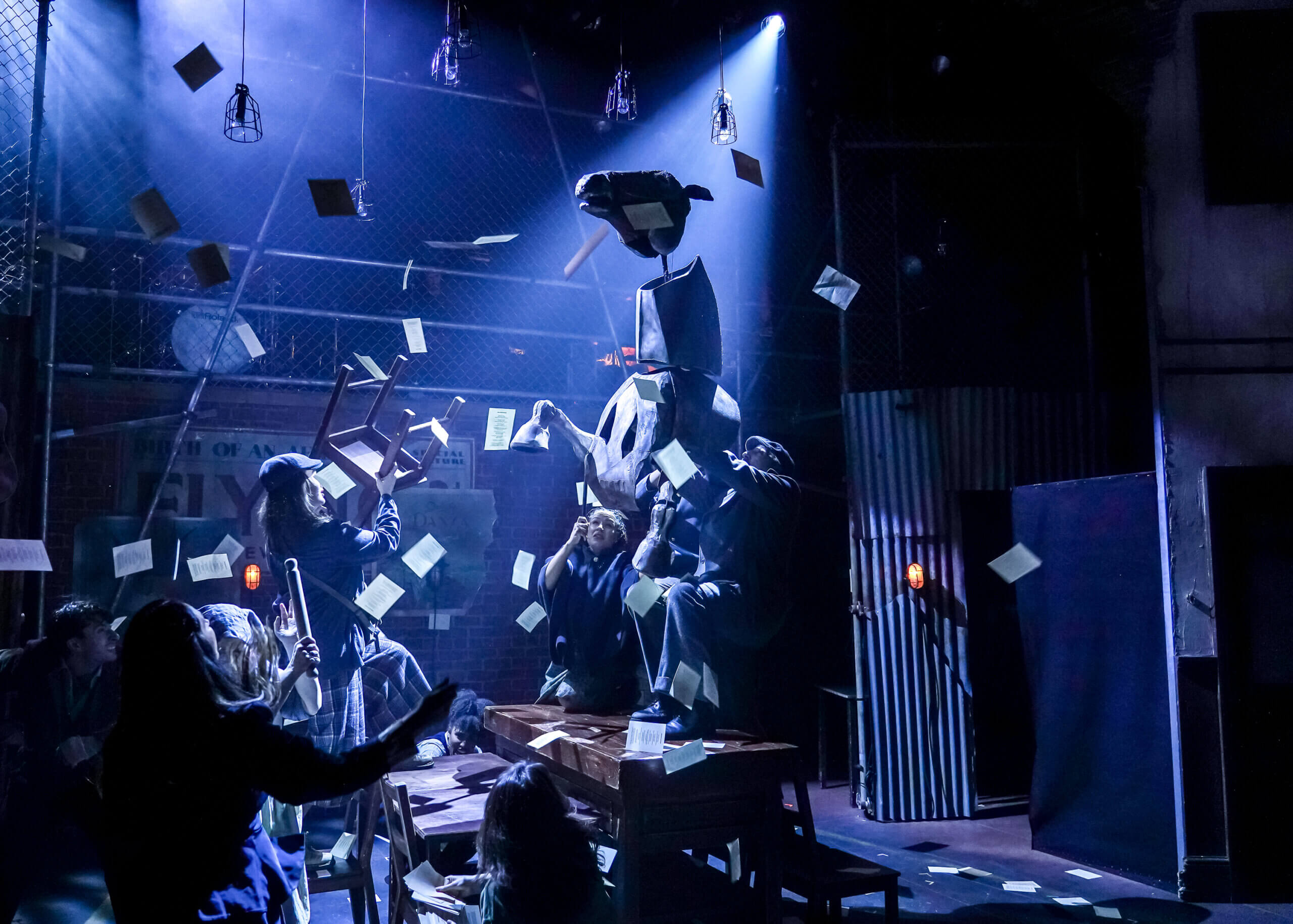
The cast of Cable Street pump their fists following a short-lived victory over fascism. Photo by Carol Rosegg

By PJ Grisar May 4, 2026
The Battle of Cable Street, the 1936 clashes off an obscure stretch of road in London’s East End, holds a totemic importance to the Jews of England, and, given how few they are in number, a correspondingly small significance in the larger British imagination.
The musical Cable Street, dramatizing that confrontation between thousands of Jewish and Irish East Enders against Oswald Mosley’s fascist blackshirts, arrives Off-Broadway from London amid a spate of headlines about the safety of English Jews and a subsequent minimization of their fears. Only now, the political alignment of those defending or hectoring Jews has recalibrated from the days the play examines.
In his rhetoric and tactics, the anti-Islam “activist” Tommy Robinson, who antagonizes Muslim neighborhoods and marched through Central London in his hateful “Unite the Kingdom” rallies, would appear to be the heir apparent to a Mosley, with the exception that he presents himself as a friend of the Jews. (Most Jews in the U.K. won’t have him; the Israeli far-right welcomed him to the Jewish state last October.)
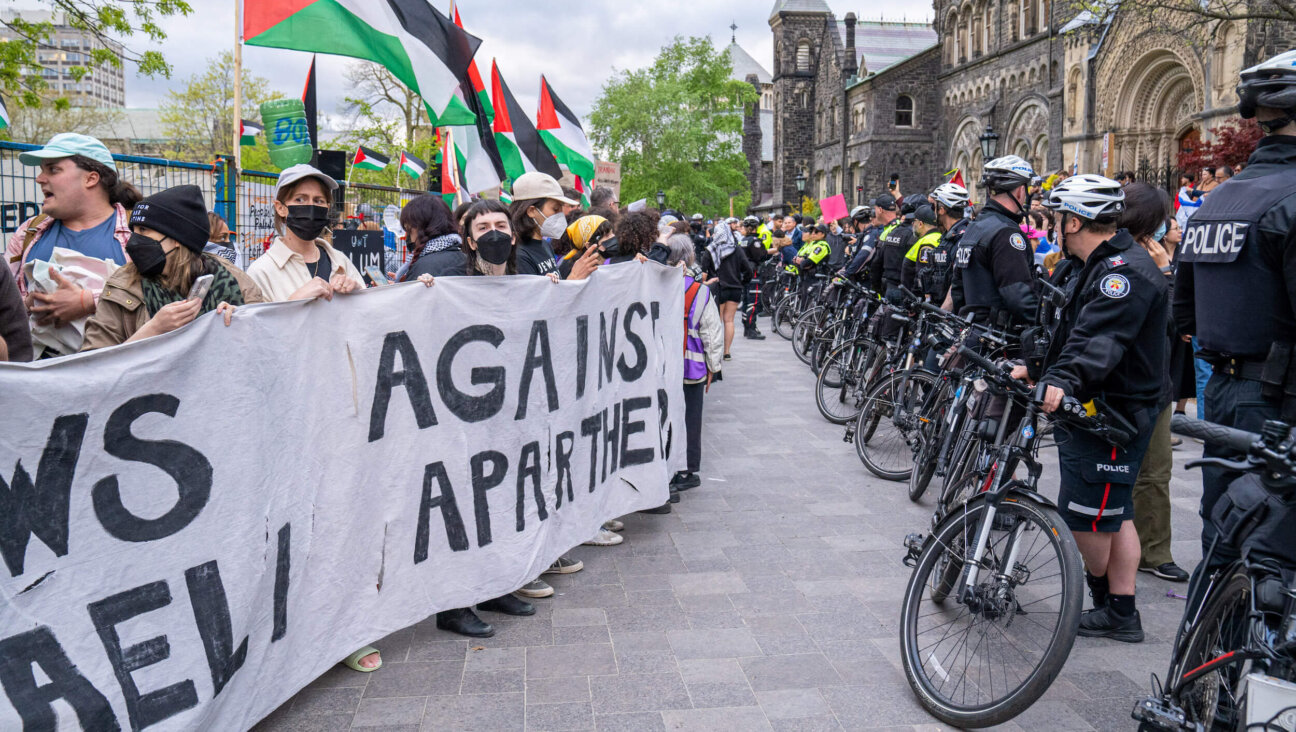
On the left, the multicultural coalition has found a cause in Palestinian rights, which they march for like clockwork. Jews, who in the U.K. make up about .5% of the population but a full 29% of recorded religious hate crimes, don’t count in their social justice calculus, comedian David Baddiel has argued. Evidence is mounting in that direction.
Police have acquiesced to community leaders pushing to cancel an Israeli soccer club matches in Birmingham, fabricating evidence with A.I. post facto to make it seem like the Israel fans will be the violent faction. A Panorama documentary from last month makes an earnest case for Jewish anxiety, but aired only after the BBC was made to review their standards over stories on Gaza following the network running a documentary that failed to disclose its narrator was the son of a Hamas minister. (This to my mind is nowhere near as egregious as the channel’s reluctance some years before to back down from blaming Orthodox children for their own abuse by mistranslating a word of Hebrew into an anti-Muslim slur.)
Jews being gunned down outside shuls on Yom Kippur or stabbed in the streets – as they were just last week, two days before I saw this musical — don’t mobilize the masses. They do get the odd pundit condemning the violence, only to then to whatabout with the humanitarian disaster in Gaza or blame Jewish institutions’ efforts to conflate Jews and Israel, as if only when uncoupled will their targeting be truly horrendous.
British Jews are so much a rounding error they could hardly sway a council election. That fact scarcely moves the needle on the old libels of governmental control, as Labour responds to violence with crack downs on pro-Palestinian protests.
The development of Cable Street goes back years before the current bloodletting, yet it has hit on a rhyme in history.
The story provides a framing device of a present-day walking tour before jumping back in time to follow three youths and their families: Irish immigrant Mairead (Lizzy-Rose Essin-Kelly), who dreams of a writer’s life during her day job rolling bagels; Sammy Scheinberg (a dynamic Isaac Gryn), who wants to be a boxer against the wishes of his shmata business father; and Ron (Barney Wilkinson) a recent Lancashire transplant, underemployed, with hair the color of threshed wheat, ripe for recruitment by a band of populist nativists.
The show finds hope in an unlikely coalition of Irish dockworkers, Jews and Communists rallying to stop a police-escorted British Union of Fascists (BUF) march through London’s Jewish Quarter. The parable is so near to today’s headlines that it can make one’s head spin, and, in the particular case of a Jew, scan for allies. Better luck in New York, with the Brits Off Broadway festival, than across the pond, where this may be taken as a more general parable, with Jews as allegorical victims standing in for other marginalized groups. To read into the story the excesses of today’s protests, and what the authorities allow under the pretext of free speech, would surely be sacrilege, depending on which marchers it’s applied to and where your loyalties lie.
In a talkback last Friday, audiences made parallels between the BUF’s appeals to the disaffected and Trump’s populism’s habit of scapegoating immigrants.
The music by Tim Gilvin has shades of what I’ll call Hebraic Hamilton (“Dream of making the dough, making the bread, baking the challah,” Sammy spits bars over a backbeat). There’s an Irish jig and a ballad that sounds like Coldplay, and “Only Words,” an elegiac plea from a Jewish father to his hothead son. (Jez Unwin plays the Scheinberg patriarch, a modern-day descendant and the leader of the Stepney BUF.) A ragtime number of chattering broadsheet sellers feeds us intermittent exposition.
The introduction of the BUF imagines them as a ‘90s boy band, making fun before they prove their menace. It works better downtown, when the Nazis in another British import, Operation Mincemeat, do their K-Pop number, as that show is an all-out farce.
Better by far is the play’s treatment of Jewish scenes, scripted by book writer Alex Kanefsky with deft direction by Adam Lenson. We hear a hamotzi, see a synagogue (with an implied women’s balcony) and hear a refrain of Sholem Aleichem and Sim Shalom integrated into musically layered sequences.
The indefatigable cast of 13 plays countless characters, switching allegiances from Mosleyites to Jews at the donning of an armband. This can lead to odd stage imagery, as when musician-actor Max Alexander-Taylor is togged up like a blackshirt while riffing on an electric guitar. (The rest of the band is on a top level, shielded in by the corrugated metal and chainlink of Yoav Segal’s set design.)
But there are moments of sublime stage work, après Les Miz, as the story’s action rises and the street mounts a defense with slogans borrowed from Spanish Republicans. The play, in its chilling wisdom, doesn’t stop at this high point. It allows room for what followed: The BUF’s membership only grew after the battle. Regrouping, they retaliated with a pogrom against the Jews. This time, no one showed up to defend them.
The cringey lyric of the battle song — “we’re not like the others, we won’t let you demonize our sisters and brothers” — is replaced with a more sober conclusion from Sammy’s sister in the wreckage of the attack.
After noting how “the rich blame the poor, the poor blame the rich and everybody hates the Jews,” Rosa Scheinberg (Romona Lewis-Malley) laments that “when the common enemy’s defeated, old wounds flare up, and old mistakes get repeated.” Solidarity was but a brief and shining moment.
As a concession to hope, the show doesn’t end there, but it very well might.
The musical Cable Street plays at 59E59 in New York through May 24. Tickets and more information can be found here.

Hello, fellow Forward reader! I’m Joel Brown, a Forward reader and supporter for more than 15 years, and currently the chair of the board of directors.
I’m an avid Forward reader because it ticks so many of my essential boxes: excellent journalism, Jewish focus and diverse viewpoints. In today’s political climate, what I most appreciate is the Forward’s independence — made possible by the generosity of its membership.
The Forward is committed to bringing you unbiased, nuanced Jewish news. From my position as board chair, I see an exciting future as we expand our position as the definitive independent voice of contemporary American Judaism.
That’s why I’m paying it Forward, by matching $36,000 of reader gifts. It’s an investment in the Forward’s newsroom, to continue telling the American Jewish story with truth and independence.
— Joel Brown, Forward board chair
Support our mission to tell the Jewish story fully and fairly.