An Israeli genocide scholar looks to Israel’s history to understand ‘what went wrong’
‘Israel: What Went Wrong’ sees Omer Bartov, a scholar of genocide and the Holocaust, considering how his birthplace changed
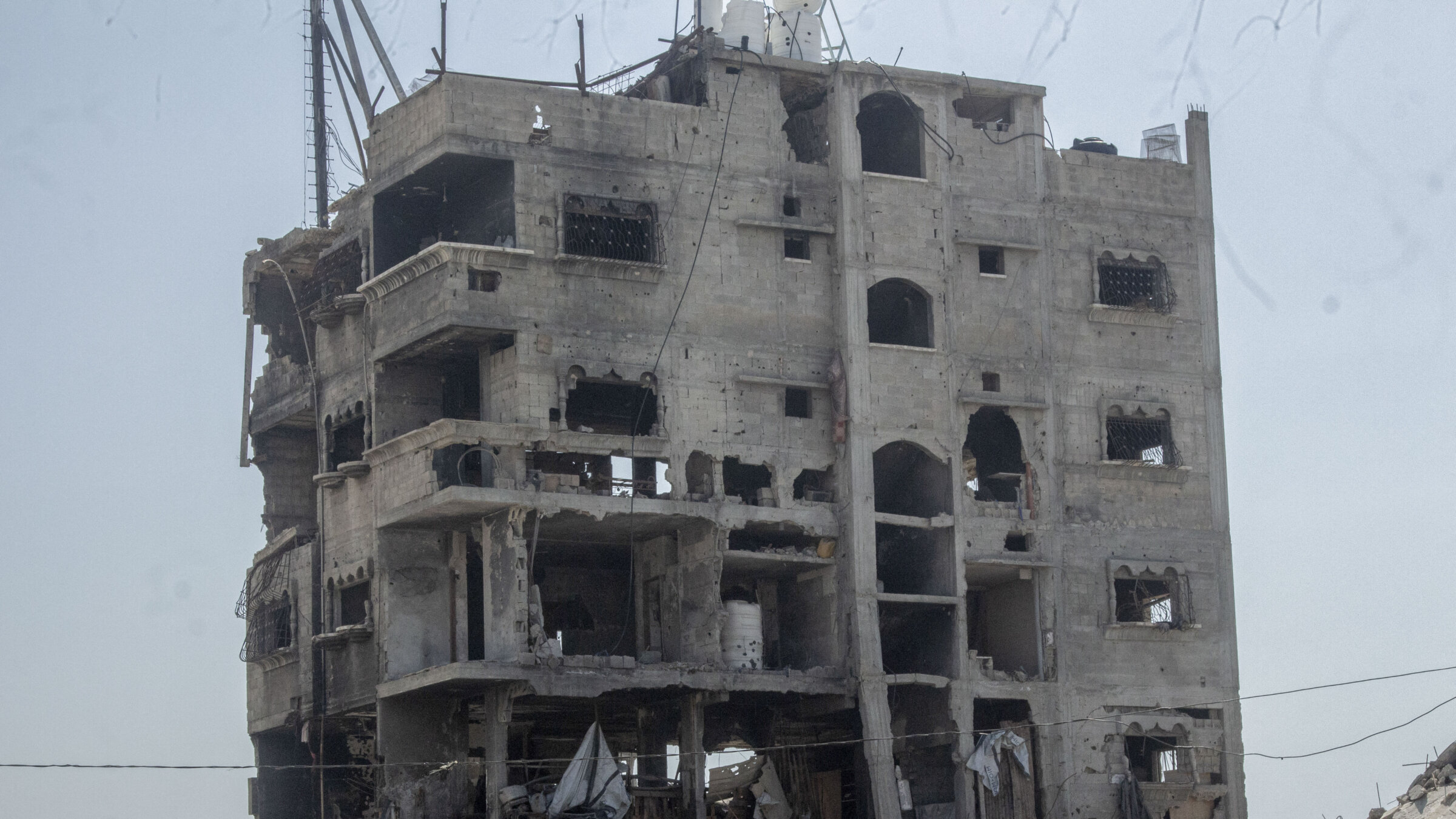
A damaged building in northern Gaza in April. Photo by Photo by Hassan Salem / Middle East Images / AFP via Getty Images
By Robert Zaretsky May 6, 2026
On Nov. 10, 2023, the Israeli-American historian Omer Bartov published a guest essay in the New York Times. Though scarcely a month had passed since the Hamas massacre of hundreds of Israeli men, women and children, Bartov expressed fears over Israel’s military response to this horrifying act of barbarity. But, he concluded, while “it is very likely that war crimes, and crimes against humanity, are happening,” he concluded, there is “no proof that genocide is taking place in Gaza.”
By mid-2025, however, Bartov revised his stance in a second Times essay. As a scholar of genocide who has taught classes on the subject — including at Brown University, where he is currently based — for a quarter of a century, he announced, “I can recognize one when I see one.”
In his new book Israel: What Went Wrong?, Bartov offers a searing analysis, both personal and professional, of the tragically entwined history of Israelis and Palestinians that climaxed with the disaster of October 7, 2023, when Hamas attacked Israel, followed by the even more disastrous response of Israel. Bartov’s account resembles an earlier book on an earlier war: Marc Bloch’s Strange Defeat, in which the veteran of two world wars examines the causes to France’s collapse in 1940. Both internationally known historians, and patriots who served their nation in arms, each man wrote their book when the debacles were still fresh.
For France, the collapse was as much moral and political as it was military. “Whatever the complexion of its government,” Bloch observed, “a country is bound to suffer, democracy becomes hopelessly weak, and the general good suffers accordingly if its higher officials are bred up to despise it.”
As Bartov’s book reminds us, this diagnosis applies not just to the decay that undermined the French Third Republic, but also to the moral rot that has been sapping the foundations of the Israeli republic. In his account, Bartov weaves the parallel histories of Israelis and Palestinians — a history composed of two catastrophes, the Shoah and the Nakba, that have ever since shaped events.
Inevitably, the very mention of these events in the same breath often sparks a violent response from many Israeli and diasporic Jews, but Bartov rightly insists upon their pairing. One of the many reasons why Bartov’s book is so important is his insistence that the two events are “inextricably linked historically, personally and as part of a politics of memory” and that they each have “become constitutive of Israeli and Palestinian national identities.”
William Faulkner’s old chestnut — the past is neither dead nor even past — is the through-line to Bartov’s sharply, at times brutally, etched history of Israeli-Palestinian relations. Crucially, Bartov argues that what has gone so terribly wrong since 1948 was inevitable only in retrospect. An alternative history, one shaped by a Zionism faithful to the ideals of the Enlightenment, was, if unlikely, certainly not impossible. At the very least the history of the past eight decades could have gone in a liberal and democratic direction.
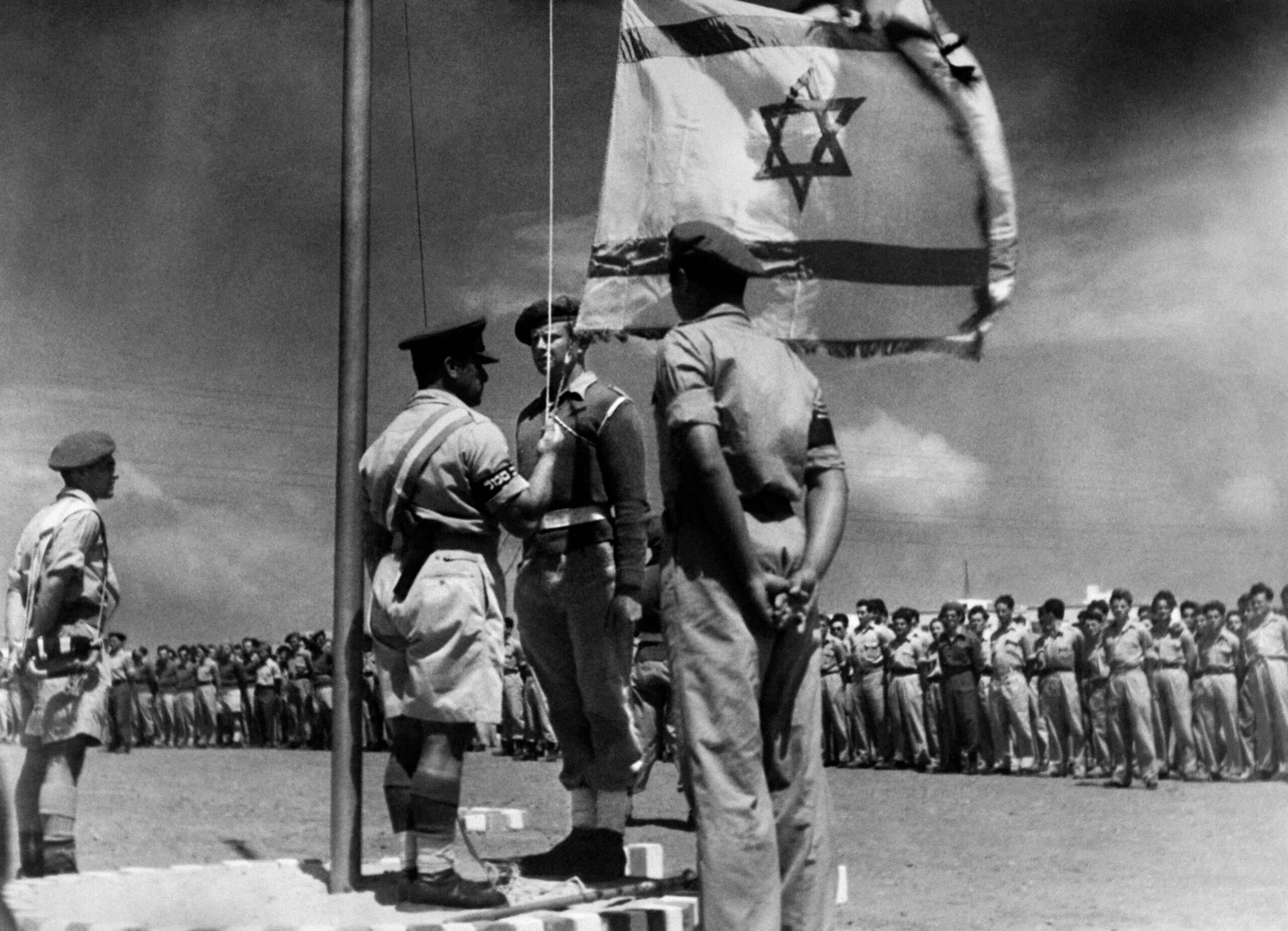
What, then, went wrong? First, there is the simple and tragic fact that the resurrection of one people meant the destruction of another people. Bartov underscores that early Zionist pioneers like his own father and grandfather, the offspring of “mutilated families” that were decimated by the Holocaust, were taught they represented the future of this reborn people. They only slowly grasped that this rebirth required the removal of the Palestinian people. For many Israelis, he observes, this “generated contradictory responses — guilt and regret, or negation and denial; a hope for redress and reconciliation, or a conscious and, just as important, unconscious will to eradicate and erase.”
The will to eradicate has been enabled by the occupations of the West Bank and Gaza, and their management. Since 1967, the metastasizing of walls and fences have transformed these territories into mazes, leading to a different kind of erasure. Israeli civilians, who once regularly encountered the Arab occupants of the land, no longer had occasion to see their Palestinian neighbors, hidden behind these walls, while Israeli soldiers serving in occupied territories were influenced by the burgeoning of ethno-nationalistic sentiment, making them increasingly incapable of seeing Palestinians as fellow human beings.
This form of “social death” — when a group or entire people are shunned and shut into confined spaces — has led with increasing frequency to all-too-real deaths. According to a recent United Nations report, more than 1,000 Palestinians living in the West Bank have been killed by Israeli soldiers, while settler violence has displaced nearly 2,000 Palestinians from their villages since the start of 2026, often with the complicity of the IDF.
For those who have been following events since Oct. 7, 2023, much of what Bartov recounts will not be a surprise. (As Bartov notes, however, the Israeli media have, with a few exceptions including Haaretz and +972, largely shielded the reality of what the IDF has done in Gaza and the West Bank from Israel’s inhabitants.)
Yet as a native-born Israeli who served as an officer during the Yom Kippur War, Bartov brings intimacy and intensity to his account. He confesses to a sense of estrangement from Israel, which now seems to be “a different, strange, and threatening place, whose people, including some of my friends, have been transformed, perhaps irretrievably.”
No less important, as a historian who has written several books on war and genocide, Bartov delves into harsher and darker corners of Israeli actions, the entwined histories of Israelis and Palestinians mostly ignored by the media. To better understand the acts and words of brutality and, at times, inhumanity committed and expressed by Israeli politicians and soldiers, Bartov compares the results of his early research on German soldiers — crucially, those serving not in the Nazi SS, but in the Wehrmacht, the broader German army which, after the war, sought to distance itself from the machinery of the Shoah.
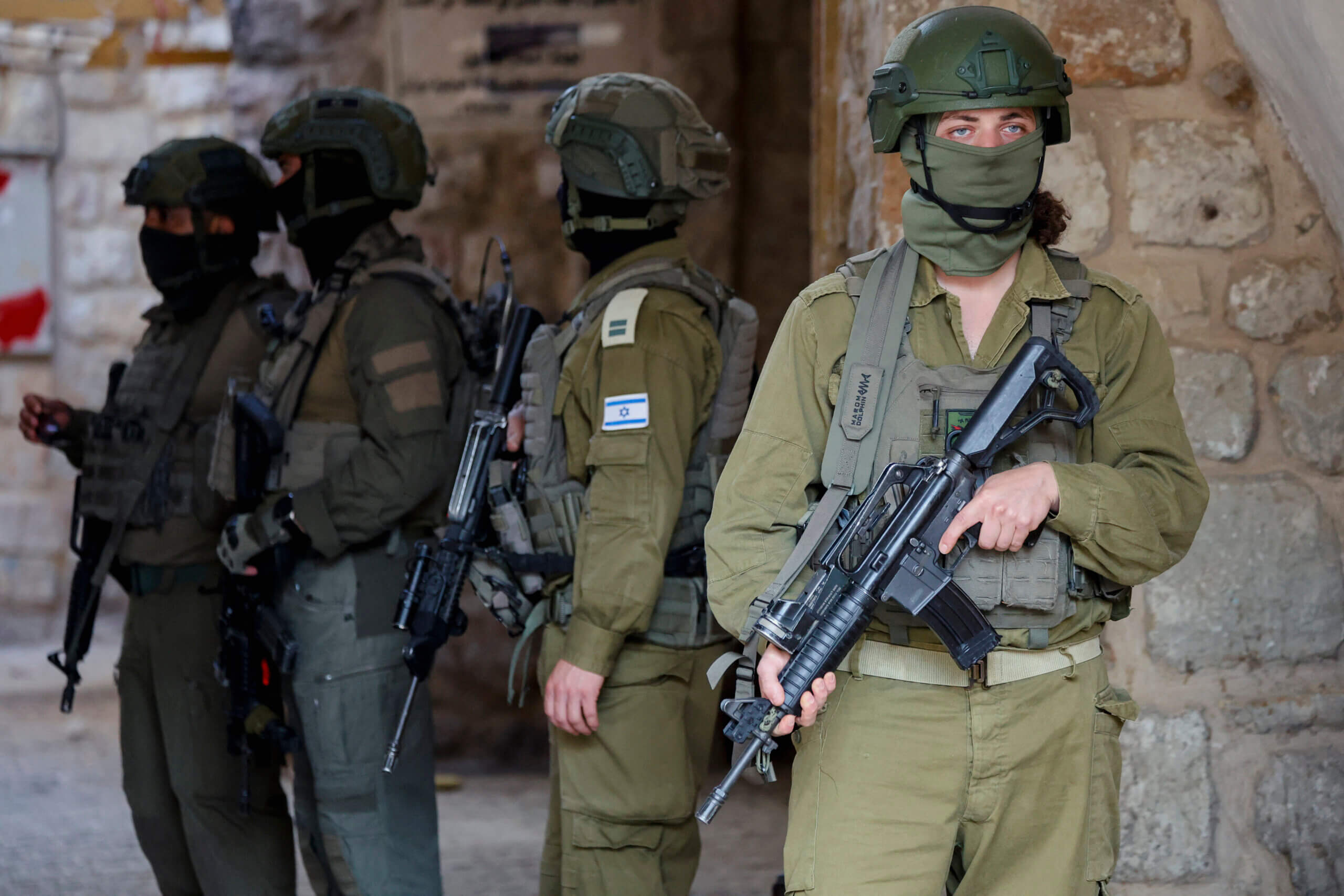
The comparison is provocative, but it is also painfully instructive. Just as latter employed animalistic images and apocalyptic claims to justify the systematic destruction of European Jewry, Israeli political and military leaders have used similar rhetoric towards Palestinians. This was true of then-defense minister Yoav Gallant, who declared Israel was fighting against “human animals,” as well as retired Major General Giora Eiland, who promised that “Gaza will become a place where no human being can exist.” No wonder, as Bartov notes, that there have been countless social posts by IDF troops calling to “kill the Arabs” and “burn their mothers.”
Given the postwar imperative of “Never again,” how has it come to this? As Bartov observes, the phrase has always carried two meanings, one applied exclusively to a repeat of a Jewish genocide, the other to the eruption of genocide, plain and simple, against any people at any time and in any place. The first definition, Bartov suggests, has bleak consequences. If the Shoah is seen, as it is by many Israelis, as an event that made the case for a Jewish state, it also turns that state “into a unique entity that operates according to its own rules and logic,” he writes. It unshackles, in short, Israel from the “constraints imposed on all other nations, not least because ‘they,’ as the saying goes, stood by while the Jews were slaughtered.”
Israel thus finds itself overseeing what Raphael Lemkin, the Jewish lawyer who coined the term “genocide,” called the “crime of crimes.” Bartov finds that Israel’s government checks the boxes for the 1948 genocide convention, which defines the crime, in part, as the commission of “acts with the intent to destroy, in whole or part, a national, ethnical, racial or religious group as such.”
When it comes to “intent,” Bartov lists a partial list of vows made by Israeli political and military leaders in the immediate aftermath of the Hamas massacre. These threats of complete destruction were not empty: from the targeting of hospitals and schools and razing of entire cities to causing tens of thousands of civilian deaths, the IDF has repeatedly violated the genocide convention. From the very beginning, the war’s goal, Bartov writes, has always been “to make the entire Gaza Strip uninhabitable, and to debilitate its population to such a degree that it would either die out or seek all possible options to flee the territory.”
In leveling these charges, Bartov does not ignore Hamas’ practice of using civilians and civilian infrastructure as shields against Israeli reprisals. Obviously, these tactics constitute a war crime, as does the unspeakable massacre committed by Hamas on Oct. 7th. Nevertheless, Bartov insists, Israel’s response has been no less criminal, ranging from its consistent failure to apply the principle of proportionality to its policy of blocking all humanitarian assistance in the early 2025.
It is tempting to conclude that apologists for the IDF’s excesses reflexively — though not reflectively — blame Hamas for the deaths of the tens of thousands of innocents. But even this conclusion is problematic given the many blanket accusations made by Israeli leaders against the people of Gaza. For example, President Isaac Herzog declared, a few days after the war, that it is “an entire nation out there that is responsible.”
And yet, the most tragic passages in the book are devoted to the Israeli constitution that never was. With a nod to counterfactual history, Bartov suggests that the unfolding of events over the last seven decades was not inevitable. Though Israel’s Declaration of Independence, inspired by its American counterpart, anticipated a similar constitution, the document never saw the light of day. On the one hand, the Declaration affirms “complete equality of social and political rights to all its citizens irrespective of religion, race, or sex.” As for the other hand, it is empty. The constituent assembly, though required by the UN’s 1948 partition plan, failed to write a constitution. Instead, there has been a series of basic laws, two of which address human rights — an ideal that for Arab citizens of Israel, not to mention Palestinians living in the occupied territories, is mostly a mirage.
What might Israel look like today if its founders had, in fact, endowed the nation with a constitution that resembled our own? For Bartov, it might well be a nation of laws where the Supreme Court, rather than being the frequent enabler of the ethno-nationalist goals of the current government, would instead serve as a powerful check to both the executive and legislative branches. With a constitution, it is conceivable, as Bartov suggests, the now-embattled court might oppose the nature of the occupation of the West Bank, perhaps even the actions of the IDF in Gaza. Israel would be a light onto other nations not because it resolved the inherent tension in being both a Jewish and democratic nation, but because it was committed to managing it.
Of course, this possible Israel never came to pass. The original purpose of Zionism, which Bartov poignantly describes as a “Jewish rebellion against fate and oppression, religious resignation and prejudice,” has given way, he says, to the God of the zealots.
“As Israel is led singing and praying and dancing into the abyss,” Bartov concludes, “it is finally shaking itself free of Zionism and heading down the path of theocracy and apocalypse following a pillar of fire and smoke.”

Hello, fellow Forward reader! I’m Joel Brown, a Forward reader and supporter for more than 15 years, and currently the chair of the board of directors.
I’m an avid Forward reader because it ticks so many of my essential boxes: excellent journalism, Jewish focus and diverse viewpoints. In today’s political climate, what I most appreciate is the Forward’s independence — made possible by the generosity of its membership.
The Forward is committed to bringing you unbiased, nuanced Jewish news. From my position as board chair, I see an exciting future as we expand our position as the definitive independent voice of contemporary American Judaism.
That’s why I’m paying it Forward, by matching $36,000 of reader gifts. It’s an investment in the Forward’s newsroom, to continue telling the American Jewish story with truth and independence.
— Joel Brown, Forward board chair
Support our mission to tell the Jewish story fully and fairly.