National Museum Of American Jewish History CEO Resigns

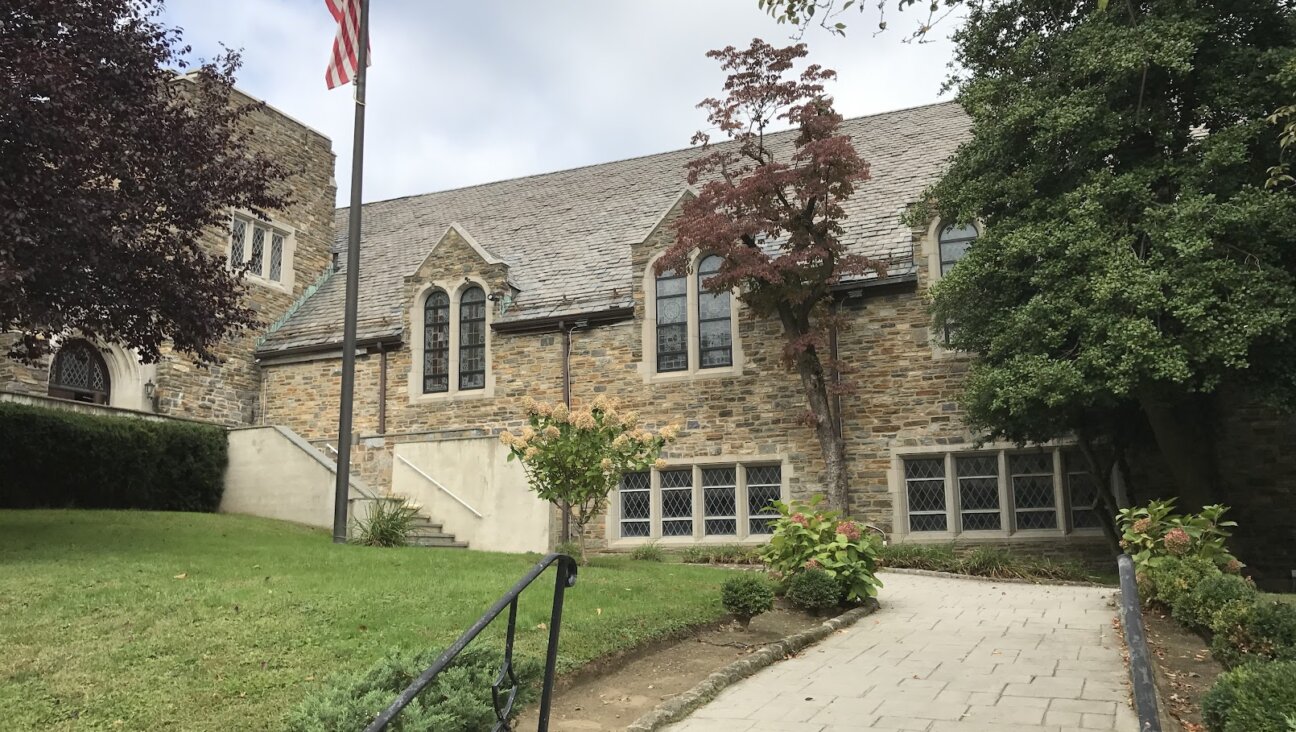
Exterior of the National Museum of Jewish History in Philadelphia. Image by Getty/Paul Marotta/Contributor

By PJ Grisar May 21, 2019
Ivy L. Barsky, the chief executive of the National Museum of American Jewish History in Philadelphia, has resigned. She will leave the institution in June, The Philadelphia Inquirer reported.
Barsky was named CEO in 2012, two years after the museum opened a new $150 million building. (The museum, founded in 1976, was historically housed in the same building as the city’s Congregation Mikveh Israel.) At the start of her tenure, the museum was struggling to attract sufficient crowds to keep up with its increasing expenses.
To cut costs, Barsky executed layoffs, rearranged departments and put forward a strategic plan that emphasized high profile programming, resulting in major exhibitions on, among other subjects, Leonard Bernstein, the photography of Richard Avedon and the role of baseball in American Jewish life.
In 2017, with yearly losses mounting, Barsky conducted another round of layoffs, froze salaries, closed the museum’s café and took a cut of $25,000 from her previous salary of $324,000.
Barsky claimed at the time that the cuts would save the museum $1.3 million annually. That fiscal year, the institution saw a $1.8 million deficit.
Despite the cuts, Barsky had a strong vision for the museum. During her tenure, she supervised the creation of a curriculum for Jewish American history using the museum’s collection; that curriculum was taught to Jewish educators through seminars via another Barsky initiative, the museum’s National Educators Institute.
In a statement, Barsky said it was “a great privilege” to lead the museum. She did not announce her future plans.
PJ Grisar is the Forward’s culture intern. He can be reached at [email protected]
It’s our birthday and we’re still celebrating!
We hope you appreciated this article. Before you go, we’d like to ask you to please support the Forward’s independent Jewish news.
This week we celebrate 129 years of the Forward. We’re proud of our origins as a Yiddish print publication serving Jewish immigrants. And we’re just as proud of what we’ve become today: A trusted source of Jewish news and opinion, available digitally to anyone in the world without paywalls or subscriptions.
We’ve helped five generations of American Jews make sense of the news and the world around them — and we aren’t slowing down any time soon.
As a nonprofit newsroom, reader donations make it possible for us to do this work. Support independent, agenda-free Jewish journalism and our board will match your gift in honor of our birthday!
Support our mission to tell the Jewish story fully and fairly.