In jailhouse letter, Mahmoud Khalil urges renewed student pro-Palestinian protests
The protest leader from Columbia University says he is a “political prisoner” since being arrested by ICE last week
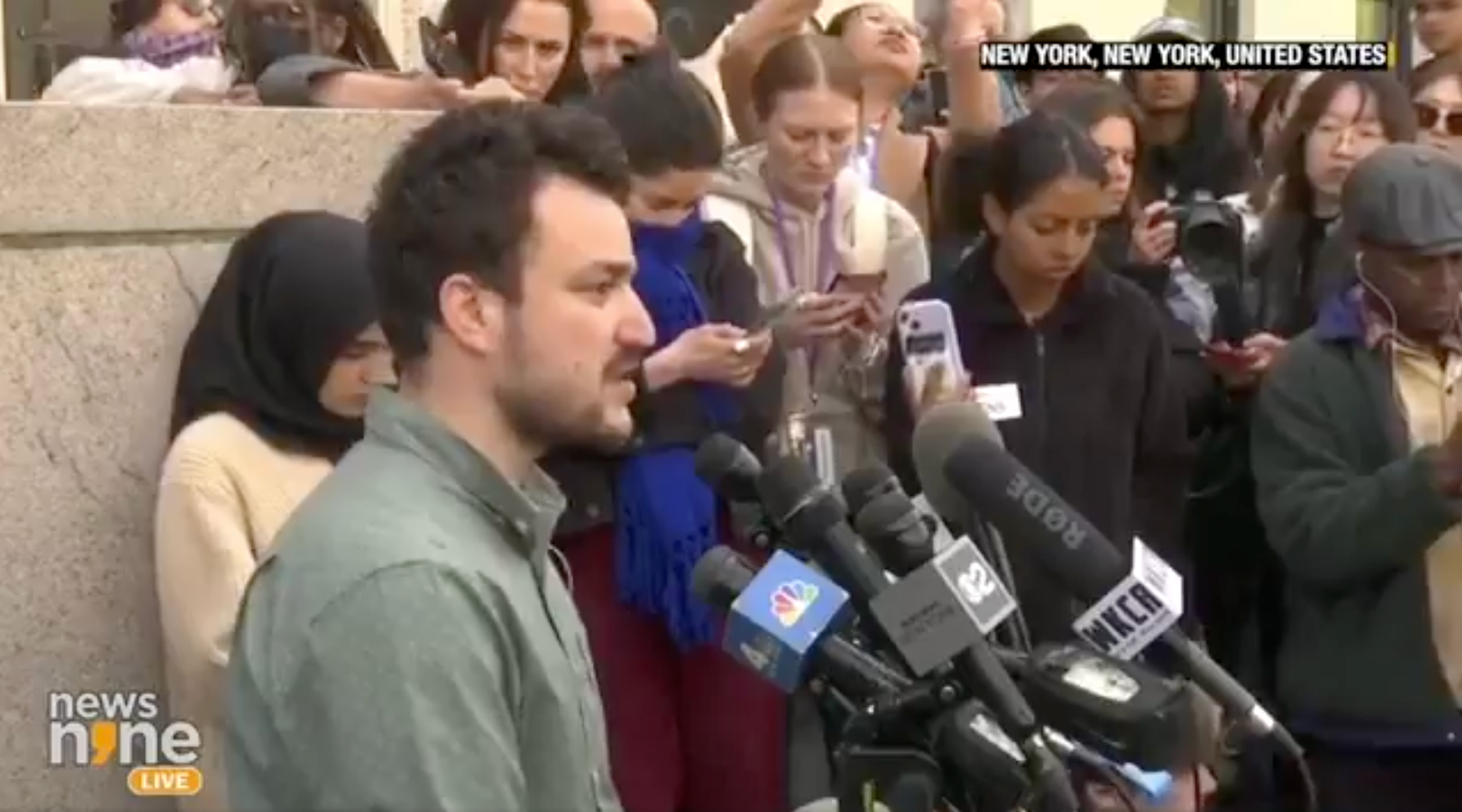
Mahmoud Khalil, a pro-Palestinian activist at Columbia who was arrested by ICE in March 2025, speaking to media. (Screenshot)
(JTA) — Mahmoud Khalil, the Palestinian protester arrested at Columbia University nine days ago, wrote that he was a “political prisoner” in a letter sent from a Louisiana detention center.
Khalil was arrested March 9 by ICE and has been threatened with deportation for leading activities that the Trump administration says were “aligned to Hamas.” He was a leader of the hardline pro-Palestinian group Columbia University Apartheid Divest, and his detainment was part of a broad crackdown on campus anti-Israel protests that has since included another arrest of someone who demonstrated at Columbia.
In the letter, which was dictated to his family, Khalil, who holds a green card, called his arrest “a direct consequence of exercising my right to free speech as I advocated for a free Palestine and an end to the genocide in Gaza, which resumed in full force Monday night,” a reference to Israeli airstrikes in Gaza that ended a two-month ceasefire. Israel rejects the accusation that it is committing genocide in its war against Hamas.
Khalil also blamed Columbia’s leaders for his arrest, accusing them of having “laid the groundwork for the U.S. government to target me by arbitrarily disciplining pro-Palestinian students and allowing viral doxing campaigns — based on racism and disinformation —to go unchecked.”
The Trump administration, along with a range of Jewish groups, have long faulted Columbia for not doing enough to curb disruptive pro-Palestinian protests that, according to many Jewish students, created a hostile atmosphere. Shortly before the arrest, the Trump administration froze $400 million in grants to Columbia over campus antisemitism, and the school responded last week by expelling and suspending a range of students.
In his letter, Khalil urged the protests to continue.
“If anything, my detention is a testament to the strength of the student movement in shifting public opinion toward Palestinian liberation,” he wrote. “In the weeks ahead, students, advocates, and elected officials must unite to defend the right to protest for Palestine. At stake are not just our voices, but the fundamental civil liberties of all.”
Did you know that only 2% of Forward readers donate to support our nonprofit newsroom? That 2% make it possible for millions to read the Forward without a paywall or subscription — removing any barriers to the full and fair Jewish story.
But while the Forward is free to read, it isn’t free to produce. Big stories — like deep dives into the antisemitism data, political scoops or reporting trips to college campuses — take months of research and fact-checking. All while we keep you informed of what you need to know each day.
— Rachel Fishman Feddersen, Forward Publisher & CEO
Support our mission to tell the Jewish story fully and fairly.