Netanyahu arrives in Washington as Trump says ‘good chance’ of Gaza ceasefire this week
Netanyahu said Hamas had made “unacceptable” demands in its latest response to an offered deal
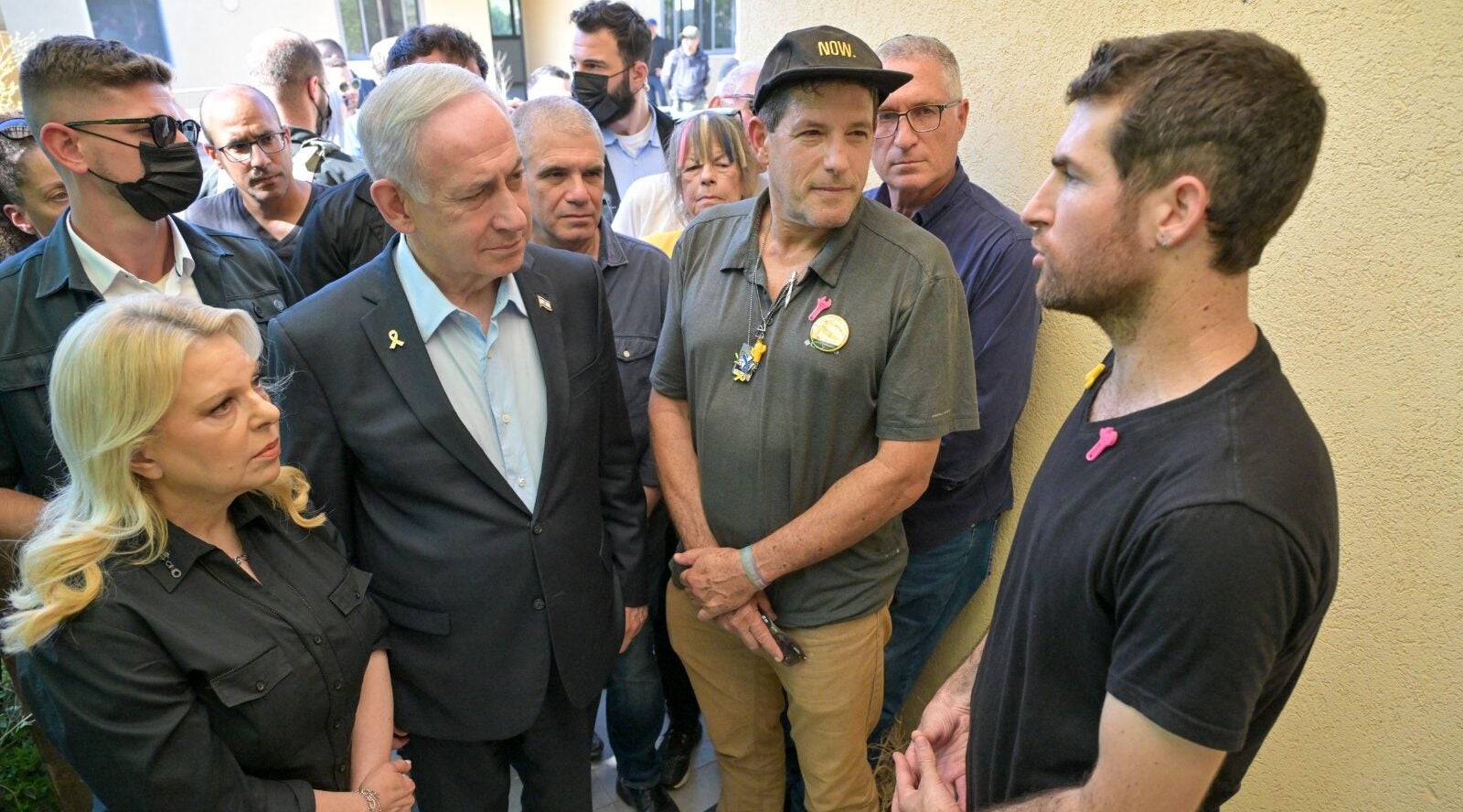
Israeli Prime Minister Benjamin Netanyahu speaks with American-Israeli released hostage Sagui Dekel-Chen during his visit to Kibbutz Nir Oz on July 3, 2025. (Photo by Kobi Gideon/GPO)
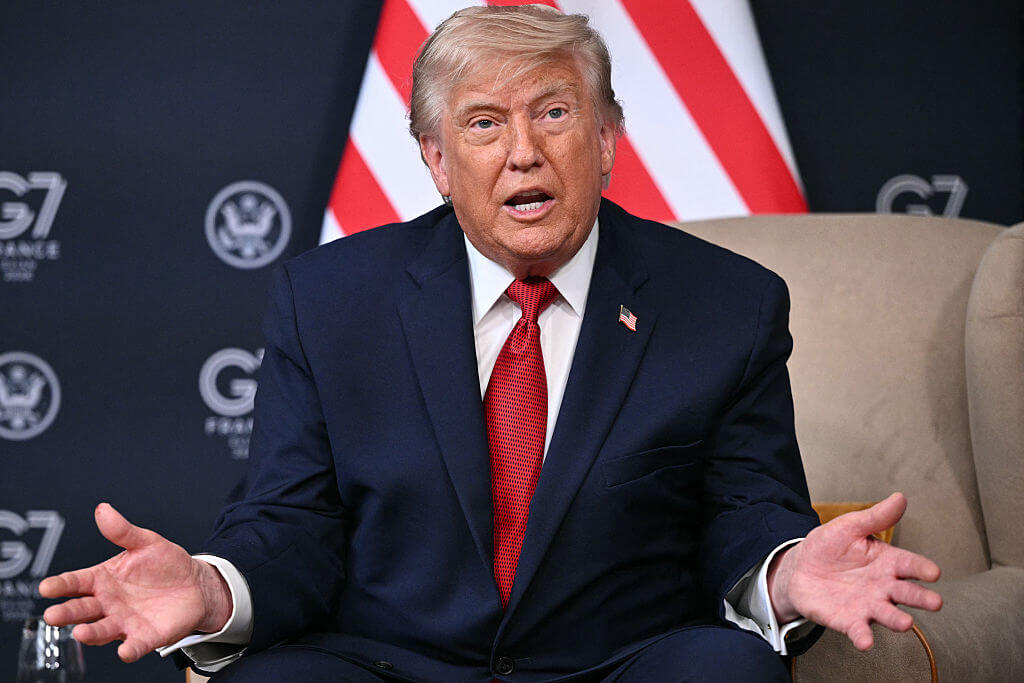
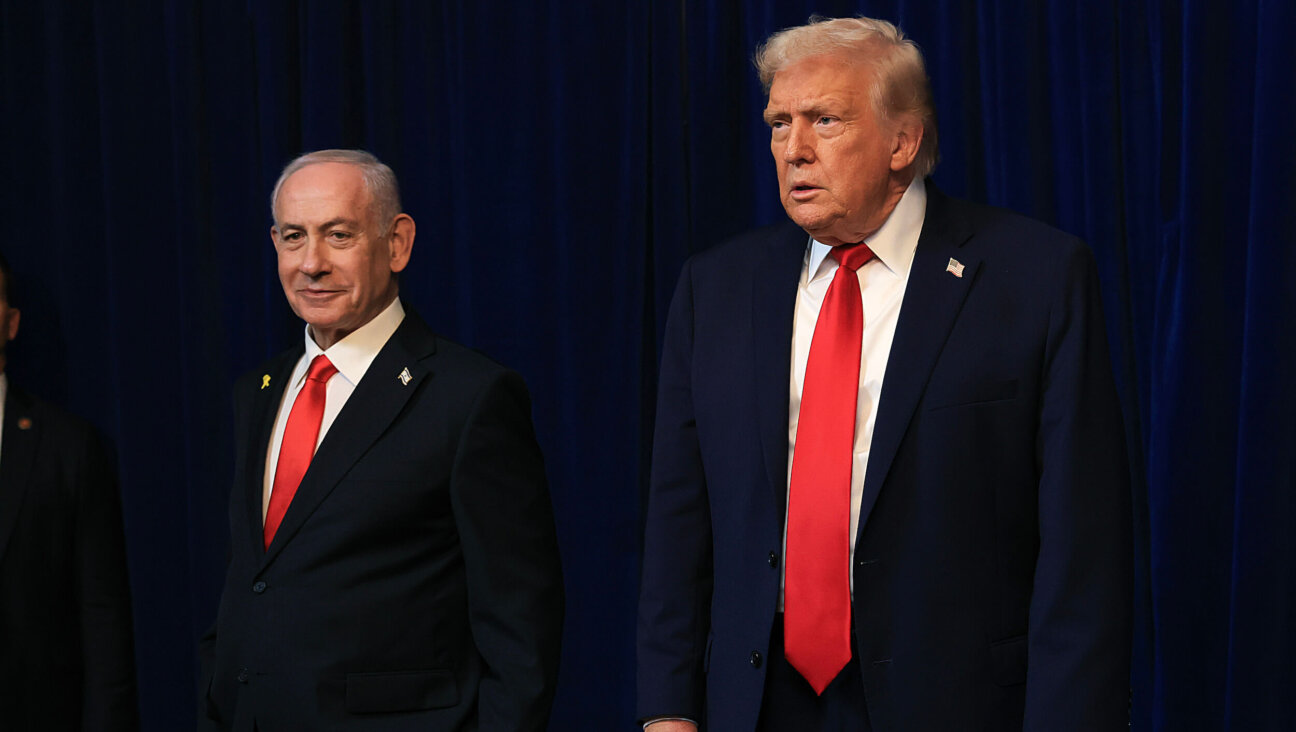
(JTA) — As he awaited the arrival of Israeli Prime Minister Benjamin Netanyahu, President Donald Trump said on Sunday that he believed there was a “good chance” of a ceasefire deal in the Israel-Hamas war in Gaza this week.
A deal on the table would include the release of 10 living and 18 deceased hostages over a 60-day ceasefire, from the 20 living and 30 dead hostages that have been held in Gaza since Hamas attacked Israel on Oct. 7, 2023. Israel would also release a large number of Palestinian security prisoners, withdraw its troops to agreed-upon buffer zones and increase aid to Gaza.
“We’ve gotten a lot of the hostages out, but pertaining to the remaining hostages, quite a few of them will be coming out,” Trump told reporters on Sunday.
If a deal is struck, talks would continue during the 60 days toward a permanent end to the war, with postwar governance a central point of negotiations. Netanyahu faces pressure from key coalition partners not to end the war.
Before heading to Washington, Netanyahu offered mixed signals about the prognosis of a deal. He announced that Hamas had made “unacceptable” demands in its response to terms brokered by Qatar — but he also dispatched negotiators to Doha to keep talking. He also visited Kibbutz Nir Oz for the first time since Oct. 7, a move that some Israelis interpreted as signaling a likely deal; there he spoke with Sagui Dekel-Chen, an American-Israeli who was released from captivity after 498 days in February, during a previous ceasefire.
“I am determined, we are determined, to bring back all of them,” Netanyahu told reporters in Israel about the hostages before setting out on Sunday. But he reiterated that he was still seeking Hamas’ full surrender.
“Wee are determined to ensure that Gaza will no longer constitute a threat to Israel,” he said. “We will not allow a situation that encourages more kidnappings, more murders, more beheadings, more invasions. That means one thing: eliminating Hamas’s military and governing capabilities. Hamas will not be there.”
Netanyahu’s visit to the White House, where he is expected to meet with Trump on Monday evening, is his third since Trump retook office earlier this year. After the first meeting, in early February, Trump pledged to “take over” the Gaza Strip, a promise he has not pursued. During the second, in April, Trump announced direct U.S. talks with Iran, seeming to surprise Netanyahu. After those talks failed, Trump bombed Iran’s nuclear facilities last month, joining Netanyahu’s military campaign there. He demanded and achieved a ceasefire in that war after 12 days and is seen as wanting to replicate that success in the much longer Gaza war.
a

Did you know that only 2% of Forward readers donate to support our nonprofit newsroom? That 2% make it possible for millions to read the Forward without a paywall or subscription — removing any barriers to the full and fair Jewish story.
But while the Forward is free to read, it isn’t free to produce. Big stories — like deep dives into the antisemitism data, political scoops or reporting trips to college campuses — take months of research and fact-checking. All while we keep you informed of what you need to know each day.
— Rachel Fishman Feddersen, Forward Publisher & CEO
Support our mission to tell the Jewish story fully and fairly.