Israel launches ground operation in Gaza City, as Marco Rubio casts doubt on diplomatic end to war
“Gaza is burning,” tweeted Israeli Defense Minister Israel Katz
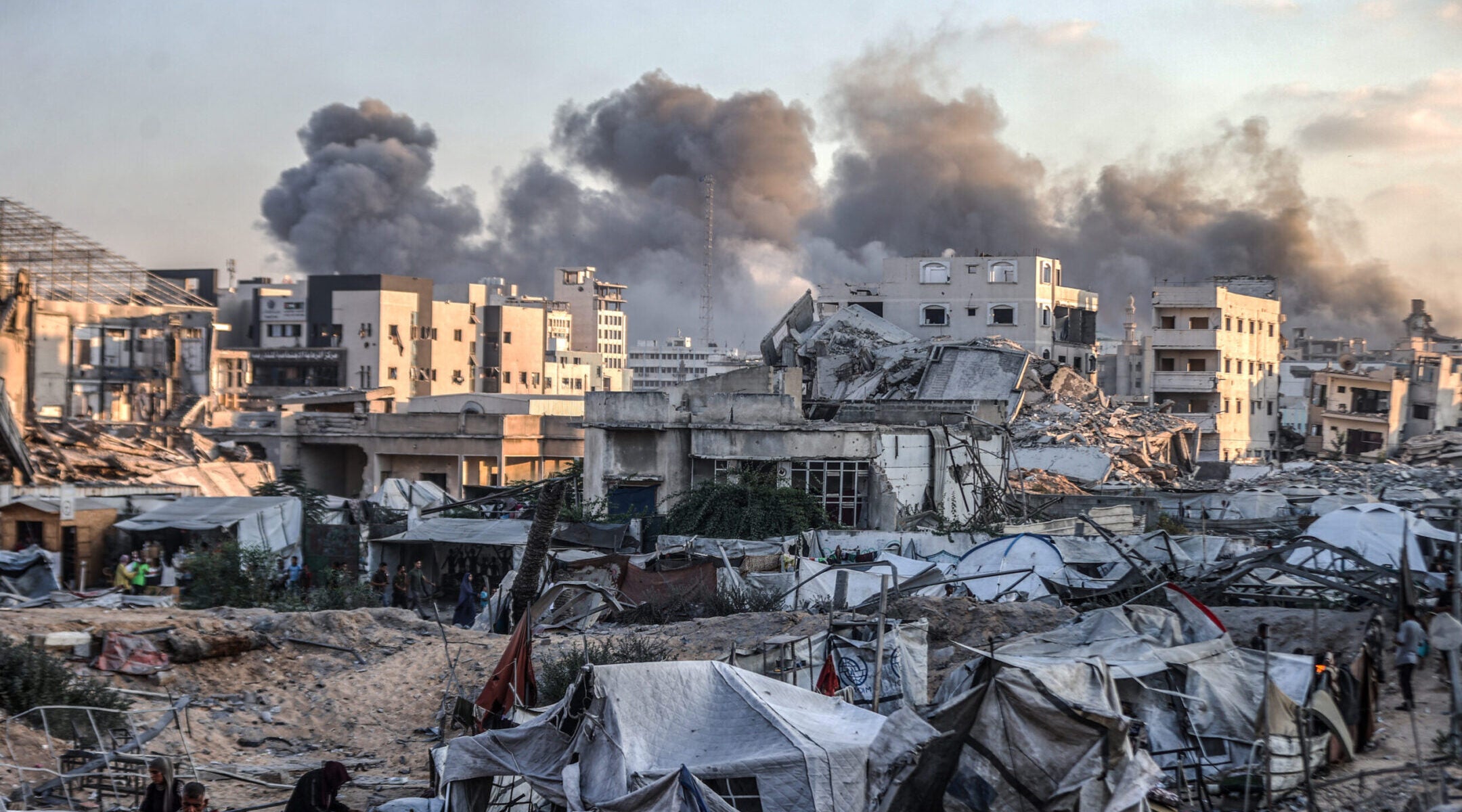
Smoke rises following Israeli airstrikes in Gaza City, Sept. 14, 2025. Photo by Ali Jadallah/Anadolu via Getty Images
(JTA) — Israel has launched a major ground operation in Gaza City, a months after its government approved a plan to take over the city despite the objections of military leaders and hostage families.
“Gaza is burning,” Defense Minister Israel Katz tweeted. “The IDF strikes with an iron fist at the terrorist infrastructure and IDF soldiers are fighting bravely to create the conditions for the release of the hostages and the defeat of Hamas. We will not relent and we will not go back — until the completion of the mission.”
Israeli Prime Minister Benjamin Netanyahu announced the operation from a Tel Aviv courtroom, where a day of testimony in his ongoing corruption trial was cut short by the development.
Israeli leaders say Gaza City is a last major Hamas redoubt and conquering it is essential to defeating the group that launched the war with its attack on Israel on Oct. 7, 2023. The army had issued an evacuation order for the roughly 1 million civilians living in the city, many as refugees, and about a third are thought to have departed so far.
Relatives of the 48 remaining hostages in Gaza, of whom 20 are thought to be alive and held at least in part above ground in Gaza City, launched a sit-in outside Prime Minister Benjamin Netanyahu’s Jerusalem residence to protest the operation.
“Our loved ones are being shelled by the IDF on the prime minister’s orders. He is doing everything to prevent a deal and to prevent their return,” said Anat Angrest, the mother of captive Matan Angrest. “We are worried that this will be their last night, we are no longer ready for it.”
The invasion follows weeks of intense bombing and began while U.S. Secretary of State Marco Rubio was on the ground in Israel for the first time since taking his position earlier this year.
Rubio and Netanyahu held a press conference after meeting on Monday in which Rubio struck a more pessimistic tone than his boss, President Donald Trump, about the potential for ending the Gaza war through negotiations.
Asked about the possibility of Hamas agreeing to disarm, Rubio said that he, like Trump, would prefer to see a diplomatic resolution to the war. But he repeatedly cast doubt on whether that could happen.
“I think we have to be prepared for the fact that savage terrorists don’t normally agree to things like that, but we’ll continue to pursue that route,” he said, according to a State Department transcript. “It’s the ideal outcome. But it may require ultimately a concise military operation to eliminate them.”
He and Netanyahu declined to say whether they had discussed the planned Gaza City invasion specifically.
Rubio remained in Israel overnight as the ground operation began, before he was due to travel Tuesday to Qatar, the U.S. ally that Israel bombed last week in a failed attempt to assassinate Hamas’ political leaders who are housed there. Qatar has played a key role in brokering so-far-unsuccessful talks aimed at ending the war.
During his Israel visit, Rubio also visited the Western Wall with Netanyahu and U.S. Ambassador Mike Huckabee and visited a contested archaeological site whose critics say is designed to solidify Jewish claims in East Jerusalem, the proposed capital of a future Palestinian state. The visit comes on the eve of several countries’ recognition of a Palestinian state during this month’s United Nations General Assembly, in moves that the countries’ leaders are mounting as a response to Israel’s prosecution of the Gaza war.

Hello, fellow Forward reader! I’m Joel Brown, a Forward reader and supporter for more than 15 years, and currently the chair of the board of directors.
I’m an avid Forward reader because it ticks so many of my essential boxes: excellent journalism, Jewish focus and diverse viewpoints. In today’s political climate, what I most appreciate is the Forward’s independence — made possible by the generosity of its membership.
The Forward is committed to bringing you unbiased, nuanced Jewish news. From my position as board chair, I see an exciting future as we expand our position as the definitive independent voice of contemporary American Judaism.
That’s why I’m paying it Forward, by matching $36,000 of reader gifts. It’s an investment in the Forward’s newsroom, to continue telling the American Jewish story with truth and independence.
— Joel Brown, Forward board chair
Support our mission to tell the Jewish story fully and fairly.