Nadler accuses RFK Jr of antisemitism over claim that ‘early’ circumcisions lead to autism
The claim has no basis in science, according to the consensus of the medical establishment
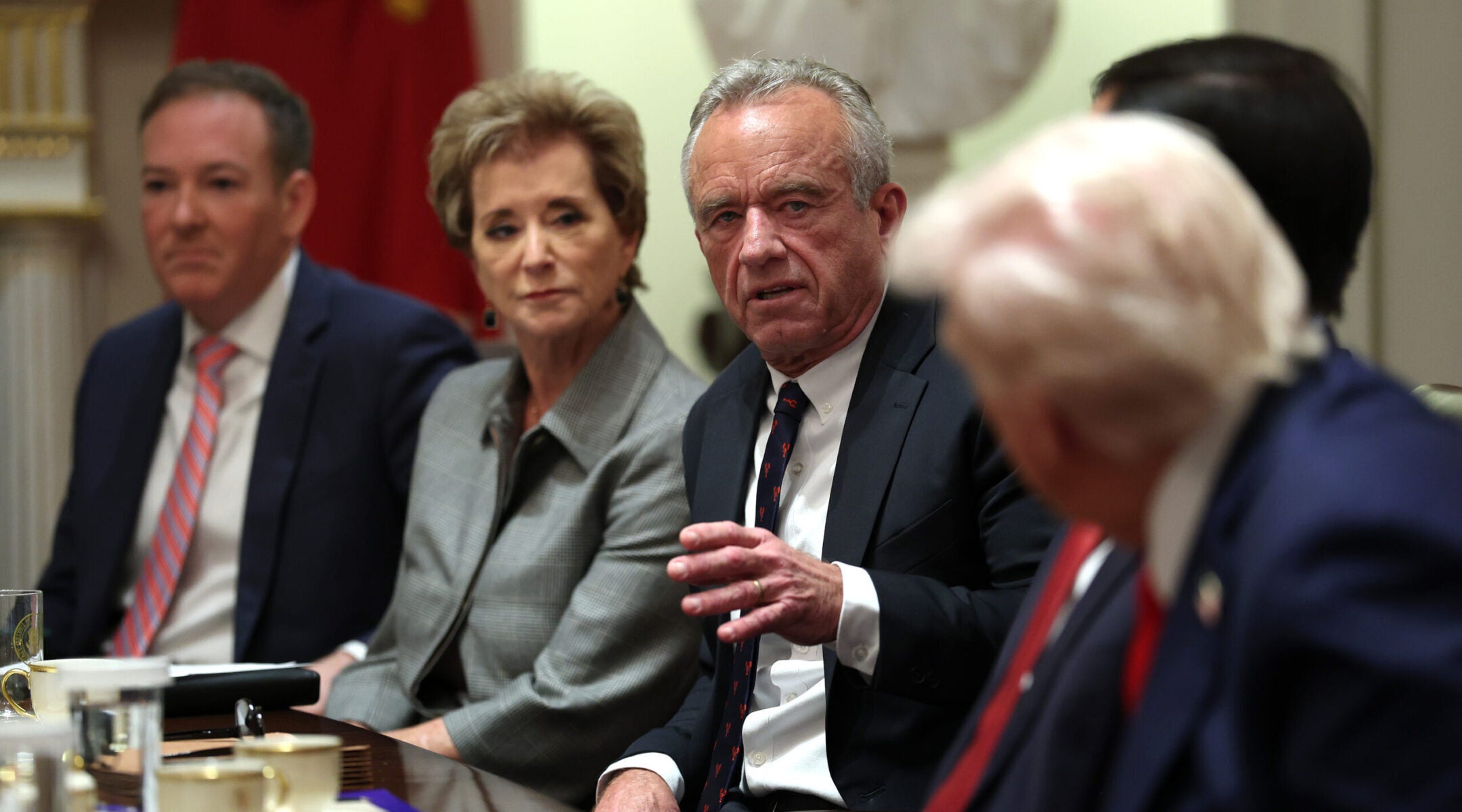
U.S. Secretary of Health and Human Services Robert F. Kennedy Jr. delivers remarks during a Cabinet meeting with President Donald Trump at the White House on Oct. 9, 2025. Photo by Anna Moneymaker/Getty Images
(JTA) — Rep. Jerry Nadler accused Robert F. Kennedy Jr. of antisemitism on Thursday after the health secretary said he believed “early circumcisions” were a cause of autism.
“Children who are circumcised early have double the rate of autism, and it’s highly likely because they’re given Tylenol,” Kennedy said in a meeting about his push to discourage the use of Tylenol among pregnant women over autism concerns, which has drawn widespread concern among medical professionals over its lack of evidence. President Donald Trump, who was present, said there was ample evidence for Kennedy’s concern but neither man cited any.
Kennedy, who has previously drawn antisemitism allegations over his comments about COVID-19, did not mention Jews in his comments. But circumcision is closely associated with Judaism. Traditional Jewish law requires the medical procedure to be performed on boy babies when they are eight days old as a signifier of their bond with the Jewish people. Male converts to Judaism also undergo circumcision.
“This is an antisemitic remark. I call on all my colleagues on both sides of the aisle to clearly denounce it,” tweeted Rep. Jerry Nadler, the New York City Jewish Democrat, about Kennedy’s comments.
Most Americans choose to circumcise their male children, although the circumcision rate has fallen sharply in recent years. Among them, Jews actually tend to perform the procedure later, as most circumcisions are performed in hospitals soon after birth. The procedure and recuperation from it does not always require the use of painkillers.
A small movement aims to normalize eschewing circumcision among Jews, who have one of the highest circumcision rates of any demographic group in the country.
Did you know that only 2% of Forward readers donate to support our nonprofit newsroom? That 2% make it possible for millions to read the Forward without a paywall or subscription — removing any barriers to the full and fair Jewish story.
But while the Forward is free to read, it isn’t free to produce. Big stories — like deep dives into the antisemitism data, political scoops or reporting trips to college campuses — take months of research and fact-checking. All while we keep you informed of what you need to know each day.
— Rachel Fishman Feddersen, Forward Publisher & CEO
Support our mission to tell the Jewish story fully and fairly.