At Abraham Foxman’s funeral, an elegy for the last generation with direct ties to the Holocaust
The longtime ADL helped define American Jewish leadership in the second half of the 20th century
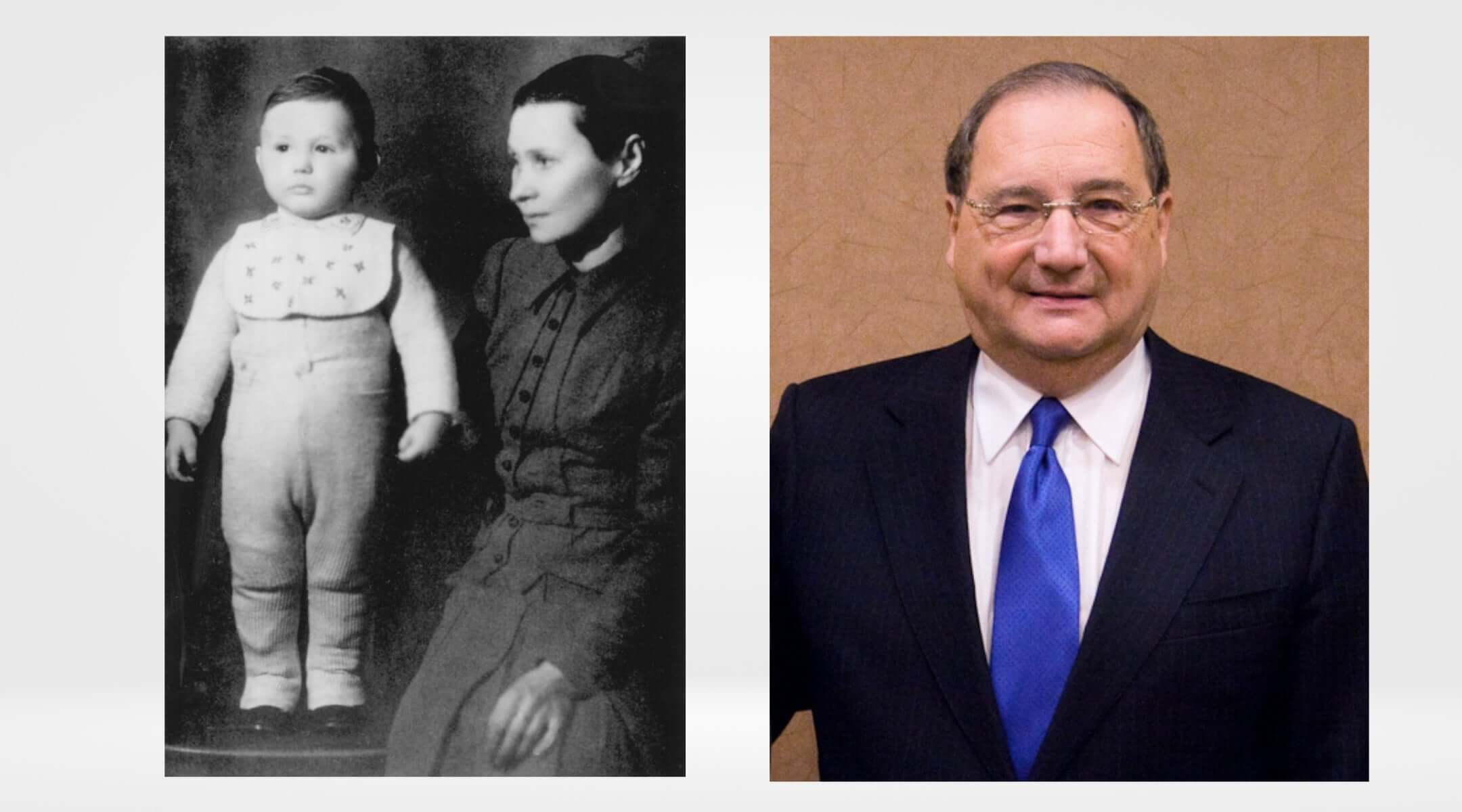
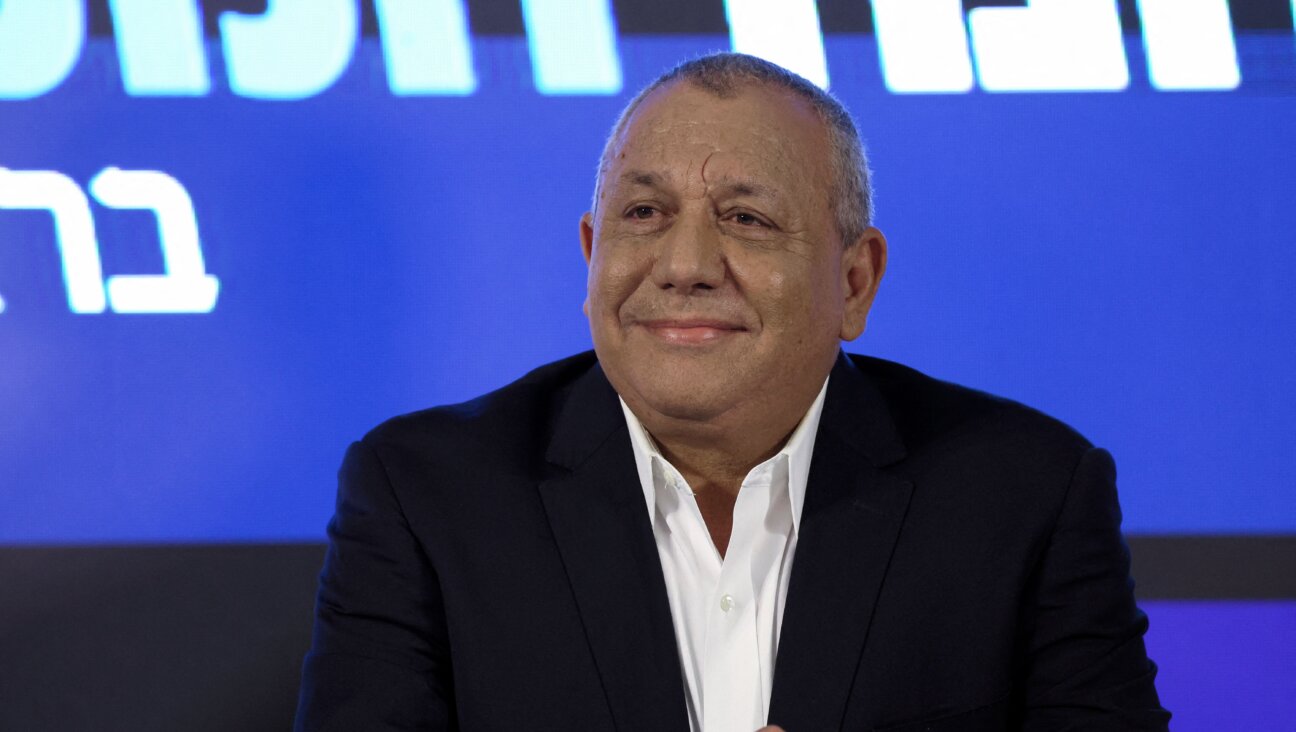
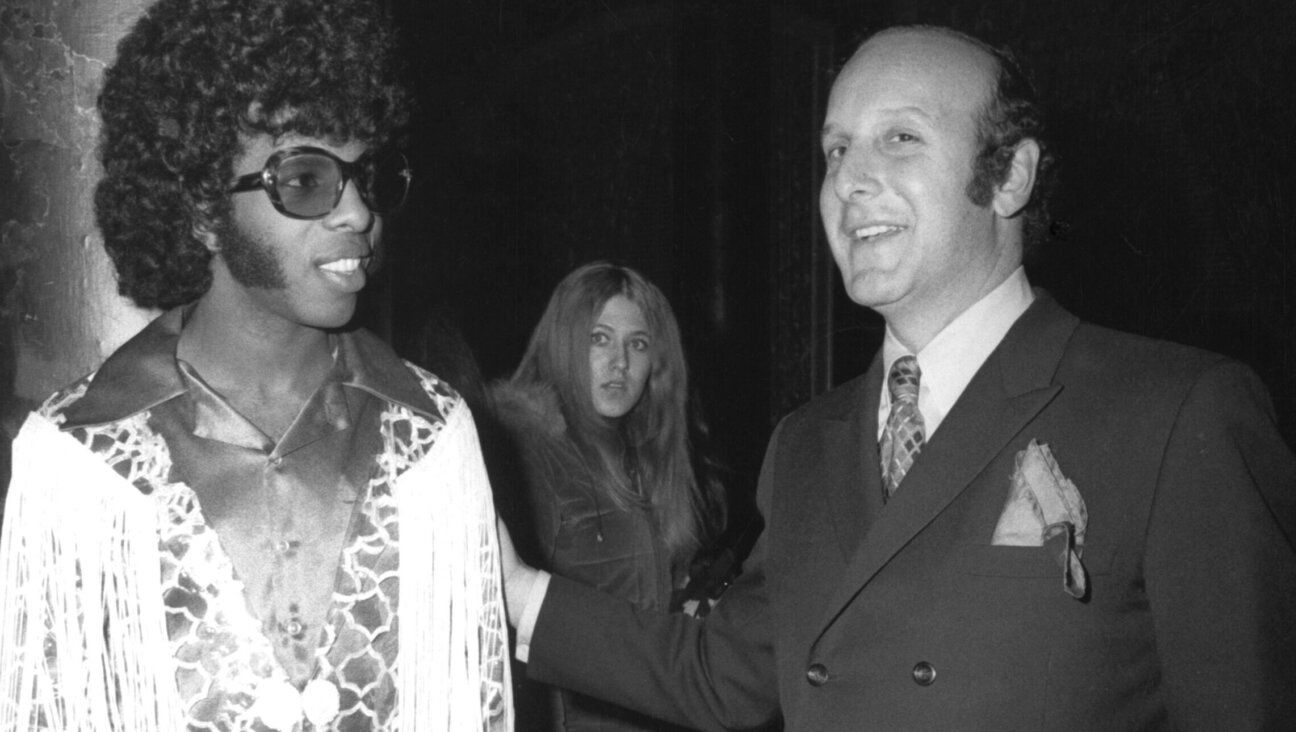
Abraham Foxman, right, served as national director of the Anti-Defamation League for almost 30 years. At left, Foxman with Bronislawa Kurpi, the nanny who hid him during the Holocaust. (The Heschel School; Justin Hoch for Hudson Union Society)
By Andrew Silow-Carroll May 12, 2026
(JTA) — As mourners gathered Tuesday for the funeral of Abraham Foxman, they were saying goodbye not only to one of the most influential Jewish leaders of the last half-century, but to one of the dwindling number whose moral authority was forged in the Holocaust itself.
Foxman, who died Sunday at 86, spent decades as one of the world’s most recognizable Jewish advocates, serving for nearly 30 years as the ADL’s top professional and another two decades before that in its leadership ranks. Presidents sought his counsel. Antisemites sought his absolution. Popes welcomed him. Prime ministers argued with him.
Many of the speakers at Park Avenue Synagogue credited his accomplishments to his outsized personality, his sense of humor and his intuitive leadership skills. And yet his past hung heavy over the funeral, which also served as an elegy for the last generation of survivors and how, like Foxman, they shaped Jewish communal life in the years after World War II and the founding of Israel. Born in Poland, Foxman survived the war in the care of his Catholic nanny.
“His life story of rising from the ashes is our story,” said Israel’s president, Isaac Herzog, in a video tribute. “It is the story of our people born in the world at war. The Holocaust shaped Abe’s character and defined his mission to combat antisemitism and hypocrisy, to call up racism and bias, to speak up for the Jewish people and a Jewish democratic state of Israel.”
Others recalled that beyond fighting antisemitism, Foxman’s past inspired him to build a communal juggernaut that championed pluralism, democracy and civil rights.
“He knew exactly what the absence of those things looked like,” said Stacy Burdett, a former ADL colleague, referring to the Holocaust. “Abe lived in our world as a moral witness, not just to what human beings can survive, but to what they’re obligated to defend.”
Packing the sanctuary were Jewish communal leaders, former ADL colleagues and bold-face Jewish activists such as the lawyer Alan Dershowitz and the New England Patriots owner Robert Kraft. (Not able to attend was Jonathan Greenblatt, Foxman’s successor at ADL, whose mother died in Florida on Saturday.)
When they weren’t recalling Foxman’s early trauma and subsequent accomplishments, eulogists painted a portrait of a Jewish communal warrior as a consummate hugger.
Thomas Friedman sent a video tribute, recalling how they met when the future New York Times columnist was a camper and Foxman was a counselor at Herzl Camp in Webster, Wisconsin. (That’s also where Foxman met his wife, Golda, who survives him, as do his two children and four grandchildren.) Friedman said that no matter how often or angrily they disagreed over something Friedman had written, usually about Israel, Foxman would sign off with affection.
“It’s true, if Abe really disagreed with you, you always knew because his text would end ‘love you, hugs,’” said Burdett. “The more strongly he disagreed, the more hugs and the more emojis.”
Former White House domestic policy adviser Susan Rice, in a video tribute, recalled shouting matches with Foxman during the Biden administration that left aides outside her office terrified.
“And when Abe and I emerged laughing and hugging,” she said, “we both had to reassure my team that all was fine, that we loved each other and not to worry.”
Rice credited Foxman with helping shape the Biden administration’s national strategy to combat antisemitism, and thanked him for defending her when others attacked her personally for administration positions on Iran and Israel.
But even as his children and grandchildren recalled Foxman as a family man, the shadow of the Holocaust fell across the synagogue’s ornate, Moorish-style sanctuary.
“You were a hidden child,” his daughter Michelle said, “and at the same time, you sought to hide the trauma from your children.”
She said she learned much of her father’s Holocaust story not from conversations at home but from his speeches, interviews and articles.
Foxman, who became ADL’s national director emeritus when he stepped down in 2015, was certainly among the last survivors to lead a major Jewish organization.
Fewer and fewer of those witnesses remain; according to the Claims Conference, as of January 2026, an estimated 196,600 Jewish Holocaust survivors are still alive. Nearly all are “child survivors” who were born after 1928.
In discussing how Foxman’s childhood shaped his activism, Sarah Bloomfield, director of the United State Holocaust Memorial Museum, recalled his traumatic childhood. His Polish Jewish parents fled to present-day Vilnius after the Nazi invasion of Poland; when Vilnius too came under Nazi control, his parents left him in the care of his nanny, who baptized him as a Catholic.
“This is what he said: ‘I’m only here because one Polish woman made a choice to save a Jewish child,’” Bloomfield recalled Foxman telling her. “She risked her life to protect the life of another human being, a Jewish child in Hitler’s Europe. Her name was Bronislawa Kurpi.”
Rabbi Elliot Cosgrove, senior rabbi of Park Avenue Synagogue, said Foxman was less interested in the “logistics” behind his survival (he and his parents were only reunited after several bitter lawsuits) than in the “singular moral act” of his rescuer. “In a world consumed by fire,” Cosgrove said, “one human being chose courage, one person chose decency, one person chose light.”
His grandson Gideon recalled asking Foxman how his history shaped his life’s work.
“He said that he felt obligated to make something of himself so that all the other Jewish children who perished in the Holocaust didn’t die in vain,” Gideon said.
And up until the end, said Burdett, Foxman was still feeling that obligation, shaped by a cataclysm that for many is becoming a distant memory, when recalled at all.
She recited his remarks last year during Yom Hashoah ceremonies at the U.S. Capitol.
“As a [Holocaust] survivor, my antenna quivers when I see books being banned, when I see people being abducted in the streets, when I see government trying to dictate what universities should teach and whom they should teach,” Foxman said at the time. “As a survivor who came to this country as an immigrant, I’m troubled when I hear immigrants and immigration being demonized.”
Did you know that only 2% of Forward readers donate to support our nonprofit newsroom? That 2% make it possible for millions to read the Forward without a paywall or subscription — removing any barriers to the full and fair Jewish story.
But while the Forward is free to read, it isn’t free to produce. Big stories — like deep dives into the antisemitism data, political scoops or reporting trips to college campuses — take months of research and fact-checking. All while we keep you informed of what you need to know each day.
— Rachel Fishman Feddersen, Forward Publisher & CEO
Support our mission to tell the Jewish story fully and fairly.