‘Don’t give up on us now’: Israel peace summit convenes thousands to aim for elusive progress
Americans have a crucial role to play in a movement determined to change the country’s course after three years of war, leaders say
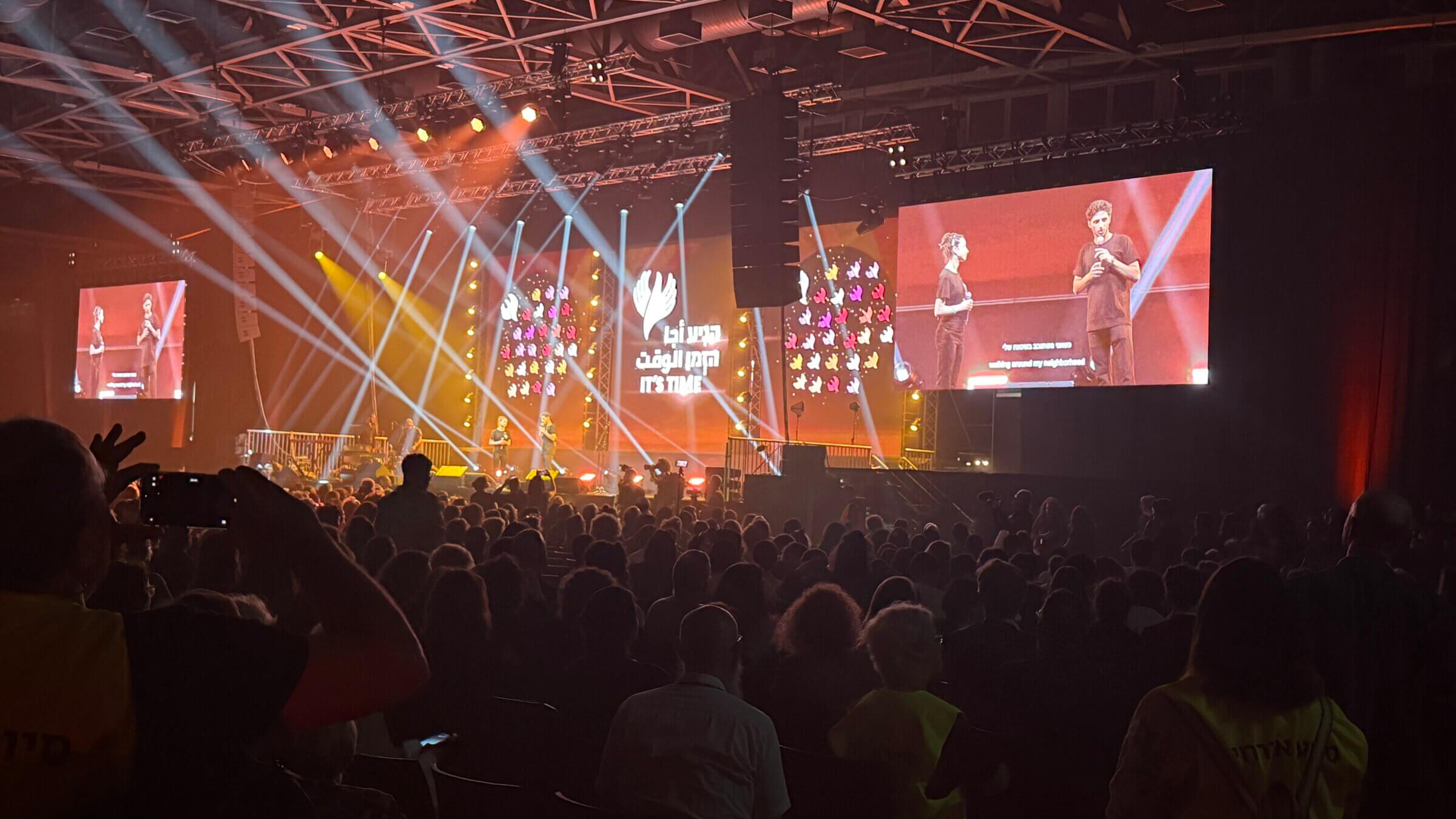
A concert featuring pop icon Dana international capped a day of discussion. Photo by Rachel Fink
By Rachel Fink April 30, 2026
TEL AVIV, ISRAEL — On Thursday’s bright, sun-drenched morning during a rare pause in the multi-front war Israel has been locked into for nearly three years, in between the protests, funerals and steady drumbeat of violence and trauma, something decidedly more hopeful was taking place.
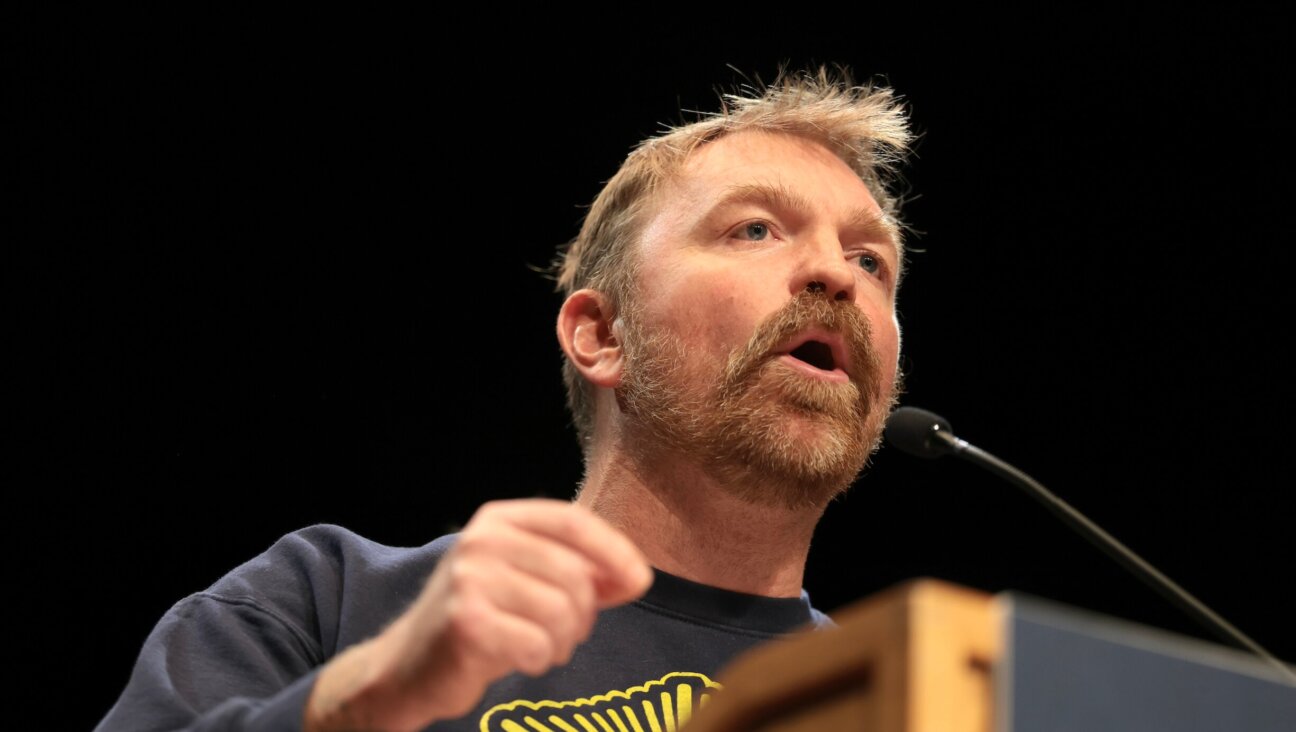
In one of the city’s largest conference centers, thousands gathered for the third annual People’s Peace Summit under the banner “It must be. It can be. It will be.” The event was organized by the It’s Time coalition, a partnership of more than 80 grassroots peacebuilding and shared society organizations.
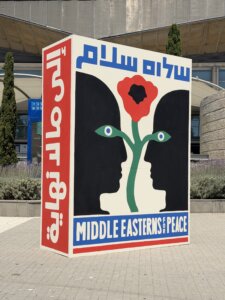
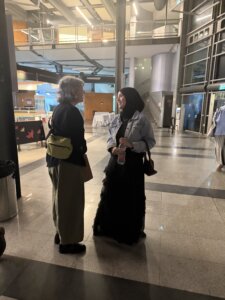
Young activists in T-shirts representing their various causes stood alongside older attendees, some in kippot, others in hijabs. Diplomats in business attire moved through the crowd, as did the handful of Israeli politicians still publicly associated with the peace camp – familiar faces in a political landscape where their ranks have thinned considerably. Outside the main arena, Hebrew mingled with Arabic and English as participants strolled through art installations and an organizational fair showcasing the work of It’s Time’s partners.
While previous events took place at the height of war — while hostages remained in captivity and Gaza endured devastating destruction — this year’s summit unfolded during a fragile lull in fighting, the tenuous ceasefires with Hamas, Hezbollah, and the Islamic Revolutionary Guard Corps allowing, however briefly, for conversations to move beyond issues of immediate survival. Speakers tackled settler violence in the West Bank, looming elections, the immense challenge of rebuilding Gaza and the broader question of how to move Israel and Palestine beyond its default state of perpetual conflict. Inside the packed sessions, the tone was equal parts practical, sober and hopeful.
After a quick coffee break, the thousands of participants came together for an evening of stirring speeches and raucous musical performances. When Israeli pop icon Dana International took the stage with a familiar anthem of peace, the crowd rose to its feet, wrapping their arms around one another and belting out the words.
Despite the joyous atmosphere, the event — and the coalition behind it — is not immune from criticism. Some critiques appear to have been internalized: this year’s programming leaned more heavily into policy, strategy and the hard realities of war than previous gatherings. Other issues remain unresolved. Palestinian participation, while present, was still markedly limited, which organizers attribute largely to government-imposed restrictions on movement rather than a lack of interest. Still, the question of whether a civil society movement like this can translate hope and optimism into concrete political change remains to be seen.
That tension between aspiration and reality extends well beyond Israel. In the United States, support for Israel, particularly among younger American Jews, is waning. A 2024 Pew survey found that fewer than half of American Jews under 30 say they feel “very attached” to Israel, while a JFNA poll released in February 2026, found that just 37% of all American Jews identify as Zionists. Both numbers represent a sharp decline from older generations.
For Shira Ben Sasson, Israel director of the New Israel Fund, it is precisely the peace camp which could hold the answer to this growing disillusionment. If the state itself no longer reflects the values that once anchored many American Jews’ connection to Israel, she suggests, perhaps their more natural partner is the small but determined coalition of Israelis working to change it.
“I appreciate how difficult it is to be a Jew who cares about Israel right now,” she told the Forward as the conference, which New Israel Fund helped support and coordinate, got underway. “People are struggling with what they are seeing — the way Israel is conducting itself. Its policies. They are watching the value set that once connected them so strongly to the Jewish state disappear.”
Her response is one of both reassurance and redirection.
“Thank you for continuing to care,” she said. “But remember — the Israeli government is not your partner. We are. Pro-democracy civil society is your partner. Those of us who are fighting for equality here, for the rights of non-Israeli Jews and the rights of non-Jewish Israelis are your partners. This is where those shared values still live.”
If that message feels unfamiliar to those in the diaspora, Ben Sasson suggests the reason ultimately comes down to lack of exposure.
“We, the Israeli peace camp, need to be in many more places than we are right now,” she said. “We must get the word out that while we might not be the majority here, we are not only growing in number, we are expanding our diversity as well.”
She pointed to the rising number of Orthodox Jews, like herself, who have joined the movement as one example.
Ben Sasson also emphasized that, as with any strong partnership, the relationship must move in both directions. Israeli peace activists, she said, must make themselves more visible to American Jews. But American Jews also need to be willing to open their eyes.
“The mainstream Jewish community has to challenge itself,” she said. “They have to be able to voice their concern for Israeli democracy, for the violence in the occupied territories. And they have to be willing to engage in an honest discussion about peace.”
She is less worried about reaching individuals whose support for Israel may be wavering — many of whom, she believes, will connect with the movement’s vision — than she is about the institutions that have long shaped American Jewish engagement with Israel. Those institutions, she said, have been slow to open themselves to this kind of messaging.
“I think there’s fear,” Ben Sasson explained. “The word ‘peace’ has come to sound political. And once something is labeled political, these legacy institutions don’t want to touch it.”
But that avoidance, she warned, comes at a cost.
“They cannot afford to just stick with the same old stale perception of Israel,” she argued. “If you aren’t willing to talk about the real-life issues that Israelis are facing, you simply won’t be relevant anymore — particularly for the young people in your community.”
“Do not be afraid of controversy,” she added. “Do not be afraid to invite an Arab and a Jew to your event, where there may be disagreement. That’s okay. Struggling and wrestling is a core part of our identity.”
While Ben Sasson contends there is a critical mass of people who are hungry for an alternative way to relate to Israel, the question of feasibility remains; the same question that follows the peace movement inside Israel: Does its growing visibility reflect real political momentum, or is it simply too late to reverse course?
To those who are ready to walk away altogether, Ben Sasson points out that Israel stands to lose not only their support, but also the values and organizing traditions American Jews have long brought to the relationship.
“You’ve helped us achieve so many things in Israel for decades,” she said. “You helped us get a state. And now we need a different kind of support. The Jewish values that you offer — the concept of tikkun olam, which is not at the heart of Israeli Judaism but is at the heart of American Judaism — this is the support you can offer us right now.”
Her final plea was simple.
“Do not give up on Israel,” Ben Sasson said. “There have been so many times when things felt insurmountable and you did not give up on us. Don’t give up on us now.”
I’m personally matching all gifts to the Forward, up to $36,000. Can I match your gift now?

Hello, fellow Forward reader! I’m Joel Brown, a Forward reader and supporter for more than 15 years, and currently the chair of the board of directors.
I’m an avid Forward reader because it ticks so many of my essential boxes: excellent journalism, Jewish focus and diverse viewpoints. In today’s political climate, what I most appreciate is the Forward’s independence — made possible by the generosity of its membership.
The Forward is committed to bringing you unbiased, nuanced Jewish news. From my position as board chair, I see an exciting future as we expand our position as the definitive independent voice of contemporary American Judaism.
— Joel Brown, Forward board chair
Support our mission to tell the Jewish story fully and fairly.