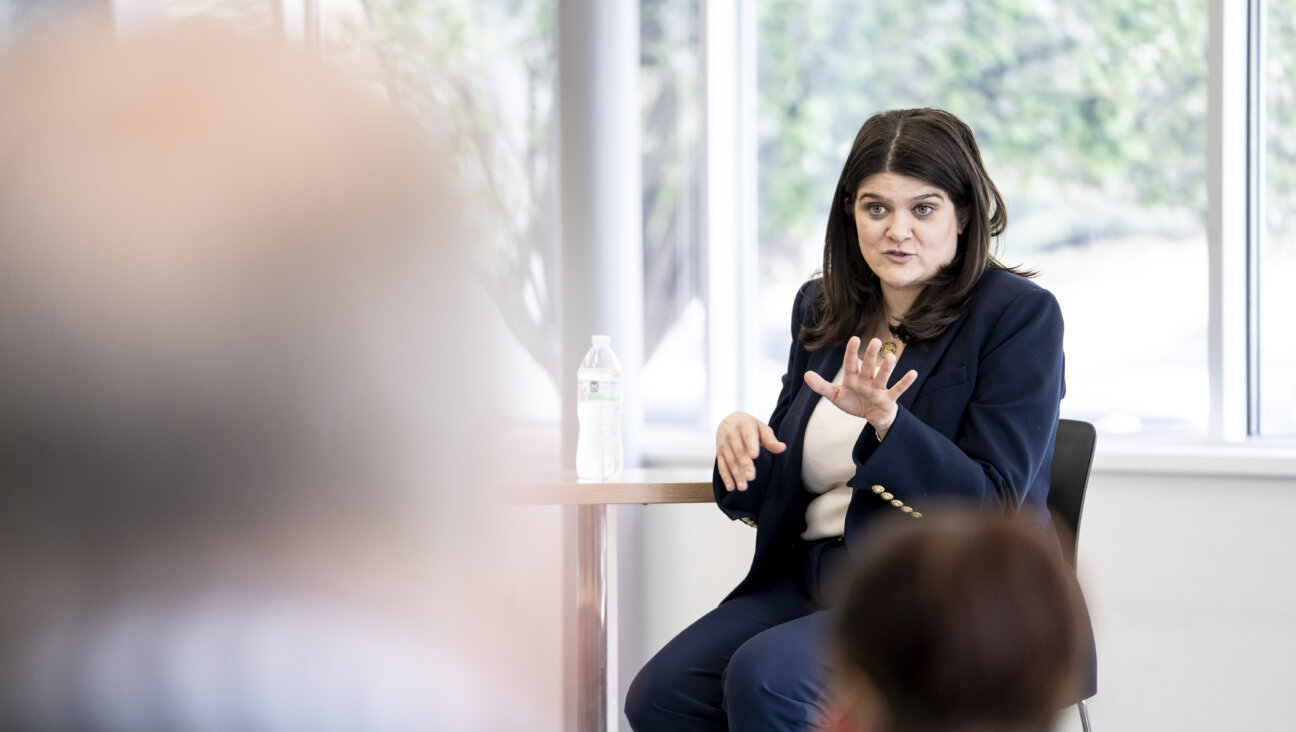
Fighting Halachically?
Is it kosher to box? Thanks to Yuri “Lion of Zion” Foreman and Dmitriy “Star of David” Salita, this is no esoteric question. After all, Foreman just lasted nine rounds against Miguel Cotto in Yankee Stadium, a match he lost in a technical knockout but fought through obvious pain and with such ferocity that he made the tribe proud. And while it’s true that Salita lost his last fight in less time than it takes to sing Simon and Garfunkel’s boxer song, it was his first defeat as a professional boxer.
Both men say they are observant Jews, and won’t fight on Shabbat or holidays, and Foreman is almost a rabbi, so the halachic question is fair game. Naturally, tradition provides an answer to suit anyone’s preference.
In Jewish text, there is a prohibition against excessive violence — many rabbinic interpretations of biblical verses come to that conclusion. There is also an obvious discomfort with injuring oneself.
But other scholars say that a prohibition against boxing rests on two caveats: safety and permission. For some, it hinges on whether the activity is done in a manner that prevents harm — by wearing headgear, for instance. Others say that if permission is granted, if you enter the ring willingly, then it’s okay.
Or, as Foreman told late-night talkshow host Jimmy Kimmel recently: “Me and my opponent, we’re aware of the risks involved in the game, and we already signed the contract, and we already know what’s involved, so it’s a kind of a bit of a green light.”
Of course, Foreman also had this to say: “I started boxing way before I came to religion. Right now, boxing is my job, and rabbis’ salaries are not that big.” Yeah, that’s the answer.
Why I became the Forward’s editor-in-chief
You are surely a friend of the Forward if you’re reading this. And so it’s with excitement and awe — of all that the Forward is, was, and will be — that I introduce myself to you as the Forward’s newest editor-in-chief.
And what a time to step into the leadership of this storied Jewish institution! For 129 years, the Forward has shaped and told the American Jewish story. I’m stepping in at an intense time for Jews the world over. We urgently need the Forward’s courageous, unflinching journalism — not only as a source of reliable information, but to provide inspiration, healing and hope.
 , editor-in-chief
Support our mission to tell the Jewish story fully and fairly.