Genocide and Conscience
The continuing agonies of the African continent — in Liberia and Sierra Leone, Congo and now Sudan — are a constant reminder to the rest of the world of the fragility of what we call societal decency. The inability of the international community to address those agonies and aid the sufferers is an ongoing stain on the world’s conscience.
In the litany of African suffering, Sudan holds a special place. The continent’s largest country, it has been a flashpoint for decades in the confrontation between the expansionist Islamic culture of Arab North Africa and the Christian and animist traditions of sub-Saharan Africa. It is home to what is believed to be the world’s most persistent slave trade. The Islamist government in Khartoum has given important aid and comfort to Al Qaeda and other terrorist gangs. The confrontation between Sudan’s two warring cultures has led to continuing bloodshed in recent decades, on a scale that has repeatedly raised charges of genocide. Its continuation is an affront to humanity.
The silence of the organized Jewish community in the face of repeated atrocities and incidents of genocide on that bleeding continent is an affront of a different order. Jewish organizations and their leaders have earned the prominence and credibility they enjoy on the world stage in large measure because they speak for a community that has known suffering and sought to learn from it. They speak often and powerfully on memory and its lessons. They remind the world of its failure to intervene when it mattered to stop the Nazi genocide during World War II. They call on the world community to learn from its failure, so it will not recur.
And yet, confronted with new atrocities in today’s world, they fail again and again to take the lead and speak out. They failed in Rwanda. They failed in Liberia. They failed in Congo. And, as Nathaniel Popper reports on Page 1, they have — with a handful of brave and noteworthy exceptions — failed in Sudan.
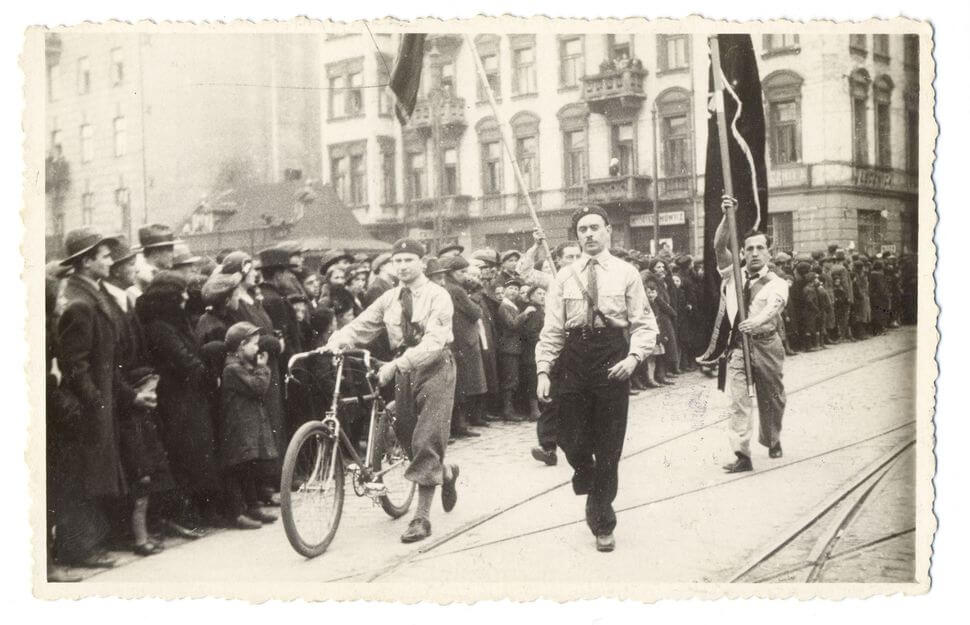
As the Jewish community prepares for the annual observance next week of Yom haShoah, the Holocaust Remembrance Day marking the anniversary of the Warsaw Ghetto uprising, the most appropriate way of honoring the dead might be a serious accounting by the living. The leaders and spokesmen of the Jewish community should begin a process of study, reflection and debate. What, we need to know, did the Holocaust actually teach us? And when will we learn it?
It’s our birthday and we’re still celebrating!
We hope you appreciated this article. Before you go, we’d like to ask you to please support the Forward’s independent Jewish news.
This week we celebrate 129 years of the Forward. We’re proud of our origins as a Yiddish print publication serving Jewish immigrants. And we’re just as proud of what we’ve become today: A trusted source of Jewish news and opinion, available digitally to anyone in the world without paywalls or subscriptions.
We’ve helped five generations of American Jews make sense of the news and the world around them — and we aren’t slowing down any time soon.
As a nonprofit newsroom, reader donations make it possible for us to do this work. Support independent, agenda-free Jewish journalism and our board will match your gift in honor of our birthday!
Support our mission to tell the Jewish story fully and fairly.