July 23, 2010
Outreach Is More Than Hugs and Smiles
It is absurd to characterize the basis of the Jewish Outreach Institute’s work — or any Jewish outreach — as an “assumption that all that’s needed is open arms,” as your article put it (“New Study Finds That It’s Not a Lack of Welcome That’s Keeping the Intermarrieds Away,” July 16). We have not spent the past decade training literally thousands of Jewish communal professionals on simply smiling nicely and having firmer handshakes.
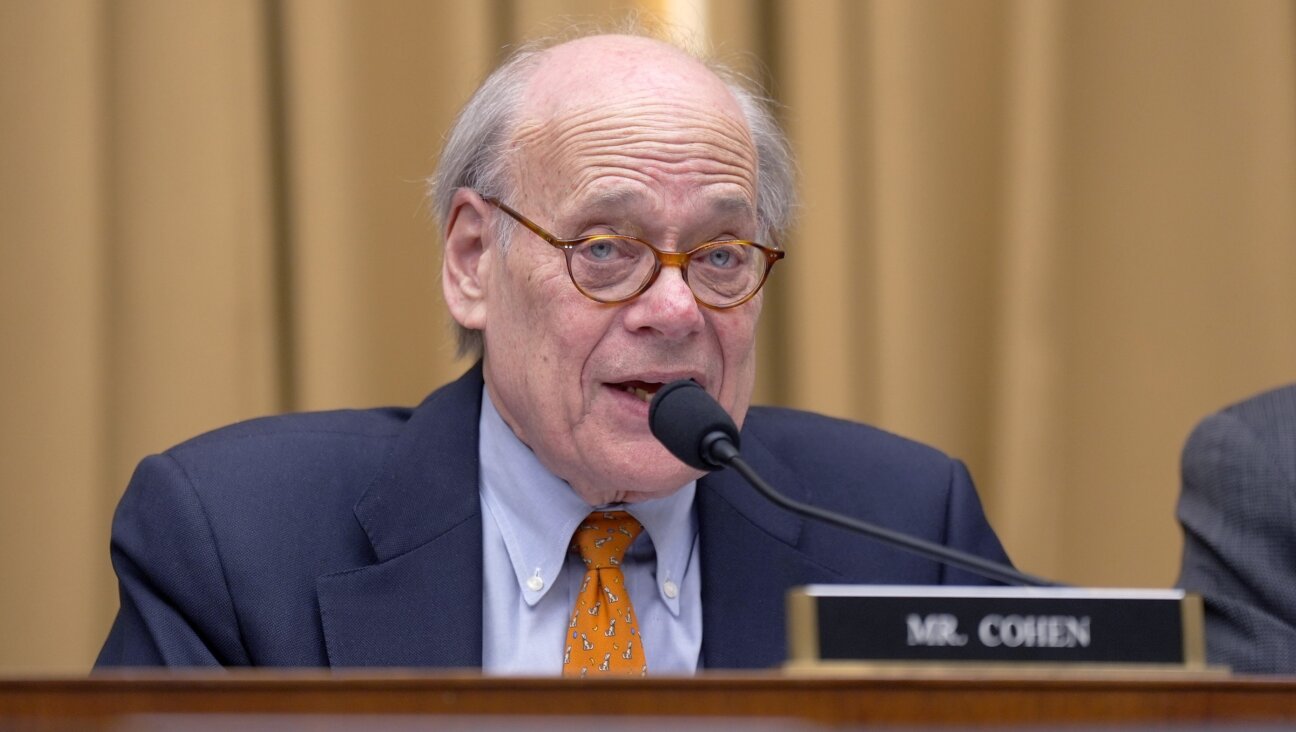
The “competence barrier” that Steve Cohen has suddenly “discovered” in his study is something we’ve been working on all along, as well as many other “barriers to participation,” as we call them, that perhaps Cohen will “discover” in coming studies.
Given that Cohen has previously called intermarriage “the greatest single threat to Jewish continuity today,” it should be refreshing to hear him describe the intermarried as just like everybody else, at least in their discomfort accessing Jewish institutions. Why he has to do so at the expense of those who have been working to welcome the intermarried is baffling.
And by “welcoming the intermarried,” let me be as clear as possible: That means making Judaism and Jewish organizations more accessible, more affordable, more convenient and more meaningful for intermarried families and all who would join us. That is how we have always defined “outreach.”
Paul Golin
Associate Executive Director
Jewish Outreach Institute
New York, N.Y.
The Sooner State Is Not in the South
As a Jew born and residing in Tulsa, Okla., I feel compelled to respond to your July 9 editorial “The Big Tent.” In discussing Lynn Schusterman’s efforts to promote inclusion of LGBT Jews, your editorial called the Tulsa-based philanthropist “too polite and Southern to pick a real physical fight.”
According to her foundation’s website, however, Schusterman (who attends my synagogue) was born in Kansas City and raised in Oklahoma City. The true Southern United States lies east (and further south) of Oklahoma.
Having previously resided in the South for seven years, I learned that the prevailing mindset there is vastly different than that of middle America (Nebraska, Kansas, Oklahoma, et al). While I have seen a rightward, more “conservative Christian” swing here in Oklahoma since my return last decade, we are not part of the South — at least not yet.
Jon Glazer
Tulsa, Okla.
Jewish Cemeteries Are for Jews
Your June 18 article “Cemeteries Are Becoming New Challenge for Interfaith Families,” should serve as a wake-up call for any Jew who plans to marry an unconverted gentile and then expect that the spouse will be buried in a traditional Jewish cemetery, which is consecrated ground for Jews only.
The height of chutzpah is to marry a non-Jew and then dictate to the Jewish community how you want things to be.
Paul J. Malevitz
Los Angeles, Calif.
It’s our birthday and we’re still celebrating!
We hope you appreciated this article. Before you go, we’d like to ask you to please support the Forward’s independent Jewish news.
This week we celebrate 129 years of the Forward. We’re proud of our origins as a Yiddish print publication serving Jewish immigrants. And we’re just as proud of what we’ve become today: A trusted source of Jewish news and opinion, available digitally to anyone in the world without paywalls or subscriptions.
We’ve helped five generations of American Jews make sense of the news and the world around them — and we aren’t slowing down any time soon.
As a nonprofit newsroom, reader donations make it possible for us to do this work. Support independent, agenda-free Jewish journalism and our board will match your gift in honor of our birthday!
Support our mission to tell the Jewish story fully and fairly.