How ‘Hacks’ botched its Yiddish line
In a recent episode, an ex-Hasidic character uses Yiddish when reaching out to Hasidic passers-by
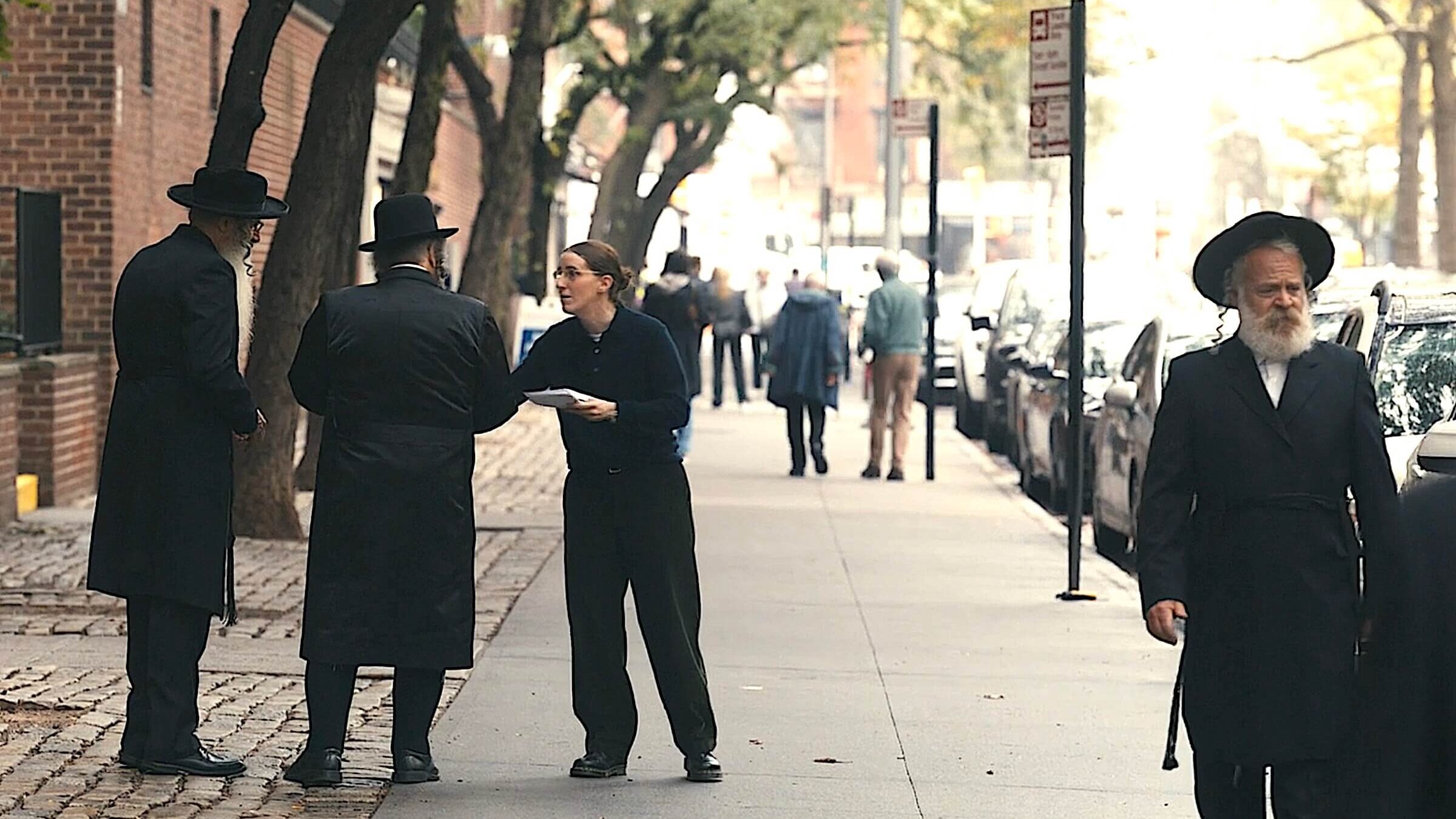
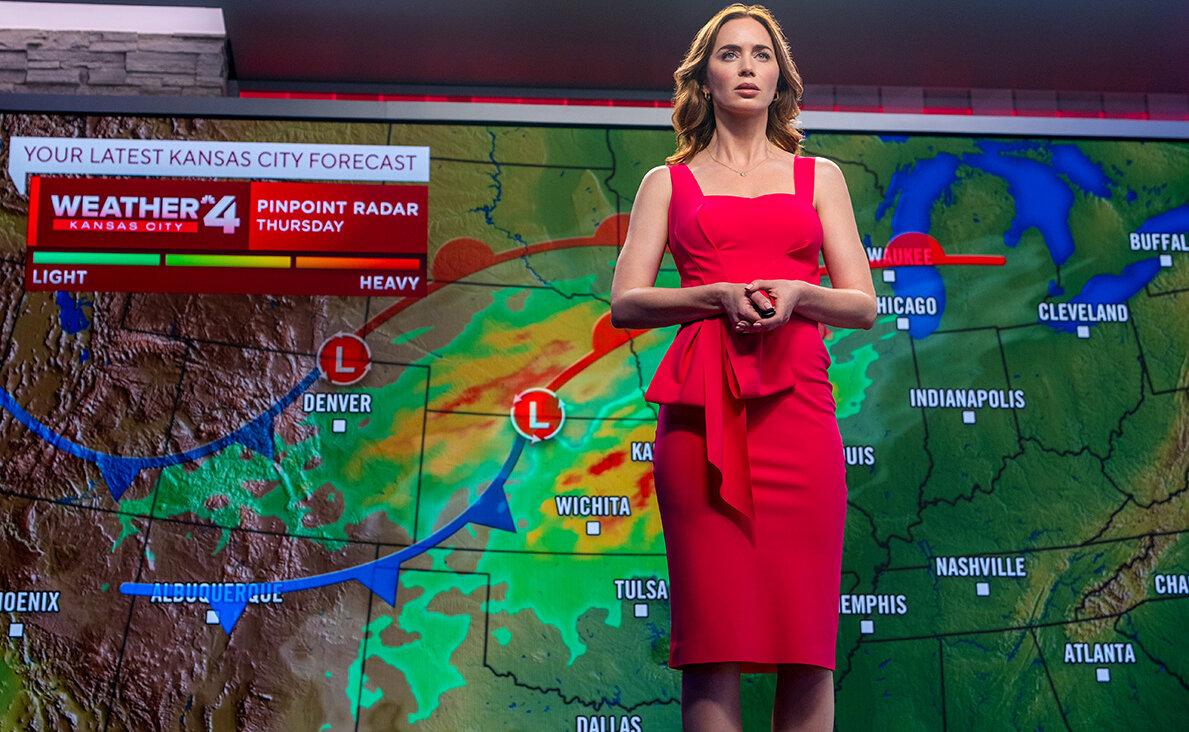
Robbie Hoffman, who plays Randi, handing out fliers in a Hasidic neighborhood. Courtesy of HBO/Hacks
By Rukhl Schaechter May 28, 2026
In the most recent episode of HBO Max’s critically acclaimed comedy-drama Hacks, Robbie Hoffman, who plays Randi, an ex-Hasidic assistant to agents who represent stand-up comedian Deborah Vance (Jean Smart), says a line in Yiddish. Unfortunately, as any fluent Yiddish speaker will confirm, it’s grammatically incorrect.
In the episode, “The Garden” — referring to Madison Square Garden — Vance’s nemesis Bob Lipka (played by Tony Goldwyn) manages to ruin the comedian’s dream performance at the renowned venue. Luckily, her crew succeeds at securing their boss a stage in Central Park (albeit with free tickets) but they have only a couple of days to convince people to fill the seats. They spread out into the streets of New York City handing out fliers, desperate to get people to come to the ad hoc performance.
Randi does her part by returning to her former community — an apparently Hasidic neighborhood in Brooklyn — and hands out fliers to the pious passers-by. Since Haredi Jews eschew secular performances of any kind, Randi’s attempts are sure to be futile but it’s a funny scene, so I get it.
Yet, when Randi tries to convince them in Yiddish to “come see Deborah Vance in Central Park,” the verb she uses is grammatically incorrect. For you grammar nerds out there, here’s what the error was: Instead of using the command form, “kumt zen Deborah Vance,” “come see Deborah Vance,” she uses the infinitive, “kumen tsu zen Deborah Vance.”
It’s as if she were to say, in English: “To come to see Deborah Vance.”
Surprisingly, as was reported in Alma, Hoffman had called her mother Connie, who, she says, actually writes plays in Yiddish, to run the line by her. If her mother is indeed a fluent Yiddish speaker, we can only conclude that she may have mis-heard the sentence.
Unfortunately, badly translated or mispronounced Yiddish lines are all too common in TV series and films, from the 1992 film A Stranger Among Us with Melanie Griffith to the 2019 mini-series Unorthodox. Interestingly, the Israeli show Shtisel, produced in Israel, did a much better job of getting the Yiddish right.
In any case, the correct way for professional studios to get lines translated into a foreign language is not to wing it, but to hire a professional interpreter who can actually come onto the set and rehearse the lines with the actor. It may raise production costs a bit but at least then, the Yiddish dialogue will sound authentic.
Did you know that only 2% of Forward readers donate to support our nonprofit newsroom? That 2% make it possible for millions to read the Forward without a paywall or subscription — removing any barriers to the full and fair Jewish story.
But while the Forward is free to read, it isn’t free to produce. Big stories — like deep dives into the antisemitism data, political scoops or reporting trips to college campuses — take months of research and fact-checking. All while we keep you informed of what you need to know each day.
— Rachel Fishman Feddersen, Forward Publisher & CEO
Support our mission to tell the Jewish story fully and fairly.